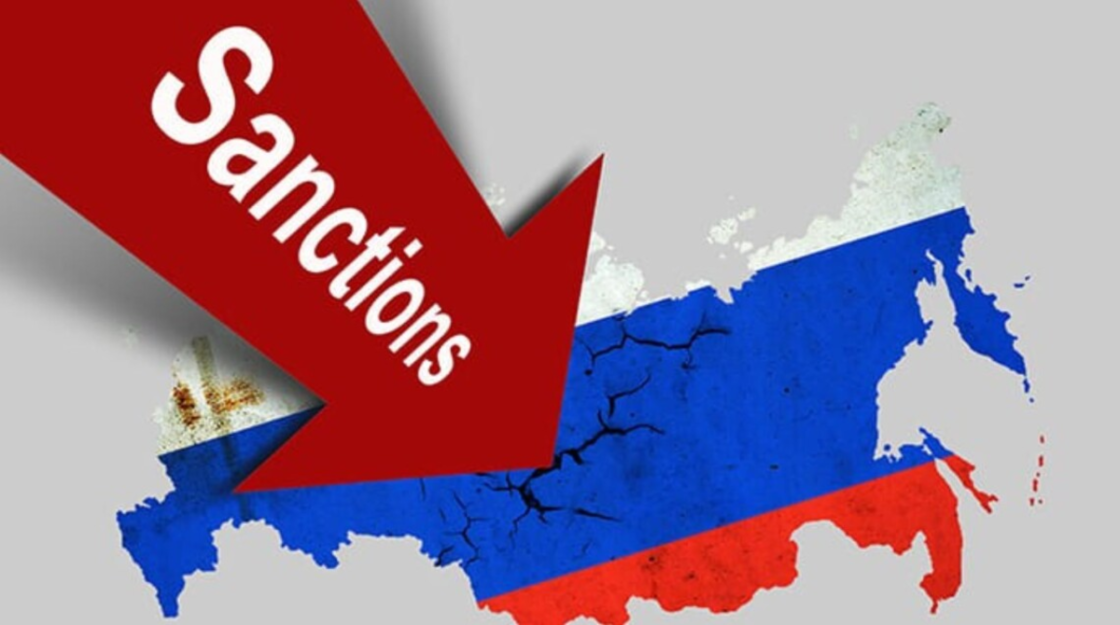
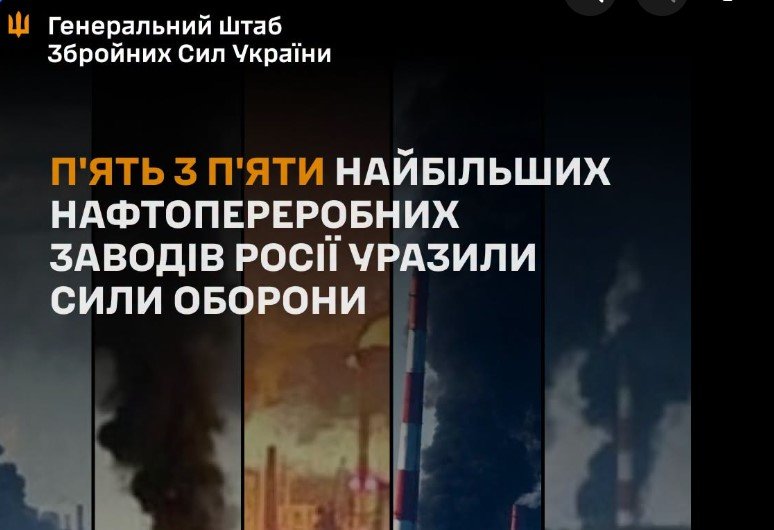
Since 30 October, Ukrainian “long-range sanctions” have reached the Omsk, Kirishi, Ryazan, Nizhny Novgorod, and Yaroslavl refineries, which are among the five most powerful in the country. The smaller, but no less important for the enemy, Novokuibyshev and Saratov plants have also been hit. The defence forces are systematically disabling Russian oil refining.
Almost 2,500 kilometres from the Ukrainian border. That’s how far Omsk is from the front line, and it was there that a fire broke out at the most powerful oil refinery in the Russian Federation on 11 November. Units of the Ukrainian Defence Forces struck the Omsk Refinery, a giant of Russian oil refining that fuels the war against Ukraine every day.
It is capable of processing over 21 million tons of oil per year and has one of the highest oil processing depths in the Russian Federation (about 99%).
The results of the attacks on the Kirishi and Saratov refineries have already been confirmed.
On the night of 9 November, Kinef LLC (Kirishinefteorgsintez) in the Leningrad region was hit. This plant has an installed capacity of about 20 million tons of oil per year and provides more than 6% of all oil refining in Russia. It produces a wide range of petroleum products, including fuel for the needs of the army of the aggressor state. The strike damaged the atmospheric tubular oil refining unit (AT), the primary oil refining unit ELOU, and two cooling units.
Even earlier, on 7 November, PJSC Saratov Oil Refinery was hit. The enterprise, with a capacity of about 7 million tons of oil per year, works for the needs of the military-industrial complex and the armed forces of the Russian Federation. The plant’s only primary oil processing unit, AVT-6, two fuel hydrotreating units, pipelines and a tank with a volume of 10 thousand cubic metres, where a fire broke out, were damaged. The enterprise’s work has been stopped.
Strikes on primary processing facilities reduce fuel production for the Russian military and reduce the revenues from which Russia finances the war.
Distance no longer saves: whether it’s Siberia or the closer regions of the Russian Federation, Ukrainian soldiers will take out the enemy where he is waging his war.
The Defence Forces, exercising the right to self-defence guaranteed by Article 51 of the UN Charter, will continue to systematically take measures to force the Russian Federation to cease armed aggression against Ukraine.
More to come.
Glory to Ukraine!