

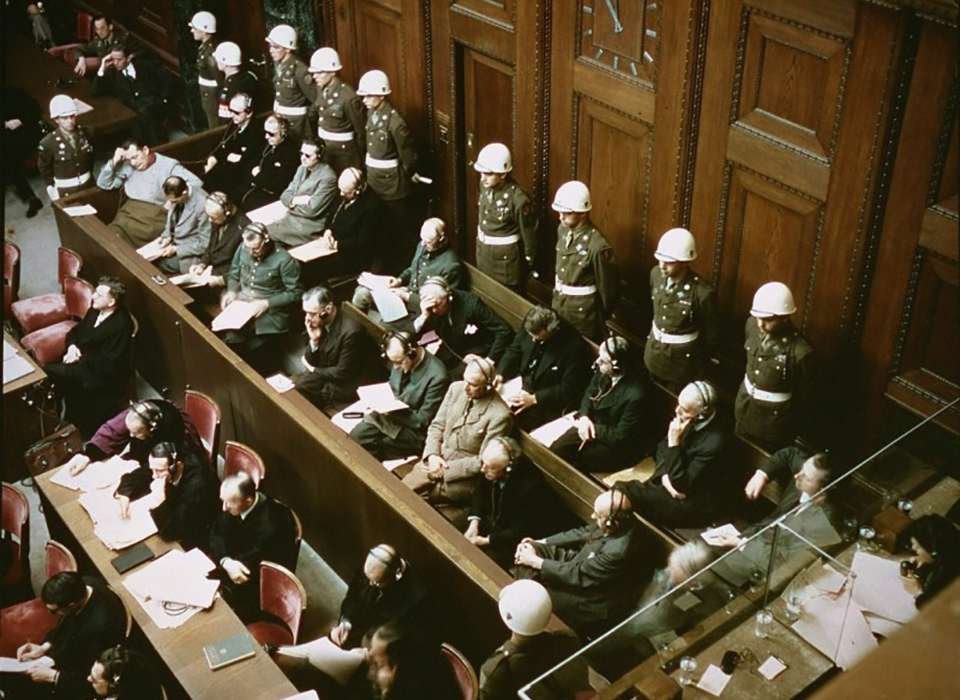
At the Nuremberg trials, six criminal organizations were identified: the Cabinet of Ministers of the Third Reich (including ministers without portfolio), the leadership corps (or composition) of the NSDAP, i.e. the Nazi Party, the Gestapo along with the SD, SS, SA, the General Staff and the High Command of the German Army (Wehrmacht). Initially, the Americans planned to try fourteen organizations and their leaders, but their number was then reduced to 6. The goal was to declare these organizations criminal so that their members could be quickly tried for membership in a criminal organization. American lawyers believed that convicting criminal organizations was a good way to show that not only senior German leaders were responsible for crimes, without condemning the entire German people. The trials of these 6 organizations were a separate part of the Nuremberg trials, which took place after the completion of a series of cases involving 24 leaders of the Third Reich.
After considering the circumstances of the accusation, 4 out of 6 organizations were recognized as criminal: the leadership of the Nazi Party, the SS, the Gestapo and the SD. Some lower ranks and subgroups were excluded from the area of responsibility.
The sentence provided for individual criminal liability only if voluntary membership and knowledge of criminal purposes could be proven, complicating denazification efforts. Unfortunately, the SA, the government of the German Reich, as well as the General Staff and the High Command were not recognized as criminal organizations. This erroneous justification became the basis of the false myth of the innocent Wehrmacht following someone else’s orders. All these criminal organizations, including those mistakenly not recognized as such, did not bear any responsibility for reparations or compensation for the damage that they caused to many nations during the Second World War.
This mistake of Nuremberg cannot be repeated in the case of criminal Russia.
Congress of the Oirad-Kalmyk people
Facebook





