
What prevents you from seeing Russia as a metropolis of the 21st century? After the full-scale invasion, Ukrainians began to raise this topic en masse, to investigate the oppression of the indigenous nations of Russia and to call for the recognition of the crimes of the Russian Federation against them, in particular genocides, but the world public still seems to be hesitating. Why is it necessary to expand the concept of colonialism? Why should you not be afraid to use the word “genocides” in the plural and how to stay relevant? How did you see cooperation with other “enslaved” nations and what did the Central Rada warn against in 1917?
About cantons and canons
We walk the streets of Bern, the de facto capital, but de jure “federal city” of Switzerland. According to local laws, the country does not have a capital (in German, literally “capital” – Hauptstadt), and it does not even have public holidays common to the entire country, except for one – the National Holiday of Switzerland, which is celebrated in memory of the union of the three cantons in 1291, which, according to the national myth, started the Swiss confederation.
Two months before that, another federation – the Russian Federation – celebrates its main public holiday every year. One of the key figures of the celebration (and the national myth in general) here is Alexander Nevsky, a prince who lived and actively developed his possessions several decades before the people of the future Switzerland signed the union agreement. It would seem that geographically distant events, opposite contexts, and even conquest in the Middle Ages were as common practice as an international visit is today, but we are rather talking about the present, that is, the modern use of certain historical narratives by states to achieve their goals, which, in particular, has led to the fact that on the streets of Bern, passers-by usually keep a distance of several metres from each other (this same respect for the physical and mental space of others, however, often harms Ukrainians, because it justifies the famous neutrality), while in the Kremlin it seems quite natural to seize other people’s territory.
Yes, we are shaped by the holidays we celebrate. If something has historical continuity and legacy, it is the unprocessed and not thought-through practices of colonialism.
Actually, colonialism as a phenomenon is connected with the “discovery” and seizure of territories by hegemonic states for the use of their resources. Britain, France, Portugal, Spain, the Netherlands – all these countries have a trail of colonial past. However, this list often forgets to mention Russia, which was the largest empire – 65 million square kilometres. Why is the anti-/post-colonial optics still blind to this federation? To generalize, it is due to the developed canonicity of the concept of colonialism (more on the need to expand the scope of studies here ). In undermining this canon, not the last role is played by the discussion of colonialist policy by the conquered nations themselves. For more than a decade, #BlackLivesMatter activists, European museums returning artworks, and politicians apologizing to the nations of Africa, India, Oceania, and North America have set the tone in the world. But how much does, say, the average Briton know about the Yakuts? Buryats? Altaians? While feminist human rights organizations in Europe provide support to Iranian women, how many Chechen women have they managed to help?
Another reason is the geographical proximity of the conquered territories. That is, the banal lack of separation by the sea (sounds absurd) conceptually prevents us from seeing a colonizer in Russia, and not just a huge super-centralized state. As Oleksiy Radinsky writes, the paradoxically anti-colonial policy of the West actually turned out to be Western-centric in itself, “partially blind to other forms of colonial rule that do not fit into established patterns”, i.e., we are talking about the usual idea of a colony to which we have to sail for several weeks.
Not the last role is played by the position of the metropolis itself.
If Britain, the Netherlands, the USA are, not always with a light heart and with the help of public activists, but still work on their colonial legacy, Russia denies and has always denied the fact of oppression of non-Russian peoples on the territory of their country.
Actually, what to take from a totalitarian state. Many countries still adhere to the infamous principle “the main thing is – not to annoy.”
Historically, one can trace centuries-old clear vectors of Moscow’s expansion, which do not lose their relevance even today: 1) Siberia and the Far East; 2) Central Asia; 3) Europe. That is, along virtually the entire borderline.
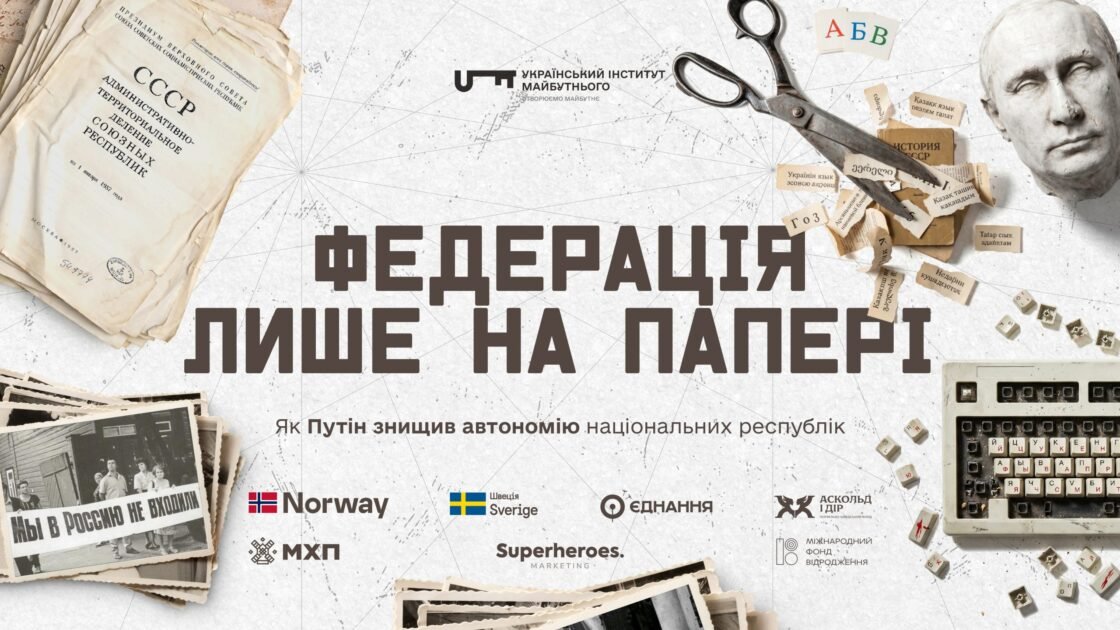
This policy (which was generally characteristic of many countries in the 16th–19th centuries), it would seem, was supposed to end with the overthrow of the tsar and the formation of the USSR, based on the distinctly anti-colonial idea of liberating the conquered. However, these were only words (which, however, fascinated a large number of listeners around the world): despite the proclaimed emancipation and self-selection of the nations, the USSR authorities from the very beginning pursued an invasive and colonialist (in the most radical manifestations — genocidal) policy towards the autochthonous population of the adjacent territories, it is like their voluntary entry into the Union. First of all, the national liberation struggle of Ukrainians of 1917–1921 comes to mind. But according to a similar scenario, events developed in Central Asia, where the Alash Autonomous Region (1917–1920) was to become the first independent Kazakh state, as well as in Azerbaijan (Azerbaijan Democratic Republic, 1918–1920), Armenia (Democratic Republic of Armenia, 1918–1920 years), Georgia (Democratic Republic of Georgia, 1917–1924), Bashkortostan (1917–1921). Under the pressure of the Soviet troops, the Chechens, Ingushetia, and Ossetians could not maintain their independence. However, the newly created empire directed its attack not only to the south and east: the Belarusian People’s Republic and the Moldavian Democratic Republic were also liquidated. Thus, almost all the nations that became part of the Union of the SSR (by the way, the draft constitution of the Ukrainian SSR was rejected for “confederalism”) were actually in the process of creating their own state and could have appeared on the world administrative map much earlier if it were not for the “union” with the centre in Moscow.
The next wave of resistance of indigenous nations was provoked by the policy of collectivization and the strict implementation of the collective farm system, as well as the general Sovietization (or rather Muscovization) of the way of life, which did not correspond to the aspirations of ethnic groups to preserve their own identity. Simultaneously with the resistance in Left Bank Ukraine and the Kuban, the Khanty and Nenets raised the Kazym uprising, the Dolgans the Taimyr uprising, and the Yakuts the Bulun uprising. All of them were suppressed with numerous human casualties, including among the civilian population.
In its colonizing ambitions, the Soviet authorities not only enslaved the territories but also destroyed their own customs, language, rituals, religion, writing, etc. Here are just a few examples: in 1939, Stalin initiated a campaign to Cyrilize the writing of the nation of the USSR. As part of this project for the “bringing together” of nations, the traditional alphabet based on the Arabic script, which was already Latinized in the 1920s under the new Turkic alphabet (Yanalif), was finally replaced by Cyrillic, convenient for the metropolis. Dozens of languages and dialects of indigenous nations, which did not have a written form before, were also Cyrillicized, of course, without taking into account the specifics of oral languages, which led to the loss of some of them forever. In combination with forcibly sending children of national minorities to Russian schools, the instillation of new rituals and the persecution of religion (Islam, Buddhism, etc.), this led to the erasure of the identity (and often simply mass destruction) of the indigenous ethnic group. Not only alphabets were narrowed and unified, but also rites and customs were forcefully archived as obsolete – together with this, the ontological universes of a number of unique communities were lost.
All these crimes were hushed up in the USSR and were not recognized by Russia, which, speaking of the “Russian people”, still only means “a man with a white face” (for example, the advertising campaign of the Yves Roche brand this year in Russia), despite the fact that at least 190 other indigenous nations live in the territory.
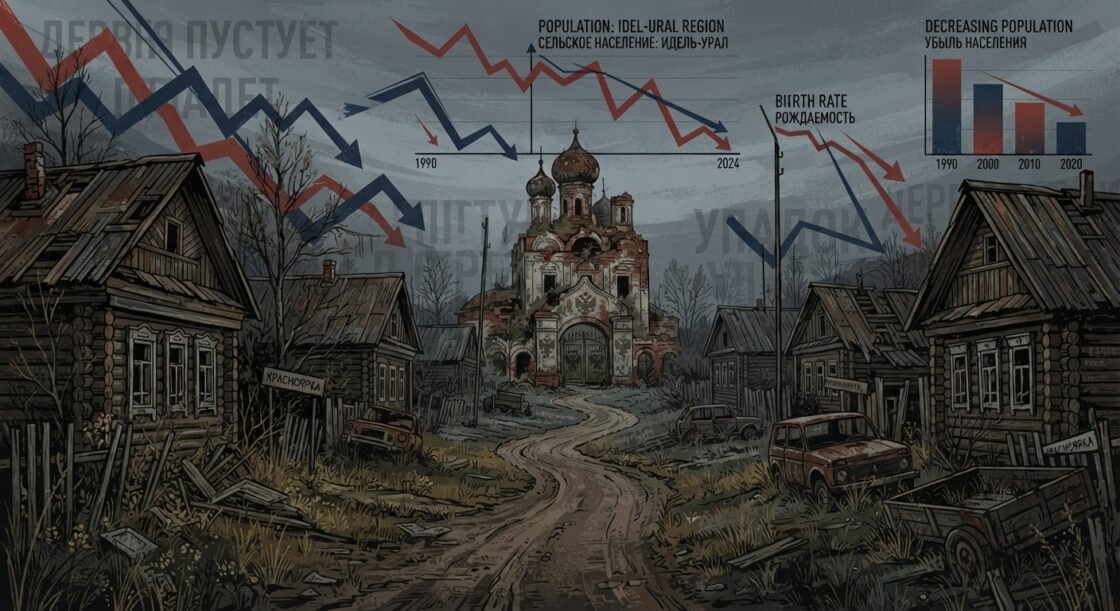
The colonialist attitude toward them is visible even now in the disproportion of mobilization on the territory of the Russian Federation: the small ethnic groups of Buryats, Dagestanis, and Tuvans make up a significant number of conscripts for the war in Ukraine.
This, obviously, shows the difference between colonialism and the state genocidal policy: when the first involves exoticization and a certain “capture” of the colony (paternalistic and belittling attitude towards representatives of ethnic groups, perverse fashion for their culture and art, in some places – punishment, as if for annoying child), then the second does not even give a chance for survival, because genocide kills and destroys. While Europe and North America have been working with their colonial past for more than 50 years, giving a place for representatives of national minorities to express themselves, the Russian Federation in the 21st century continues to seize foreign territories and the nations who live there. Impunity for one’s past enables the crimes of the present.
Genocide “according to the template”
Russia called the “genocide in Donbas” (in popular usage – “8 years of Donbas bambili”) as the reason for its invasion of the territory of Ukraine, accusing Ukraine of it. Historians and lawyers call this tactic “accusation in the mirror”: the criminal accuses the victim of what he himself intends to do. Of course, there is no evidence, and these accusations sound especially absurd from the mouth of Russia, which throughout its history has expanded its borders mainly through wars and genocides. On 27 September of this year, the first stage of the sessions of the International Court of Justice of the United Nations on the lawsuit of Ukraine against Russia, which uses these accusations for illegal invasion, ended.
The author of the term “genocide”, Raphael Lemkin, in 1953, during commemorative events in the USA for the anniversary of the Holodomor, gave a speech in which he called the extermination of Ukrainians “a classic example of Soviet genocide”. What is Soviet genocide? Is it different from the conventional one? The 1948 UN Convention defines genocide as any of the following acts committed with the intent to destroy, in whole or in part, a national, ethnic, racial or religious group as such:
- killing group members;
- causing serious bodily harm or mental disorder to members of such a group;
- deliberate creation for any group of living conditions aimed at its complete or partial physical destruction;
- measures aimed at preventing childbirth in the environment of such a group;
- forcible transfer of children from one human group to another.
The destruction of the group can be realized not only through physical killing.
This is the specificity of the Soviet (Russian) policy of genocide. Repression of elites, intelligentsia, deportations and “resettlement” of Russians or representatives of other enslaved nations, starvation and mass murder – these are the methods by which Russia committed genocides in order to build its empire.
Ukrainians, Belarusians, Kazakhs, Crimean Tatars, Poles, Latvians, Lithuanians and Estonians have experienced all of this, and the list is too long.
A feature of the Soviet-imperial-Russian policy is that these actions were always accompanied by Russification. During the Soviet period, due to the genocide, all nations were unified into one — Soviet, where Russian was the international language. That is, all those who survived, for example, after the Holodomor, had to accept the Soviet identity and the Russian rules of the game, where Russian was the language of the proletariat and the progressive city, and Ukrainian was the language of the dark disenfranchised village. They did not physically kill these people, but they killed their Ukrainian identity. Such are the roots of Russian-speaking Ukrainians today, such is the explanation of the prevalence of the Russian language as a world language phenomenon.
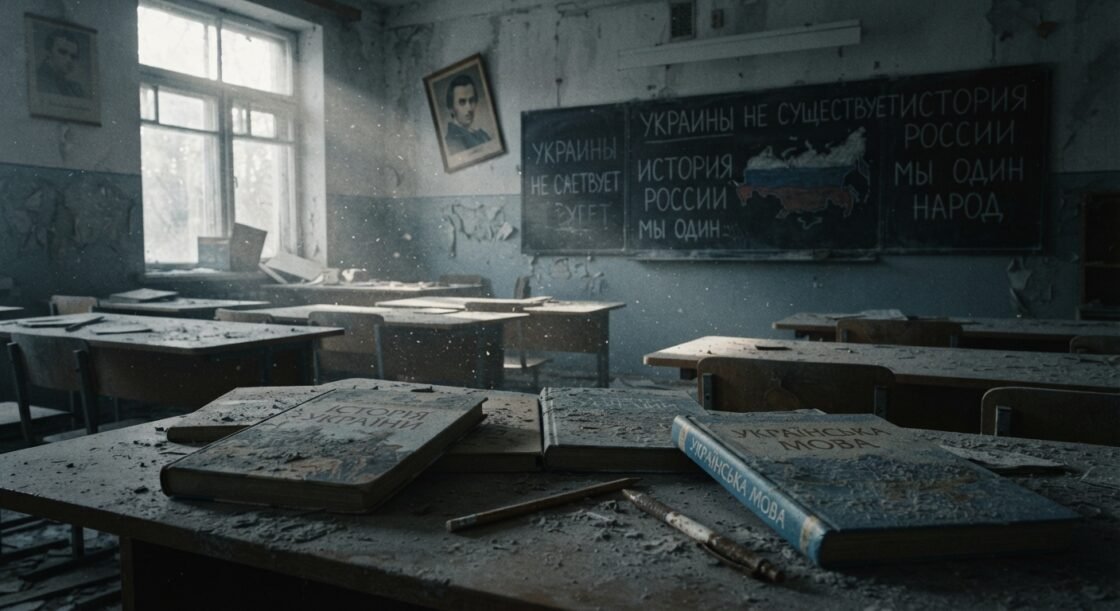
Today, Russia appeals to these achievements of Russification, which it does not want to lose – a “common language” from Siberia to Tallinn or, perhaps, beyond. The ideology of the “Russian world” became the national idea of Russia during the period of Putin’s rule and consists of creating a civilization where people speak and think in Russian, share historical memories and visions of the future with Moscow, appreciate Russian culture and fear Russian weapons. Among the list of means of genocide in the Convention, there is not a single word about the destruction of the culture of the group. But in the Russian version, this is a mandatory component of the destruction of nations. We can observe this in the territories of Ukraine occupied by Russia today: they immediately rename streets Pushkin, Tolstoy, etc.; education, media and office management are translated into Russian language and Russian standards. They kill and imprison representatives of the local intelligentsia and all those who are able to resist. This is how the Ukrainian identity is suppressed without physically killing every person, and these same methods were “trained” by the empire on its lands for centuries against other enslaved peoples. Today, in the Russian Federation itself, the dominant language is Russian, and the rest of the languages are mostly studied only in primary school.
Lemkin called the destruction of culture genocide and emphasized that the erasure of cultures and nations, even without physical damage, must be condemned by humanity.
It is very difficult for all admirers of Tolstoy and Dostoyevsky to condemn the crimes of Russia and call them genocides, because it is difficult to separate Russian culture from the mass murders that Russia permanently commits. And it, for its part, defends itself with the great “Russian language” and culture, simultaneously using them as a weapon for the destruction of nations.
The Soviet Union was an updated form of the Russian Empire, and in the methodology of genocide, it did not depart far from the tsarist period. Lemkin emphasizes this: Soviet expansion through the destruction of nations is a continuation of the traditions of imperial Russia. For example, Russia’s capture of the Caucasian lands took place due to wars, deportations, mass murders and starvation of ethnic peoples. Such a fate befell the Circassians during the years 1763–1864. Having launched a war of aggression in the Caucasus, the Russian army faced the resistance of the local nations. The Circassians recaptured captured territories or fortifications every time. Then, in its usual way, Russia broke the resistance with the help of genocide. The troops burned entire settlements, crops and food supplies of the Circassians. They shot civilians with cannons and organized massacres. Systematic acts of genocide led to a reduction of the indigenous population in this territory to 10%. To which the Russian Emperor Alexander II replied: “Thank God.”
In Russian history, this is called reunification. Just like the annexation of Crimea, the occupation of parts of the Donetsk, Luhansk, Kherson and Zaporizhzhia regions of Ukraine in 2014 and 2022.
The Russian opposition, in the form of representatives of the intelligentsia who spoke out against the Russian war in Ukraine and against Putin, seems to represent “another Russia — democratic and not imperial.” Are they ready to give freedom, for example, to the Republic of Tatarstan, which supported state sovereignty in a referendum in 1992? Needless to say, some of them cannot even recognize the annexation of Crimea as an international crime and do not recognize the responsibility of Russia as the legal successor of the USSR for its crimes, primarily genocides.
World insight
Working on one’s past is a difficult and long process. Since the election of independence, Ukraine has been working at the state level to recognize the genocide of Ukrainians in the 1930s and the deportation of Crimean Tatars as crimes. However, only after the beginning of the full-scale invasion of Russia in Ukrainian society was there a noticeable demand for openness to the historical experience of indigenous nations on the territory of the Russian Federation (more about this in the collection of the Ukrainian Institute ” Decolonization “). Someone may object that we have enough trouble admitting numerous crimes against ourselves. However, being aware of the history of others does not diminish our traumas, but on the contrary, allows us to see more broadly and trace parallels. Most importantly, it is the solidarity with the activists of indigenous peoples who have suffered from oppression that allows the world public to finally see Russia as an empire, or not the last metropolitan country in the 21st century. To speak in a common anti-colonial rhetoric is to speak the same language as the world.
This is the logic that the Central Rada already understood, convening the Congress of the Enslaved Nations of Russia in Kyiv in 1917 and decreeing: “Each of the nationalities living in Russia has the right to national and personal autonomy, to the formation of the nation into a legal and legal union that encompasses its members from all parts of the country” ( source and interview ). Volodymyr Zelenskyy appeals to the indigenous nations of Russia, and Verkhovna Rada appeals to the world public with a call to support the right to self-determination of the peoples of the Russian Federation (directly calling the policy of the latter genocide).
Very slowly, the optics of the West begin to change to anti-colonial when it comes to Russia (for example, the meeting of the Commission on Security and Cooperation in Europe or this article ). The reorientation of departments and educational programmes of world universities to “Eastern European”, “anti-colonial” or at least “post-Soviet” studies instead of “Russian” is taking place even more slowly – it seems that the world has taken a new look at the map. For Russia’s policy of genocide to finally stop, the world must finally understand the true basis of Russia’s “greatness.”
Note: for a quick information search please subscribe to our Telegram channel “Freedom for Nations!” https://t.me/ABN_Freedom_for_Nations
Also, read the Facebook materials of the ABN page and the group
Our site: https://abn.org.uaen/