
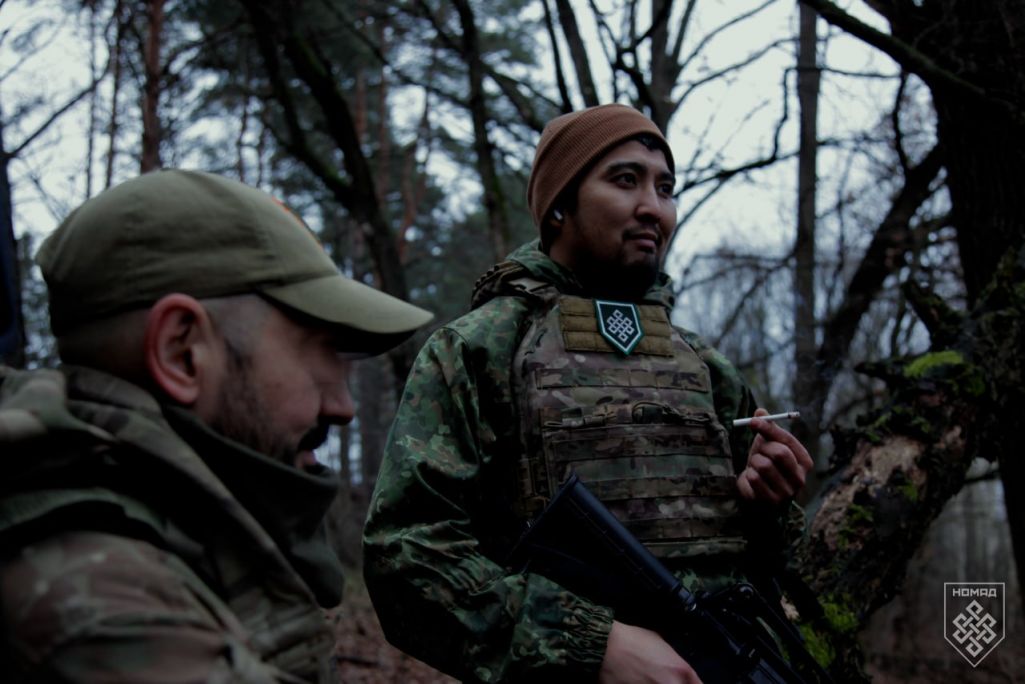
In December 2024, a new unit called Nomad appeared in Ukraine, fighting on the side of the Ukrainian Armed Forces. It consists of representatives of the indigenous nations of Russia: currently, its ranks include residents of Kalmykia, Tatarstan, Bashkortostan, and Yakutia. The formation does not disclose its numbers and tasks, but its representatives note that they are “on the way to creating a full-fledged unit in the ranks of the Ukrainian Armed Forces.” Vot Tak spoke with the leader of Nomad, a serviceman from Kalmykia with the call sign “Shaman.” He told us how he sees the future of his unit, whether he wants to achieve independence for Kalmykia, and explained why, in his opinion, Russia needs decolonization.
— Why is your unit called “Nomad”?
– “Nomad” means “wanderer”. My ancestors – Kalmyks and representatives of other indigenous nations – were nomads. That is where the name came from.
— On your uniform, there is a chevron with the inscription “Zbroyni sili Ukrayini” (Ukrainian: “Armed Forces of Ukraine”). Do I understand correctly that you are a serviceman of the Armed Forces of Ukraine?
– Absolutely right. This is not my first year serving in the Armed Forces of Ukraine. Our unit is still on the way to legalization, but my presence in the Armed Forces of Ukraine guarantees that those people who decide to come and support us will have such an opportunity.
— How and when did you join the Armed Forces of Ukraine?
— I have been living in Ukraine for over ten years. Due to the circumstances, I was interested in seeing such a phenomenon as Maidan, which later grew into the Revolution of Dignity. I saw that people can and are ready to fight for their rights and freedoms and can resist the authorities trying to usurp them. I joined the Armed Forces of Ukraine in 2014. Exclusively out of humanitarian motives, I supported my acquaintances and friends who became volunteers during the ATO. I had a medical education — I believed that my skills would help save people’s lives.
— What is the Nomad division and who is currently part of it?
— “Nomad” is not just a unit, it is more of a platform for representatives of indigenous people of Russia who want to defend their rights and freedoms, express themselves, and identify themselves. Currently, our ranks include Kalmyks, Tatars, and Bashkirs, but we are ready to accept representatives of all nationalities of multinational Russia. If representatives of other nationalities appear, we will also look for their supporters, so that more national units appear in our ranks that will fight with us and help us achieve our goals.
— How is your platform different from the others? What parameters can one use to get to you?
— We are ready to accept representatives of all nationalities — there are more than 200 of them in Russia. We do not concentrate on one nationality. Russia is a multinational country, and no one needs to pull the blanket over themselves.
The main thing is the desire to change something in the country. It seems to me that our main goal is to weaken the Putin regime. With the weakening of the regime, I think the opportunity will arise for the new generation to understand the depth of feelings that people experience. In my opinion, those Russians who are now remaining in Russia and doing nothing, [they] are helping, pandering to the government. Inaction in this situation is already a criminal decision. People must decide whose side they are on – good or evil.
— Why is the ability to express yourself and identify yourself so important to you?
— Many of my fellow countrymen and representatives of other republics in today’s chauvinistic Russia have encountered biased attitudes from Russians. Our rights and freedoms have been cut off. We have neither a voice nor opportunities for self-realization, or self-identification. At some point in Moscow, they decided that we do not need to study our native culture, our native language, or literature. But I am sure that such decisions lead to the nation disappearing.
As a result, many representatives of the indigenous nations simply began to leave the country. Now many of my fellow countrymen, Kalmyks, live in the USA and Europe. We keep in touch with them and speak our native language. We have a very rich history, there is a folk epic called “Dzhangar”. From time immemorial, we have been trying to preserve it and pass it on from generation to generation.
— Why did you choose this way of defending your land – fighting on foreign soil?
— The war in Ukraine gives us opportunities for our struggle because Ukraine is fighting for liberation from imperialist Russia, which is seizing new territories. If we do not unite here and now, then in the future, we will no longer be able to resist Moscow. Separately, we will not be able to do anything. What is one group of people who will talk about their independence? Even if it has several million people.
We have already been through this during the Chechen campaign. We have been through this in 1943 during the deportation of the Kalmyk people. We were allowed to return to our lands only 13 years later and were forced to swallow the insult. Although the majority of my people died during the deportation.
Old people, women and children were driven out of their homes while all the men were at war. We were told that we had to remain part of “Great Russia”, that we would be given land, that life would improve, and that everything would be fine. And what are we seeing now? Thirty years later [after the formation of the Russian Federation], we still have not received anything.
— Other Russian units are fighting on the Ukrainian side — the Russian Volunteer Corps, and the Siberian Battalion. They also have a so-called national component, and they are known for their right-wing views. Is there an ideological basis in your unit?
— I will repeat once again that we do not support the policy of chauvinistic Russia. These views are alien to us. But at the same time, healthy competition between various units — such as the Siberian Battalion, Bashkort and others — is only to our advantage. Perhaps not all of our supporters have decided on the ideology that suits them best. But this is what our platform was created for.
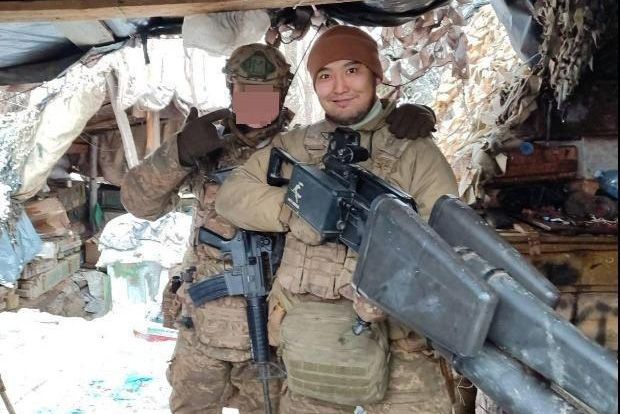
— Do you see Kalmykia as an independent state in the future?
— I want my people to be able to live and have the same rights and freedoms as other people. I don’t want to feel disadvantaged in my own country — to come to the capital and hear: “Why did you come here?”
I am sure that the current regime of chauvinistic Russia will eventually collapse. History has shown that such processes are cyclical. We saw this 90 years ago. When the regime falls, I will, of course, return to my homeland.
— What do your relatives who remain in Russia think about the future of the republic?
— Most of my relatives and acquaintances in Kalmykia do not understand me. And I can do nothing about it. The propaganda machine has been working in Russia for entire generations.
– But if you want to return to Russia, you will have to live with people who did not find the strength to fight. And those who did, are now facing criminal charges. How will you live next to these people?
— I think that in the future when the process of decolonization of Russia begins, people’s self-awareness will begin to return. They will understand what happened. In my opinion, what is happening in Russia now is similar to the Iron Curtain of the Soviet Union, when there was only one source of information that poured into people’s ears, what was necessary. Everyone was ready to listen and believe. I think that self-awareness will return, and everything will be remembered.
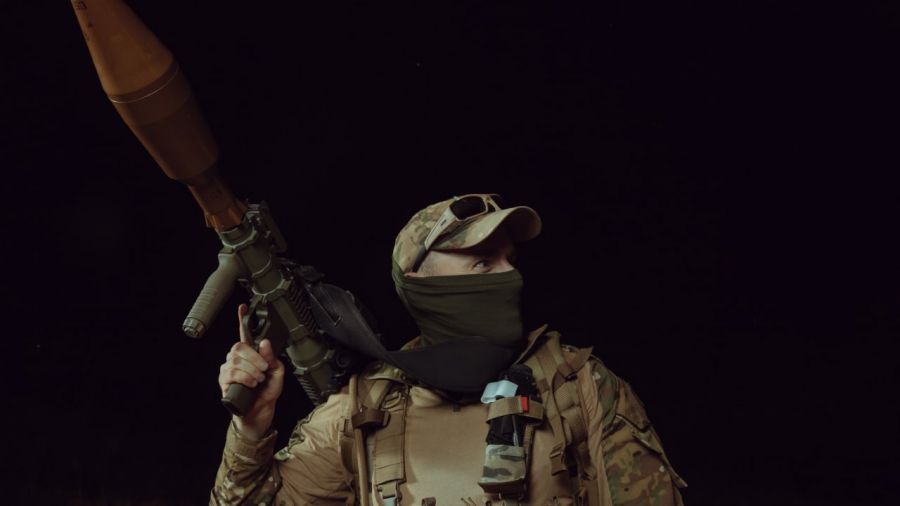
“Russian Volunteer Corps”, “Legion” and SSO “Azov”. How Russians are fighting against the Kremlin on the side of Ukraine
— What do you think is needed for the decolonization of Russia?
— As cruel as it may sound, there must be a certain number of victims — so that people understand what is really happening in the world. For many, the war is happening somewhere far away. Until they encounter it personally, until their relatives are sent to war, nothing will change.
— Okay, this moment has come, but what next? Do you see this process as liberation from within, as an uprising of the masses who have realized that they need to fight for their freedom? Or do you see it as Russia’s defeat and its further division into separate lands?
— Personally, both options are acceptable to me. It is impossible to say that the first, or the second, or any other will happen. But I hope that it will. One way or another, everything is moving in this direction. Russia remains the last empire of this kind on Earth.
— Do you follow the Russian political space at all now? Are there any figures that are close to you, who you could look up to?
— Unfortunately, I don’t see any people among the Russian opposition who could confirm by their actions that they are the opposition. We have a lot of opposition in words but in reality…
In fact, they can join us, support us. I am sure that among those millions of Russians who have left Russia and are now somewhere in Europe, in America, we can gather a thousand people who will be ready to come here and support us.