

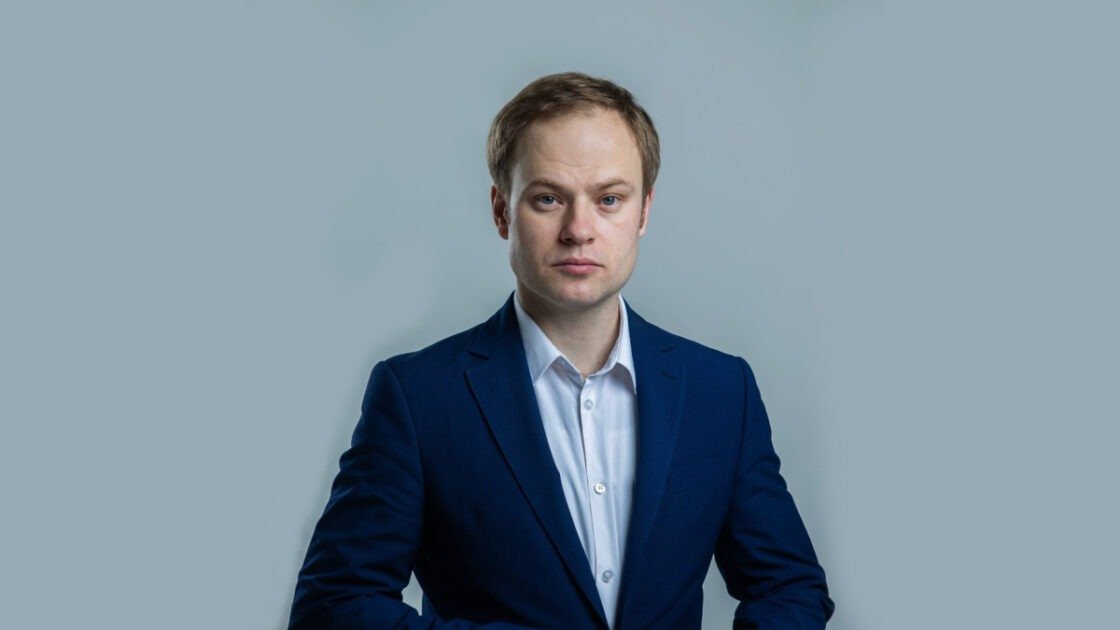
Ukraine is trying to prepare the elite of the enslaved ethnic groups of Russia, to help them be better prepared for the moment when they will receive more powers. This is stated by the chairman of the Verkhovna Rada of Ukraine Committee on Freedom of Speech Yaroslav Yurchyshyn. On the air of Ukrainian Radio, he spoke about the development of the main principles of the state policy of Ukraine regarding interaction with the national movements of the nations of the Russian Federation. The relevant draft law was recommended for parliament consideration by the Rada Committee on Foreign Policy and Interparliamentary Cooperation as soon as possible. Yurchyshyn emphasizes that the Russian Federation’s nationalities had their own states much longer than the Muscovites, who later called themselves Russians. These nationalities will ultimately try to ensure their independence as much as possible. After all, their common life with the Russians mostly led to genocides.
“It is important to meet on the borders of 1991, not totalitarian Russia, but many states that see Ukraine as a partner, not an enemy”
It is very important to create an algorithm for interaction with the national movements of the colonial nations of the Russian Federation, but the law has not yet been adopted by the Verkhovna Rada. At what stage of consideration is it now? And is there any communication with representatives of the colonial nations of the Russian Federation at all now?
Communication is extremely active. We have several Chechen battalions fighting in the Armed Forces of Ukraine, there are representatives of many nationalities fighting both in the International Legion of the Ukrainian Armed Forces and in other combat units. This is the most active unit with which communication is conducted.
Ukraine is the second country after Georgia to recognize the genocide of the Circassian people, and it also recognized the genocide of the Chechens and Ingush after World War II. In these resolutions, we refer to the right enshrined in UN documents on the right to self-determination. In addition, a resolution of the Verkhovna Rada was adopted, which, referring to UN documents, in principle recognized the right of indigenous and small nations of Russia to self-determination, taking into account the de facto colonial policy of Russia towards them. These are the steps that have already been taken and are now being very actively communicated. Similar decisions have been made at the level of the Council of Europe, the Parliamentary Assembly. The question is to move on to real actions.
Last week, there was a meeting under the leadership of the Minister of Foreign Affairs on how we should move forward with this bill. There were representatives of all our special services that work with indigenous nations, there were representatives of the Ministry of Culture and the Ministry of Education. After all, there is a two-way movement here: on the one hand, we need to tell these enslaved nations about Ukraine, and on the other, Ukrainians need to be told and explained that over 30% of the population of the so-called Russian Federation are ethnic indigenous minorities, indigenous groups that are subjected to double pressure during the war. Russia is in practice destroying these nations, burning them in the war or expelling them from their territories if they do not want to mobilize. On the other hand, this is an economic benefit: for example, direct budget management has been introduced in Ingushetia, that is, money does not go to this republic as a whole, and Moscow takes care of it.
Therefore, there is a lot of work and the main task was to determine how we will move forward with this draft law. We agreed that now we will work on the adoption of the law in the first reading, and between the first and second readings we will actively finalize and introduce the proposals that various institutions have proposed. We hope that this will give impetus to this topic, because even under optimal conditions, when we reach the borders of 1991, it is very important for us to meet on these borders not a totalitarian Russia, even without Putin, but a federation or a whole series of state formations that see Ukraine as a partner, not an enemy.
Or at least a real federation…
This is a transitional state because we understand that nationalities that had their own states much longer than the Muscovites, who later called themselves Russians, will try to ensure their self-government and independence as much as possible. After all, living together with the Russians mostly led to genocides, exterminations, closing schools, and press bans. We, Ukrainians, understand this perfectly well because we ourselves have been subjected to this for centuries.
Successful Tatarstan and the North Caucasian regions of the Russian Federation most ready for self-assertion
Mr. Yaroslav, of those nations with whom Ukraine has good communication, who, in your opinion, can most actively and successfully resist Russia’s policy of enslavement?
They are forced to reckon with the Tatars. This is the only republic that still has its own president, although this is prohibited by the Russian constitution. Putin specifically lobbied for the heads of regions not to be called presidents, but the Tatars ignored this ban and they still have a president of Tatarstan. Plus economic capacity, and the Tatar language are mandatory. If an official is sent to Kazan, he must know the Tatar language by default.
The only thing that currently prevents Tatarstan from pursuing an independent policy is that in Soviet times they were cut off from Kazakhstan and were denied access to the direct state border. They are a kind of “enclave”. By the way, in the 1990s, the Republic of Tatarstan even had an official representation in Ukraine. And this republic has its own constitution.
The North Caucasian regions — Chechnya, the Chechen Republic of Ichkeria, Ingushetia, and, in fact, Adygea or Circassians, who are now scattered in many parts — still remain the most ready for self-assertion.
And the Krasnodar Territory?
The situation there is more complicated because the policy of population of cities by ethnic Russians and a break with ethnic groups that lived on their original land was pursued. After all, the resettlement of Ingush, Kuban is also one of such policies. But we can only predict something historically or economically, and, as the practice of the collapse of the USSR shows, freedom and independence are mainly taken not by those who are most economically prepared, but by those who are most culturally distant.
“The easiest way to reconcile what is now called the “Russian Federation” is decentralization”
The biggest problem now is to convince the West to get rid of the fear that existed during the time of US President Bush that the disintegration, and decentralization of Russia would necessarily lead to some conflicts with the use of nuclear weapons. First, only Russia is currently rattling with it and nothing prevents it from doing so, even though it has signed all the documents that it will not do this. And, as the history of Belarus, Ukraine, and Kazakhstan shows, when the empire disintegrates with new states, it is much easier for the big powers to communicate. The easiest way to reconcile what is now called the “Russian Federation” is decentralization. We are as interested as possible in convincing the West, in showing how the inhabitants of Russia of different ethnic groups can organize themselves and live peacefully, without internal conflicts.
“There is something to work with”
What about the national movements of colonial nations, do they actually exist?
Yes. There is a Committee for the Liberation of Ingushetia with a centre in Turkey and a representative office in France and in some Arab countries, there are several centres of Chechen resistance. It is a pity that now it is not a single movement, but the FSB has worked very actively to ensure that there are various groups of influence. Now we are trying to actively work to ensure that representatives of the elites of this nation understand that the key enemy is Russia, and not the one who has greater legal authority to represent their people.
There are very good supranational organizations – the League of Free Nations. There is a very active regional movement. Kaliningrad itself is closer to the Baltic perception and only legally, due to the presence of the Russian military presence there, identifies itself as a Russian part. There are very serious centrifugal movements at the regional level around St. Petersburg. So there is something to work with.
Ukraine is trying to train the elite of the Russian Federation’s enslaved ethnic groups
Mr. Yaroslav, how can we help these movements in a purely practical way, other than by supporting and recognizing that these are real nations and that they are suffering from the colonial policy of the Russian Federation?
Recognition is already a lot, it allows this nation to communicate with other nations, having a legal basis.
What assistance are we already providing, even without a law? Since stateless nations have no representation at the global level, only their partners can speak on their behalf. In this case, we are talking about the fact that Russia is arresting representatives of enslaved nations who oppose the war in Ukraine on international platforms. We are talking about the fact that Russia is trying to manipulate Interpol and seek the forcible return to Russia of those who are leaders of enslaved nations. Such a story happened, for example, with representatives of the Buryat opposition movement in Finland. The Finns initially did not understand and almost sent the daughter of one of the leaders of the Buryat movement to Russia. She would probably have been taken hostage right away and this movement would not have been able to work actively, because, unfortunately, it is very often based on personalities.
We have also actually launched several public initiatives and we hope that we will reach the systemic state level, to train the leaders of these nations, because we remember how difficult it was for Ukraine to build its own statehood in the 90s. So we are trying to prepare the elite of these ethnic groups, to help them be more prepared for the moment when they will receive more powers as representatives of a regional or ethnic group. We are also working to ensure that commissions similar to ours are created in the parliaments of European countries, the European Parliament, so that the enslaved nations have something to knock on.






