

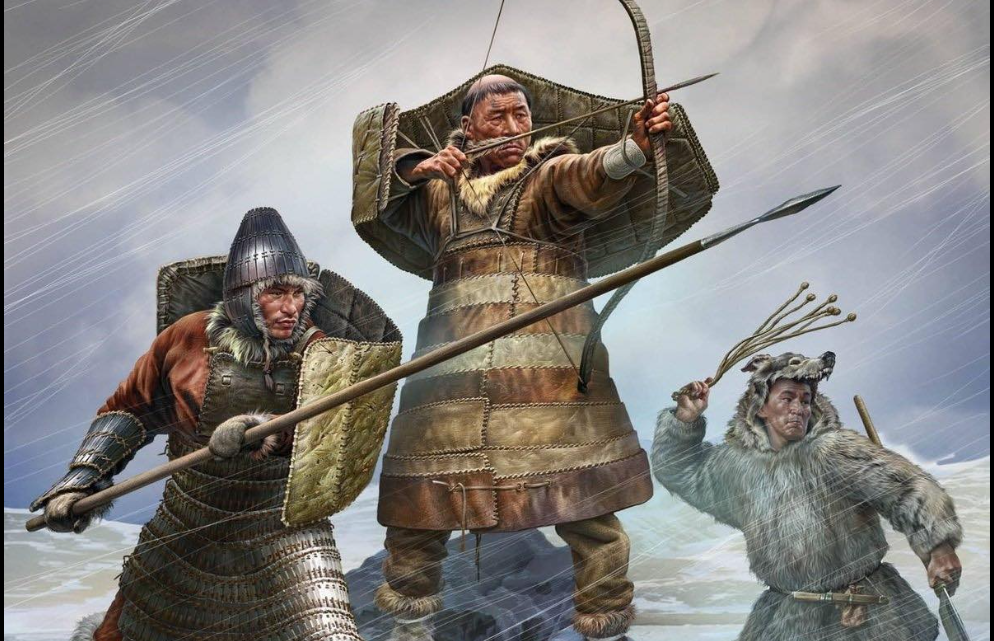
Do you remember the jokes about the Chukchi?
There were jokes about all the nations, invented in the KGB dungeons. But about the Chukchi, it seems to me, the most insulting, the most humiliating.
The Soviet system, also in this way, took revenge on the Chukchi.
Do you know what for? For the fact that the Muscovites (the Russians of that time) tried to conquer the Chukchi for 130 years. And they could not do it by military means.
The Russian-Chukchi wars lasted from 1641 to 1778. And this was the ONLY example when the Russian Empire recognised its military defeat. And was forced to switch to a peace treaty and trade.
No other people of Siberia fought so long and so bloody. None! The Chukchi did not go to any negotiations with the enemy. Chukchi warriors more than once destroyed Russian expeditionary detachments and completely destroyed the fortresses they had built.
By 1720, the only territory in all of Siberia that remained unconquered by the Russians was the territory inhabited by the Chukchi.
When Russian Cossacks reached Chukotka in the 17th century, their main goal was to collect the yasak (fur tribute).
However, the Chukchi, unlike many other Siberian nationalities, resolutely refused to pay it and put up fierce armed resistance.
The first recorded clash occurred in 1641, when the Chukchi attacked Russian yasak collectors in the Kolyma region.
In 1649, the Anadyr ostrog (fortress) was founded on the Anadyr River, which became the main base of the Russian military and administrative presence in the far northeast.
In the 18th century, the Russian Empire sent large-scale military expeditions to subdue the Chukchi. One of them is known as the Anadyr Party. These campaigns were led by Afanasy Shestakov and Major Dmitry Pavlutsky. They both died there. Pavlutsky’s detachment was destroyed, and Shestakov’s detachment was captured.
Even the Russian fleet took part in the war with the Chukchi.
Russian troops resorted to cruel methods – they destroyed camps, killed elders. Does this remind you of anything?
Captain Vasily Shipitsyn called 12 Chukchi elders to negotiations and killed them all.
Often, the Chukchi committed suicide in whole families, so as not to die at the hands of the conquerors
and responded with guerrilla wars, causing significant losses to the Russians. They avoided direct clashes with large detachments armed with cannons, instead attacking small groups, convoys and outposts, exhausting the enemy.
The Chukchi demonstrated exceptional mobility, courage and resourcefulness.
Maintaining the Anadyr outpost cost the invading empire more than 1 million rubles. And the revenue from the yasak was meagre.
The entire empire, with a lot of money, could not continue to drag out an exhausting war against a people much smaller in number and resources.
The Chukchi defended their own. The Russians wanted to take what did not belong to them.
And then Russia was forced to change tactics. It was an economic and diplomatic compromise.
In 1788, a fair was opened on the Anyui River – a type of “economic integration through mutually beneficial trade”.
In 1779, Empress Catherine II signed a decree on the acceptance of the Chukchi into Russian citizenship. The Chukchi officially accepted Russian citizenship, but in fact retained self-government and freedom. This allowed them to remain relatively independent until the Soviet era.
The Soviet Union completed the total colonisation of the Chukchi. Destroying the language, culture, traditional crafts, arts, social order, military spirit, religion, folklore and mythology.
Russia does not need the Chukchi. Like other peoples of Siberia. And this is largely due to the Arctic, which contains significant reserves of oil, gas and minerals. Indigenous peoples demand respect for their rights during the development of these resources, including the right to fair compensation and participation in the profits from resource extraction carried out on their historical lands.
A few facts:
1. The Chukchi ethnic group is about 15–16 thousand people.
2. Among the indigenous peoples of the Northern Far East (Chukotka and Kamchatka), the Chukchi are the most numerous. All others are significantly smaller.
3. The largest population group in the Chukotka Autonomous Okrug remains Russian – about 50 percent according to the 2010 census.
4. Only 5–7 thousand people actively speak the Chukchi language. Russian is displacing their native language.
5. The Chukchi language has differences in pronunciation between men and women, associated with the taboo on pronouncing the names of a man’s relatives.
6. The basis of the Chukchi life is reindeer herding. Deer were everything: food, transportation, clothing, shelter, and material for tools.
7. The Chukchi were known for their warlike nature. This people was hardened in military terms. Every man was a ready warrior.
8. The Chukchi had a high level of self-organisation. The lack of centralised authority or leaders made it difficult to subdue them. Even after the signing of peace, any individual community could resume hostilities.
9. The Chukchi believed that all natural objects (the sun, moon, rivers, mountains, deer, sea animals) have a spirit. The central figure is the Shaman. He acted as an intermediary between the world of people and the world of spirits, cured diseases, prophesied, and accompanied the souls of the dead.
10. Carving on bone and walrus tusk is the most famous type of Chukchi art, recognised worldwide and protected by UNESCO.
11. The Chukchi are among the most vulnerable peoples to climate change, so the topic of climate change and the impact on their traditional way of life is a matter of life and death.
12. The Chukchi, like many other indigenous peoples of the North, have a genetic trait that leads to a slower breakdown of alcohol in the body. This makes them more sensitive to its effects and increases the risk of developing alcohol addiction. But the issue is not only genetics. The genetic factor, combined with socio-economic difficulties, historical traumas and the lack of traditions of alcohol consumption, is the reason for the high prevalence of alcohol problems among these peoples. This is what the colonisers have always taken advantage of.
13. Along with the Russians, infectious diseases came to the Chukchi through the Koryaks, Chuvash and Yukagirs, such as syphilis, which in Chukchi is called the “Chuvash or Russian disease”.
Zoya Kazanzhi
Facebook





