Key theses of the material:
- The ex-deputy from Kazakhstan listed the Russian regions that the Russian Federation should return to Astana
- They played their revenge card against Russia
- China can take Siberia for itself, under the cover of Kazakhstan
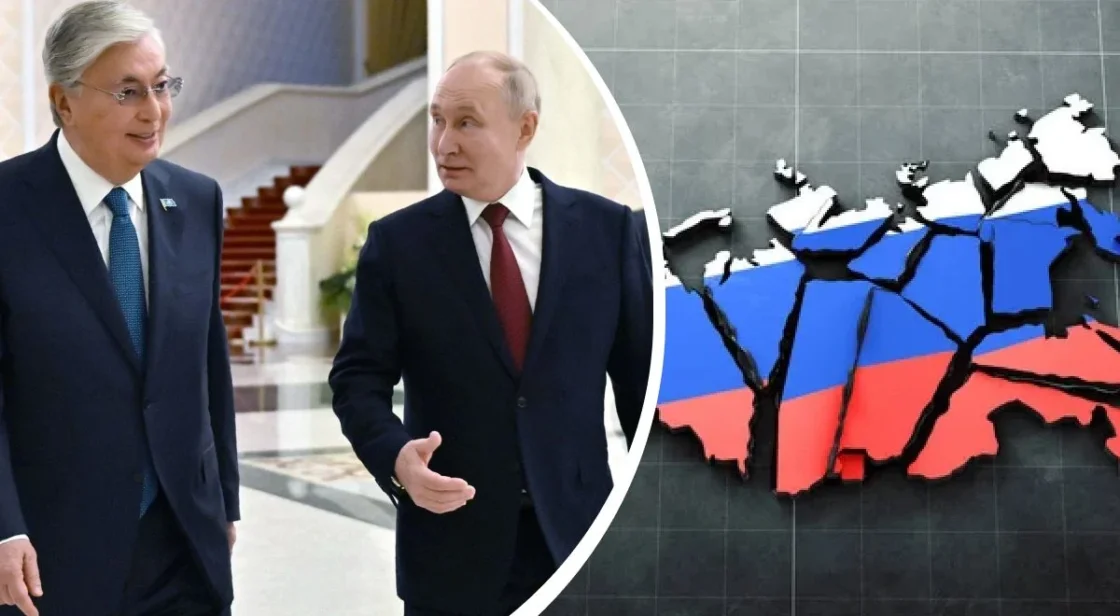
Ualikhan Kaisarov, a former member of the Kazakh parliament, said that part of Russian territories have Kazakh roots and should return to Kazakhstan. In his speech, he mentioned historical facts and listed Russian regions that, in his opinion, were inhabited by Kazakhs.
“Russia itself, Siberia, Muscovy before Hungary were Genghis Khan’s territories. The same Novosibirsk is Novai-Syvir, our Kazakh lands. Tyumen is Temen. Orenburg is Orinbor, it was the capital of the Kazakh state. Kurgan is Khurgal. Saratov is Sarytau. Isn’t Astrakhan – Astar-Khan. Not Omsk, but Ombi,” he said.
Kaisarov emphasized that these lands should be returned to Kazakhstan for the sake of historical justice.
He also noted that many of the names of these cities are adapted from Kazakh, and the Orenburg region was given to Russia in the 1920s as a gift.
According to Kaisarov, Russia, as a state with artificially formed borders, has for a long time exploited the resources of many nations and republics, particularly the Kazakhs. Some territories of modern Russia, he believes, came under its control by accident.
He also mentioned the Ukrainian Kuban, which at the beginning of the 20th century came under Russian rule but Ukrainian language traditions are still preserved there.
Kaisarov called on the Kazakhs to seek the return of historical lands.
The reaction of experts to Kaisarov’s statement
In turn, Russian analyst Anatoly Nesmiyan noted that such statements by Russia’s neighbours are a response to Russian revanchist rhetoric. In his opinion, if the Russian authorities use historical maps to justify territorial claims, then similar views may become popular among other states as well.
Nesmiyan recalled the Helsinki Act of 1975, which confirmed the inviolability of post-war borders in Europe. He also mentioned that the breakup of Yugoslavia and the Soviet Union created a “gray zone” where administrative boundaries became international state borders. Until the beginning of 2022, this principle worked, albeit with certain restrictions, but ensured peaceful coexistence.
According to the analyst, the current growth of territorial claims on a historical basis requires a review of approaches in international politics.
Nesmiyan emphasized that for stable coexistence it is important to abandon the justification of territorial claims by historical justice.
But military expert and expert Kyrylo Sazonov saw a certain role of China in such statements.
“And now let’s remember that Kazakhstan protected itself from all Russia’s claims with a very reliable “Chinese umbrella”. There are many Chinese investments in the country, great interests. And when someone in the Kremlin recklessly blurted out that “Kazakhstan is next after Ukraine”, in Beijing they gently but understandably “put a hot head on it.” Hybrid war is different. In Crimea and Donbas, the Russian occupiers were hiding behind local collaborators. In Siberia, China can formally cover itself with Kazakhstan. And then offer its platform for negotiations on a just peace,” said Sazonov.
Russia’s latest failures – what is known
According to Forbes, the Armed Forces caused serious damage to the Russian army in Kurshchyna. Over the course of six days, Ukrainian drone operators managed to find 77 destroyed armoured vehicles of the Russian Armed Forces in an area of 420 square miles.
Glavred also said that on this night, 13 November, the BpLA flew to Penza. According to Andryushchenko, at least three UAVs hit the oil and gas equipment in Montazhny at the Penza plant oil storage facilities.
Главред