


Content:
— loyalty systems.
– Russian imports in numbers.
— list by country.
What do we see on the map of supplies of weapons and components?
Blurred boundaries.
Hybrid regimes of map blurring by transnational capitals and neocolonial logics of subordination.
Flexible modulation of command networks of transnational military contractors in a state of constant war.
Networks of the global empire of military concerns and their interethnic connectivity.
Networks materialize their boundaries through details of connections, names, addresses, and logistical nuances.
The network should be treated as a process and technology with action algorithms, but not as an object.
A worldwide state of war, which blurs the distinction
between war and non-war where “war becomes the basic principle of organizing social life, and politics is only one of its instruments or embodiments” (A .Negri, M.Hardt “Empire”)
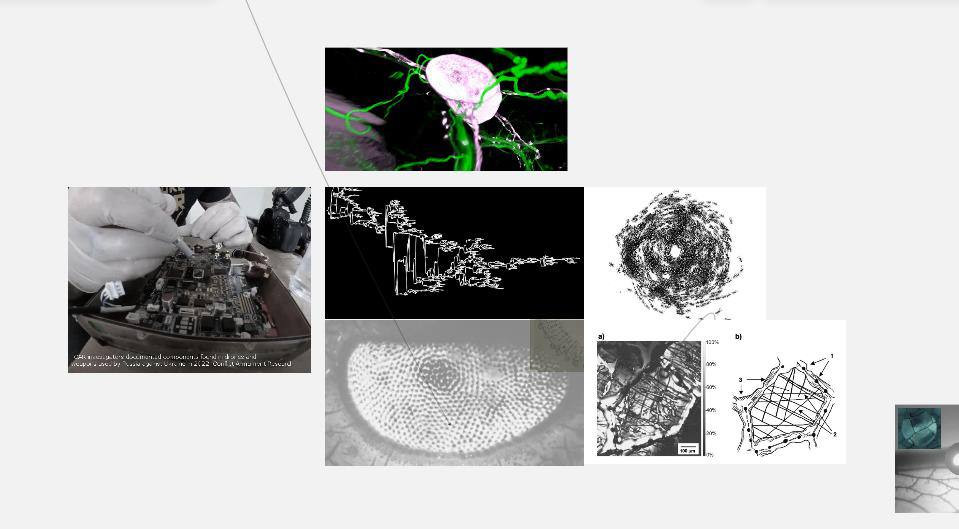
Despite the apparent political autonomy of neighbouring countries (countries that were part of the USSR: Armenia, Kazakhstan, Kyrgyzstan, Uzbekistan, Tajikistan, Georgia, Moldova, etc.), the Russian Federation continues to use its territorial neighbours as a transit zone to bypass blockages in the supply of components for the military-industrial complex (military-industrial complex). The borders of sovereign territories are being redrawn under the pressure of the diffuse space of the network of military contractors of the Russian Federation. Corrupt bypass routes for shadow imports are activated and manifested.
Shadow imports are necessary for the Russian Federation to continue replenishing supplies and servicing Military Industry
The Russian military-industrial complex is not independent and critically depends on imported components.
This primarily concerns UAVs, secure communications equipment, microelectronics and machines for manufacturing parts.
The Russian military-industrial complex is a direct successor to the Soviet one. Over the past 30 years, a very small number of new types of weapons have been put into mass production. The Russian military-industrial complex is engaged in the repair, support 1 and modernization of what was produced back in Soviet times. New types of weapons under the outer casing of the Russian Federation consist of Western components at the level of engines, optics, processors and microelectronics.
Contrary to the myths about the impressive legacy of the Soviet Union, about its developments and military production capabilities, the Russian military-industrial complex is a poorly coordinated, corrupt and not independent network of dilapidated research institutes of the Soviet period. Where import substitution of microelectronics and production methods occurs only on the stands in front of investors and the weak imagination of officials, without existing in reality.
The dynamics of the microelectronics industry and Russian developments can be traced on the archived pages of the Angstrem JSC plant (a Moscow company engaged in the design and production of electronic products and semiconductors. The company produced several integrated circuits of the Soviet era. After the collapse of the Soviet Union, in the ’90s it released a line of calculators and bank cards.) The plant, which was founded in 1963 under the name NII-336, and like the entire microelectronics industry of the Russian Federation, rapidly degraded after the collapse of the USSR 2
There is no extensive network of contractors for the military industry in the Russian Federation. Orders are distributed non-transparently within large holdings and corporations. Control over order fulfillment is also hidden deep within the opaque but poorly coordinated machine. Since 2014, a network of foreign intermediary firms has been registered and created, allowing the supply of components for the production of weapons. They, in turn, sent chips, microcircuits, etc. to military contractors – subsidiaries of the Russian military-industrial complex, whose main enterprises were already under sanctions.
The sanctions boycott policies adopted in 2022 (and earlier, in 2014) by the EU and some other countries no longer allow the Russian Federation to directly receive resources for waging war. However, the effect of sanctions 3 adopted in the field of military technologies is greatly weakened by the extension of time, the merging of civilian and military technologies and the forced loyalty of buffer countries that the Russian Federation uses. And most importantly, the Russian Federation continues to receive components thanks to the old “business as usual” corruption ties in European countries.
Part of military logistics was restructured, focusing on production in Iran, China and Turkey.
However, Western components produced in the EU countries and the USA enter the Russian Federation through Armenia, Kazakhstan, Kyrgyzstan, Belarus, and Uzbekistan.
Such cooperation and assistance in circumventing sanctions can hardly be called voluntary for the countries of the former USSR and those that have common borders with the Russian Federation.
Human resources also play an important role in the colonial logic of warfare. Taking advantage of the pressure on the former Soviet republics, the Russian Federation promises Russian passports to labor migrants from Central Asian countries for participating in hostilities. In 2023, in the Russian Federation, there were raids and police raids on migrants who had received Russian passports to serve them with military subpoenas. External colonial logics are reflected in internal politics: most of the Russian army are representatives of indigenous peoples, residents of national republics and contract soldiers from economically unprotected regions.
In Alabuga (Tatarstan), 15-year-old teenagers are forcibly recruited to assemble Iranian combat drones “Shahid” for the needs of the Russian army.
The ideas of the “Russian world” are, of course, paid for by those who were consistently exploited by the central regions and experienced genocides and ethnic cleansing by the empire.
We want to emphasize that the countries of the post-Soviet area are deliberately used by the Russian Federation since the dependent nature of relations does not create conditions for symmetrical choice or the possibility of making autonomous decisions. Using the example of Sakartvelo, it is easy to trace the connections of colonial pressure. Having endured 20% occupation of its territories by Russia, Sakartvelo does not join the EU sanctions demands, despite the high level of internal solidarity of Sakartvelo residents towards the struggle of Ukraine and even though Sakartvelo became a candidate for accession to the EU in 2023. There are many reasons for these apparent contradictions (the threat of military intervention from the Russian Federation, old corrupt ties between countries, forced cross-border cooperation, transit transactions, etc.).
Also, the fact that many post-Soviet countries are connected with the Russian Federation through forced labour migration plays a role in dependent relationships. Migrant families are fragmented by labour and trade relations and forced linguistic and cultural integration into the Russian Federation, whose exploitative logic (RF) is the reason for this migration. Financial, scientific, educational, and cultural resources were drawn and compacted around the centre (Moscow), without strengthening or developing local infrastructure, which forced people to migrate for insufficient resources, in search of work, education, healthcare and improved quality of life. The logic of capital and colonialism follow symmetrically, supporting each other.
Since the beginning of Russia’s full-scale invasion of Ukraine, the borders of post-Soviet countries have been experiencing unrest and unrest. The tension materializes in border military conflicts ( Tajikistan-Uzbekistan, Armenia-Azerbaijan ) and mass rallies demanding that local authorities stop flirting with the Kremlin. (Armenia, Kazakhstan, Georgia, Moldova).
Russia, through external agents of influence, exerts pressure and interferes in local elections, sabotaging paid rallies and riots. It threatens with economic pressure and blocks access to energy resources, forcing neighbouring countries into political deals loyal to themselves.
We observe diffraction and multiplicity in the ideas of territorial independence and state sovereignty. Logistic flows plough and redraw political and geographical maps, subjugating new territories and re-signifying them. The economic dependence and connection of the post-Soviet area with the Kremlin’s central apparatus subjugate the regional territories of the Russian Federation in the logic of the resource economy and encroaches on fragile borders with neighbouring states. Moscow is becoming a liquid and sticky substance, expanding its presence and expanding its spheres of influence into more vulnerable regions on geographical or economic grounds.
There cannot be equal and secure relations with the government of the country, which looks at the neighbouring independent state as a territory of temporarily lost attention and does not see it as a subject of its own history. Russia looks at the former republics revengefully and at the same time condescendingly. The stories of external and internal colonial conquests, genocides and deportations of Tsarist Russia, the Russian Empire and modern Russia are still covered with Bolshevik myths about the equality and friendship of nations and false oppositions to Western imperialism.
What are the goals of the full-scale Russian invasion of Ukraine?
A war intended to establish or maintain
a certain social order may not have an end. Therefore,
it includes the constant, uninterrupted
use of violence and cruelty. It
cannot be won, or, more precisely, it must be won over and over again every day. We are looking at the policy of consistent genocide and destruction of the culture of the former republic of the USSR, which dissociated itself from the xeno-hateful narratives of the “Russian world”.
The Russian Federation is not interested in new territories from the point of view of their local development. (This can be seen in the example of the occupation of Abkhazia and the subsequent abandonment of territories.) At the same time that new territories of Ukraine are being captured, the regions of the Russian Federation are rotting, numerically and economically dying off, being an operational and reproductive zone serving the centre (Moscow).
The Russian Federation does not hesitate to enter into temporary alliances to obtain weapons and organize grey oil exports with the totalitarian governments of such states as Iran, Turkey, and Azerbaijan. Azerbaijan helps to circumvent sanctions on the sale of oil and gas to the EU – by being a hub/redistribution zone and issuing gas and oil products to the Russian Federation – for the export of oil and gas from Azerbaijan. Iran and Turkey are suppliers of drones, which are then passed off as locally produced in the Russian Federation (for example, the Geranium drones used in the war with Ukraine).
Also, the Russian Federation supports and legitimizes such terrorist groups as Hamas (Palestinian), Taliban (Afghanistan) and expands its presence in African countries, participating in local military coups.
An analysis of schemes and supply channels for components for the military-industrial complex of the Russian Federation reports on many participating countries, in addition to the former Soviet republics. The Russian Federation continues to receive all necessary dual-use goods and critical elements for the production of weapons. The largest partners are also China, Turkey and Iran. The countries of Western Europe and the United States, while developing and joining sanctions, are forced not to sell parts directly, but this still does not interfere with the delivery of components to the Russian Federation.
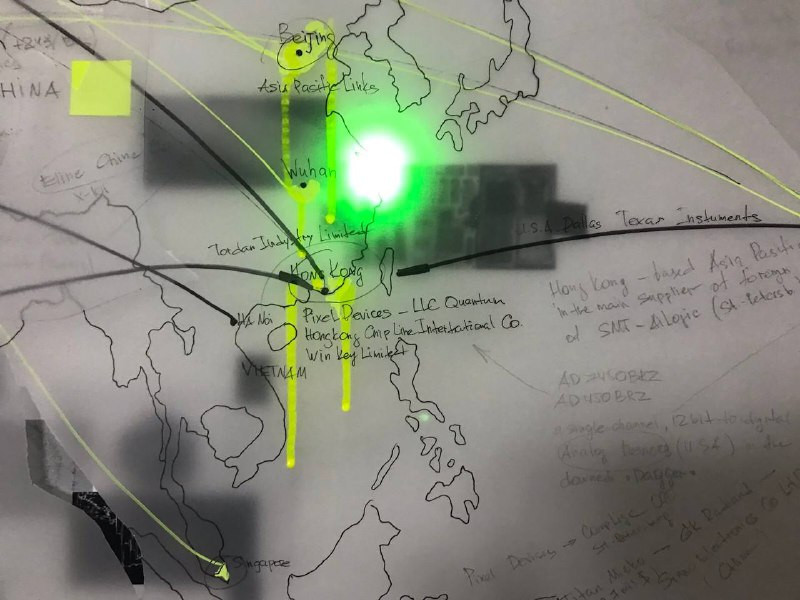
Many Western companies do not answer questions from journalists about export conditions and ways to control the use of their products.
At the moment, we see sustainable supply networks on the map that help bypass sanctions controls. If in the case of post-Soviet countries, in many ways, one can understand the situation of no choice, then the loyalty and rigidity of other countries: the UK, the USA and Western European countries (France, Germany, Austria, Switzerland) raise questions. Questions about the boundaries of expansion and the speed of geopolitical capital of the military-industrial industry.
It is not the sanctions that work poorly, but their adoption mechanisms and consistent enforcement procedures.
“The key condition defining ontological politics is its performance.” A Marie Mall
footnotes:
1.
X-101 missile – at least 53 types of electronic component base (microcircuits, chips) – foreign production. In particular, components from companies such as STMicroelectronics (Switzerland), Vicor (USA), XILINX (USA), Intel Corporation (USA), Texas Instruments (USA), ZILOG (USA), Maxim Integrated (USA) and Cypress Semiconductor (USA).
To produce the 3M-14 Caliber sea-launched cruise missiles, Russia uses at least 45 foreign components. The 9M723 ballistic missiles and 9M728/9M729 cruise missiles from the Iskander complex are equipped with at least 15 and 32 types of foreign electronic component base (ECB), respectively. And the X-47M2 Kinzhal aeroballistic missiles use at least 48 foreign components.
A chip manufactured by the world-famous American company Intel was discovered in the Russian Tornado-S rocket, in particular in the head part
In August 2022, the British Royal United Services Institute (RUSI), also examining Russian missiles, found that Russian weapons are critically dependent on Western electronics. Of the 450 unique foreign-made components, more than a quarter bore the logo of Texas Instruments and Analog Devices, two American companies.
In the first seven months of the war, Russia imported $2.6 billion worth of electronic components, at least $777 million of which were produced by Western firms, according to a joint investigation by RUSI (Royal United Services Institute) and Reuters based on Russian customs data.
In 2022, allegedly “household” chips worth about $3 billion came to Russia https://www.liga.net/politics/articles/zapadnye-tehnogiganty-pomogayut-rossii-bombit-ukrainskie-goroda-kak-eto-ostanovit
2.
https://en.m.wikipedia.org/wiki/Angstrem_(company) JSC Angstrem ( Russian: AO Angstrem) is a Moscow company engaged in the design and production of electronic products and semiconductors. [1] The company produced several Soviet-era integrated circuits. After the collapse of the Soviet Union, it released a line of calculators and bank cards in the 1990s. https://www.linkedin.com/posts/alexey-evstifeev-9288b829_zart-angstrem-analogdevices-activity-7130575077061869568-5zz- 2023: radio station #Azart virobnitstvo #Angstrem , Radio station revenge five keys cross-circuits #AnalogDevices .
2010: “The government will not allow foreign parts into defence products, cryptography and the passport system. To support Russian microelectronics, the state agreed to provide local companies with orders, even if their products are more expensive than foreign analogues. The government will support Russian microelectronics” ©
2010 :
“There is no point in creating capacities for mass production of consumer electronics and electronic components with a low intellectual component since the technological gap from the world leaders – the USA, Japan, Asia is too great. There is nothing terrible in the fact that Russia will continue to import consumer electronics from abroad – household appliances, televisions, cell phones, GLONASS navigators, bank and trade cards and other “colonial” goods (or produce abroad for domestic consumption, but according to Russian developments), – this is exactly what all countries are doing today” ©
2011 :
“Angstrom began selling equipment to Huawei”
2011 :
“Vnesheconombank renewed Angstrom-T’s credit line for 815 million euros. Former Minister of Communications Leonid Reiman may have helped reach an agreement with the bank.
The VEB Supervisory Board approved the resumption of financing for Angstrom-T, a source close to the board told Vedomosti. We are talking about a credit line of 815 million euros, which the bank allocated to this company in 2008 for the purchase of AMD licenses and equipment, as well as for the launch of a 0.13-0.11 micron microchip plant.” ©
2018 :
“U.S. sanctions targetting Russia’s nascent high-tech industry have caused a Russian microchip company significant financial problems and delayed the launch of an initiative aimed at producing substitutes for Western products, the firm’s owner said.”
President Vladimir Putin has stressed the need to develop Russia’s domestic technology industry to make it less dependent on Western equipment. But Moscow’s efforts to produce Russian microchips and other high-tech products have been hampered by US sanctions against several Russian technology companies. Semiconductor company Angstrom-T has accumulated significant debt and is about to be taken over by state development bank VEB after failing to repay a loan of 815 million euros” ©
2023
“Angstrom” was transferred under state control under the decree on state defence procurement,
it is part of the Element Group of Companies – a joint venture of Rostec and AFK “Sistema”, and “Angstrom-T” came under the control of the state corporation » VEB.RF »
2023
analysis of components by Ukrainian military experts:
“Russian radio station #Azart Virobnitstvo #Angstrom . The radio station contains five key microcircuits #AnalogDevices .” ©
What do we learn here about the global supply of components for the military-industrial complex, except about the helplessness and collapsed domestic microelectronics industry of the Russian Federation? The United States imposed sanctions in 2016 on Angstrom -T due to the annexation of Crimea in 2014, but in 2023 Angstrom -T uses microchips made in the USA.
U.S. sanctions targeting Russia’s nascent high-tech industry have caused a Russian microchip company significant financial problems and delayed the launch of an initiative aimed at producing substitutes for Western products, the firm’s owner said.
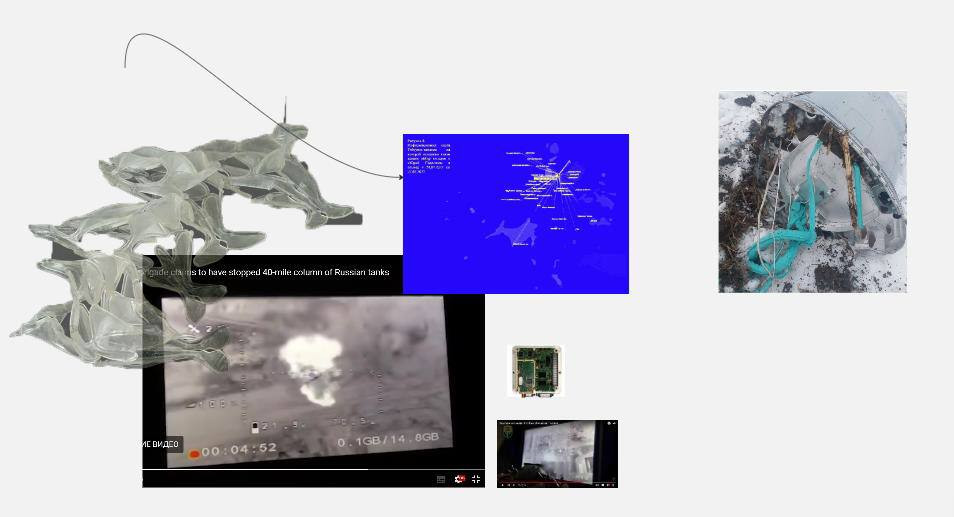
TOTAL FIGURES OF RF IMPORT:
(information collected from open sources)
The main growth in exports from the EU to the countries of the former USSR occurred precisely in goods that were subject to anti-Russian sanctions – it amounted to 95%. Exports of these goods to Russia collapsed by 71%. For example, in November 2021, the total export of these types of goods to Belarus, Armenia, Georgia, Kazakhstan, Uzbekistan and Kyrgyzstan amounted to only €500 million, and in November 2022 it tripled and amounted to €1.5 billion.
Over the last six months of 2023, Russian authorities cleared customs components from American Analog Devices Inc. for more than $98 million, Xilinx – more than $75 million, Microchip Technology – more than $42 million, Texas Instruments – at least $38 million, as well as Infineon, Germany’s largest semiconductor manufacturer – more than $28 million, according to customs data. Also imported to Russia were products from Marvell (chip manufacturer) worth more than $11 million, Cypress Semiconductor – more than $3.8 ml, and Atmel – more than $2.7 million.
The largest trading partner of the Russian Federation is China, which increased exports to Russia by $8.5 billion in 2022. compared to 2021, according to data from UN Comtrade. But in percentage terms, this is not the largest increase: here the first five places are occupied by Turkey, Armenia and the countries of Central Asia.
According to the British Royal Defense Studies Institute (RUSI), Russia has not stopped importing Western electronics. From March to October 2022, more than $2.6 billion worth of it was imported, with nearly $777 million coming from chips and components from companies such as Intel, AMD, Texas Instruments and Analog Devices.
The analysis conducted by Euromonitor experts looks even more interesting. It showed: that exports of goods from the European Union to Russia from March to November 2022 fell by 47%, and to Belarus, Armenia, Kazakhstan, Georgia, Uzbekistan and Kyrgyzstan during the same time increased by 48%, RBC reported.
Since the start of its all-out invasion of Ukraine, Russia has increased the cost of imported microelectronics to $2.45 billion, up from $1.8 billion in 2021. The International Working Group on Russian Sanctions and identified at least 1,057 foreign components produced by 155 companies in Russian weapons.
Brief information on COUNTRIES IN CIRCUMSTANCE OF SANCTIONS AND IMPORT OF GREY EXPORTS:
KAZAKHSTAN:
Although the country’s government has declared neutrality in the Russo-Ukrainian war, its trade with Russia suggests otherwise. Kazakhstan has become the main channel for supplying technology to Russia and circumventing Western sanctions. Last year, Kazakhstan’s imports from the EU grew by 89 percent, reaching 10.4 billion euros. This increase includes a significant volume of technology and equipment purchases (worth approximately €4 billion). Goods worth approximately €2.6 billion went missing, thus becoming “ghost goods”—goods that were officially purchased by Kazakhstan from the EU but never reached consumers in Central Asia.
In 2022, the EU’s trade turnover with Kazakhstan amounted to 40.2 billion euros, which is 74% more than in 2021. EU exports amounted to €10.4 billion, up 89% in 2021, while imports from Kazakhstan reached €29.8 billion (up 70% in 2021). 2021). The trade balance was €19.5 billion in favour of Kazakhstan, compared to €12.1 billion in favour of Kazakhstan in 2021.
Almost 1 billion of this amount went to technology and engineering, although Kazakhstan does not produce most of these goods. Last year, Kazakhstan sold 3.3 million euros worth of semiconductor components to Russia, although in 2021 the volume of this trade amounted to only 11 thousand euros.
Kazakh Deputy Prime Minister Serik Zhuangarin, who is also the Central Asian country’s minister of trade and integration, confirmed reports that Kazakhstan exported sanctioned dual-use technology to Russian companies that investigative journalists say are involved in supporting Moscow’s war. in Ukraine. Zhuangarin reported on June 27 that the Kazakh government is currently working to prevent the export of 104 types of goods to Russia, adding that controls have been strengthened over companies involved in such exports. Germany’s export growth is 136% with Kazakhstan.
According to the editorial source, which supplies products from China to Kazakhstan, there is a special “green” list of companies whose vehicles are not inspected: “The companies on the list are constantly changing, so it is difficult to track them. The list was compiled, in his words, “by those at the top.”
You can learn more about what is happening on the land border between Russia and Kazakhstan from this video report. The Kazakh company Aspan Arba sent more than 500 drones to Russia in 2022. It was registered in Kazakhstan after the start of the war – in April 2022. The industry portal Metalmininginfo reported that Aspan Arba will be the official dealer of DJI drones in Kazakhstan and will supply helicopters for the mining industry, “construction, power generation, search and rescue operations and agriculture.”
According to data from the Ministry of Digital Development, Defense and Aerospace Industry of Kazakhstan, Aspan Arba received a license to import 18 thousand DJI drones worth $45 million. The exporter is DJI Europe BV, a Dutch subsidiary of a Chinese company. Aspan Arba sent 500 drones to Celestial Mechanics in Russia.
“Aspan arba” can be translated from Kazakh as “heavenly carriage”. But not only the names of the Kazakh and Russian companies are similar. “Celestial Mechanics” is owned by Ilya Goldberg – the same name as the founder of “Aspan Arba”. The current director of Aspan Arba, Mikhail Sapozhnikov, was previously a co-owner of Celestial Mechanics along with Goldberg. The telephone numbers listed on the Aspan Arba website in the data leak of the courier company SDEK appear as the telephone numbers of an employee of Celestial Mechanics. Who else purchased drones from Celestial Mechanics?
In April 2022, DJI Mavic 2 drones worth a total of 11 million rubles were purchased from Celestial Mechanics by the Moscow regional Federation of armed conflict veterans “Lynx”. Its founder and the only board member listed on the website is Special Forces Lieutenant Colonel Andrey Mezhevykh.
The largest buyer of Celestial Mechanics in 2022 – early 2023 was the DJ Ars Moscow company, which received goods worth almost 500 million rubles. “DJ Ars” under the Digbox brand sells drones and other equipment on Ozon.
In 2022 and early 2023, Elix-st sent Da Group to Kazakhstan more than $800 thousand worth of components, including products from such manufacturers as Analog Devices, Infineon, Texas Instruments, and STMicroelectronics, which claim that they no longer cooperate with Russia. Da Group, in turn, sends components to Russia, mainly to Stack companies. Thus, in January 2023, Da Group received 2598 Onsemi brand integrated circuits from Elix-st from Germany. In the same month, 2,598 microcircuits from Germany were sent by Da Group to Stack in Russia. At the same time, in 2018–2021, that is, before the war, Elix-st did not import goods to Kazakhstan at all (and, on the contrary, imported them to Russia).
How did Stack obtain the necessary components?
In the suburbs of Stuttgart, one of the most important industrial centres in Germany, the office of the Elix-st company is located. It is owned by Russians – Evgeniy and Elena Chernet. In Russia, they own a company with a similar name, Elix-M. And in Astana, Kazakhstan, the company Da Group 22 was registered in March last year. Its owner and director is Alexander Chernet.
In 2022–2023, Stack imported $4.2 million worth of components (integrated circuits, diodes, transistors and others) from Kazakhstan. Customs data does not contain information about which manufacturers’ products it was, however, there is information about the countries of origin of the goods – these are Hong Kong, Germany, the Netherlands and Singapore.
Among Stack’s clients, the website mentions the special design bureau MPEI, a developer of radio engineering systems as part of Roscosmos, and the Moscow Searchlight Plant, a manufacturer of power supply systems for Russian missile systems.
Another company importing American microelectronics to Russia is the Russian Prime-Ek. In particular, through Kazakhstan in 2022-2023, it imported components worth $3.1 million. Prime-ek itself is not particularly well-known, but it has a partner with a similar name – Prime, to which Prime-ek supplied in 2022, electronic components worth more than 100 million rubles. Their offices were located in the same building, and the contact phone number listed on the Prime website appears in the data leak of the SDEK courier service as a Prime-ek phone. Last year, the Penza production association Elektropribor became one of Prime’s largest clients, part of the Avtomatika concern of Rostec. It produces communications equipment for the Ministry of Defence, such as the P-240I complex, which the Russian military in Ukraine uses for field communications.
But on one day in December 2022, a Kazakh firm called EltexAlatau exported more than 100 shipments of dual-use electronics to Russia.
Global computer imports into Kazakhstan rose sevenfold to $1.2 billion in 2022 from the previous year, including $310 million from the EU. Meanwhile, Kazakhstan’s exports to Russia in this category grew more than 2,300 times compared to the previous year and amounted to almost $300 million.
Meanwhile, Kyrgyzstan did not import or export any aircraft, helicopter or drone parts in 2021, according to UN trade data. But in 2022, Kyrgyz firms imported $3.5 million worth of such parts—mostly from the United States— and exported $1.5 million worth to Russia.
KYRGYZSTAN
:
In 2022, the total volume of imports of goods into Kyrgyzstan increased from 5.5 billion US dollars to 9.6 billion US dollars, an increase of 72.6% compared to 2021. Of these, imports of “machinery, equipment and apparatus” increased from $770 million to $1.6 billion, or more than 2 times, while exports of “machinery, equipment and apparatus” almost doubled – from $101 million to $197 million.
Russia is Kyrgyzstan’s second largest trading partner after China, accounting for 27.4% of Kyrgyzstan’s total trade turnover with all countries. Kyrgyzstan’s foreign trade turnover with Russia in 2022 increased by 40.3% compared to 2021, while exports from Kyrgyzstan to Russia increased by 245% from US$393 million to US$963 million in 2022. Russia is the largest export destination for Kyrgyzstan with a total share of 44.1%, making Kyrgyzstan economically dependent on Russia.
Exports from Kyrgyzstan increased by 250% and exceeded $960 million. At the same time, some goods (such as rifle scopes) were not previously supplied by Kyrgyzstan to Russia.
Following Russia’s invasion of Ukraine, German exports to Kyrgyzstan skyrocketed by 994%, reaching €170 million.
For example, Cas Impulse (the first detonator plant in Central Asia) supplied 661 thousand detonators to Russia in January–April 202023. The plant itself produced at least 19.6 thousand of them, the rest may have been shipped from China. The recipient was ORICA CIS, part of the Evoblast group – a Russian manufacturer of industrial explosives and initiation systems for the mining and construction industries.
None of the Cas Impulse supplies are reflected in the official statistics of Kyrgyzstan. It is difficult to estimate how many other similar shipments have “disappeared” from the reports.
Kyrgyzstan did not import any aircraft, helicopter or drone parts in 2021, according to UN trade data. But in 2022, the country imported $3.5 million of such products—mostly from the United States—and exported $1.5 million to Russia.
Kyrgyzstan exported 115,920 electric detonators to Russia worth $882,400 in 2022, although it made no shipments in 2021. Electric detonators are used in the production of anti-personnel and anti-tank mines. Kyrgyzstan, for its part, imported 193,536 electric detonators from Canada in 2022, worth $3.7 million. There is reason to believe that Kyrgyzstan re-exported Canadian-made electric detonators to Russia.
Exports of military equipment for radar, radio navigation and remote control in 2022 amounted to US$169,800, an increase of 60% compared to 2021.
The volume of optical sights (for weapons) exported from Kyrgyzstan to Russia in 2022 amounted to 199,700 US dollars, which is 13 times more than in 2021.
Supplies of spare parts for airplanes, helicopters and unmanned aerial vehicles from Kyrgyzstan to Russia grew from zero in 2021 to $1.5 million in 2022.
Campaigns:
- Tro.Ya – for supporting the military sector of Russia.
- RM Design and Development has made hundreds of shipments of semiconductors, electronic integrated circuits and capacitors.
- GTME Technologies, according to the US Treasury Department, supplied tantalum capacitors and electronic integrated circuits to Russia.
- Progress Leader supplied some goods to the Russian company Siaisi, which mainly sells electronics, and Cargoline supplied sanctioned goods worth $1 million to Russia. In particular, optical equipment and computers.
- aviation spare parts for Boeing and Airbus.
Weitmann Handeln Allianz imported Swiss equipment from Essemtec in 2022.
ARMENIA:
Armenia’s exports to Russia increased by 187% in 2022 and reached $2.37 billion.
The document, stamped by the US Bureau of Industry and Security, states that in 2022, Armenia imported 515 percent more chips and processors from the United States and 212 percent more from the European Union than in 2021. At that time, Armenia exported 97 percent of these chips and processors. the same products to Russia, the document says.
In another document, the Bureau of Industry and Security identified eight categories of chips and components considered critical to Russian weapons development, including one called a programmable gate array that was found in one model of the Russian Kh-101 cruise missile.
One of the documents stamped by the US Bureau of Industry and Security states that in 2022, Armenia imported 515% more chips and processors from the US and 212% more from the EU than in 2021, the article notes. “Armenia then re-exported 97% of the same products to Russia”
German exports to Armenia increased by 172%
Total trade volume for January-August 2023 exceeded $4.16 billion, a record high since the collapse of the Soviet Union. Exports from Armenia to Russia during this period amounted to $2.3 billion and for the first time exceeded imports, which amounted to $1.86 billion. Vietnam’s
exports to Armenia grew by 380 percent, while exports from Mexico grew by 324 percent, and from Japan by 252 percent. Citing a document from the US Bureau of Industry and Security, the New York Times recently reported that in 2022, Armenia “imported 515 percent more chips and processors from the United States and 212 percent more from the European Union” than in 2021. Armenia then exported 97 percent of the same products to Russia.
Campaigns
: Tako LLC from Armenia (under sanctions)
TAJIKISTAN:
German exports to Tajikistan increased by 154%
GEORGIA:
German exports increased by 92% with Georgia
MOLDOVA:
Since the beginning of the war, the Moldavian Max Jet Service has sent 0.5 billion rubles worth of aircraft parts to Russia, including for Boeing and Airbus. Founder of Max Jet Service Sergey Ranga https://istories.media/stories/2023/09/12/pochemu-samoleti-v-rossii-vse-yeshche-letayut/?ref=en.thebell. io
UZBEKISTAN :
MVizion imported equipment and microcircuits for one of the contractors of the Lancet manufacturer
In contrast to the personal sanctions against Usmanov imposed last year by the United States, European Union, Britain and Switzerland, the Treasury only mentioned that London had joined in more targeted sanctions against USM Holdings.
While most of USM’s largest assets are in Russia, the move also targeted Akhangarancement, Uzbekistan’s largest cement company, and Digital Invest, a company that, according to the private Uzbek news site Gazeta.uz, owns a stake in telecommunications concern Ucell and “manages the labeling system” in Uzbekistan.
COUNTRIES CONTINUING TO SERVE THE RF MIC:
SWITZERLAND:
Neural Networks for the Ministry of Defence :
The family of the head of Roscosmos, Yuri Borisov, who previously oversaw arms purchases at the Ministry of Defence and as Deputy Prime Minister of the Government, controls the defence contractor JSC STC Modul. In particular, the Ministry of Defence purchased a neural network accelerator developed by the Scientific and Technical Center “Module”. Module purchases electrical equipment in Switzerland, from E-tec Interconnect AG. The Swiss company CODERE continued to supply equipment to the sanctioned Elektromashina plant in Russia, which produces components for Russian tanks. It was purchased for 155.5 million rubles through an intermediary, the Galika-CTS company. GF Machining Solutions.
In 2018, OJSC In 2017, the Izhevsk Mechanical Plant in Udmurtia purchased an AgieCharmilles CUT 20 P electrical discharge machine from the Swiss GF Machining Solutions for 169,648 euros. https://informnapalm.org/en/how-companies-from-switzerland-italy-and-germany-help-russia-circumvent-sanctions-to-produce-weapons/
Swiss manufacturer Fritz Studer AG also cooperates with Russia. In 2018, the company supplied two Studer S21 CNC universal cylindrical grinding machines to the largest aviation and space engine manufacturing enterprise in the Russian Federation, PJSC Kuznetsov in Samara. This cost more than 316 million rubles.
By order of the Ministry of Defence of the Russian Federation, Kuznetsov produces engines for the Tu-160 “White Swan” strategic bombers, deeply modernized Tu-160M, Tu-95MS aircraft and long-range Tu-22M3 aircraft. Now the Russians are actively using all these aircraft in the war in Ukraine.
In 2019, the Swiss manufacturer fulfilled an order from the only company producing missiles for the S-300 and S-400 anti-aircraft systems – MMZ Avangard JSC (Moscow). Russian forces near Kharkiv used these weapons—S-400 and S-300 anti-aircraft missile battalions—in April 2022.
A Russian client received from a Swiss company a precision CNC cylindrical grinding machine with the function of processing external and internal threads S30 worth more than 382,000 euros. The instrument design bureau in Tula received equipment worth more than 722 million rubles from the Swiss company GF Machining Solutions. In particular, the Russian company purchased 23 MIKRON HPM 600HD milling machines, 12 MIKRON HEM 500U milling machines, 1 AgieCharmilles FORM 20 stamping machine and a MIKRON HRM 1150U milling machine.
This Russian company develops weapons. For example, the Bureau produced the Pantsir anti-aircraft missile and gun systems, which Russia is using in the war against Ukraine.
In 2018, the Swiss manufacturer Sylvac SA sold Russians an optical measuring system model Scan 52 worth almost 3 million rubles. The customer is JSC Novosibirsk Ammunition Plant, which produces cartridges for small arms, including 7.62×51 caliber.
The Tochnost sniper rifles that the Russian National Guard was armed with in 2017 are of this caliber. According to Reuters, a special unit of the Russian National Guard “Vityaz” operated in Bucha. So, this Swiss company also contributed to the tragedy.
Swiss shell company Galika AG. The director of this company is Lino Derungs, a Swiss citizen. However, it has been doing business in Russia since the early 1990s.
SwitzerlandIn 2019, journalists discovered that the company was supplying equipment for the production of Kalashnikov assault rifles to Venezuela. However, Swiss officials turned a blind eye to this fact.
“In 2012, Galika AG from Volketswil in the canton of Zurich supplied machines for the production of AK-103 assault rifles worth several million Swiss francs. The plant in the city of Maracay should be operational by the end of 2019 and will produce 25,000 Kalashnikov assault rifles per year.
The export ban did not apply to equipment sold by Galika AG. This is because the equipment did not fall under the category of military equipment and was not considered so-called dual-use goods. We are talking about those machines that can be used for military purposes.
NETHERLANDS
Woerd-Tech exported at least $1.2 million worth of Texas Instruments and Analog Devices chips from March to November 2022. Among its partners, in particular, was a Russian company that supplied electronic components to a plant producing electronic warfare equipment.
Kudryavtsevordered goods, and repacked them as if to be sent to the Maldives, but the real recipient was Russia.
https://theins.ru/politika/264391
HUNGARY
Hungarian company Aluminiumarugyar Zrt. sells gas containers to the Russian enterprise Rusbal, a manufacturer of inflatable models for the army. https://theins.ru/ekonomika/261733
AUSTRIA
Components for warship engines:
Other buyers of products from Europe are oligarchs Iskandar Makhmudov and Andrey Bokarev. They control JSC Kolomensky Zavod, which supplies the Ministry of Defence with diesel engines for warships. Parts for D500 type engines are sold to Kolomensky Zavod by Sipavag AG from Switzerland, D. Kudarauskienes Warehouse from Lithuania and Geislinger GmbH from Austria. https://theins.ru/ekonomika/261733
It is based on D500 diesel engines that the company produces engines for the Navy. Kolomensky Zavod receives coil springs from Germany, from Heinrich Eibach GmbH. Safety valves are from HOERBIGER Wien GmbH from Austria. Engine parts of type D49 – from Piston Ring Manufacturer Prima from Poland.
https://theins.ru/ekonomika/261733
The Russian medium-range attack UAV “Orion” (item 90) is equipped with an Austrian Rotax 914 power plant with a power of 86 kW manufactured by BRP-Rotax GmbH & Co KG, a subsidiary of the Canadian Bombardier Recreational Products.
Also, the Austrian company Diamond Aircraft Industries not only supplied, but also localized production in Russia of light aircraft DA42M-NG, which are used for the needs of the FSB.
https://site.ua/alexander.kovalenko/sankcii -rakety-i-korrelyaciya-i7xmrjg
One of the main suppliers of Unimatik (and through it, the manufacturer of tank guns Plant No. 9) is EMCO GmbH from Hallein. The company supplies the Russian defence contractor with turning pulleys and brackets, clamping rings, timing belts and the actual machines.
Austrian EMCO and Unimatic are long-time partners. They even launched a joint production. The Emko-Rus company, in which EMCO GmbH has 65% of the capital, and Unimatik has 35%, still operates in Yekaterinburg. https / /theins.ru/ekonomika/267552
Weapons and ammunition
According to the EU working group COARM, Austria continued to export weapons to Russia after 2014. In the period up to 2020, “smoothbore weapons of calibre less than 20 mm, other weapons and automatic weapons of 12.7 mm calibre” were exported, as well as “ammunition and fuze mounting devices and specially designed components.” Altogether it had an export volume of almost 19 million euros.
Pistols from the Austrian manufacturer Glock , Steyr Arms and automatic rifles like AR-15 https://correctiv.org/top-stories/2023/11/07/deutsche-waffen-fuer-russland/
POLAND
Engine parts of type D49 – from Piston Ring Manufacturer Prima https://theins.ru/ekonomika/261733
ESTONIA
Night vision devices https://www.krone.at/2657939
St. Petersburg JSC Lomo is a manufacturer of optical systems for the Navy, Space Forces and Ground Forces. For example, night vision sights “Mowgli-2” and “Mowgli-2M” for man-portable anti-aircraft missile systems. The Krasnopol high-precision (guided) projectiles are also equipped with a semi-active homing head developed by Lomo. During the war with Ukraine, Krasnopol proved itself so well that the production volume of such shells in 2022 increased several times.
Lomo’s supplier from Europe, the Estonian Elsorel OU, supplies glue, fibreglass laminate, organic decomposition lamps, aluminum nitrate and silver in the semi-processed form to the Oryol company Proton-Electrotex. It is affiliated with Proton JSC, a large manufacturer of optoelectronics in Russia. To understand that Proton works for the military industry, just go to its website. Among the partners are the corporations Rostec, Almaz-Antey and Tactical Missile Armament https://theins.ru/ekonomika/267552
Marker Nordic Ou. A company from Tallinn supplied a Russian defense contractor with fibre optic bundles, industrial glue, etc. https://theins.ru/ekonomika/261733
From January to May 2023, the Estonian company Elmec Trade OU sent at least $250 thousand worth of prohibited electronics to Russia. https://verstka.media/rassledovanie-kak-v-rossiyu-popadayut-lyubye-sankcionnie-tovary#25
Elmec Trade from Estonia. The company exported approximately $2 million worth of microchips from Texas Instruments and Analog Devices from March to November 2022, attracting intense international attention. In May 2023, the American Treasury Department imposed sanctions against Elmec Trade and its Russian partners – Kvazar LLC and Spetsvoltazh LLC
Idatrading, in 2022, supplied $50 thousand worth of Analog Devices microcircuits to Russia, which amounted to record revenue for the entire period of its existence. https://theins.ru/politika/264391
Gold Solution OU and Leolart.com transport Italian goods from Tallinn for Pumori North-West, and Alekon OU provides warehousing services. – provide logistics and transport services, supplying Russian defence contractors with products from European manufacturers. https://theins.ru/ekonomika/267552
Elmec Trade Oü, an electronic components wholesaler based in the Estonian capital Tallinn, shipped at least $17 million worth of goods to Russia between April 1 and October 31, according to Russian customs data. These included chips made by Analog Devices and other American manufacturers, records show. https://www.reuters.com/investigates/special-report/ukraine-crisis-russia-tech-middlemen/
Sumar Tools OU supplies foundry models and core boxes of its production for Invest-Stanko LLC from Khimki. This company located near Moscow provides machine tools to JSC Plant No. 9, an enterprise part of Rostec, which is responsible for the production of barrel artillery systems. Among the key products are guns for T-72 and T-90 tanks. It was also reported that this plant produced guns for the Armata https://theins.ru/ekonomika/267552
During the war, Meconet OY supplied copper tape and parts for semiconductor devices to JSC TD Proton-Electrotex. This company is affiliated with Proton, which, in addition to state contracts with VOMZ, works for Rostec, Almaz-Antey and Tactical Missile Armament and does not hide it. https:// theins. ru/ekonomika/267552
LATVIA
Riga’s Baltic Machinery supplied O-rings, couplings and other goods to Ekaberinburg’s Unimatik until it was recently liquidated. In this case, a customs warehouse in Vilnius of the Lithuanian UAB Didneriai was used. https://theins.ru/ekonomika/267552
The Russian airline “I Fly” bought aircraft parts from the Lithuanian Right Direction Aero – spare parts from European and American manufacturers, including Boeing, for more than 145 million rubles.
Director and owner of Right Direction Aero – Pavel Chalapov
V Customs databases indeed indicate that the Lithuanian Right Direction Aero sold I-Fly goods on behalf of Cargoline. It seems that according to the documents, the spare parts were going to Kyrgyzstan, but in reality, they were going to Russia.
https://istories.media/stories/2023/09/12/pochemu-samoleti-v-rossii-vse-yeshche-letayut/?ref=en.thebell.io
UAB Elfanta participates in the export of washers and plugs for lathes of Austrian origin to Unimatika (ROSTECH).
CZECH REPUBLIC
Aircraft parts
In particular, the Apram Aerospace company from the Czech Republic supplied aircraft parts to Air Fly and other Russian companies both before and during the war. Apram Aerospace has been on the market since 2012, the owners of the company are Czech citizens Alena Šimečkova and Milan Kočan. In her LinkedIn profile, Šimečková indicated that she worked for Kočan’s other Czech company, also involved in the supply of aircraft parts, Job Air Logistics. https://istories.media/stories/2023/09/12/pochemu-samoleti-v-rossii-vse-yeshche-letayut/?ref=en.thebell.io
FRANCE:
Fuses for “Grads” and “Smerches”
During the war, the French company Marchante supplied the Russian arms company Kurganpribor with technical products. https://theins.ru/ekonomika/261733
Chips for GLONASS
JSC Information Satellite Systems (ISS) is one of the largest contractors of the Roscosmos state corporation. ISS carries out orders for the development and production of spacecraft as part of the development of the GLONASS navigation and positioning system and the Gonets-M satellite communication system in the interests of the Ministry of Defence. GLONASS plays an important role in ensuring the combat effectiveness of the Russian Armed Forces: the system is used in high-precision weapons, unmanned aircraft, and at the level of operational command and control of troops. In 2022, 9 spacecraft for various purposes (including military and dual purpose) produced by ISS were launched into orbit.
“ISS” is only under US sanctions. Therefore, it can freely import switches from Europe that are used in the microcircuits of on-board missile control systems. The supplier is Radiall SA from France. https://theins.ru/ekonomika/261733
parts:
For several years, the French company ECA Group has supplied unmanned Inspector Mk 2 boats and Seascan Mk 2 mine defence underwater vehicles to the Russian Sredne-Nevsky Shipyard JSC,
French Inspector Mk 2 systems from ECA Group have been integrated and are used by the Russian Navy minesweepers of Project 12700 “Alexandrite”
Russian Su-30SM fighters were equipped with head-up displays (HUD) produced by the French company Thales HUD 3022
https://site.ua/alexander.kovalenko/sankcii-rakety-i-korrelyaciya-i7xmrjg
humanitarian aid to Russian troops:
Auchan chain of stores in the Russian Federation: Auchan did not limit itself to its stores in St. Petersburg in supplying the occupation forces. This is evidenced by the fact that deliveries were coordinated with the Moscow office, and that collection of aid in shopping centres owned by Auchan was also reported in other regions. For example, in Samara, Rybinsk and Vladimir, collection points for “humanitarian aid for Donbas” were opened in Auchan stores. https://theins.ru/en/politics/259460
nuclear fuel:
The nuclear fuel production plant in Lingen, part of the French Framatome group, Uranium
dioxide is planned to be transported to the company MSZ Machinery Manufacturing, a joint stock company (MSZ JSC), part of the Russian state corporation Rosatom ” Rosatom is a military-civilian conglomerate with no clear dividing lines. As noted in a new newsletter by alternative Nobel laureate Vladimir Slivyak, published on air on behalf of, the Russian state-owned concern is directly and indirectly involved in the war against Ukraine – far beyond the occupation of the Ukrainian nuclear power plant in Zaporizhzhia. https://www.ausgestrahlt.de/presse/uebersicht/geplante-uranexporte-von-lingen-nach-russland-vers/
ITALY:
Body armour
The manufacturer of body armour for security forces and the military, JSC NPP “CLASS”, imported a cutter from Italy. Supplier: Minelli Carmello . https://theins.ru/ekonomika/261733
FOOTWEAR FOR MILITARY
Donobuv also supplies shoe glue from Germany (sender – Jakob KECK Chemie GmbH ) and leather ( Salamander SPS GmbH & Co. KG ), and imports soles from Italy ( Tacchificio Campliglionese ).
Both the Italians and the Germans continued supplies to Donobuva after February 2022. During the war, Salamander also sells leather to another Ministry of Defense contractor, Faraday Company JSC . https://theins.ru/ekonomika/261733
Machines and components:
In May 2023, Unimatic (the company imported machines from Italian O.M.V. and German Arinstein worth at least $5 million to Russia) brought milling machines. They were sent from Italy by O.M.V. Officine itself, even though this particular type of product is also under the export control of the European Union. One of Unimatika’s main government customers is Plant No. 9, Russia’s leading manufacturer of tank guns.
2019, the Italian manufacturer Hexagon Metrology SpA sold a Micra Hexagon Metrology coordinate measuring machine worth more than 171,000 euros to the Russian JSC Izhevsk Electromechanical Plant KUPOL. KUPOL supplies the Russian Ministry of Defence with Tor air defense systems, which the Russians are actively using in the war against Ukraine. https://informnapalm.org/en/how-companies-from-switzerland-italy-and-germany -help-russia-circumvent-sanctions-to-produce-weapons/
MTSRL from San Giovanni in Marignano (Rimini) – Spare parts for machines “IPK Finval” – ROSTEC supplier for Uralvagonzavod, – T-90M “Breakthrough” (tank). https://theins.ru/ekonomika/267552
Norblast SRL from Bologna.- imported the shot blasting plant LLC “Pumori-North-West” from St. Petersburg(is a defence supplier of metalworking machines for both VOMZ and the corporation “Tactical missile weapons”)
During the war, Pumori North-West purchased steel needles, filter cartridges, shut-off valves, polymer rings and other components from CMSSPA from Zogno (Bergamo). From Devco SRL. (Paderno Dugnano, Milan) – milling machines for metal processing (delivery amount in December 2022 amounted to 50 thousand euros). A Russian defense contractor purchased an automatic machine for washing metal products from the Magido Group from Trezzano sul Naviglio. https://theins.ru/ekonomika/267552
GERMANY
FOOTWEAR FOR MILITARY
” Donobuv” also supplies shoe glue from Germany (sender – Jakob KECK Chemie GmbH ) and leather ( Salamander SPS GmbH & Co. KG ), and imports soles from Italy ( Tacchificio Campliglionese ).
Both the Italians and the Germans continued supplies to Donobuva after February 2022. During the war, Salamander also sells leather to another Ministry of Defense contractor, Faraday Company JSC . https://theins.ru/ekonomika/261733
Ammunition
From the Thuringian company Merkel Hunting and Sporting Weapons Ltd., ammunition manufacturers Nammo Schönebeck, RWS and Ruag Ammotech, as well as Eben Blaser from Allgäu. https://correctiv.org/top-stories/2023/11/07/deutsche-waffen-fuer-russland/
Machine tools for rockets
Moscow Stan LLC is a developer of modern machine tools with numerical control, part of the Rostec state corporation. Although Rostec is under sanctions, the German company Vansped Logistics (on behalf of Reißaus & Baumberg Maschinenbau GmbH ) supplied Stan with technological equipment for foundry production after the start of the war. According to the ImportGenius database, deliveries were made in July 2022.
According to the government procurement analysis database, Stan LLC concluded 125 contracts totaling more than 14 billion rubles. Among the counterparties are:
- PJSC “ODK-Kuznetsov” – produces engines for the Tu-160M strategic missile carriers;
- JSC Research and Production Corporation Uralvagonzavod is the only developer and manufacturer of tanks in Russia;
- JSC NIKIET is the leading organization for the dismantlement of nuclear submarines;
- JSC Admiralty Shipyards is the main centre for the production of non-nuclear submarines;
- JSC Concern Marine Underwater Weapon-Gidropribor is a manufacturer of torpedoes and sea mines;
- JSC “Corporation “Kometa” is part of the Almaz-Antey aerospace defence concern (ASD), and is engaged in the creation of the space echelon of the Russian aerospace defence system. https://theins.ru/ekonomika/261733In 2018, the largest manufacturer of aircraft engines in the Russian Federation, PJSC ODK-UMPO (Ufa, Bashkortostan), received a WALTER HELITRONIC MINI POWER universal grinding machine for more than 81 million rubles. from the German company Walter.
By the way, in 2018, ODK-UMPO began developing an engine for the SU-57 fighter. In May 2022, Russian propagandists boasted of testing fifth-generation Su-57 fighter jets in the war against Ukraine.
In 2019, JSC NPP Kaluga Instrument-Making Plant Typhoon received a TNA 400 lathe worth 260,000 euros from the German manufacturer Index Traub. The Russian enterprise produces radar stations for surface ships of the Russian Navy and coastal missile systems. The Bal coastal missile system, equipped with anti-ship cruise missiles, is produced here. It is used to shell Ukraine from Crimea.
In the same year, the Russian JSC Chepetsk Mechanical Plant (Glazov, Udmurtia) received a Planomat HP 412 CNC profile grinding machine for more than 41 million rubles from the German manufacturer Blohm Jung GmbH.
The Chepetsk Mechanical Plant is part of Rosatom, whose employees took part in the seizure of the occupied Zaporizhzhia nuclear power plant. The enterprise also occupies one of the most important places in the technological cycle of nuclear fuel production based on natural uranium.
The German company Blohm Jung GmbH expressly states on its website that it is part of the United Grinding Group with specialized subsidiaries for the international markets in India, China, Russia and the USA.
https://informnapalm.org/ en/how-companies-from-switzerland-italy-and-germany-help-russia-circumvent-sanctions-to-produce-weapons/
Another example is the German company WWsemicon. Until 2015, its owner and director was Vladimir Avetisyan. This same person, as follows from Russian judicial acts, controlled the company Kompel JSC. Before the war, Kompel JSC was the official distributor of Texas Instruments products. As customs data show, from March to November 2022, WWsemicon imported Texas Instruments and Analog Devices chips worth more than $1.6 million. Its almost exclusive Russian partner was JSC Kompel, which also received government orders from military enterprises. https://theins.ru/politika/264391
WTO Werkzeug-Einrichtungen GmbH is a supplier to several Russian defence contractors. It sends parts for lathes to OTS-Technologies LLC in Yekaterinburg, and OTS-Technologies sells tools to Plant No. 9 and Uralvagonzavod.
WTO Werkzeug-Einrichtungen supplies tool blocks to the Penza LLC TD SMS, which is affiliated with Stankomashstroy LLC, which supplies machines to Rostec.
Another importer of WTO Werkzeug-Einrichtungen products is the Unimatic company, also a contractor of Plant No. 9. https://theins.ru/ekonomika/267552
Last November, Oxapa GmbH from the city of Jena supplied blanks from optically processed glass to LLC NPK Makrooptika from Ryazan. This is one of the leading Russian manufacturers of optical-mechanical systems for aviation and military equipment, a contractor of VOMZ, other structures of Rostec, as well as the FSB, the Ministry of Defence and Tactical Missiles https://theins.ru /ekonomika/267552
Rudi Gebel Gmbh & Co. Kg from Helmbrechts supplies parts for the assembly of power semiconductor devices to the same Oryol Proton, which imports products from Estonia, and then supplies military enterprises with optoelectronics. https://theins.ru/ekonomika/267552
TURKEY:
radio electronics
of the Turkish Turkik Union And Dijital Teknoloji, which supplied Radiopriborsnab* with components worth $24 million in 2022, is managed by Mustafa Cankat Aytek. https://istories.media/stories/2023/01/25/zapad-zapretil-prodavat-rossii-komplektuyushchie-dlya-proizvodstva-oruzhiya-no-rostekh-ikh-uspeshno-pokupaet/
Azu International, co-founded by Turkish businessman Gokturk Agvaz, has stepped in to help fill the supply gap. Over the next seven months, according to Russian customs data, the company exported at least $20 million worth of components to Russia, including chips from American manufacturers.
Azu International is an example of how supply channels to Russia remained open despite Western export restrictions and manufacturer bans. In the seven months to October 31, at least $2.6 billion worth of computers and other electronic components arrived in Russia, Russian customs data shows. At least $777 million worth of these products were produced by Western firms whose chips were found in Russian weapons systems: US Intel Corp, Advanced Micro Devices Inc (AMD), Texas Instruments Inc. and Analog Devices Inc., as well as Germany’s Infineon AG.
One Russian importer, Fortap LLC, based in St. Petersburg, was created by a Russian businessman in April and has since imported at least $138 million worth of electronics, including computer parts from the United States, according to Russian customs data. They show that one of the largest suppliers of Fortap is the Turkish company Bion Group Ltd Sti
https://www.reuters.com/investigates/special-report/ukraine-crisis-russia-tech-middlemen/
Azu International – It was founded in March 2022 in Istanbul. Its co-founder is Turkish businessman Gokturk Agvaz, who also runs the German Smart Impex GmbH. Both structures specialize in the supply of IT products.
Within a week of its establishment, Azu International began shipping goods to Russia. During the first seven months of its operation, the company, according to the agency, exported components worth at least $20 million to the country, including American-made chips. https://www.bbc.com/russian/features-65234429
CHINA
Radio electronics
Hong Kong-based Tordan Industry Limited belongs to the director and owner of the Saratov VMK Dmitry Rebus. Last year it imported almost $30 million worth of components to Radiopriborsnab* in Russia.
Testkomplekt has many Chinese suppliers and dozens of companies from both Hong Kong and mainland China. The largest of them is the Hong Kong-based United Electronics Group Company Limited, owned by a man named Yuri Zhukov.
* “Radiopriborsnabu” is the procurement department of electronic components for KRET enterprises (he represents it this way in all documents). In 2021, Radiopriborsnab’s revenue from the sale of electronic components to KRET enterprises amounted to almost 10 billion rubles. The main buyers in 2022 are the above-mentioned KNIRTI, the Ekran Research Institute (the main developer of Vitebsk) and the Ryazan Instrument Plant (avionics, radars and more).
https://istories.media/stories/ 2023/01/25/zapad-zapretil-prodavat-rossii-komplektuyushchie-dlya-proizvodstva-oruzhiya-no-rostekh-ikh-uspeshno-pokupaet/
Microelectronics
In May 2022 Hong Kong company Hongkong Chip Line International Co. Limited supplied a batch of AD7450BRZ chips, manufactured by Analog Devices, to Russian importer Kvantum LLC, registered in Moscow. AD7450BRZ is a single-channel 12-bit analog-to-digital converter that was discovered by the Ukrainians in the downed Kinzhal https://theins.ru/politika/264391
Among the firms shipping Western technology to Russia is a Hong Kong-registered company called Pixel Devices Ltd. A Reuters journalist who visited Pixel Devices’ office in a Hong Kong business tower found a small room with cardboard boxes stacked to the ceiling and no employees. There was little sign that the company has shipped at least $210 million in electronics to Russia since April 1, including at least $50 million in Intel and AMD products through Oct. 31, according to Russian customs records.
The current owner of Pixel Devices is Singapore-based Asia Global Neolink Pte Ltd, which in turn is owned by Seychelles company White Wings Ltd, according to reports from the Hong Kong and Singapore companies. The sole director of Pixel Devices is currently the Spaniard Pere Rura Cano, who is also listed as a director of Asia Global Neolink and runs an aviation club in Catalonia. Rura Kano, reached by phone in Spain, confirmed that Pixel Devices supplies semiconductors and other products to Russia.
Russian customs data shows that Pixel Devices’ main customer in Russia is a company from St. Petersburg called KompLiga LLC. The company’s website states that it can supply a wide range of IT products and components. Since April 1, KompLiga has imported at least $181 million worth of electronics, almost exclusively from Pixel Devices, according to customs records.
https://www.reuters.com/investigates/special-report/ukraine-crisis-russia-tech-middlemen/
Drone components
Since 2017, Asia Pacific Links has supplied SMT-Ilogic * with $12 million worth of components, with about half of this amount coming from the start of the Russian invasion.
Almost all the goods that SMT-Ilogic imported to Russia came from China. Customs data indicates that these goods are for non-military purposes.
*SMT-Ilogic calls itself one of the largest suppliers of electrical equipment and spare parts in Russia. Since 2017, the company has imported products to Russia worth approximately $70 million (about 4.5 billion rubles), and annual supply volumes have increased tenfold during this time.
“SMT-Ilogic” is a supplier tailored for one client. It supplies components to the sanctioned STC ( Special Technology Center (STC) company, which makes Orlans)
https://storage.googleapis.com/istories/stories/2022/12/15/zapad-zapretil-prodavat-rossii- komplektuyushchie-dlya-proizvodstva-oruzhiya-no-ona-ikh-uspeshno-pokupaet/index.html?_gl=1*1fcrvfu*_ga*NzUzMzc1OTk5LjE2OTg5MzM3OTU.*_ga_86829926PE*MTY5ODkzMzc5NS4xLjEuMTY5ODkz Mzg5NS4wLjAuMA
In November 2022, the Hong Kong company Win Key Limited sent a batch of 28 ADF4351BCPZ-RL7 chips manufactured by Analog Devices to the Russian importing company Azimut. These circuits are broadband frequency synthesizers found in Russian Tachyon drones shot down in Ukraine. In total, from March to November 2022, Win Key exported $2.6 million worth of Texas Instruments and Analog Devices microchips to Russia. https://theins.ru/politika/264391
USA
Universal Photonics from New York exports aluminum oxide and polishing powders to NPK Makrooptika and TPK RZM LLC. These Russian companies, in turn, are contractors of the Vologda Optical-Mechanical Plant, which produces sights for tanks.
Another importer of products from American Universal Photonics is Morion JSC, which supplies the Russian defense industry with quartz generators. https://theins.ru/ekonomika/267552
Supply of components for drones
Ik Tech Company
supplied $2.2 million worth of goods to Russia from 2018 to 2021. More than 90% of them were ordered from SMT-Ilogic. Among these goods were, for example, almost 1,400 GUM3703FEBY processor modules manufactured by Gumstix – exactly the same ones were found in Russian Orlans in Ukraine.
The Granat UAV is equipped with a Japanese Canon camera, its electronics are manufactured by the American companies Intel Corporation and Pulse Electronics, the engine is from the Czech Model Motors and even the American battery is from MaxAmps … The Eleron UAV uses a primary Sony FCB-EX11DP camera and a secondary Olympus Stylus TG-860. They also use a 32-bit microcontroller from the Swiss company STMicroelectronics
https://site.ua/alexander.kovalenko/sankcii-rakety-i-korrelyaciya-i7xmrjg
Weapons
Smith & Wesson, Barrett Firearms and Desert Tech
Scotland
Following a shocking revelation, Glasgow-based Future Technology Devices International (FTDI) has come under scrutiny for allegedly selling microchips to Russia following the country’s invasion of Ukraine. https://bnn.network/world/russia/glasgow-based-ftdi-accused-of-selling-microchips-to-russia-post-ukraine-invasion/
DENMARK
Russian Navy insulation for warships. In 29 cases, the sale took place through Rockwool’s official partner and distributor, Marine Integrated Systems LLC (MCS), which makes its living serving the Russian military.
https://infonavigator.com.ua/analitika/s-2014-goda-kompaniya-rockwool-prodavala-sudovuju-izolyaciju-rossii-kotoraya-okazalas-kak-minimum-na-31-voennom-korable-vmf-rf/ UAE
Dubai company Ats Heavy Equipment & Machinery. In just over a year, it made more than 700 deliveries to Russia worth 3.9 billion rubles. Spare parts for Boeing and Airbus went to the Aeroflot group, which, in addition to Aeroflot itself, includes the companies Rossiya and Pobeda.
The beneficiary of Ats Heavy Equipment & Machinery is a citizen of Jordan, Mohammad Altahine. According to his LinkedIn profile, he has been working for Jordanian Aerospace Technical Services since 2015. The company has been supplying spare parts for Boeing and Airbus for 20 years; its clients include the largest European, Arab and Turkish airlines. The owner of Aerospace Technical Services is Jordanian citizen Al-Khair Tahina.
Griffon (UAE). According to Sayari, its beneficiaries are Irina Gorokhovskaya and Ilya Rysev. They graduated from the All-Russian Academy of Foreign Trade and worked there. Rysev established two companies in Russia – Simplex and Ameritech, which supply aircraft parts.
South Korea
Seoul-based Mabuchi Korea Corporation supplies machine tool oil, lens grinding machines, polishing powder and other products to the above-mentioned Ryazan-based NPK Makrooptika. Moreover, deliveries began in January 2023.
Seolin Industry Inc. from Seoul supplies the Udmurt JSC Elekond with solutions, paints and other goods. This is one of the leading enterprises of the Russian military-industrial complex in the development and production of electrolytic capacitors. https://theins.ru/ekonomika/267552
IRAN
Iran Air Cargo, Safiran Airport Services and their parent company Iran Air are under US sanctions for transferring Iranian unmanned aerial vehicles to Russia with Armenian assistance. Russian Air Force IL-76MD aircraft were also used to transport Iranian drones through Yerevan. https://neweasterneurope.eu/2022/11/28/the-iranian-armenian-russian-axis-and-the-war-in-ukraine/
joint production of Shahed drones https://investigator.org.ua/ua/ investigations/255650/?fbclid=IwAR1DRYcFfPqDyGVpEdCp3y-rhM4w0iOSnbgNiBQy8lIArrIwivifdf65H5w
CANADA
The Russian medium-range attack UAV “Orion” (item 90) is equipped with an Austrian Rotax 914 power plant with a power of 86 kW manufactured by BRP-Rotax GmbH & Co KG, a subsidiary of the Canadian Bombardier Recreational Products.
https :// site.ua/alexander.kovalenko/sankcii-rakety-i-korrelyaciya-i7xmrjg
JAPAN
Japan Industrial Trading (sealing rubber gaskets, cathode foil) and Kaga Electronics (finished electrolyte for the production of electrolytic capacitors) Supplied by Elekond JSC – This is one of the leading enterprises of the Russian military-industrial complex in the development and production of electrolytic capacitors. https://theins.ru/ekonomika/267552
Serbia
The Serbian company Grindex DOO manufactures high-precision grinding machines for grinding cylindrical surfaces. Its Russian buyers are Unimatic, which helps produce guns for tanks, and Ryazan-based Krona LLC, which acted as a contractor for Uralvagonzavod. https://theins.ru/ekonomika/267552
Virtus Zemun from Belgrade delivered a four-roll hydraulic sheet bending machine to the previously mentioned Pumori North-West LLC in January.






