


A week ago, the RDK, the “Freedom of Russia” legion and other units consisting of Russians who are ready to fight the Putin regime launched another wave of active actions in the border zone. They turned out to be more extensive and lasting than in 2023. But how far can they go and how is it that Russia does not control its border?
More details about this can be found in the material of the joint project of OBOZ.UA and the “Information Resistance” group.
Who and with what does Russia “guard” the border
The border of the Russian Federation with Ukraine is practically not covered by Russian troops, no matter how paradoxical it sounds. The border protection group consists of about 35,000 personnel and up to 1,000 reserves. In total, this whole mass can be estimated as 45 battalion tactical groups (BTGr).
At the same time, the group is equipped with 200 tanks, 600 armoured fighting vehicles, 800 artillery pieces, and a little over fifty self-propelled guns. Such equipment is not even close to standard for 45 BTGr, which must perform combat tasks with high quality.
For example, such a group should have 495 tanks, 1,485 anti-aircraft guns, and 540 artillery systems on staff (the last ones are even overkill due to the need for the ROV for regular terrorist attacks on border villages and towns).
The border protection group is divided into three groups of troops: “Bryansk”, “Kursk” and “Belhorod”. Each of them is equipped differently and has a different degree of combat capability when repelling military threats. For example, the Kursk and Bryansk warships are the least capable, while Belgorod has the largest number of personnel – about 17,500 personnel and the best equipment – more than 100 tanks, 350 BBMs, and more than 450 artillery systems.
But still, this is not enough to control a section of the border more than 750 km long.
All right. The border, which can be safely called a front line of more than 750 km, must hold 45 undermanned BTGr. To put it mildly, this is a challenge even for a fully equipped BTGr with four times the functionality of keeping 16 km of the front in defense.
But Russia cannot do anything about it, because it already critically lacks resources in the combat zone in Ukraine, and to allocate 60 to 80 thousand people, more or less manned, for more reliable protection of the border… No, such a luxury the current Moscow cannot afford in the present state of the military-industrial complex and mobilization system. But raid groups can.
raids
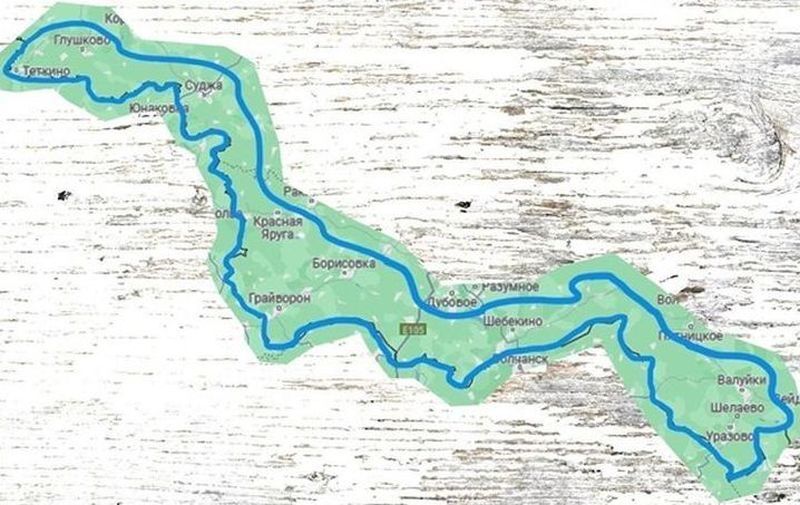
What we can observe now along the border with Russia is not a march on Moscow or even an attempt to free Belgorod from Putin’s yoke. In these processes, the functionality of sabotage and intelligence groups is quite certain and easily known. Moreover, if in 2023 it was a pen test, now it is a full-fledged prologue. But what is the prologue for?
Taking advantage of the insufficient security of the border and the lack of ability of the Russian security forces to respond effectively to threats in the near border zone, the raid measures create a similarity of grey zones. Gradually, these NWs will expand, stretch along the border and absorb nearby villages. These include Kozynka, Zarechche-Druhe, Horkovsky, and Tyotkino (although it is too large for quick absorption).
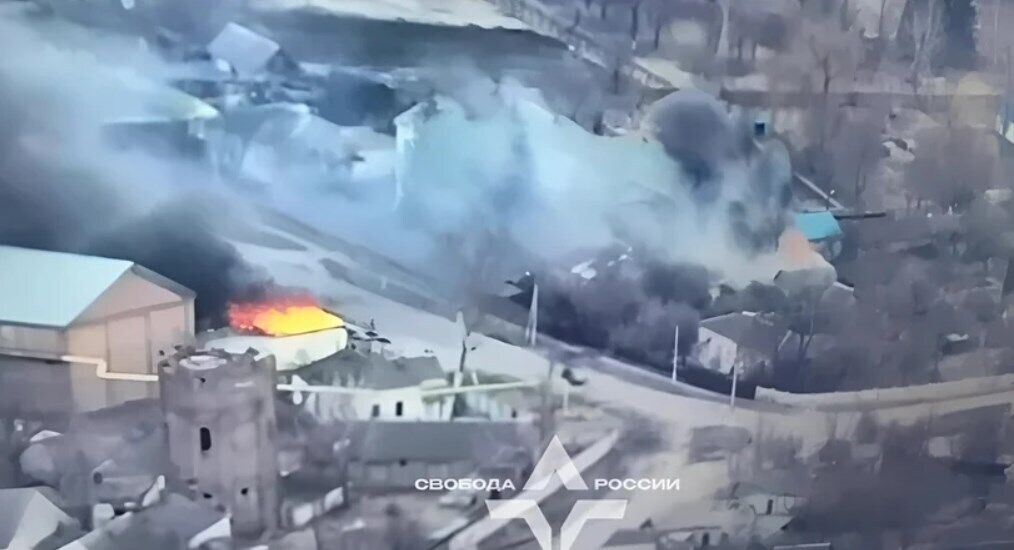
Be that as it may, there are such villages that in the future, after the absorption of the NW, will begin to turn into a bridgehead, beyond which the further territory of Russia will “grey” in anticipation of a colour change.
The most striking example of a similar system of actions is Krynyk on the left bank of the Kherson region, which at first turned into a grey zone, but now it is a full-fledged bridgehead for the Defence Forces of Ukraine. Only in the case of the Russian Federation territory, it will be a bridgehead for the RDK, the Legion “Freedom of Russia” and other Russians with a cold head and a warm heart.
The ultimate goal may be to create a buffer demilitarized zone up to 10 km deep, and possibly more, along the border with Ukraine (on the Russian side). But for now, it is too early to talk about this, since we are still watching only the prologue and not the first chapter.
Conclusions
Russia is unable to control the border with Ukraine. It simply lacks the necessary resources for this, which are concentrated in the DB zone in Ukraine. This will allow in the near future, to bring the raid activity to a wider level and create a similarity of grey zones along the border with Russia with their gradual transformation into bridgeheads.
Such actions will put pressure on the command of the Russian occupation forces, which at a certain moment will be forced to disperse its resources from the combat zone to strengthen the border cover. But it is unlikely to bring success, as it did not in the example of the Krynks.
Currently, the Russian command does not have a single effective solution to the border problem, which puts it in an extremely uncomfortable position, both reputationally and tactically, and perhaps something even more serious.
Oleksandr Kovalenko
oboz.ua





