


WHO ARE MORDVA, ERZYA AND MOKSHA
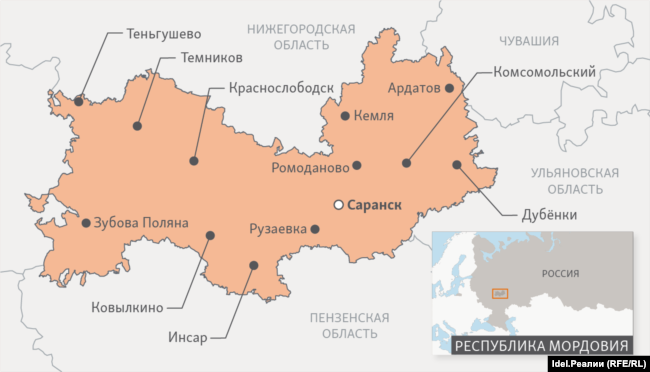
About 600 km from Moscow, in the Volga region, is the Republic of Mordovia, where a little less than 800 thousand people live. The state languages of this subject of the federation are Russian, Erzyan and Mokshan. The last two are presented in parentheses to explain what “Mordovian” means.
Erzyans and Mokshans are Finno-Ugric people, their languages and cultures are similar, but not identical. This is indicated not only by activists, but also by the actions of the authorities: for example, the absence of “Mordovian” as such among the state languages, or the fact that the authorities – even under the general name “Mordovian” – have to hold events in two different languages. So, last year, the Ministry of Culture of Mordovia published the results of an open dictation in the Moksha and Erzyan languages, held on the All-Russian Day of Mordovian Languages — 10 April 2023. The organizer of the event was the Volga Centre of Cultures of the Finno-Hungarian People.
HISTORY AND ETHNOLOGICAL DISPUTE
The narrative about a single “Mordovian” nation is supported by the authorities and some local academics from budget institutions. Yes, the professor of Moscow State University named after N.P. Ogaryova Vladimir Abramov previously claimed in the media that the “Mordovian” people have been known as one under their present name since the 4th century AD.
— The terms “erzya” and “moksha” appear only from the 13th century and are associated with the existence of principalities in the “Mordovian land” (according to Russian chronicles) with the centres of Erzemazy (Erzya) and Moksha. There was still a third principality with its centre in Meshcher (Meshchersky gorodok [town] in Russian). That means, etymologically, they are identical to the terms Vladimir, Ryazan, Novgorod, etc. In all censuses until 2002, the Mordvins appeared under one name of the indefinite archaic form “Mordva”, he noted.
According to Abramov, there are no scientific grounds to consider them different people.
— All major Mordovian academics, writers and cultural figures are unequivocal about this — Abramov declared.
He is convinced that messages about the separation of Mordovian groups come from individual public figures. True, his words contradict the results of the latest censuses, which are organized and conducted by the authorities, the results of which are published by a special state body – Rosstat. Although Erzyans and Mokshans are less than those who called themselves “Mordovians” of the first and second thousand.
As stated on the website of the project of educational and intercultural programmes “Finno-Hungarian Peace”, the name “Mordovia” is not an original name itself – and although it has long been used by the Mordovian population itself, it is an exoethnonym (the name of the people given to it by other peoples – “Idel. Realii” ), borrowed from the Russian language and used to denote two groups that are initially close to each other in terms of language and culture, but nevertheless have different ethnic self-awareness – Moksha and Erza.
For the first time, the name “Mordva”, as stated on the project site, is found in Jordan (6th century AD) in the form of Mordens – one of the people allegedly conquered by the Gothic king Germanarich. Then in the 10th century — by the Byzantine emperor Constantine Porphyrogenet in the name of the country Mordia.
— In Russian chronicles, ” Morodva” is mentioned for the first time in the list of the people of the Middle Volga Region, which were part of the sphere of interests of Kyivan Rus from the earliest times, compiled, as it is believed, in the 11th century. The origin of this name is connected with the words of the Iranian language meaning “man, man,” the material says.
It is noted that after the revolution of 1917 in Russia, Erzyane and Mokshan received general autonomy: in 1928, the Mordovia District was created, transformed in 1930 into the Mordovia Autonomous Region (since 1934, the Mordovia Autonomous Republic). Due to the dispersed settlement of the “Mordovians”, less than a third of the entire Mordovian population of Russia (according to the 1926 census – 1 million 339 thousand people) turned out to be living within the created autonomy. Significant groups of Erzyans and Mokshans still live in the Samara, Penza, Orenburg, and Ulyanovsk regions. In censuses, they are often listed as “Mordva”. For this reason, it is impossible to establish the exact amount of Erzyan and Mokshan.
PRESSURE
The majority of Mokshan and Erzyan activists agree that the concept of a single “Mordovian” nation is an incorrect colonial construct imposed by the Soviet government and still promoted by the republic’s officials.
Independent Erzyan public figures have repeatedly lamented that the Russian government is trying to create an all-Mordovian identity in order, as they claim, to assimilate Erzyans and Mokshans into the “melting pot”.
The fact that the authorities are promoting the “Mordovian” identity is not only pointed out by Erzyans. The authorities of Mordovia and the Executive Committee of the Council of the Interregional Movement of the Mordovian (Moksha and Erzyan) people ( the presidium of the organization mainly consists of officials and employees of the budget sphere — “Idel.Realii”) previously demanded that the FINUGOR Info Centre abandon the designation of Erza and Moksha as separate Finno-Hungarian people and unite them into Mordovia. The editors of the FINUGOR Info Centre disagreed with the request then.
Among the examples of pressure on independent activists who, among other things, raise the issue of the separateness of Erzyans and Mokshans, it is possible to mention others. Earlier, “Idel.Realii” reported that independent Erzyan activists approved a system of national representative bodies based on the example of the Crimean Tatars. It includes Atian Ezem (Council of Elders), Inyazor (Chief Elder), Promks (National Congress) and Videkuro (a court that resolves disputes within the national movement).
However, on 25 June 2022, the Russian media reported that a new Atyan Ezem (Council of Elders) was created in Mordovia, which has 20 members, although traditionally, according to independent Erzyan activists, it should consist of 18. The new Council of Elders, as noted, elected an alternative inyazor (chief elder). He became an artist of the State Russian Drama Theatre of the Republic of Mordovia, Sergey Adushkin, which means, an employee of the public sphere. The elections were held in a public institution — the Pushkin Library, although according to tradition they should be held in Raskeni Osks (during national prayers). There they also approved the provision governing national representative bodies.
Security forces at the Erzyan prayers
The situation with creating clones of public structures of self-organization of the Erzyan people is not unique, since in Russia the authorities often interfere in the affairs of similar organizations, although this is prohibited by Russian legislation. This prohibition is prescribed in the Federal Law dated 19.05.1995 N 82-FZ “On Public Associations”. But the authorities have repeatedly bypassed it before.
Thus, in contrast to the Youth Association of the Finno-Hungarian People (MAFUN), which has existed since the 1990s, the Russian authorities established a duplicate youth structure of the same name. The head of the first was Aleksey Tsykarev, and the Russian alternative was headed by Tatiana Ishmatova, a member of the State Council of Udmurtia, who later became an official of the Udmurt Minnats. One of the main tasks of MAFUN is the rapprochement and organization of cooperation between Finnish-Hungarian youth from Hungary, the Russian Federation, Finland and Estonia. True, the MAFUN clone created from above never became a significant player in the Finno-Hungarian world.
Not without the criminal prosecution of public officials. In October last year, Erzyan independent organizations reported the detention of several ethnic activists in Mordovia. At the same time, it became known that the FSB in the republic opened a criminal case about the “organization of an extremist community.” The community that attracted the attention of the security forces is the public institute of national representative bodies of the Erzyan people “Kirdiyur”.
ACTIVISTS AGAINST WASHING
Among those who consider the Erzians and Mokshans as separate nations is Donysi Chovganon, doctor of philosophy, historian and head of the Mokshan National Committee, who lives in Ukraine. He learned about his Mokshan roots already in adulthood.
– In our family, it was not customary to remember that my grandmother constantly said that we were Russian, although from the photographs and from the fact that we demonstrated through the maternal line, it was clearly visible that there were no Russian costumes, books or embroidery. All this remains now in front-line Zaporizhzhia. But there it was clear as non-Russians, if compared. There is nothing Russian there, except for the name, – he shares.
Chovganon also notes that the war also contributed to the strengthening of his new ethnic identity.
— I began to study Moksha topics in more depth; in addition to the Mokshan language, [ начал ] gets acquainted with culture and traditions. In the Ukrainian information space, we will try to fight against these enemy tactics and propaganda that these are Muscovites, these are not Mokshans, and vice versa. Because in Ukraine and the West, many people confuse and attribute the name “Moscow” to “moksha”. This is absolutely not the case, – notes Chovganon.
Chuvganon is not against the Erzians; moreover, he believes that the Mokshans should cooperate closely with the Erzyans.
“Together” does not mean to be united, that is, you can be at the same table together and at the barricades together, but not united. You cannot make one out of two people. The policy of “Mordvinization” presupposes this, he admits.
The activist also draws attention to the fact that this policy comes from the Russian state. According to him, the authorities support their narrative with the opinions of historians.
– By the hands of historians and politicians, everything is being asked to be presented as based on “historical sources”. For example, the same Kremlin manual ethnologist Tyshkov ( Valery Tyshkov – scientific supervisor of the Institute of Ethnology and Anthropology of the Russian Academy of Sciences –“Idel.Realii” ) constantly points out that the word “Mordva” is indicated in Western chronicles, meaning, such people lived, so you и есть они, – he complains.
Speaking about the policy of “Mordvinization”, the activist mentions the policy of Stalinism.
— Stalin’s policy was aimed at creating [ from Erzyan and Mokshan ] one ethnos. But it did not work out, – states Chovganon.
Elder Syres Bolyaen of Erzyan even longer and louder criticizes the policy, which he also characterizes as “Mordvinization”.
“It [ the Mordvinization policy ] simply allows the authorities to almost legally destroy us,” he believes.
Bolyaen recalls that as soon as the Soviet power weakened in the 1980s, Erzyans created their organization “Vozrozhdenie”. At the same time, he points out that the division into Erzyan and Mokshan is unprofitable for the authorities of Mordovia since this is not “Erzyan or Mokshan, but Mordovian power.”
He also resents the assimilation of both Erzyans and Mokshans, who, even according to government data, are decreasing in number. Bolyaen is convinced that his fellow tribesmen are Russified.
Nevertheless, representatives of the Erzians and Mokshans (as well as other nations) are going to fight against Ukraine. The elder explains this by “zombified propaganda.” To open their eyes, he is convinced, the Russians need to lose the war against Ukraine.
— They have to go through the loss. When the resource that feeds them now disappears, they will listen and watch differently. Now they do not think about it, they have a hard time with causal relationships. At the moment of loss, many things change immediately. Here the question is how it will happen, he concludes.
Speaking about the Russians exposed to propaganda, Chovganon points out that they lack a critical understanding of what is happening.
— The problem is that without an alternative, a choice, without seeing the full picture, at the same time having only what is shown by propaganda in social networks, critical thinking is absent in many people, — he explains why some Erzyans and Mokshans are fighting for “Russian peace” in Ukraine, not thinking at the same time why they themselves do not speak their native languages.
Idelreal.org





