

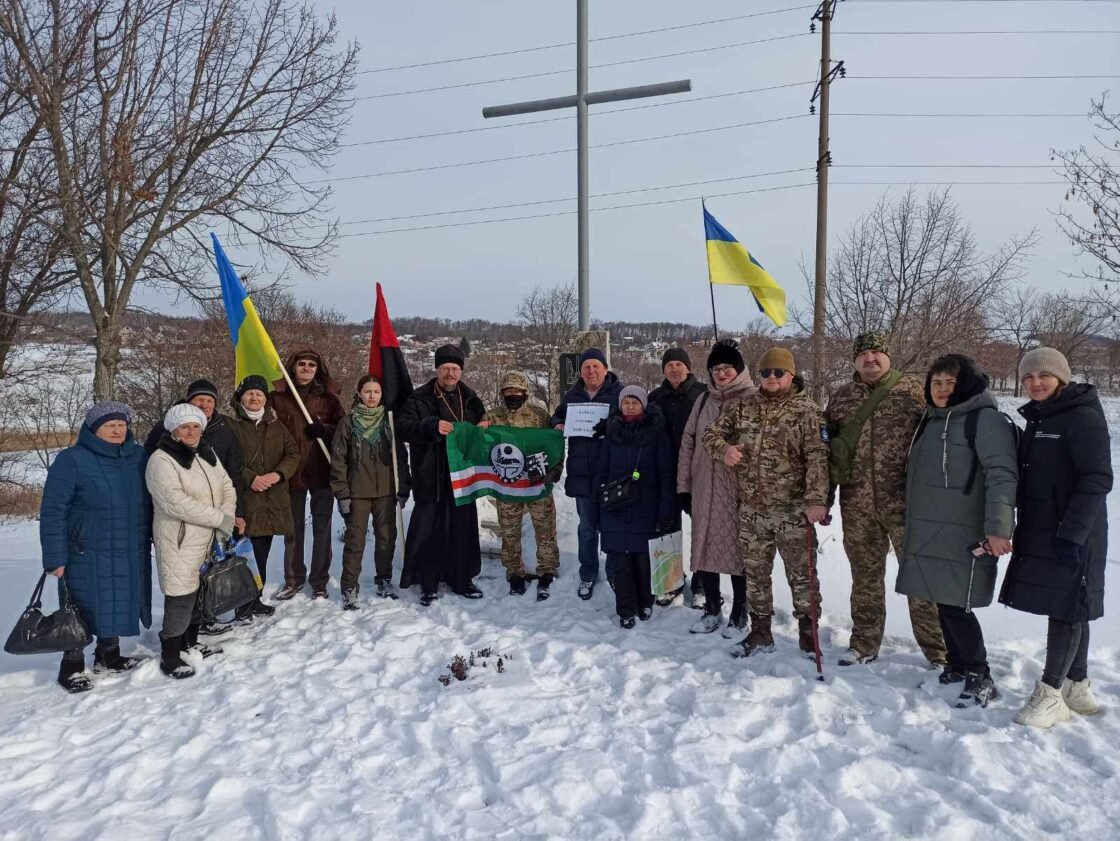
It was on 23 February 1944 that the Moscow occupation authorities began their deportation from their ancestral lands. They were taken away in freight cars, many people died and their bodies were dumped at railway stops. The settlement of Khaybakh was burned down along with its inhabitants… Chechens (the self-name of the Nokhchi) had been fighting against the Russian occupiers since the end of the 18th century under the leadership of Sheikh Mansur. In the 19th century, the struggle continued under the leadership of Gazi-Muhammad, Gamzat-bek, and Shamil. The analogue of the Ukrainian opryshki was the abrek, in particular Zelimkhan Gushmazukayev (Kharachoyevsky), known in the early 20th century. During World War II, when the nations enslaved by Moscow fought for freedom as part of the partisan units of the UPA, the BVA (Belarus), and the Baltic “forest brothers,” an insurgent movement developed in Chechnya under the leadership of Khasan Israilov. The last rebel, Khasukha Magomadov, died in 1976, and in the 1990s the Russian-Chechen wars began, in which the Chechen Republic of Ichkeria was destroyed. Ukrainian-Chechen ties are quite old. Taras Shevchenko strongly opposed Russian aggression in the Caucasus in the poem “Caucasus”. Chechens appear in the work “Vyr” by Grigory Tyutyunnyk. Chechens assisted Ukrainians during the Holodomor of 1932/1933 and fought in the UPA. The first president of the CRI, Dzhokhar Dudayev, lived in Poltava during his military service. In the 1990s, Ukrainian volunteers from the UNSO came to the aid of the Chechens to stop the Russians in the Caucasus and help dismantle the “prison of nations”. In honour of two Ukrainian volunteers, Kharkiv resident Oleg Chelnov and fellow Ukrainian Oleksandr Muzychko, streets were named in Grozny (Dzhokhar), and the bard Imam Alimsultanov dedicated a song to Ukraine. During the latest Russian-Ukrainian war, Chechen volunteers created several units within the Armed Forces of Ukraine – the Dzhokhar Dudayev Battalion, the Sheikh Mansur Battalion, the Separate Special Purpose Battalion of the Ministry of Defence of the Chechen Republic, the Khamzat Gelayev Battalion, etc. Brigadier General Isa Munayev died in the fight for Ukraine. Therefore, on 23 February a memorial event was held in the city of Lozova, in the Kharkiv region, near the Cross “To the Heroes of Ukraine”. Fighters of the Sheikh Mansur Battalion attended the event, Lozova residents-military personnel of the Armed Forces of Ukraine, parishioners and volunteers of the Preobrazhenskaya parish of the UGCC, the NGO “Prava Molod”, and public activists. Poems were read, including Taras Shevchenko’s “Caucasus”, the participants held sheets with the names of the places of mass crimes committed by Russians – “Haybach. Samashki. Novi Aldy”, “Mariupol. Bucha. Izyum”, as well as with the slogan from the memorial in Grozny destroyed by the current authorities: “Dolhur dats! Duhur dats! Dyts a diyra dats!” (“We will not cry! We will not break! We will not forget!” The guests were presented with a book by the “Iron Dad” publishing house – “Dzhokhar Dudayev. Knight of Freedom”, and the Ukrainian military exchanged chevrons with their Chechen counterparts. Russia will cease to pose a threat to the world when the nations it occupies gain independence.
priest Vyacheslav Trush,
chaplain of the DUK PS






