

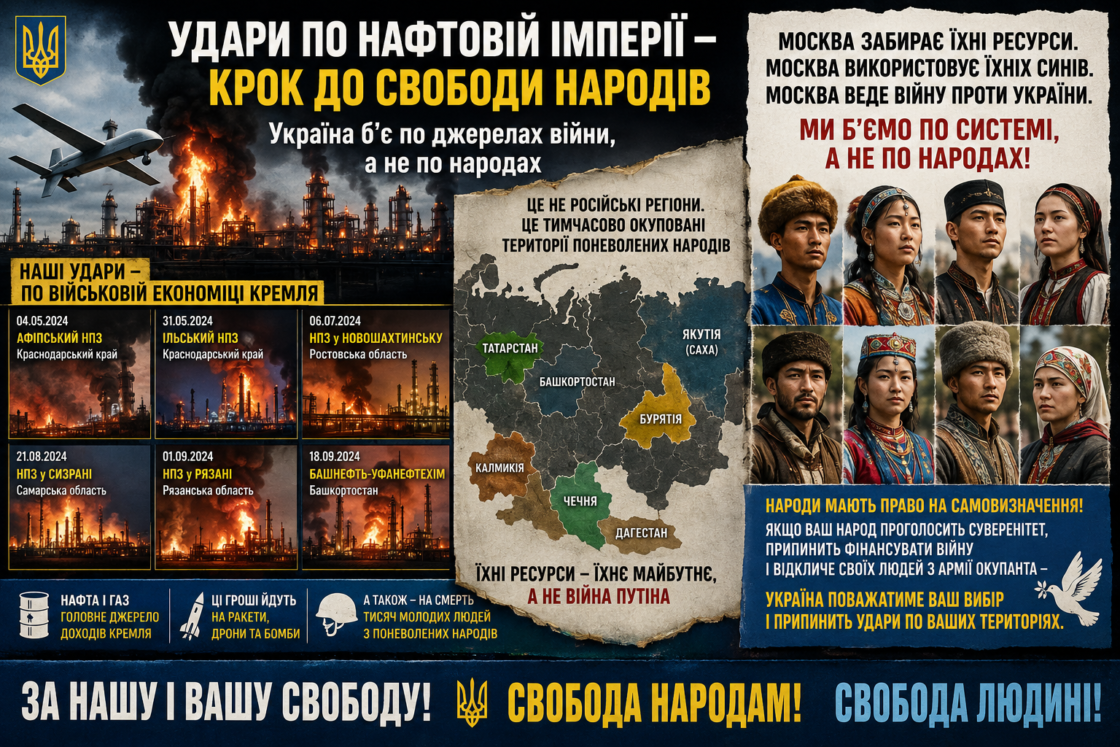
The city of Moscow has 13 million people, although it produces very little itself. The city lives by pumping all the money out of the regions where there is an extractive or processing industry, through mechanisms of colonial exploitation. Not the least of which is “the headquarters of colonialism”, when the central offices of regional companies are registered in Moscow, and their taxes completely bypass local budgets.
What does Moscow produce?
That is why terrible poverty reigns in the very rich regions of Russia, and Moscow throws money at them in the form of subsidies, claiming that the regions do not know how to earn money and live exclusively at the expense of Moscow. Valeriy Pekar writes about this.
So, Moscow itself produces almost nothing, except for colonial policies, which give it a standard of living that is many times higher than that of mining, industrial, or agricultural regions. Colonial officials and their multi-level staff, from masseurs and psychologists to university professors, live in Moscow.
In essence, it is an imperial court, a khan’s pond, which satisfies the pyramid of the capital’s needs. It imports everything from outside and exports nothing, devouring goods and producing nothing (the huge volumes of industrial production in the city of Moscow shown in the statistics are just an accounting of goods produced in colonial regions by local companies registered in the capital). This is not a post-industrial service economy, because all services are consumed internally.
At the same time, local residents despise work at the lower rungs of the pyramid of needs, so the capital imports a huge amount of labour (up to 3 million people out of 13, a significant part of whom are illegal). Muscovites hate migrants and at the same time cannot do without them.
If (when) centrifugal processes begin in Russia, the flow of colonial money will begin to decrease, and the same will begin with goods. The population will scatter at a terrible speed (just as between 1917 and 1920 the population of Moscow almost halved), fleeing to where there is some food. Migrants will return home or try to create permanent economic centres in the places of life of their former masters, as has repeatedly happened in history after the fall of imperial capitals.
In other words, Moscow will become “prettier” again, and nature will be purified. I don’t think that without the colonial system the city is capable of sustainably feeding more than a couple of million people.
Now the question is whether we will live to see it.
24 канал





