

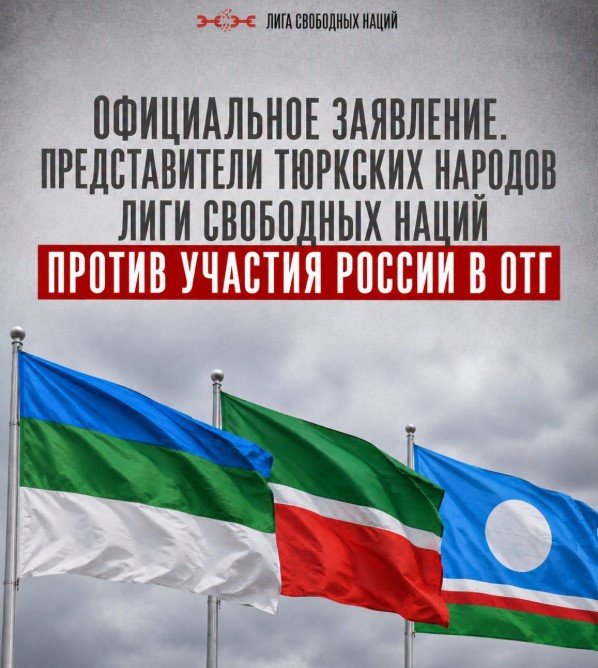
Representatives of the Bashkir, Tatar, and Sakha movements, members of the League of Free Nations, called on member states of the Organisation of Turkic States (OTG) not to grant Russia observer status or include it in the “OTG+” format. At the same time, the Turkic peoples of Russia are deprived of an independent voice. The 31 October statement was supported by representatives of the Chuvash, Tuvan, and Khakass movements.
Kazakh President Kassym-Jomart Tokayev prompted the initiative by proposing to invite Russia to the “OTG+” format or grant it observer status at the 13th OTG summit in Ankara on 30 October, citing, in particular, the presence of Turkic peoples in Russia.
“The right of the Turkic peoples of Russia to an independent voice cannot be replaced by Moscow’s right to speak on their behalf,” the authors of the statement emphasize.
They point out that the leaders of Russia’s Turkic republics lack political autonomy, and Moscow’s participation in the amalgamated territorial communities would become a tool for the Kremlin to exert influence over independent Turkic states.
The authors also recall that in December 2015, the Russian Ministry of Culture demanded that Altai, Bashkortostan, Sakha, Tatarstan, Tuva, and Khakassia cease contact with the international organisation TURKSOY, demonstrating the restriction of independent ties between Turkic peoples and the Turkic world.
The appeal also mentions the persecution of ethnic activists, the banning of the VTOC and Bashkort organisations imprisoned in the Baymak case, and the curtailment of opportunities for education in native languages. Separately, they mention the sentence of Altai activist Aruna Arna, who was sentenced in June 2026 to five years in prison on charges of “justifying terrorism” for publishing two songs on a Telegram channel.
Another topic of the appeal is the participation of representatives of Turkic peoples in the war against Ukraine. The authors allege military and administrative coercion and cite reports of deception and pressure in the recruitment of citizens of Turkic states.
Representatives of the movements also put forward six demands to the Russian authorities:
– stop restricting the international cultural and political ties of Turkic peoples;
– stop persecuting national activists, human rights defenders, and public organisations;
– restore full-fledged education in Turkic languages;
– end coercion to participate in war and deception in recruitment;
– ensure peoples’ real right to manage the natural resources of their republics;
– guarantee the rights to national development, self-government, and independent determination of their future.
Without these demands, discussions about Russia’s rapprochement with the Organisation of Turkic States look less like a desire for Turkic unity and more like an attempt to expand the Kremlin’s political influence over independent states and exploit historical and cultural ties to advance Russian foreign policy.
The statement was signed by Ruslan Gabbasov of the Bashkir movement; Ruslan Aisin, Sergey Ismagilov, and Aida Abdrakhmanova of Tatar organisations; and Raisa Zubareva of the Movement for the Independence of Sakha. It was supported by Rodion Evdokimov (Ilmar Yankas), Eres Kara-Sal, and Amina Akhpasheva—representatives of the Chuvash, Tuvan, and Khakass movements, respectively.
Representatives of the Turkic nations of the League of Free Nations spoke out against Russia’s participation in the ATG
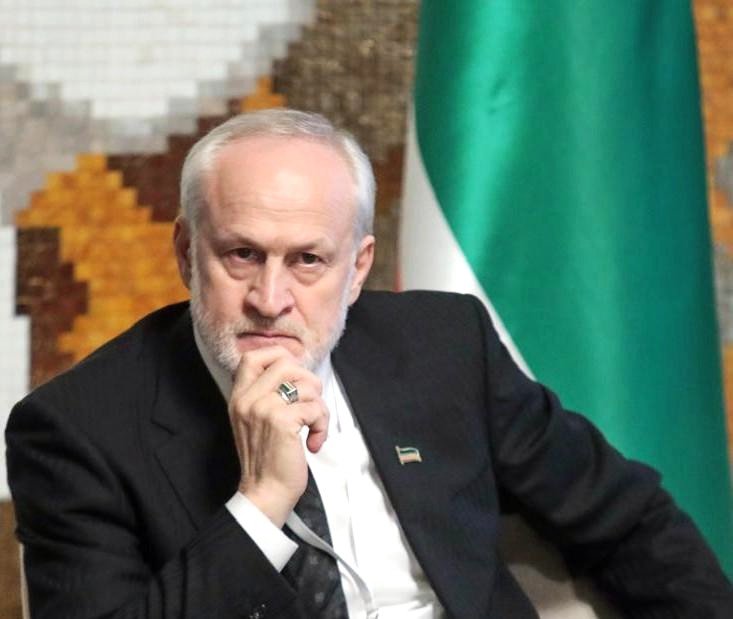 International Relations, JournalismAkhmed Zakayev’s address to journalists October 20, 2026 Documents On 13 March 2026, The Insider published an investigation titled "A Secret Intelligence Unit Linked…
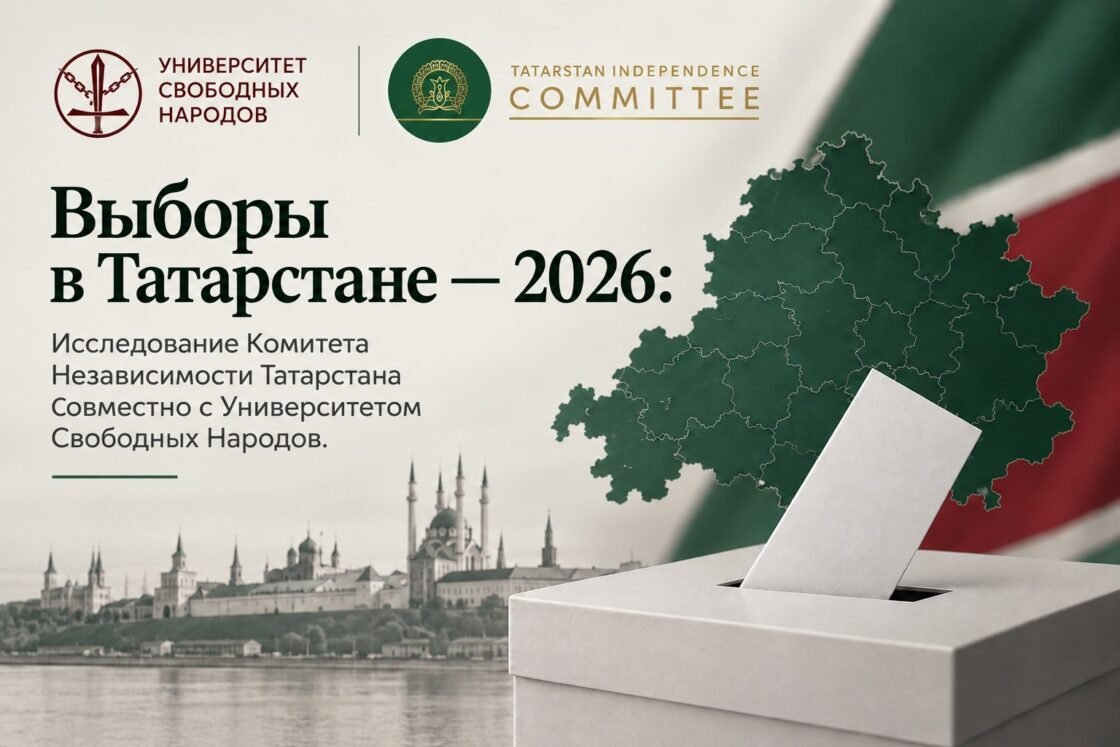
 International RelationsOfficial statement of the Government of Independent Tatarstan in Exile September 22, 2026 Documents We welcome the holding of the first free elections to the Council of Representatives of…
 PoliticsBY THE PRESIDENT OF THE UNITED STATES OF AMERICA A PROCLAMATION July 23, 2026 Documents During Captive Nations Week, we stand in solidarity with all who suffer beneath communism and…
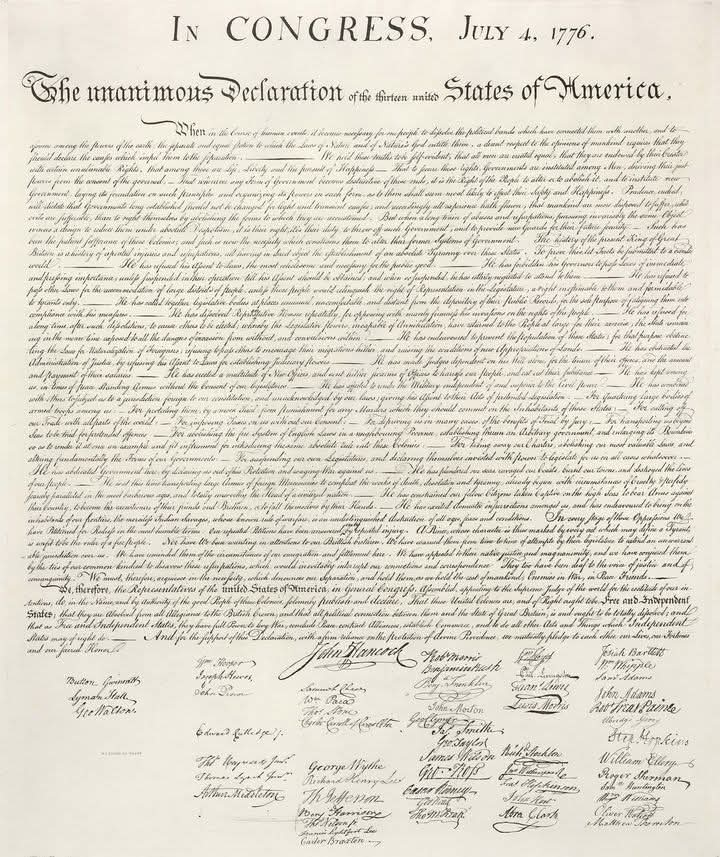 International RelationsWe sincerely congratulate the people of the United States of America on the 250th anniversary of the founding of the United States! July 5, 2026 Documents Over the past 250 years as an independent nation, the United States of America has…
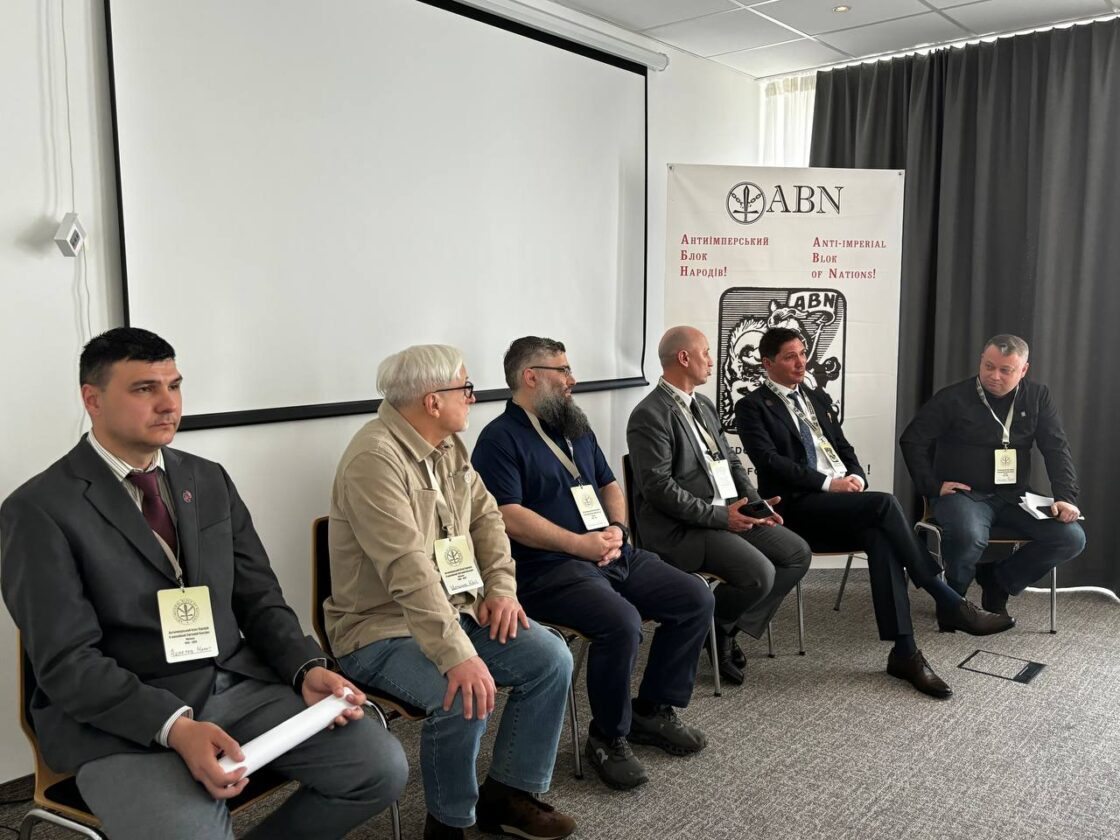 International RelationsTHE MUNICH DECLARATION OF THE JUBILEE II WORLD CONGRESS OF THE ANTI-IMPERIAL BLOCK OF NATIONS April 29, 2026 Documents Preamble We, representatives of the national liberation movements of the nations enslaved by Moscow, proclaim…
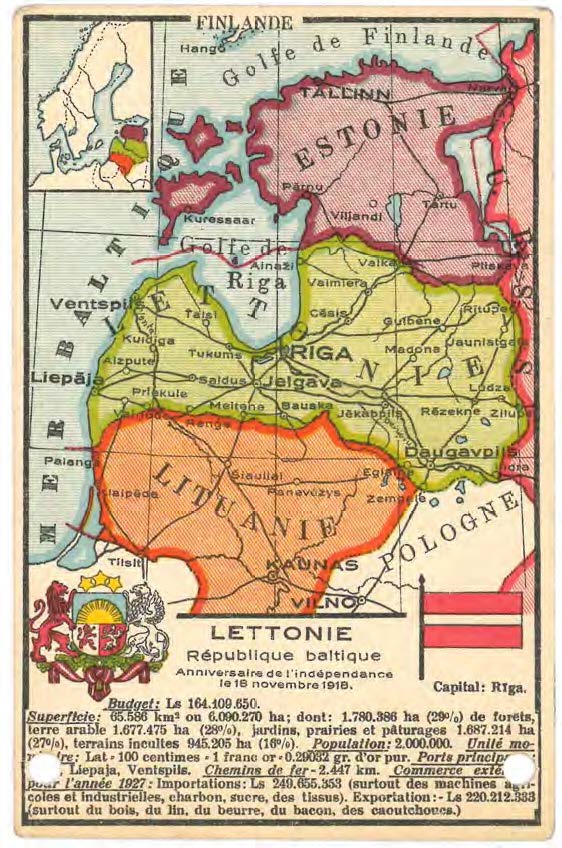 ArchivesCorrespondence of the ABN with Latvian representatives: 1949-1956 April 27, 2026 Documents Correspondence of the Anti-Bolshevik Bloc of Nations with Latvian representatives. A significant part of the…