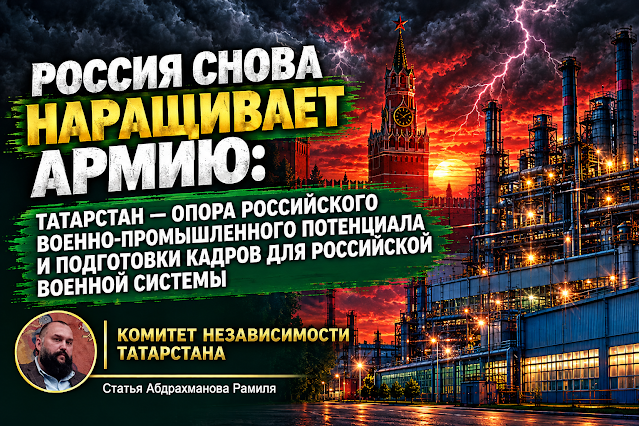
On September 28, Vladimir Putin signed a decree on another increase in the staffing of the Russian Armed Forces. Now the Russian army officially has 1,550,500 servicemen, and the total staffing of the Russian Armed Forces is 2,441,630 people. The decree came into force on the day of signing.
This decision outlined the fourth stage of adjusting the structure of the Russian Armed Forces for the current year. Starting in March, the number of servicemen has been consistently expanding (by 2,640 , then by 7,360 , then by 25,000 , and today, by another 15,500 people).
It is important to note that these changes fix only the regulatory limits of the military department, and not the actual manning of military units. Along with the legal expansion of the state structure, the Russian Government has instructed to allocate additional budget appropriations necessary to financially support the new staff units, the published document states .
The number of servicemen has increased to 1,550,500 by now , which reflects a deep structural restructuring of the Armed Forces of the Russian Federation: compared to August 2022, the figures have increased by almost 35% ( from 1,150,628), and relative to the base level by 2,628).
As for the Republic of Tatarstan in this context, it is quite difficult to establish the exact number of military personnel based in the Republic, since official information on this category is not published by the state in open sources. However, the structure of the military presence in the republic can be assessed based on open data on key facilities of the Central Military District, to which this region belongs.
But based on the fact that Tatarstan has at its disposal the infrastructure for training personnel for the Russian military system, which includes both the pre-university level of the “ Kazan Suvorov Military School ” and higher military-professional education in the person of the “ Kazan Higher Tank Command School ”, the republic as a whole forms a consistent officer corps of the Ground Forces. Also, Tatarstan is one of the significant elements of the Russian military-industrial complex , having a developed production and technological base integrated into the system of support for the Armed Forces of the Russian Federation. Thus, the Republic of Tatarstan is more important to consider not as one of the regions of the regular presence of the Armed Forces of the Russian Federation, but as one of the regional elements of a broader system of reproduction, support and support of the entire Military-Strategic Complex of the Russian Federation.
What is behind this increase?
The consistent expansion of the Russian Armed Forces’ staff size over several years shows that the Russian leadership is not abandoning the scenario of a rapid reduction in the country’s military potential. On the contrary, an institutional opportunity is being created to maintain and expand a much larger army. This potentially indicates that Moscow is preparing not only to maintain a high military load for a long time in the medium term, but also to consistently adapt it to long-term support.
The increase in staff may be due to the need to recruit new units, ensure rotation and replacement of hidden real losses, as well as maintain military capabilities to continue Russia’s war of aggression in Ukraine and the expansion of imperial territories. The decree itself, however, does not allow us to establish exactly what part of the new positions is intended to replenish losses and what part is intended for further expansion of the army.
And a natural question arises: if this criminal war unleashed by Russia against the Ukrainian state was supposed to end quickly, why would the Russian leadership consistently increase the officially planned army size?
Moreover, military spending is also increasing at the same time.
The Russian budget for 2026 includes about 1293 trillion rubles for the “National Defense” item. And in the draft budget for 2027, defense spending reaches a record 17.1 trillion rubles – about 32% more than the planned figure for 2026.
At the same time, the exact cost of today’s increase in the number of military personnel by 15,500 has not yet been officially announced. The decree only orders the Russian Government to provide additional budget allocations.
However, the 53% increase in staff numbers requires a different interpretation: does it indicate an increase in Russia’s military power or reflect the need to compensate for the large-scale personnel and resource costs of the war?
The unambiguous answer is not given by the numbers of staffing, but by real data on the staffing of the army, personnel losses, the recruitment of contract soldiers and military expenses. Thus, the increase in the staffing of the Russian Armed Forces is not just an administrative adjustment, but an indicator that the Kremlin is institutionally setting a course for the long-term militarization of the state and the preservation of military potential to continue its aggressive foreign policy.
October 9, 2026
Ramil Abdrakhmanov is a member of the board of the Tatarstan Independence Committee. Registration number: 802558-1037, Sweden.
Комитет Независимости Татарстана