

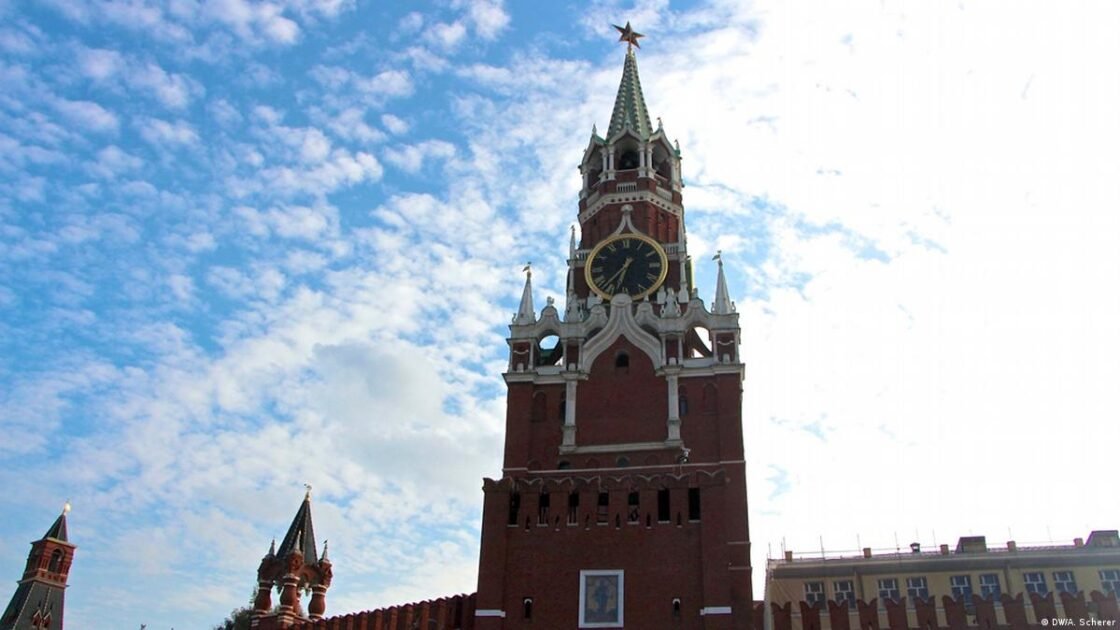
The Russian Federation consists of 85 subjects – equal, as written in the Constitution, and equally dependent on the Kremlin.
Because regions cannot declare sovereignty under any conditions. There is not a word about this in the main law. Although even in the constitutions of the Soviet Union, the republics had a legal right to leave.
Nowadays, Russians call that law a formality and deliberately closed the door to freethinkers.
“When the right to exit was recorded in the USSR, everyone understood that there was no right to exit. No one tried to get out. If the right to leave is recorded, it will be treated as an invitation to leave. There is such a value as state integrity,” says Mykhailo Krasnov, former legal advisor to President Yeltsin.
In the 1990s, the head of Soviet Russia, Boris Yeltsin, made a statement that you will not hear from Kremlin leaders today – he called on the regions to take as much sovereignty as they can.
“We say to the Bashkir people: take the fate of power that you can swallow yourself,” said Yeltsin.
Not only the Bashkirs, but a total of 10 regions took advantage of the advice and adopted declarations of independence. However, by 1992, all regions had signed the federal agreement, except for two – Chechnya and Tatarstan. The latter successfully held a referendum on independence, introduced its own money and constitution.
Boris Yeltsin managed to keep the region in Russia, but for a long time Mintimer Shaimiyev was the full-fledged master of the republic. Only in 2001 was the reference to independence removed from the constitution of Tatarstan.
And Chechnya was declared independent in 1991 by Dzhokhar Dudayev. But Moscow did not put up with this and tamed the unruly people by force. Russia fought two wars. Thousands of people died.
So nowadays in the Russian Federation everything is actually decided in Moscow, there is no decentralization of power. After all, only a few regions, where natural resources are mainly extracted, earn money, most of the subjects of the federation are subsidized.
“The Russian Federation is now more in name than in form. When you live on money sent from the center, you cannot be equal participants in the process,” says Dmytro Trenin, director of the Carnegie Foundation.
From 2004 to 2012, the Kremlin even deprived Russians of the right to choose regional leaders, who were appointed from Moscow. Two years ago, this right was returned, except for some – in particular, in the Caucasus. But still, the center has great influence on the governors – the president can arbitrarily dismiss them.
“The governor, even if he is elected by the people, knows who to focus on – the president will fire him, not the people,” Mykhailo Krasnov explains.
The state language of the Federation is Russian, but regions can define their own state languages - there are more than 20 of them. Another dozen subjects have official languages. And if they are actively spoken in Tatarstan and Bashkortostan, then in many, for example, in the Khanty-Mansiysk District, newspapers are published for reporting and they have half-hour programs on television.
Unlike, for example, the autonomy of Catalonia in Spain, where the signs on the streets are in Catalan, in Surgut you did not see any signs in the Khanty and Mansi languages. Indigenous languages are not used in the local parliament either.
The Ukrainians of Surgut, of whom there are tens of thousands, currently do not have this either. School is only on Sunday. And it is financed by itself. There is not a single full-fledged Ukrainian educational institution in Russia, despite the fact that according to official data only 2 million of our compatriots live there, and unofficially – all 10.
In Ukraine, Russian-language schools are financed from the budget. Instead, public associations of Ukrainians at the federal level were also closed – a lawsuit was filed by the Russian government.
“An inspection came to us and they started looking for flaws. Lavrov’s undisguised statements that federal organizations are being closed down because their leadership is too engrossed in politics,” says Valery Semenenko, the former head of the Union of Ukrainians in Russia.
It is symptomatic that despite federalism and the representation of all regions, the parliament often votes almost unanimously. In particular, for the accession of Crimea. For the Ukrainian peninsula, the right of nations to self-determination is suitable, while Russian regions are forbidden to even think about it.
Andrii Hetman
FAKTS





