

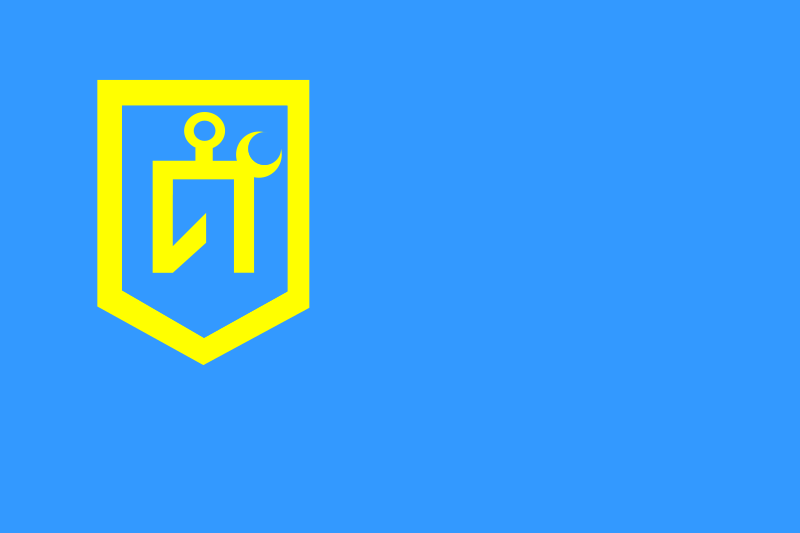
At the end of May, on the 27th, a historic event took place in Kyiv – an international conference dedicated to the 105th anniversary of the declaration of independence of the Mountainous Republic. We are talking about a pan-Severo-Caucasian state, which was partially recognized in 1918-1920. The meeting was attended by representatives of the Chechen, Ingush, Circassian, Dagestan peoples. Leaders of the Crimean Tatars Mustafa Dzhemilev and Rifat Chubarov, Prime Minister of the unrecognized Ichkeria Akhmed Zakayev, Chairman of the Assembly of Peoples of the Caucasus Ruslan Kutaev, guests from Poland, the USA, Switzerland, France, deputies of the Verkhovna Rada of Ukraine and representatives of the local expert community, in an online format, their thoughts about decolonization was expressed by American, Japanese, Canadian, British specialists and scientists. Ruslan Aisin, who personally watched the performances, shares his thoughts.
The event was rich, lively and extremely useful. First, it demonstrated the importance and relevance of the very idea of a united Caucasus. Secondly, it connected the possibility of real gaining freedom with the processes that are going on today. And Ukraine, courageously fighting against the Russian imperial oppressor, stands at the center of this historical event, a big turning point, when its victory will mean the victory of the oppressed peoples, now bound within the framework of the Russian Federation. But provided that they show activity, can gain political maturity, put aside petty grievances and close the squabbling Pandora’s box.
This is a strategic issue. But for this you need to work hard. To study the experience of past attempts to build an independent stato, what did not work out and what conclusions should be drawn from this.
I also spoke at the plenary part of the conference. And he expressed a number of conceptual thoughts concerning our joint future. It should be noted here that the Mountain Republic as a confederal entity arose synchronously with the proclamation of another meta-historical political entity – the State of Idel-Ural.
The latter, as you know, covered the vast lands of the Volga-Urals, where the most fierce battles of the Civil War subsequently flared up. The population of this territory was seven million people. Tatars and Bashkirs were to make up the main population of the new formation. Representatives of the Mari people supported the initiative, testifying to this at a meeting of the Millet Mejlis (National Assembly) at the end of 1917 in Ufa. It was also decided to create the territorial state of Idel-Ural.
The Millet Mejlis sat until January 1918. The next session was scheduled for May, when, by the way, the Mountain Republic was proclaimed.
However, plans and dreams were not destined to come true. The Bolsheviks never gave the peoples self-determination. The National Assembly linked its decision to create the Idel-Ural confederation with the possibility of exercising the right to secede from Russia in the event that difficulties arise for cohabitation. Therefore, the high assembly prudently chose a delegation of three people to participate in the forthcoming Versailles peace conference. She was supposed to draw a line to the First World War.
But, as we already know, hopes were not justified. The Bolsheviks outplayed the Idel-Uralovites. The concept of “the right of nations to self-determination” received a different interpretation than was spelled out in the “Declaration” of the Soviet government of November 2 (15), 1917. A fundamental change in this issue was made by the “Declaration of the Rights of the Working and Exploited People”, published two months later, on January 12 (15), 1918, which recognized the right to self-determination only for the supporters of the Soviet regime. The National Assembly was not such, therefore, its decisions were not recognized by the Bolsheviks.
Without waiting for the official closing of the Millet Mejlis, the Commission for the formation of the autonomous state of Idel-Ural moved from Ufa to Kazan and began work as part of the second All-Russian Muslim Military Congress (8 (21) January 1918). Passions boiled over him. The Bolsheviks threatened members of the assembly. As a result, on February 17, they were forced to leave the congress, declaring that they would not accept its decisions.
Then the Bolsheviks resorted to violent actions. They insisted that the Muslim Military Congress should abandon the proclamation of the autonomous state of Idel-Ural, recognize the power of the Soviets in the Kazan province, abolish Muslim national organizations and transfer all national troops to the Soviet Provincial Commissariat for Muslim Affairs.
These demands were rejected. In response, the Bolshevik authorities dispersed the congress by force. It was not possible to hold the position. Harbi Shuro (Military Council of the Millet Majlis) moved to the Tatar part of Kazan, located behind the Bulak canal (where I lived until 1997) and proclaimed the Tatar Autonomous Republic, known as the “Zabulachnaya Republic”.
After that, the Bolsheviks opened decisive military operations against the Tatar national organizations. Units from Moscow and Petrograd came to their aid, namely a detachment of Baltic sailors with armored cars. They managed to break the resistance of the defenders of the Zabulachnaya Republic.
The political and military initiative following the results of this campaign was already completely in the hands of the Soviet government.
Looking back, we can say that it was an experience comparable to what the Mountain Republic implemented. She was able to unite the Caucasus into a single whole. But the Bolsheviks were stronger. It didn’t take much to be successful. But one thing could not be taken away – the desire and will to win!
The territories and regions inhabited by our peoples are historical in themselves. Isn’t the Caucasus historical? Historical. Isn’t Kazakhstan historical? Historical. That Tatarstan and Bashkortostan, Yakutia and Buryatia are not historical? Absolutely historical. They are more rooted in the past than some kind of Moscow that has drawn the political juices of these spaces onto itself.
We are inscribed in this reality, in a living historical fabric. And now this chance is coming, since regions are territories that are united by a common historical heritage, economic ties, national identity, and intellectual discourse. We say: “There is the Urals, there is Siberia, there is the Volga region, there is the Caucasus.” These are established forms and specific people live there who have their own identity.
And Moscow is trying to drown out this identity. But for what? So that we all become part of the political technology “Russian world” and go to fight for Putin? Why should we accept this and go to the block, bowing our heads before the executioner? And this is the same. If there is physical murder, then it is spiritual and political.
The polity itself, and the Mountain Republic and Idel-Ural are such, without a doubt, gives a powerful emancipation of thought, straightening the political will. And Moscow prevents this. It forces us to forget religion, language, ourselves. These Kremlin upstarts are sending nations to die for Putin and his oligarchs.
The region is a stable territory. And in the Koran, and in the Bible, and in the Torah, territories have the status of formalized realities participating in the deployment of hierohistory. Hijaz, Palestine, Aramaic land, Egypt, Ethiopia, Chaldea and so on. The Almighty designated them and this geographical and historical sacred orientation is present as a given.
Republics or our polities are formed as a synthesis of an idea and its political embodiment. We stand for a cross-border model of interaction – an alliance of peoples or an alliance of subjects of history, but without Moscow’s dictatorship.
People often ask: “Is it possible?” Of course, perhaps, we retort But what about the United States, they were able to form as states, as states within, as a confederation pulsating with the rhythm of history.
Another example is the EU (European Union). Europe has never been as united as it is now, despite the crisis. No matter what Moscow propagandists say, Europe has formed into a certain monolith. The well-known European historian Jacques Le Goff wrote about this. This was also claimed by Robber Fossier, Giscard d’Estaing, the architect of modern Europe.
Now Europe has a single territorial space, currency, Schengen area, common approaches and laws, unified standards. There are attempts to pursue a common foreign policy.
Yes, this conglomerate, of course, shakes him, but what a complex spatial entity Europe, which was united for a short time during the time of Charles V, Napoleon united for several years, but then it all fell apart (not least thanks to Moscow), still managed to overcome all sorts of contradictions and converge into a civilizational community.
Now Europe is united, despite the fact that the members of this community have been at war with each other for centuries. It’s easier for us to unite. We are not at war with each other! We really don’t have anything to share. We have a common opponent, a common enemy who will do everything to ensure that we never become a single entity. We have a historical right, after all. We did not enter the empire voluntarily.
Idel.Реалии





