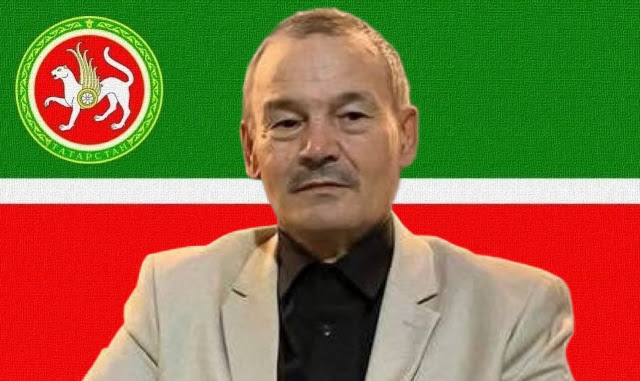

The Iranian Foreign Ministry’s sharp reaction to the brutal detention of Iranian students in Kazan, according to Tatarstan political scientist Ruslan Aisin, clearly demonstrates Moscow’s growing dependence on Tehran. This weakening of Russia, the expert believes, was a direct consequence of the full-scale invasion of Ukraine.
Another scandal in Kazan. On 22 November, a mass brawl between foreign students took place near one of the buildings of Kazan Federal University. Rosgvardia officers and several police squads arrived at the scene. The “Cosmonauts”, as the combat unit of security forces is popularly called, oppressed the students – they beat them up. Video footage of the execution flew around the world.
The state agency TASS reported that a mass brawl, “involving migrants,” took place in a queue near the Department of External Relations of Kazan Federal University, where registration for foreign citizens is extended. Due to the BRICS summit, held in Kazan at the end of October, foreign students were sent home – their visa days were shifted or reset. As a result, they had to re-register in an accelerated manner. The university bureaucracy turned out to be completely unprepared for this.
“As they write in some Kazan Telegram channels, students stood in line for documents, but the department works “little and ineffectively,” so the line began to form at 3-4 in the morning, and by 9 o’clock a fight had already begun,” the Groza project wrote on 22 November.
This is the chronological algorithm of this incident. It might have remained simply a fact of the criminal chronicle if the Iranian side had not joined the case. The Iranian Consul General in Kazan Davud Mirzakhani reacted harshly, for a diplomat.
“The Russian police must be dealt with for their inhumane behaviour. We will not tolerate such treatment of our students. Iranian citizens studying abroad have the right to respect and fair treatment. We will ensure that our students’ rights are fully protected. The Russian police confuse the people of Iran with other nations,” the diplomat said.
In addition, it became known that the situation is under the personal control of Iranian Foreign Minister Abbas Araghchi.
In general, nothing less than an international scandal ensued. The Iranian side was clearly offended by such an attitude of the Tatarstan (read – Russian) security forces. And all this against the backdrop of many years of fraternization and assurances of strategic partnership.
Although Iran has a theocratic system, there are still democratic institutions and competitive elections are held – often with unpredictable results. The population actively participates in the acute phases of the political struggle: rallies, clashes with the authorities and disputes. And the university in Iran retains a certain autonomy and a high level of passion. The authorities take this into account. The student youth was the personnel base of the Islamic Revolution in Iran in 1979. Until now, their reference point is the left-Islamic (let’s define his views this way) thinker Ali Shariati. Incidentally, he criticized clericalism, among other things.
Therefore, rebellion is part of the political culture of Iran. There, just as in the USSR, revolutionary romanticism is glorified. Accordingly, it dictates behavioural guidelines for young people.
But Putin’s Russia has long been on the path of a totalitarian movement. Any dissent and, God forbid, rebellion against the system’s order is an impudent challenge that is punished literally on the spot. Which is what happened to the Iranian students.
As background information, we note that the Consulate General of Iran has been operating in Kazan for more than fifteen years. During this time, Tehran has been able to establish close cooperation with Tatarstan in many areas: humanitarian, economic, technical and business. Including in the oil industry. Tatneft has been working in Iran for a long time, implementing several joint projects. There are a considerable number of specialists in Iranian studies and experts in the Persian language based on the same KFU and several research centres.
The Shahed-131 and Shahed-136 UAVs are being assembled in the Alabuga special economic zone using Iranian technological patterns. Russia labels them as Geran-1 and Geran-2.

Over the past couple of years, Russia and Iran have become closer as military and political allies. Moscow needs Tehran’s support even more. The war has changed the previous dispositions – now Putin is forced to seek the attention of the DPRK, the ayatollahs in Iran, and the Taliban in Afghanistan…
If this incident with the students had happened three years ago – before Russia’s full-scale invasion of Ukraine – the Iranian side would hardly have behaved so boldly and confidently. But now the Tehran establishment feels and understands that Moscow has weakened, is vulnerable and dependent on them. Therefore, they can exert pressure and threaten.
Putin’s power regime is brutal towards everyone: both his own and others. No one should have any illusions about this.
And to the students of our native alma mater, a parting word: fight for your rights. You have the energy of youth, enthusiasm and a future that should belong to you! The Kremlin elders cannot cancel time – here they will definitely lose this race.
Ruslan Aysin is a Tatar activist, publicist and political scientist, currently living outside of Russia. He is published on the pages of various Tatar and Russian publications as an expert on national issues and the situation of Islam in Russia. The Russian Ministry of Justice considers him a “foreign agent”, which the publicist himself does not agree with.
Idel.Реалии