
The Forum of the Free Nations of Post-Russia was founded in the spring of 2022 as an interactive public platform that brings together both the subjects of the Russian Federation and Lithuanians, Poles, British, Czechs, Ukrainians, Georgians, Austrians, Belarusians, Turks, Germans and many others in order to understand which there must be a reconstruction (for the time being) of Russian territory.
This process involves the development of specific scenarios, roadmaps, coordination, that is, everything that the Marshall Plan once implied. Perhaps due to the fact that no one, including primarily the USSR itself, was ready for this “biggest geopolitical catastrophe of the century”, this process turned out to be painful and lengthy in its consequences.
The issues discussed are very specific and acute: the complete denuclearization and demilitarization of Russia’s successor states, the reduction of geopolitical instability, risks and threats, in which the entire Eurasian continent is interested; stabilization of the hydrocarbon market.
According to Ainash Kerney, a Kazakhstani scientist, in fact, this forum is an alternative to what Russian pseudo-liberals in exile offer, advocating the preservation of the Russian empire and the continuation of the colonization of dozens of nations who are already losing their languages, cultures, national identity.
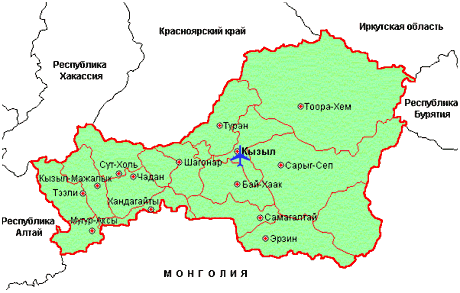
The main topics of the 7th Forum that directly relate to the future of Kazakhstan are the development of a strategy for taking active actions along with possible scenarios for the collapse of the Russian Federation and the emergence of independent states in the northern and East Asian regions of Post-Russia (potentially: Sakha, the Pacific Federation, the North of Siberia, Buryatia, the Republic of Chukotka and Kamchatka, Tuva, etc.). Development of roadmaps to ensure win-win outcomes for both the new post-Russian Asian states and their democratic neighbors – Japan, South Korea, Mongolia, the creation of a new collective security architecture in North and East Asia, the discussion of potential vectors of economic, trade and security, the creation of East Asia new regional alliances focused on trade and security.
Three more forums are expected to be held by the end of the year, final hearings and debates are expected in the European Parliament.
Denis Ugryumov, a representative of the Ingrian social and political movement “Free Ingrianland”, outlined the main features of the desired image of the future at the Sixth Forum of Free Nations of Post-Russia, held in April at the Hudson Institute in Washington.
Holding one of the forums in the US is very symbolic, in his opinion, for two reasons. First, because the United States is the first nation in the world to put the principle of diversity—whether cultural, ethnic, gender, or religious—at the service of its people, and succeeded in doing so. And secondly, because the time frame during which the free peoples of the post-Russian countries will be able to start moving towards democracy and progress largely depends on the support of the United States and other developed countries.
In his opinion, the imperial state should be dismantled, the peoples inhabiting the empire should be freed from the dictatorship of the central government and should be able to determine their own destiny. All those involved in the crimes of the Putin regime must be held accountable. Sovereign territories and the rights of neighboring states must be restored in full. It is necessary to develop and implement programs for war reparations, the establishment of new cultural and economic ties, and the restoration of good relations with neighboring states. “Our slogan is REVOLUTION, CALCULATION, REPENTANCE and RECONCILIATION,” the speaker said.
What happens if the Russian Federation is dissolved?
There WILL be several new nation or territorial states based on democratic values and oriented towards cooperation with the collective West and with each other. As a consequence, new economic alliances, global value chains and international production networks WILL emerge. There will be new markets for Western technological and human innovations, free from the corrupt influence of Moscow, cultural, ethnic, gender and religious diversity will be expanded, justice systems that meet the local needs of the states implementing them, access to the extraction, processing and marketing of natural resources will be opened, international transport infrastructure.
What WILL NOT happen if the Russian Federation collapses?
There WILL BE NO war in Ukraine and Europe, and there WILL BE NO threat of the use of weapons of mass destruction, as well as the threat of military conflicts between the empire and neighboring states.
What WILL happen if the Russian Federation survives?
There WILL be a continuation of the active phase of the war in Ukraine for an indefinite time, constant nuclear blackmail, an increase in mental and economic losses. There WILL be a real threat of an escalation of the conflict directly related to nuclear war, the consequences of environmental and humanitarian disasters in Europe, and the uncontrolled situation in the US and Europe.
There WILL be an increase in xenophobia and nationalism in the Russian Federation and Europe, and the use of these sentiments as instrumental violations by right-wing and ultra-nationalist politicians. The revolutionary threat WILL increase.
What will NOT happen if the Russian Federation remains?
The final end of the war in Ukraine WILL NOT BE, with a complete cessation of all hostilities, the liberation of all occupied territories, the signing of an act of surrender (or a peace treaty) and their actual implementation. There WILL BE NO control over Russia’s strategic arms, no guarantees of nuclear non-proliferation, no guarantees of non-interference of the Belarusian-Russian-Chinese conglomerate in the internal affairs of sovereign states, no lasting peace in Europe. The return of refugees and internally displaced persons to their places of permanent residence, the settlement of interethnic conflicts and territorial disputes, the demographic growth of the local population, and the reduction of migration WILL NOT BE. There WILL BE NO renunciation of the policy of national superiority and imperial expansionism on the part of the Russian Federation in relation to its closest neighbors.
What methods?
The activists intend to use only the usual methods of political struggle: agitation and propaganda and no terror. “We will never resort to terrorism ourselves, we will not call on others to commit terrorist acts and we will do everything to prevent terrorism … Terror is a method in the KGB arsenal, and Putin uses this tool with sadistic pleasure both inside Russia and abroad . The destruction of the empire will put an end to this. Please help us do this. People should learn about the benefits that they will receive in case of successful state building in their ancestral territories.
The purpose of this educational work is to encourage the inhabitants of the regions to fight for their independence. The result will be the creation of a “reference point”, the emergence of a national or territorial entity that will openly declare its independence from Russia and proclaim its sovereignty.
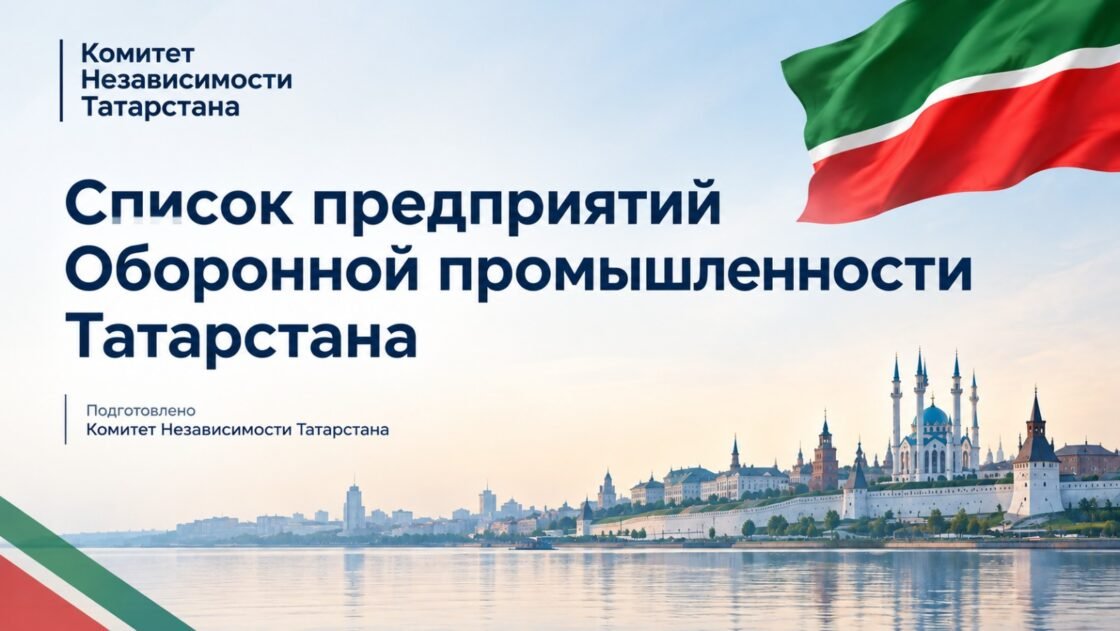
“With the exhaustion of all the resources of the Putin regime and the disorganization of its repressive apparatus, this could happen anywhere – in Tatarstan, Bashkortostan, Tuva, the Baltic states, Koenigsberg. In such a situation, the United States and the collective West must immediately recognize the region’s right to independence and declare their readiness to stop any attempts by the Russian federal center to subdue the breakaway entity by force.
In such a situation, the “domino effect” will destroy the empire in six months. This will not lead to a civil war, although, of course, there will be some excesses on the ground. However, this is the least of all evils. If the moment is lost and the Russian Federation becomes a de facto Chinese colony, such a development of events will be impossible.”
How close is the collapse of the under-empire?
The research company “U.S.S.” conducted a sociological survey “Assessment by the inhabitants of the Russian Federation of the state of relations between the federal center and the regions.” Its results can be found here
Alexey Belovol, Deputy Director of the U.S.S. Research Company, believes that the seemingly unshakable state stability of the Russian Federation, given the existing protest potential in the Russian regions, may turn out to be a real fiction.
It is the sanctions of the West, and specifically the Western anti-Putin coalition, that the majority of respondents, namely 48.7%, consider as a factor hindering the improvement of their lives. Which is much more than claims against local and central authorities – respectively 18.2% and 19.5% of the respondents. And the sanctions pressure, judging by the determination of the coalition, will intensify both in relation to Russia itself and to all those who are trying to help it circumvent the sanctions.
The potential for the collapse of the Russian Federation is in the gap between the regions and the center
More than 80% of the respondents categorically deny the possibility of the collapse of Russia and do not believe in the likelihood that regions may appear that can break away from the federal center. Nevertheless, more than 10% of respondents (among whom respondents aged 18 to 34 predominate) admit the collapse of Russia in the coming years. And with the weakening of subsidies from the center, where problems with the budget are more and more noticeable, these sentiments may intensify.
So, according to the results of April of this year, the deficit of the federal budget of the Russian Federation has already exceeded the plan for 2023 – the budget deficit amounted to 3.424 trillion rubles, having increased in April by 1.024 trillion at once.
Moreover, despite the 100% public loyalty of the head of Chechnya, Ramzan Kadyrov, it is Chechnya, like Tatarstan, the Caucasian republics in general and Bashkortostan, that Russians see as the most unfavorable regions in the context of the collapse of the Russian Federation.
At the same time, 40% of respondents believe that local authorities do not quite enough or completely insufficiently protect their interests before the center. These high figures indicate that power rests on the strength and strength of Moscow, but even local elections in September may bring surprises in certain regions and create prerequisites for distancing the regions from the Center.
As long as the TV is working properly for Putin, people on the ground see real problems and therefore want to believe that the tsar is good there, but here the boyars are bad. Therefore, the further the official, the higher the support.
The conflict of generations – the younger the age, the less support from the authorities
There is a clear trend towards a decrease in trust in the actions of the Russian authorities with a decrease in the age of the respondents. This is a confirmation of the fact that the more information a person is, the more mobile, the less he trusts the authorities. 33.8% of respondents aged 18 to 34 who oppose the war are a fairly promising resource.
One thing is clear, the processes maturing in Russia will inevitably affect both Kazakhstan and Central Asia. No one is interested in the emergence of a huge belt of instability along the perimeter of the world’s longest joint land border. Simulation of the future is the best chance to avoid civil war.
Exlusive