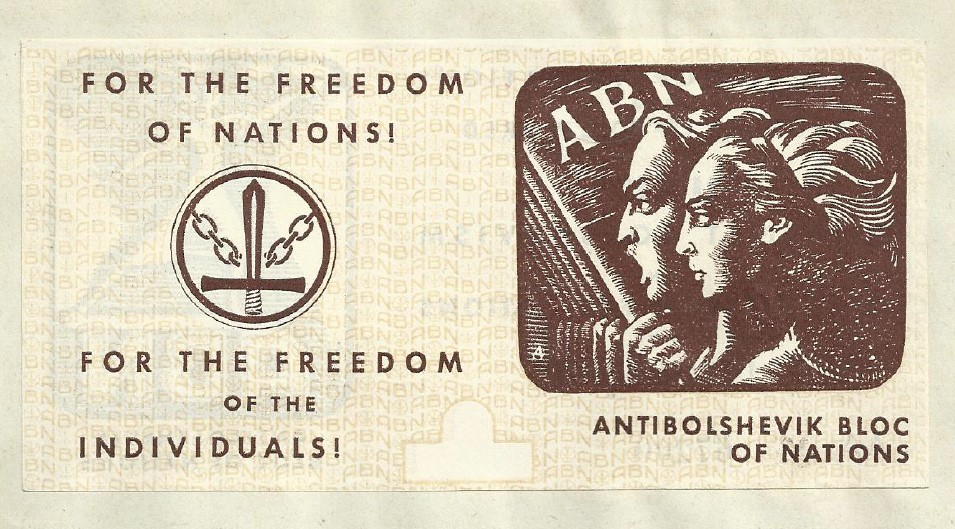
April 16 marks the 80th anniversary of the creation of the Anti-Bolshevik Bloc of Nations. This event took place in 1946 in Munich, where representatives of national (by then already emigrant) organizations gathered for the Constituent Congress.
But the organizational and political basis of the ABN was laid even earlier – at the secret Conference of the Enslaved Nations of Eastern Europe and Asia, held on November 21-22, 1943 in the village of Buderazh in the Rivne region at the initiative of the leadership of the revolutionary OUN. Delegates representing 13 nations enslaved by Russia – Ukrainians, Belarusians, Georgians, Armenians, Tatars, Ossetians, Azerbaijanis, Uzbeks, Kazakhs, Circassians, Kabardians, Chuvash, Bashkirs (almost all of them spoke under pseudonyms) – agreed on a joint struggle against two empires – the USSR and Nazi Germany.
Over the many years of ABN’s activity, a large number of historical documents were deposited in the OUN Archive, from which a special ABN fund was created – Fund 19.
We have now supplemented it by organizing 12 additional storage units (files). The added corpus of archival documents is the correspondence of the Central Committee of the National Anti-Russian Federation with representatives and national organizations: Crimean Tatars, Poles, Azerbaijanis, Armenians, Albanians, Bulgarians, Caucasians, Estonians, Georgians, Croats, Cossacks and Idel-Ural representatives.
Among the archival documents are many signatures of famous figures of the ABN and national movements of the nations enslaved by Moscow, letters, discussions, plans, invitations and reports – evidence of close, long-term cooperation of the nations against the Moscow Empire of Evil.
The chronology of the documents covers the period from 1949 to 1958 (there are also documents dated 1960-1962).
The publication of these unique historical sources is intended for their use by historians, journalists, and political figures of enslaved nations in their ideological struggle against Putin’s propaganda.
You can view and/or download these resources at the link .
You can read the description of F.19 in the OUN Archive at this link.