
The Day of the Deportation of the Vainakhs is one of the most tragic pages of the history of the Caucasus, which has left a deep scar in the memory of the Chechens and Ingush. On 23 January, we honour the victims of these events, remembering the ruthless Operation “Letch”, initiated by Joseph Stalin. This act of ethnic cleansing was intended to break the spirit of a group of people, eradicate their culture and change the demographic composition of the Caucasus. Although many years have passed, the pain of this tragedy is still felt in every Chechen and Ingush family.
In February 1944, one of the largest deportations in the history of the Soviet Union began. Within a few days, NKVD soldiers under the leadership of Lavrenty Beria forcibly deported the entire Vainakh population to Kazakhstan and Kyrgyzstan. According to the official version, they were accused of collaborating with Nazi Germany. However, there was no real evidence for this. Stalin feared the indomitable spirit of the Chechens and Ingush, who had resisted the Russian regime for centuries — from the Tsarist Empire to the Soviet regime and Putin’s current regime. The Vainakhs never submitted to the invaders, desperately defending their land and traditions. This resistance was the main reason for the brutal massacre of them.
The deportations were carried out according to a harsh script. People were evicted from their homes without warning, and only the bare necessities were allowed to be taken. Hundreds of thousands of men, women, children, and the elderly were crammed into freight cars without food, water, or heating. The conditions of transportation were so inhumane that many died en route. According to various estimates, between 20% and 40% of the deportees died from disease, hunger, and exhaustion. The bodies of the dead were thrown from the trains into the snowy steppes of Kazakhstan. It was a real humanitarian catastrophe.
A separate terrible episode of this tragedy was the fate of the village of Khaybakh. In the winter of 1944, when Soviet troops were carrying out Stalin’s order to deport the Vainakhs, the inhabitants of this mountain village were told that they had to leave their homes. But not everyone could do it – among them were the old, the sick, women with small children. They could not gather quickly, and some refused to leave their native land.
Then the NKVD officers decided not to waste time. They herded people into barns and stone buildings, locked them from the inside, and set them on fire. Those who tried to escape were killed by bullets. The buildings turned into mass graves for hundreds of innocent people.
This crime was not accidental or spontaneous – it was a carefully planned punitive operation that showed the true face of the Soviet government. The tragedy of Khaibah was kept quiet for a long time, hiding its scale, but even after decades, the truth broke through the veil of lies. Today, the name of this ‘aul’ has become a symbol of the cruelty of the Stalinist regime and the ruthless destruction of the Vainakh people.
However, even after arriving in new places, the suffering did not end. The Vainakhs were settled in special settlements under the strict control of the NKVD. They were deprived of basic rights: they did not have the opportunity to move freely, receive education in their native language, or engage in familiar crafts. They were forced to work in difficult conditions, often without proper remuneration. National traditions and culture were banned, and any manifestation of dissent was punished by shooting or exile to camps.
It was a classic policy of genocide: to destroy the people not only physically, but also spiritually, to erase their culture and history. The Soviet authorities purposefully destroyed Chechen mosques, sanctuaries and ancestral towers, trying to eradicate the memory of the past. Even geographical names were changed: the Chechen-Ingush ASSR was liquidated, and its territory was distributed between neighbouring regions. Instead, the empty homes of the Vainakhs were settled by immigrants from other regions, mainly Russians and Ossetians, which contributed to the Russification of the Caucasus.
Despite all the efforts of the regime, the Vainakh people survived. They preserved their culture, language, and religion even in exile. After Stalin died in 1957, Nikita Khrushchev rehabilitated the deported people, allowing them to return to their homeland. Chechens and Ingush returned to their homes en masse but faced new injustices: their homes were already occupied by displaced persons, and the land was redistributed. This led to social tension, ethnic conflicts, and further repression.
In turn, Russia has tried for decades to cover up the crimes of the Soviet regime against the Chechens and Ingush, and the tragedy of the Khaibah village is a clear example of this policy of silence. The Soviet authorities deliberately destroyed any mention of these events, and documents that could confirm the mass killings were either classified or destroyed altogether.
Until the 1990s, there was no information about the Khaibach tragedy in the official historiography of the USSR. Even after the rehabilitation of the Chechens and Ingush in 1957, this page of history remained under strict prohibition. In Soviet textbooks, the 1944 deportation was mentioned only in the context of the “relocation of people”, without any details about the forced evictions, mass murders and abuse of the civilian population.
In 2013, Russian media outlets reported that the Khaibah tragedy was a “fiction of Chechen separatists.” Pro-Kremlin historians began to actively deny the fact of the mass extermination of civilians in the village, claiming that there was not enough official documentary evidence. At the same time, Russian authorities blocked access to archival materials that could confirm this crime.
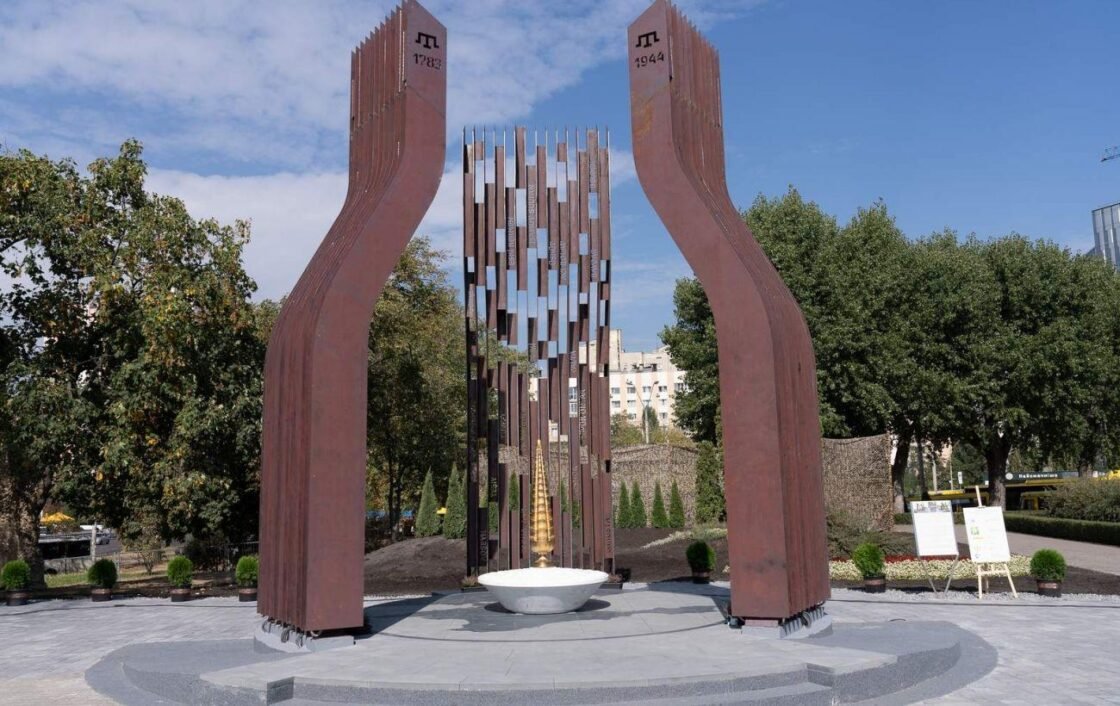
Moreover, in 2019, Russia officially adopted a new version of history textbooks that completely omitted information about the deportation of Chechens, Ingush, Crimean Tatars, and other nations in the 1940s. This was done under the pretext of “protecting historical truth” and combating “falsifications.” The Kremlin is trying to create an image of the USSR as a state that never committed crimes against people, and all deportations were justified by “security needs.”
This Kremlin policy is part of a broader strategy to erase from the memory of the people all the crimes of the Soviet and modern Russian regimes. But, despite all efforts, the truth cannot be hidden. Eyewitness testimonies, publications by independent historians, and the work of journalists allow us to preserve the memory of these tragedies and remind us that crimes against humanity have no statute of limitations.
Today, Chechens and Ingush continue to fight for their freedom. Despite all the repression and attempts to destroy their identity, they did not give up. The independence movement continues to exist, and one of the information centres of the resistance has become the independent information resource “Caucasus Center”, which covers events in the Caucasus and tells the truth about the Chechen struggle for freedom. The Russian authorities have repeatedly tried to block this site, which once again confirms its importance in the dissemination of truthful information.
Ukrainians should support the struggle of the Chechens and Ingush because their struggle for freedom from Russian oppression in many ways echoes ours. We know what repression, war, and attempts to destroy national identity are. The unity of our nations is our strength, and together we can stand up to a common enemy. The memory of the deportation of the Vainakhs is a reminder that totalitarianism has no right to exist, and we must all make efforts to never allow such tragedies to happen again.
Daniil Kozachok