

Dear Vladimir Ilyich!
Perhaps, because of your illness, this letter will not be read to you, perhaps they will not even be told that it exists, but since it was written, sent in copies to some comrades and sent to you, it is already a historical document.
Comrade Stalin, through Comrade Rudzutak, reports that I can return to the party, i.e., he pretends that he knows nothing about my anti-Moscow initiatives and my joining the rebel movement, which I notified the Central Committee by letter in 1920 from Baku. How can one trust you and return after on May 19, 1920, you and Stalin together signed a decree that 14 months later abolished the agreement of March 20, 1919, which both of you, me and other comrades signed. When I personally protested to you about this unilateral decree, you defined our agreement as a piece of paper. But this agreement announced the creation of an independent Bashkir army with direct subordination to the Supreme Command. By the decree of May 19, 1920, you deprived the Bashkir army of this right and completely subordinated it to the army corps beyond the Volga.
It all happened like this as you wanted, and today the Bashkir army actually does not exist. The deceptive phrase you formulated in the same resolution: Ufa province joins Bashkiria, actually means that Bashkiria joins Ufa province. The appeal of the Soviet government to Russian Muslims dated November 20, 1917 spoke of the right to independence up to “separation from Russia”; by your resolution on May 20, 1920, this right was completely destroyed. The defeat of the Bashkirs, Kazakhs and Turkestans in the south-east of Russia and my tomorrow’s departure from Soviet Russia open a new period in the history of the Muslims of South-East Russia: the struggle of Muslims for their rights ceases to be domestic and spills out onto the international arena. My task is to acquaint the world with the history and essence of this struggle.
The Great Russian nation, not only in the social and economic fields, but also in the field of culture, sets strict paths for the development of the nations and people in its captivity. The conductor of this policy is the Eastern University, which you organized last year. Experts on Eastern issues from among the Great Russians appeared in the Central Committee. To prepare the materials needed by the so-called specialists on the East under the Central Committee, Soviet citizens of Eastern nationalities were brought to Moscow. They published some books and pamphlets, but the topics of these publications were determined exclusively by the Great Russians; As for foreign intellectuals, they were sometimes not even invited to discuss issues directly affecting their nations.
Specialists from the Eastern University and the Eastern Department of the Central Committee are doing a lot of work today – they are trying to create alphabets and literary languages of different peoples, taking into account phonetic differences in local dialects. In establishing the principles of this work, non-Russian communists play only an advisory role. In the latest issue of the magazine “Kzyl Shark”, published by employees of the Eastern University, an article by Dagestani Umar Aliyev says that if the Russian alphabet (Cyrillic alphabet) is taken for the Turkic languages of the North Caucasus, this will ultimately lead to the introduction of Christianity, therefore the North Caucasians should use the Latin alphabet, as is planned in Azerbaijan; in general, the problems of the alphabet and literary language should be dealt with not by Russians, but by local scientists with the help of independent governments of autonomous states, created on the principles of national and political freedom. Such articles and the desire of the Azerbaijanis to gather communist intellectuals of the Turkic-Muslim peoples around “Kzyl Sharq” and a single literary Turkic language unnerved Great Russian scientists.
At one of the meetings, where Uzbek and Kazakh intellectuals were present, Professor Polivanov and other Russians, polemicizing with the Azerbaijanis Shakhtakhtinsky and Jalal Kuliyev, who defended the thesis of a single alphabet based on the Latin alphabet, stated that even if the Latin alphabet was adopted now, it would still over time give way to the Cyrillic alphabet, and each of the more than forty Turkic dialects will have its own alphabet. Shakhtakhtinsky remarked that the constant goal of the Russians is to prevent the existence of a literary Turkic language. It is absolutely clear that if you, Great Russian comrades, take on the language and spelling of a people, you will not leave them alone until they become completely Russified. It is impossible not to be struck by the difference between your views expressed in Against the Tide and other works about the right of nations to decide their own destiny, and the policies you pursue today.
In the summer of 1919, when we were engaged in the reform of our army in Saransk, your representative, Comrade Zaretsky, spent a month in lectures about the future of previously oppressed nations, about the formation of national governments and armies, about the fact that for the first time in history all these issues were positive, and is permitted by the Soviet government. I published an article in Pravda that was in tune with these moral teachings. But not even four years have passed, and your policy is developing and being implemented in a completely opposite direction. So it is better for the Russian Communist Party to talk about saving nations in countries of Asia and Africa far from Russia. The truth is that Great Russians are nervous when they see publications indicating the continuation of the tsarist colonial policy in Turkestan, like the material of the truth-seeker Georgy Safarov, who visited here, and they rejoice when local communists define small nations as small fish that are food for whales, passing it off as your own beliefs. Comrade Artem told some of our communists in Bashkiria that he believed in their future independent life and that in all Asian countries, except China and India, Soviet (Russian) culture would reign supreme; according to him, it was not even worth paying attention to local languages and cultures, who would like to prevent this; these languages can only be used to spread the ideas of communism. He repeated these and similar words in other places. They were heard outside Russia as well. There is no doubt that this policy will continue, and as a result, Soviet Russia will become the number one enemy of every nation who wants to live of their own free will, but remains in your captivity.
I told you a little about this when we looked over your theses together for a speech on national and colonial issues. Then I re-read these theses in The Communist International (No. I)172. You put forward the idea that after the establishment of the world dictatorship of the proletariat, the “advanced nations” will certainly provide active assistance to backward peoples in the construction of a socialist regime in their countries. This means that in India, Turkestan and Africa, colonial policy will be carried out respectively by English, Russian, French and Belgian workers’ organizations. When I spoke with your comrades in Ufa in 1915, there was no talk that the socialist regime that we would establish would will give rise to terror that destroys the will of people. What has happened now? Was this really the goal of the revolution? Pyatakov was right,
If you recover, perhaps you will personally correct the mistakes you have made. My only request to you is to allow my wife Nafisa to travel to Germany, who, due to pregnancy, will not be able to go with me to Iran tomorrow.
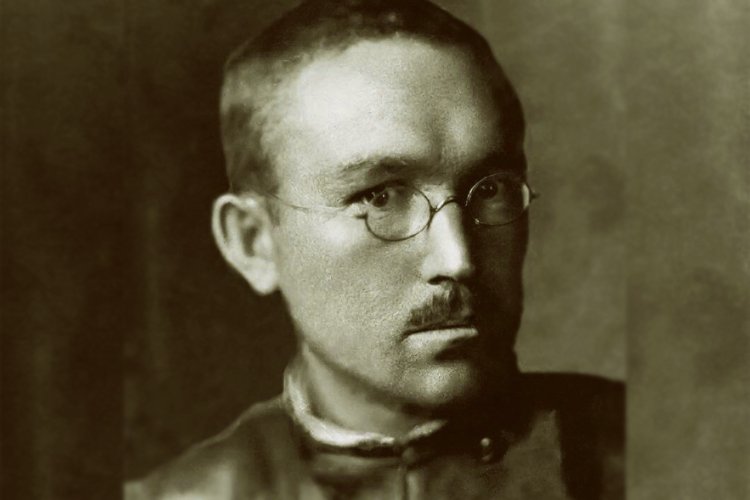
Akhmet Zaki Validov
Source: Iskhakov S. M. A.Z. Validov: Staying in power // Domestic History 1997. – N 6
Note: for a quick information search please subscribe to our Telegram channel “Freedom for Nations!” https://t.me/ABN_Freedom_for_Nations
Also, read the Facebook materials of the ABN page and the group
Our site: https://abn.org.uaen/






