

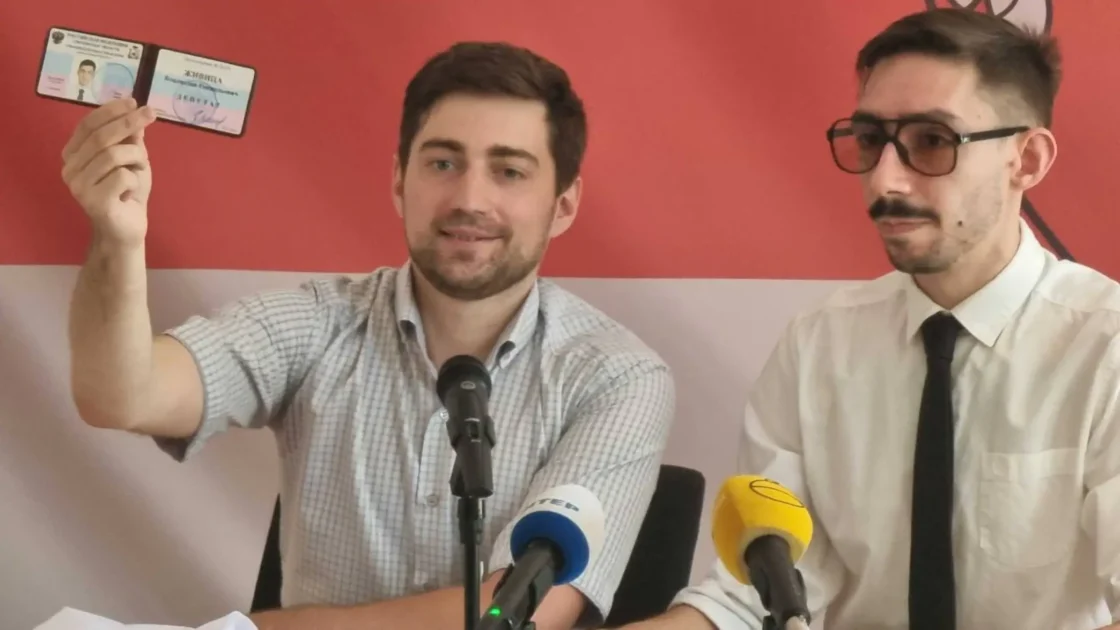
— Congratulations, Vas. How long has the idea of separation from Russia been brewing, and what was the catalyst?
—Good afternoon. The idea of separating the Smolensk region is not new – it has its roots in periods when the region had its own statehood or was part of other associations different from Russia. The modern stage of awareness began in the early 2010s. Russia’s full-scale war against Ukraine in 2022 became a catalyst: it showed that the current Russian statehood is a constant threat to both its neighbours and its own regions.
— What military facilities and infrastructure in the Smolensk region are most critical for supporting the Russian armed forces today?
—These are ammunition and equipment depots, air bases, air defence and radar sites, as well as railways connecting central Russia with the western direction. The M1 and P120 highways, railways used to transfer troops and cargo to the territory of Belarus, as well as the energy infrastructure that ensures the operation of military facilities, remain key. In addition, Moscow actively uses the human resources of the Smolensk region. A faculty for training junior engineers to serve military aviation has been created on the basis of the Moscow Energy Institute branch in Smolensk, and a production centre for unmanned systems for the needs of the army is also being formed. A military training centre operates based on SmolSU, from where students graduate as soldiers and sergeants. Small and medium-sized enterprises that work under defence contracts are also involved in military programmes, making the region’s economy increasingly dependent on war.
— Does Europe provide real assistance to your movement?
—Currently, Europe does not support us. We do not receive political, financial, or organisational assistance. Everything we do is based on our own strength, initiative, and interaction with like-minded people.
— Is there internal support for the ideas of independence among the residents of the Smolensk region?
—Yes, it is growing. More and more people see that Moscow is using the region as a resource base and a military bridgehead. The decline in living standards and isolation from Europe are forcing people to think about the future outside of Russia. Young people, scientists, and deputies are especially active, although not publicly, in talking about this.
— What are your relations with the Russian opposition? Who among them is truly ready to support the independence of the regions, or are they just as imperialists?
—The relationship is complicated. The majority retain an imperial mindset, opposing regional self-determination, even if they criticise the Kremlin. We cooperate only with those who recognise the right of each region to freedom and choice of its own destiny, but unfortunately, there are few of them. We are supported by national liberation movements and nationally oriented Belarusian politicians and organisations. We do not expect anything from the Russian opposition — and we do not need it.






