

Interview for the European Human Rights Dialogue project
— If possible, tell us about yourself and your work in two or three sentences.
– I am a journalist, editor-in-chief of the Region. Expert , I cooperate with Radio Liberty and Estonian publications, since I live in Tallinn, and with some American research institutes. The circle of my media contacts is very wide. I have been promoting the topic of the development of regionalism in Russia for quite a long time now, and I see that over the past year its popularity and demand have increased dramatically. Now we are trying to analyze these changes.
— How do you see the development of events in Russia in the near future?
– Accurate forecasts are now a bit ridiculous to build – you should not imitate Globa or Vanga. But first of all, the defeat in the imperial war against Ukraine can become a trigger for change. As we know from history, in Russia all reforms began with one or another lost imperial war. One can recall the Crimean War in the middle of the 19th century, and the Russo-Japanese War at the beginning of the 20th century. The demand for reforms in society arises precisely when the empire loses another war. I believe this will happen in the near future.
– And besides defeat, what other factors can play a role?
– Of course, economic sanctions also play a role, but, as the past year has shown, they have not yet undermined the military and economic systems of the empire as much as one might expect. So far, we have not observed protests in Russia related to the worsening economic situation. There are anti-war protests. Many people (I don’t know if they can be called optimists) said that if there were tough Western sanctions, the Russian economy would instantly collapse. Of course, it has suffered in many ways, but it cannot be said that over the past year this has led to some catastrophic changes and a sharp drop in living standards. The economy still exists somehow. Therefore, I would not expect any immediate performances. Of course, the situation is leading to this, because the modern economy cannot exist in isolation. But there is no such effect as it was in February 1917, when bread was not delivered to St. Petersburg shops – and the people took to the streets, and everything started to go. The authorities are trying to prevent such a situation, and so far it has the resources for this.
– What options open up in the event of such a fall?
“It all depends on how it will be. It is rather difficult to talk about any single scenario. For example, everything can happen according to the 1953 model. Then, after the death of Stalin, the Politburo slightly loosened the reins – and then attributed all the sins personally to Stalin and Beria. They themselves remained in power, although there were their own quarrels – Khrushchev removed the “anti-party group” of Malenkov and Molotov from power, and then Brezhnev removed Khrushchev himself. But the system itself has survived.
The situation was different in the era of Perestroika. Even before the collapse of the USSR, power passed from the CPSU to freely elected Soviets, and Gorbachev himself was the conductor of this idea. These were fundamental events. In fact, the most free elections in Russia were precisely in 1989-1990, and in the post-Soviet era, political technologies aimed at maintaining the status quo have already turned on.
Now it is difficult to say what the transition of power after Putin will be like. But in any case, I believe that the growth of regional requirements is inevitable, and he will be included in this process. How radical they will be is not yet clear. But, I think the law of the pendulum will work. Now the pendulum is at the point of total centralization, unification, imperialization. When it moves in the opposite direction, it will lead to the radical disintegration of Russia.
– Can the current Russian elite maintain its position at the same time? Can any of its representatives agree on something with the West separately from the rest?
– Here you can fall into conspiracy theories, remember “17 Moments of Spring”, where Himmler is trying to negotiate with the West. Of course, this is quite possible. But I think that from the point of view of the West, it will be about how legitimate these elites are, how much they represent the country and can govern it. From a pragmatic point of view, I think Western leaders will pay attention to this, but at the moment it is difficult for me to imagine that there are any autonomous subjects in Russian politics at all.
However, this may be an illusion – after all, even before 1953 it also seemed that the Soviet party elite was absolutely monolithic, and then it turned out that there were different points of view. Now a very tough personalist regime has been created in Russia, where Putin acts as a balancer. This can be seen as an option, as an option, but I think that with the elimination of this imperial personalism, events related to certain regional movements will play a more significant role. They are not noticed in the empire, but with its collapse they quickly become the leading political actors.
– Can the ideas of regionalism be realized in this case? If so, what possible mechanisms do you see for this?
– The optimal and most legitimate mechanism would be free elections of regional parliaments. After all, the governors, who are in fact appointed by the Kremlin, are not very popular, rather, in most regions there is a strong antipathy towards them. The only exception in recent years has been speaking in defense of Sergei Furgal in the Khabarovsk Territory, but his popularity rested on the fact that he defeated the governor from United Russia. And he himself was perceived there as a local native, no matter what party he belonged to – the main thing is that he opposed the Moscow dictate. Therefore, the people followed him, and later began to protect him.
But this is a unique case. And in most Russian regions, the mood towards governors is sharply critical. Therefore, I think that in the regions there will be a request for their own power. And since there are different forces there, I think a parliamentary form of government will be required for them to coordinate their interests. In the Russian subjects of the federation, there are still legislative assemblies, but they are deprived of any powers. This is not at all a federation like the United States or Germany, where each state and each land can have its own laws. Now the Russian regional parliaments are just clones of the State Duma, they have about the same ratio of different parties.
Let me remind you that in Russia in the 1990s there were regional political parties, but in 2002 they were liquidated – it was decided that parties could only be federal. It was a very harsh anti-democratic measure. Thus, all regional civil communities (right, left, whatever – the main thing is that they express the interests of the inhabitants of their region) were deprived of a political voice. At the same time, regional parties exist freely in European countries, even in such unitary countries as France. There, each department has its own parties, they can be nominated both in local parliaments and in the European Parliament. In Europe, such communities have both the right to vote and the right to represent. In Russia, although it is formally a federation, regional parties are banned, but I think that there will be a request for them. Regional parties and in the republics, and in the regions they will simply force out the federal ones, one might say, as a class. This is how this entire imperial trend, which is based on the fact that we have “a single people, from the Baltic to the Pacific Ocean, and we are at war with external enemies,” will collapse.
Politics will return, so to speak, inside, to their regions, to their citizens. In each region, I think, there will be a request for their own local self-government. After all, now most of the regions of Russia have been robbed. They say that there are only a few donor regions. But in reality, things are different. For example, we had an article on the portal by an economist from Karelia , which explains why it is considered subsidized. Most of its large enterprises, and even the world-famous Kizhi Museum, belong to some all-Russian holdings. So they all pay taxes outside the republic. There is nothing left in Karelia, because it is subsidized. In the same way, Gazprom produces gas in Yamal, but pays taxes in Moscow and St. Petersburg, their budgets are growing, and the local residents do not receive anything.
All over the world, another system is considered normal: the company pays taxes in the region where it operates. For example, in the United States, a corporation pays taxes in the city and state in which it is incorporated. Taxes and resources don’t go to Washington. One way or another, at the time of defeat in this imperial war, the demand for regional self-government will be very high. How will the regions interact with each other in the future? I think that contractual relations will be needed, but they will require legitimate authorities elected in the regions themselves. And the current governors have neither legitimacy nor popularity.
In what regions are the ideas of independence most popular, the strongest movements for it?
“Now we can’t talk about the popularity of these ideas in Russia, because I wouldn’t call sociological polls there relevant. Under totalitarian conditions, no adequate polls are possible. But judging by the movements of political emigrants from various regions who left Russia over the past year, such activity is observed in dozens of regions. They are really trying to formulate some requests for their future independent republics. Anything can be cited as an example, from Koenigsberg to the Far East.
For obvious reasons, the most active are residents of various national republics: the Caucasus, the Volga region, and so on. There, the economic and political suppression by Moscow is also superimposed on the national, linguistic. But many Russian regions also express their regional interests. Even in Königsberg, the name “Kaliningrad” seems ridiculous to the local regionalists themselves, and they do not like the transformation of their European region into an anti-European military outpost. There are Ural regionalists, there are Siberian ones, there is a similar movement in the Pskov region – they recall the history of the Pskov Republic. The Pskov region is very close to Europe, but propaganda seeks to make it a militarized, police region – and this causes protest.
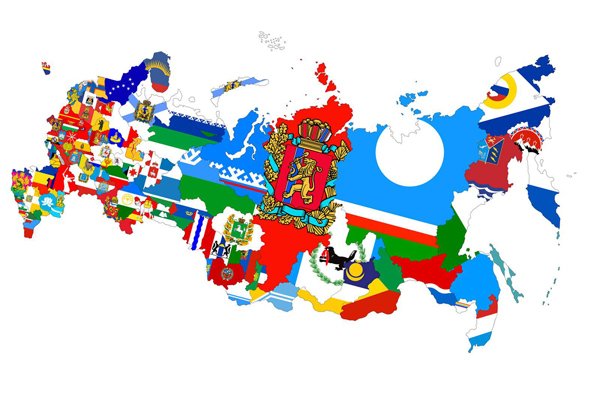
Now I would be careful not to say that something will break out in some region, and he will lead the process. Let us recall the same Khabarovsk events: hardly anyone could have predicted them. Who expected that in the Russian region people would come out to protest, and even with their regional flags? There were no Russian flags there – there were regional ones. For the first time in the territories and regions, their own regional symbols have become so popular. Of course, in the national republics this happens often, but in the Russian region this happened for the first time. And there were quite tough anti-Moscow slogans. However, this is generally characteristic of the Far East. Therefore, I would not now predict from which region everything will begin. But in the event of the collapse of the Kremlin vertical, I think we will face a “domino effect”: it will start in one region, spread to another, and gradually the slogans of self-government will become as popular as in 1990. Then all the autonomies within the RSFSR proclaimed declarations of state sovereignty. But then, for some reason, only the republics, and not the regions, were allowed to do this. I think that at the current stage, the sovereignization process will also affect the regions.
– What forces can lead the process of Russia’s disintegration? After all, the Furgal you mentioned was an exception.
All revolutions produce some sort of “exceptions.” I think that civil forces will form in every region – of course, not immediately. Perhaps some part of the local elites will take part in this, but not those people who were appointed “vertically”, but those who have been working in a particular region for a long time, in its economy, culture, science, and so on. All these institutions still exist, but they are suppressed by this vertical. I think civil awakening will happen in every region, it’s inevitable.
Of course, not all regions will support the idea of immediate independence – somewhere they will support it, somewhere not. Rather, the possibility of a new federal or confederal agreement between the regions will be discussed, because almost all regions are interconnected – both economically and humanly. Most likely, even if some force appears in the elections and advocates strict independence, they simply will not vote for it, people will not understand the need to fence themselves off from their neighbors.
I believe that there will be a division of ideas: on the one hand, everyone opposes the Moscow dictate, but even the same Karelia will not want to break ties with Ingria (the current Leningrad region) or with the Arkhangelsk region. We will talk about getting rid of vertical unitarism, and I think no one will particularly object to direct horizontal ties between regions. But it is important that there be a real transition of power. I remember perestroika times, when power was transferred from the CPSU to the elected Soviets. It was a short period, and perhaps few people noticed it – but it took place. And now such a transit seems to me the most adequate. In the regions, instead of this appointed gubernatorial pseudo-elite (often they are simply “Varangians”, people who have nothing to do with the region), regional parliaments should be elected, which will actually represent all civil communities, the same regional parties, based on the needs of the local population. And when such parliaments are formed, they will decide what kind of agreement the region needs, or whether it needs complete independence.
Is such a scenario possible without bloodshed? Which regions in this regard seem to be the most dangerous?
— The main risk is not in relations between regions. This is a horror story that the Kremlin is imposing: they say, if there are no deputies somewhere, then everyone will fight there. In fact, most regions have nothing to share among themselves. This also applies to the Siberian regions and most of the republics. They all suffer together from the same unitary policy, Moscow drains them of both resources and taxes. They are equally colonies. Rather, they will together oppose this vertical and demand its elimination.
Some kind of inter-regional clashes are possible only in the North Caucasus. There the borders were cut very artificially. Different peoples were united into one republic, such as Kabardino-Balkaria and Karachay-Cherkessia – very different peoples live there. And, for example, the Nogais, on the contrary, were scattered across different republics. The situation there is really complicated, and I think some kind of border conflicts are possible. But if there is a democratically elected government, it will minimize these conflicts. If all Russian regions elect their own parliaments, they will not be so concerned about the issue of borders. For them, the main thing will be to get rid of this Moscow vertical. And the main risk will be that the well-armed National Guard, detachments of the FSB, FSO, and so on, will clash with local forces in the regions. But I think, that there the majority of the population will defeat this Praetorian Guard, it will not be enough to crush the desire for self-government. The army, in my opinion, will remain neutral in this situation – it is unlikely that it is interested in any inter-regional clashes.
— What role can Western powers play in the regionalization of Russia? What is the possible role of China?
– It is often said that if Russia falls apart, then China will take Siberia for itself. But now we can observe that Siberia and the Far East have actually been turned into a joint raw material colony of Moscow and Beijing . Already now, huge resources from there are sent to China for next to nothing, and the local population does not receive anything from this. Recently, the Power of Siberia gas pipeline from the Kovykta field was launched in the Irkutsk region, and there all the gas goes to China . This is completely absurd: gas is produced on Russian territory, but the locals themselves do not see it, it goes completely to China. This is an absolutely colonial situation.
China does not need to take anything – it already takes everything it wants with the permission of Moscow. All these Russian-Chinese relations are based on pure geopolitics, on a bloc against the West, against all democratic countries. But in this bloc, the Siberian and Far Eastern territories of Russia find themselves in the position of plundered colonies, which themselves do not dispose of their raw materials. But if the Siberian and Far Eastern regions acquire economic and political independence, then they will be able to manage their own resources. Perhaps they will also be interested in trading with China – this is a huge state with a colossal economy, but all the profits from gas, oil and coal that are sent to China will remain with the regions themselves and work for their own development. It makes no sense for China to arrange some kind of military expansion – it arranges economic instead.
As for the interest of the West in the de-imperialization of Russia, here, I think, some historical understanding should be included: as long as this giant Eurasian hyper-centralized empire exists, it will constantly threaten both European countries and its neighbors.
This can be traced back to the 19th century, when Russia constantly tried to attach someone to itself, to play the role of the “gendarme of Europe”. In 1917, this empire seemed to have collapsed, but then the Bolsheviks gathered it again, and under new messianic slogans they began to threaten the construction of world communism. The imperial trend has resumed. And now – it seems that the USSR collapsed, it seems that Yeltsin spoke in the US Congress, promised that Russia would forever return to the civilized world, and would no longer pose a threat to anyone … And only seven years had passed – and he brought Putin to the Kremlin. The imperial matrix has won again, swallowed up everything, and again threatens the entire world around us.
Responsible Western figures should know history and draw some conclusions. It is impossible to endure endlessly that this empire breaks up over and over again, and then gathers again and begins to threaten the whole world. This problem needs to be radically addressed somehow. I think some sort of international decision will be made to prevent the creation of a new centralized, Moscow-centric empire.
– Is there a chance that the defeat will lead not to regionalization, but to the complete disintegration of the country and civil war?
— I can’t imagine a civil war between most of the regions, because they have nothing to share. All of them will only oppose Moscow-centrism, which robs them and does not allow them to freely choose their government. This Kremlin horror story about the civil war does not convince me. Yes, clashes with federal forces, with the National Guard and so on are possible. But if regional sovereignty is ubiquitous, then the Praetorian Guard will inevitably lose.
Complete collapse is also a virtual horror story. Each region must elect its own government. The best option is parliaments, because they are already legitimate, unlike governors, but they do not have power. And if they are elected with the participation of all regional parties, then this will be a legitimate government that will make international recognition of the republics possible. Well, then some regions will wish to maintain their independence, while others will prefer new confederal projects. The point is not that some center wants it that way, but because it is more profitable for them to conduct trade among themselves without customs barriers. But the independence of the state involves borders, customs and the like. Since the Russian regions are economically interconnected, I think that all this will seem superfluous to them.
Another thing is that this association should in no case be built on a centralist principle, and, of course, its capital will not be in Moscow – it is associated with imperial suppression, and most regions will not support such an option. But I leave this issue to the discretion of the future regional parliaments, I would not like to prejudge anything for them.
– What will happen to nuclear weapons in the event of the collapse of Russia?
– Of course, the problem of nuclear weapons is the most frightening of all – that they will disperse somewhere. But after all, in the conditions of the collapse of the USSR, this threat was somehow stopped. However, then Russia picked up everything for itself. But at the new stage, all these newly formed political entities will simply not need nuclear weapons. It has, rather, geopolitical significance, it is useless for resolving interregional issues. In the event of a dispute between Bashkiria and Tatarstan, even if there are nuclear weapons there and there, will they be used? This is completely absurd, because the nuclear wave will cover even the one who presses the button.
Most likely, the scenario that has been repeatedly discussed at the Post-Russian Forum of Free Peoples is being implemented: the new regional forces will agree that the nuclear weapons located on their territory be transferred to the UN or some specially created international commissions. The regions or republics themselves will be interested in this, and their representatives present at the Forum are in favor of the denuclearization of their territories. They are ready to give up nuclear weapons in exchange for international recognition and economic support. But now there will be no question of transferring these weapons from all the republics to any one, as was the case after the collapse of the USSR. Then it just led to the restoration of an empire that threatens the whole world. Now, I think, not a single entity will lay claim to these nuclear weapons, they will need to be handed over to international organizations.
– If some regions still prefer independence, and they need an intermediary in their relations, then who is most likely in this capacity?
– I think, most likely – international organizations, and by that time they should already be created and ready for this. One can recall the court for the former Yugoslavia – however, it was only a judicial instance, and created only after the fact. But even then, the UN was saying that in order to resolve such conflicts, it is necessary to create in advance some kind of international organizations capable of acting as a balancer, an intermediary between various forces.
When some regions in Russia begin to stand up for their sovereignty or independence, they will need international mediators one way or another. But in this capacity, some individual countries are also possible, for example, the United States or Germany. After all, these countries are federations, and their political elites are well aware of what regional diversity is. They will try to find some mutually agreed solution for different regions. But I do not expect any special conflicts between the regions: they have nothing to share. Someone may have border issues. But after all, the borders between European countries are largely artificial – but everyone has come to terms with this. So the issue of borders is likely to be far from being the most important, it is difficult to expect any special conflicts here. The main conflict will be between the imperial elite, including the power,
– What elites can lead the regions of Russia in the event of its collapse – those who are already ruling them, activists in the struggle for independence, or some others?
– The regions will be headed by those who win the parliamentary elections in them. These elections will show who is the real elite, and who is the “elite” in quotation marks. The request for self-government, I think, will be in all regions. Let’s see who the local population chooses. Some colleagues fear that if elections are called immediately after the fall of the regime, then United Russia will win. These are rather strange fears, because United Russia hasn’t won much before, but now it will suddenly win after all its politics have collapsed. This should not be expected, especially if regional political parties really appear. In my opinion, they will become the main subject in these elections. Of course, the old elites can defect to these new parties – but I think that the citizens themselves will figure it out.
Let us recall the perestroika elections of 1989-1990, when party conservatives were also nominated, but were not successful. Everywhere people of democratic views won, and in St. Petersburg the Lensoviet was the most radical-democratic and even regionalist parliament. In Siberia, people like Alexei Manannikov, a former Soviet dissident, were elected. Then new people came to the parliaments, and not Soviet “cogs” and conservatives from the previous system. Most likely, we will observe approximately the same picture in really free elections. The regional elites will be replaced very abruptly, the “vertical” appointees, of course, will all fly away, because no one will vote for them. There will be no falsifications, because there will be a lot of observers at the elections, including international ones. In this way, it will be possible to find out the real moods of people.
I have respect for Ilya Ponomarev, but he argues that a two-year transition period is needed – and this means that “good Russians” will settle in Moscow, who will reproduce the same centralized model. I’m afraid that this whole imperial matrix will simply reboot, enter a new circle, and the regions will not really get their vote, there will be no agreement. An agreement is possible only on the basis of legitimately elected regional parliaments.
— Is there a danger of local kings coming to power, like those that appeared in the Central Asian republics after the collapse of the USSR?
– Personalist regimes exist right now: there is a Kremlin tsar who appoints his deputies to different regions. To get away from this model, it is necessary to move to the format of parliamentary republics in all regions. Parliaments will more adequately represent the diversity of local forces: right, left, whatever. If local parliaments (which are now called legislative assemblies) become the main political actors in the regions, and they are really freely elected, then it will be possible to get away from the personalist model of power.
– If defeat in the war does not lead in the short term to either reform or revolution, then how can events develop in the country?
“It’s hard for me to imagine that defeat will not lead to any changes. History shows that the military defeat of an empire always, one way or another, causes a demand in society for reforms, for a different policy. Theoretically, one can imagine that Russia will retreat from Ukraine, but this will be presented as a victory, as a “goodwill gesture.” But this will only be a variant of a delayed decision.
Russia is so actively positioning itself as a new great empire that it can no longer abandon this imperial policy. Propaganda speaks of this, and the recently published concept of foreign policy.. The Kremlin has set itself a global imperialist goal: to recreate the zone of influence of the USSR – at least, although, of course, it does not have the resources for this. But he tries to insist on it and threatens the whole world with nuclear weapons. But there were no threats to “destroy the whole world” even from the lips of late Soviet leaders, for example, Brezhnev. Then the official doctrine was peaceful coexistence. The current Kremlin leadership is more radical, it has already rejected this doctrine, and declares only its own interests, wanting to suppress all other countries and dictate their will to them. I think the international community will not agree with this, and some model of external influence can be used to eliminate this empire. One way or another, the regionalization of this empire seems to me not only necessary, but inevitable. This is where historical logic comes into play. This empire collapsed twice: in 1917 and in 1991, but, as they say, God loves a trinity.
Is it possible to preserve the Putin regime, albeit with some modifications, without Putin himself?
— No, like any other personalistic regime. Hitler’s regime could not survive without Hitler, Stalin’s regime could not survive without Stalin… All such regimes leave together with their supreme rulers. This is a common illusion: the Russian regime appears strong to many, but is actually very fragile compared to democracies. In democracies, the main thing is institutions, the turnover of power. We may not know who is now leading the French or British parties, and it does not matter at all. It is important that these parties exist as institutions. And in Russia, as you know, all parties are personalist. Zyuganov and Yavlinsky have been in charge of their parties for 30 years, and Zhirinovsky has been in charge for the same amount, longer than Putin has been in charge of the country. This personalistic model requires total abolition. I think it is the primacy of institutions that will be evidence that
– In your opinion, is the current state of Russian society organic for it – or is it situational, caused by state propaganda or some other factors?
— You don’t need to go far for examples, just remember the Afghan war unleashed by the Soviet Union in 1979. There were no mass protests against it, although people were recruited there from all regions, and then returned in the form of “200 loads”. Protests began only in Perestroika, in 1987, and in the end, in 1989, Gorbachev stopped this war and withdrew troops. In the early 1980s, under the totalitarian regime of Brezhnev, Andropov and Chernenko, no one could expect protests against the war – however, there were fewer deaths there than now in Ukraine. And then it suddenly turned out that no one needed this war – as soon as glasnost more or less appeared.
Approximately the same situation now. To say that the entire Russian society supports the war means to trust propaganda, because that is exactly what it claims. In fact, nothing of the kind. But we do not know real sociology, and it cannot exist in a totalitarian regime. If someone calls a person, introduces himself as a sociologist and asks if he supports the “special operation”, naturally, he cannot be sure that if he says “no”, then the cops will not come to him tomorrow, they will not fine him or even put him in jail, after all, now any speech against the war is already a criminal article. Naturally, no one will tell a stranger that he is against the war. At least most won’t. And from this near-power sociologists make a beautiful picture. In the conditions of freedom of speech, when no one is prosecuted for speaking out against the war, I think the situation will be completely different. No need to believe the Kremlin propaganda.
Is it possible to sober up Russian society, and if so, what is required for this?
– When the First World War began in August 1914, the German embassy was burned in St. Petersburg, there were mass demonstrations with shouts of “Hurrah for the Tsar-Father”. And just two and a half years later, in February 1917, the same Petersburgers took to the streets with the slogans “Down with the autocracy!”. It’s all very unpredictable – but inevitable. The war lost by the empire inevitably changes public consciousness, sometimes changing it radically and revolutionary. I believe that in this case, after the lost war against Ukraine, this revolutionism will become a boomerang: Russia tried to seize and dismember Ukraine – and instead it will split itself into various regions. This is how it happens in history.
– Then the readiness to fight was enough for two and a half years. How long can it take this time?
– Hard to tell. Now, in fact, they have already mobilized everyone they could – but this did not help. I think if at some point the mobilization is overdone (it’s not even about electronic summonses, but about the fact that everyone will be taken away this year), this may cause protest in some regions. They are still trying to buy people with promises of large payouts (and they are really very high by the standards of many depressed regions). But when they begin not to buy them, but to drive them by force – perhaps this summer – this will become one of the factors in the growth of protest. And if somewhere, like a spark, a fairly massive anti-war movement breaks out, the level of speeches in Khabarovsk in 2020, then this will inevitably spread to other regions. Then we will observe a completely different picture.
Can regionalists resist Putin’s war, and if so, how?
“Those of them who are abroad are already opposed to her. As for those who live in Russia itself, we from safe Europe cannot demand anything from them. It would be incorrect and unethical – calling for protests, we substitute them under police batons and criminal articles. But the continuation of the war leads in many regions to the question: do we need this empire? People are starting to think about it, including on social media. I myself observe how completely apolitical people suddenly come to regionalist ideas. If we do not live by the interests of our republic or region, but are forced to obey Moscow, turning our youth into cannon fodder, what is the point? It can be said that such topics are already becoming mainstream in many social networks.
I think regionalist sentiments will inevitably grow. But in order for them to manifest themselves politically, some changes are needed. And in Russia, change traditionally starts in the capitals, but then spreads everywhere – and on the ground, the results can be very different, even unpredictable.
— What prompted you personally to leave Russia, apart from threats from the Karelian leadership?
– When Governor Khudilainen wrote: “There will be no will for extremists either in Petrozavodsk or in Karelia” , it was already read as a clear threat: “Get out, otherwise we will put you in jail.” I realized that with my ideas of regionalism and self-government, I no longer fit into the permitted framework of the kind of journalism that could still exist in Russia. It was 2015, already after the annexation of Crimea, when there was wild imperial propaganda. I already had two administrative cases with a landing, and then the employees of the Center “E” said bluntly: the next case would be a criminal one. I decided not to give them such a gift.
— Has your attitude towards Russia and the Putin regime changed in emigration?
– In a qualitative sense, it has not changed, but there is more understanding: unfortunately, for Russia, this empire is fatal. This is not some kind of historical accident, but a pattern, and a cyclical one at that. If Russia continues to be a single centralized state, then it will cyclically fall into this imperial rut. It begins to threaten both its neighbors and the entire world around it, to suppress its own population. She keeps getting back on track. Interested researchers should consider some possible way out of this imperial, so to speak, samsara.
— Are you a member of the Forum of Free Peoples of Post-Russia?
– Yes. I participated in the first forums, then there was a break, and now I took part online in the sixth forum.
— How do you assess its significance and prospects?
— It seems to me a very useful discussion platform. For example, Kaspar’s Forum of Free Russia continues to be “Moscow”. People who left Moscow gather there and continue to live by centralist stereotypes. The same applies to Khodorkovsky and his projects. They all agree that Russia should be preserved as a centralized state, only a bad tsar should be replaced with a good one.
And the Free Peoples’ Forum has a much more radical approach – and, I think, absolutely right. We need to stake on various regions of this space, on future countries and their direct agreements with each other. Moscow officials or self-proclaimed oppositionists should not be allowed to command everything again. I believe that this forum has very serious prospects. It met for the first time last spring, first in Warsaw, then in Prague. The latest forums are already Brussels, Washington and New York. One can observe how both factions of the European Parliament and American institutions are increasingly showing interest in the ideas of regionalism in Russia. They understand that this is one of the real alternatives that now exists. Most importantly, the idea of regionalism, which even ten years ago seemed utopian,
– Has your attitude towards him changed, and if so, under the influence of what?
Why should it change? I believe that its participants are generally right, only I have some constructive criticisms. This is normal, I’m not the organizer of the forum, but also one of the participants. Yes, there are many tend to wishful thinking. For example, they accept declarations of independence of their republics, although no one in the republics themselves knows about it. It turns out some fallout into the virtual world. In my speech , I urge you to engage in real analysis of the situation in the regions. And then, I think, this analytics will prompt an adequate political practice.
— Who organized this forum as an organization?
– As far as I understand, several public organizations from Eastern European countries participate in the forums, one of the factions of the European Parliament (the faction of European conservatives and reformists) – the Brussels Forum was held as a conference of this faction. They have the right to organize such conferences and invite to them whom they wish. And several American institutions participated in the organization of the forum in the USA, for example, the Hudson Institute, and the Ukrainian Institute in New York. They also showed interest in this topic and wished to receive representatives of this forum and listen to them.
I think this is a very good sign that such advanced American institutions invite various regionalists and are ready to communicate with them, to learn their interests and points of view. This is a much better picture than in 1991, which Western Sovietologists actually overslept. Oddly enough, they were just as centralists as the Soviet leaders, and only followed what was happening in the Kremlin, with little or no interest in the demands of the various republics. For many of them, the collapse of the USSR was completely unexpected, they did not see new countries in the union republics, and only then began to quickly study them. And now Western analysts are beginning to study the situation in the Russian regions, not focusing on the events in Moscow. They are also interested in the western Russian regions, and the eastern, and Siberian ones. It’s very good, it shows
— What role does Ukrainian participation play in it?
Of course he plays. One of the organizers of this forum is Oleg Magaletsky, a Ukrainian public figure and analyst. I believe that from the point of view of Ukraine, this is a completely natural interest in regionalism in Russia and its de-imperialization. But Ukrainian participation in this forum is not some kind of setting a single doctrine – it is only at the level of individual participants. There, for example, the deputy of the Verkhovna Rada Oleg Dunda speaks, and other analysts too. And all statements of the Forum are accepted by representatives of various regions of Russia, all this is discussed, amendments are made. It would be wrong to say that Ukraine somehow limits the agenda. On the contrary, at the last forum there was even a free discussion of supporters of the independence of their regions and the preservation of Russia as a single state.
— How influential are its participants in their regions?
– Since regional political parties are banned in Russia, it is difficult to say how much the forum participants represent them. Yes, many of them did not pass through the election filter, so it is too early to say that there is some kind of legitimacy behind them. On the other hand, they represent regional civil communities, they keep in touch with their countrymen, many of them are popular there, and for many years they have been involved in local social and political work – that is, they are known there. The issue is that we cannot now say about any emigrant oppositionists that they represent someone. And who, excuse me, do Kasparov and Khodorkovsky represent? After all, they, too, were not elected by anyone, but for some reason they broadcast for the whole of Russia.
– Which of the famous people in exile do you trust and support more? Who could play the role of leader, influence the situation in Russia? Or are there none?
– I repeat: we need to move away from the personalist model. She inherits the Russian monarchical tradition. It all comes down to the fact that we are looking for some leaders, leaders. Under normal political conditions, institutions must work, or rather, they must first be created. This also applies to regional parliaments and other institutions.
I would not want the opposition to have a single leader – this will return us to the same personalistic, imperial track. If, in a broad sense, we are talking about emigration figures whom I trust, then I would, unfortunately, name the late Vladimir Konstantinovich Bukovsky. We talked with him in the UK back in the zero years, I interviewed him. An old Soviet dissident who was once exchanged for Luis Corvalan is a well-known story. He then published a host of new books, and in recent years he has been interested in and supported regionalist movements in Russia. In this he differed significantly from the “centralist” Moscow opposition. I believe that much of his legacy remains relevant.
Регион-Эксперт





