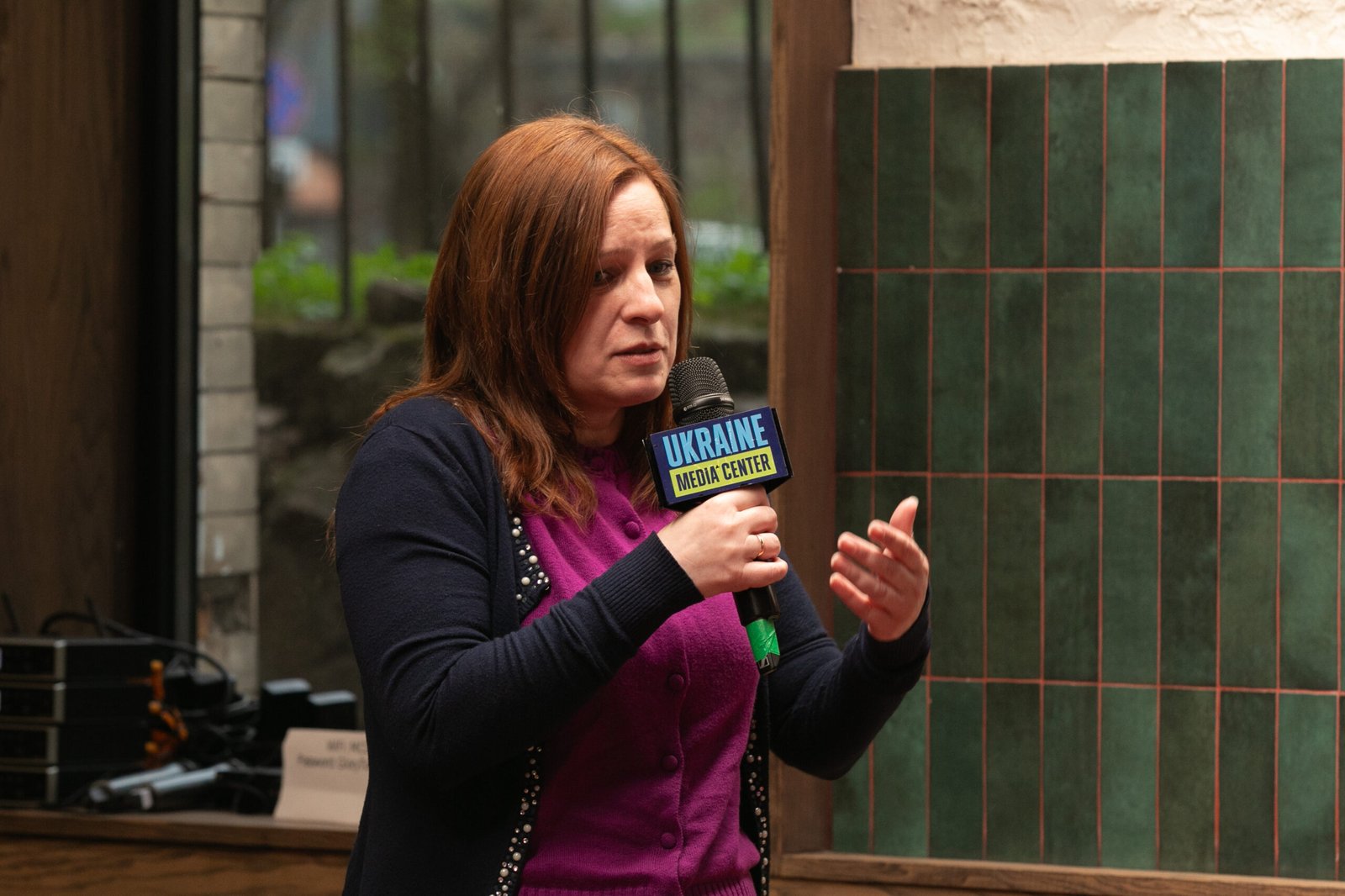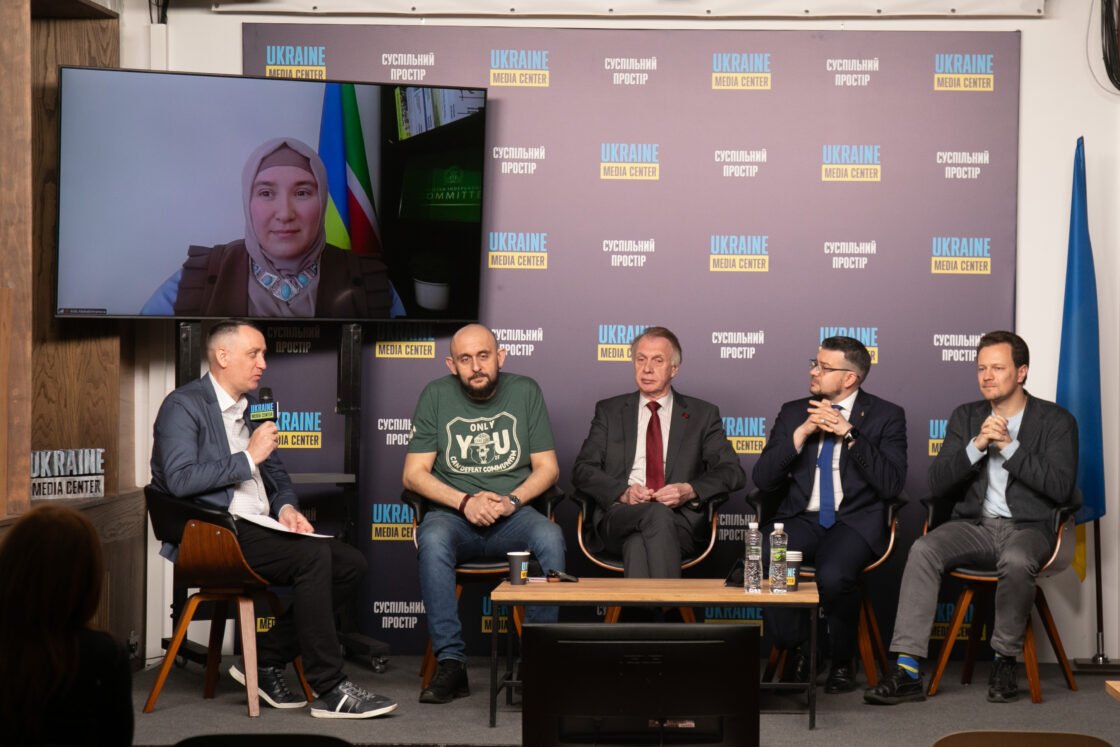
In Kyiv, at the Media Centre “Ukraine”, at the initiative of the Ukrainian Institute of National Remembrance, an expert-led panel discussion was held on the topic: “ABN and Modernity: Prospects for the Struggle of Enslaved Nations”, dedicated to the 80th anniversary of the creation of the Anti-Bolshevik Bloc of Nations.
The purpose of the expert-led panel discussion was to draw attention to the history of the creation and activities of the Anti-Bolshevik Bloc of Nations (ABN), in whose ranks various enslaved nations were united in a common struggle against Russian Bolshevism and the USSR. As is known, on 16 April 1946, the First Congress of the ABN was held in Munich, which formed the idea of \u200b\u200bthe enslaved nations as a separate force in international politics. The expansion of the ABN took place through the accession of national organisations of different countries, which was accompanied by the formation of the idea of \u200b\u200bthe enslaved nations as a separate force in international politics. At different periods, the association included representatives of numerous emigrant and diaspora communities from Eastern Europe and Central Asia. The main role in the creation of the ABN was played by the Ukrainian liberation movement, which, under the leadership of the OUN (b), acted as the organisational core in uniting peoples in the struggle against the “prison of nations” – the USSR. The ABN played an important role in supporting and coordinating the activities of underground organisations in the USSR during the Cold War.
A separate task of the event was to rethink the ideas and experience of the ABN in the context of the modern Russian-Ukrainian war, primarily through the prism of the struggle of the nations against modern Moscow imperialism.
In his opening remarks, the moderator of the event, Executive Director of the Anti-Imperial Block of Nations, Director of the Ukrainian Information Service Oleh Vitvitskyj, described the main periods of the ABN’s activity: from the time of its creation to the present. He emphasised the continuity of the Anti-Imperial Block of Nations as the successor of the ABN’s work during the Cold War. “Times have changed, but the mission of the ABN has been and remains unchanged – the liquidation of the Moscow empire through the national liberation struggle of the enslaved nations, with the support of Ukraine and the entire civilized world,” Oleh Vitvitskyj emphasised.
The Head of the Ukrainian Institute of National Remembrance, Oleksandr Alforov, stressed the importance of properly honouring the merits and achievements of the Anti-Bolshevik Bloc of Nations, especially in the current period of the Muscovite-Ukrainian war. Oleksandr Alforov noted that the history of the ABN is not sufficiently known in Ukrainian society and needs proper study and popularisation.
Volodymyr Ohryzko, Minister of Foreign Affairs of Ukraine (2007 – 2009), Ambassador Extraordinary and Plenipotentiary of Ukraine, Head of the Centre for Russian Studies, in his speech touched upon the international aspects of the ABN’s activities, agreeing with previous speakers that it is necessary not only to study historical experience, but also to work on the final implementation of the ABN’s mission.
The head of the Tatarstan Independence Committee, vice-president of the Anti-Imperial Block of Nations, Aida Abdrakhmanova, congratulated the participants on the 80th anniversary of the founding congress of the ABN.
“The Anti-Bolshevik Bloc of Nations truly became a powerful and in many ways unexpected force of the 20th century — a union of nations enslaved by the Russian Empire represented by the USSR. It was an organisation that managed not only to self-organise, but also to conduct effective joint activities of representatives of different nations for decades, achieving significant results. Therefore, the role of the Anti-Bolshevik Bloc of Nations is difficult to overestimate,” Aida Abdrakhmanova emphasised in her speech. “After Russia’s full-scale invasion of Ukraine, Ukraine itself and its role in international politics acquired new significance and new influence, as did its socio-political organisations, which throughout Ukraine’s existence have been fighting bloody Russian imperialism.
The goals and objectives of the ABN remain relevant to this day, as Russian imperialism is still alive and aggressive. Therefore, the very concept of the ABN national liberation struggle remains relevant.
Nowadays, the ABN has transformed into the Anti-Imperial Block of Nations, of which I am the vice-president, noted Aida Abdrakhmanova. Together with representatives of other peoples, we closely cooperate, having the same goal – to break the shackles of the Moscow “prison of nations” and stop its bloody war in Ukraine. The Anti-Imperial Block of Nations is doing a lot of work to draw attention to the history of the ABN’s creation and activities. It is especially important for us, representatives of enslaved nations, that a separate educational course has been introduced at the University of Free Nations, completely devoted to the history of the creation and activities of the Anti-Bolshevik Bloc of Nations. This not only brings together different generations of fighters for freedom from centuries-old Russian imperialism, but also allows us to use the successful experience of our predecessors.
Aida Abdrakhmanova also made specific proposals regarding those areas of work of the Anti-Imperial Block of Nations that are priorities: establishing permanent work with enslaved peoples within Russia; dialogue with foreign politicians; training military personnel from among the enslaved nations and their education with a view to future stages of the struggle.
Other speakers of the expert panel discussion also shared their thoughts on the prospects for the national liberation struggle of enslaved nations, the role and significance of the ABN – Taras Byk, a member of the board of the NGO “Decolonisation” and Stanislav Fedorchuk, head of the “Postrosia” direction of the Analytical Centre “Ukrainian Strategic Initiative” at the Kyiv-Mohyla Academy, and Tetyana Boyko, a representative of the Ukrainian Institute of National Remembrance, responsible for organising the event.