

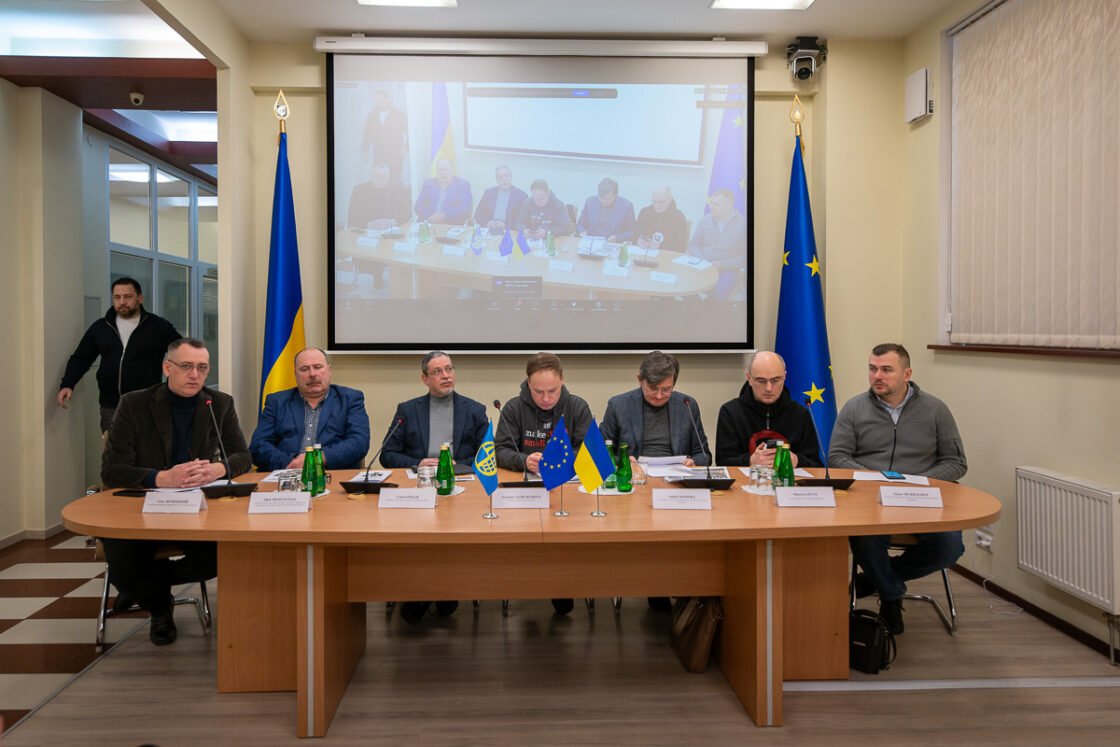
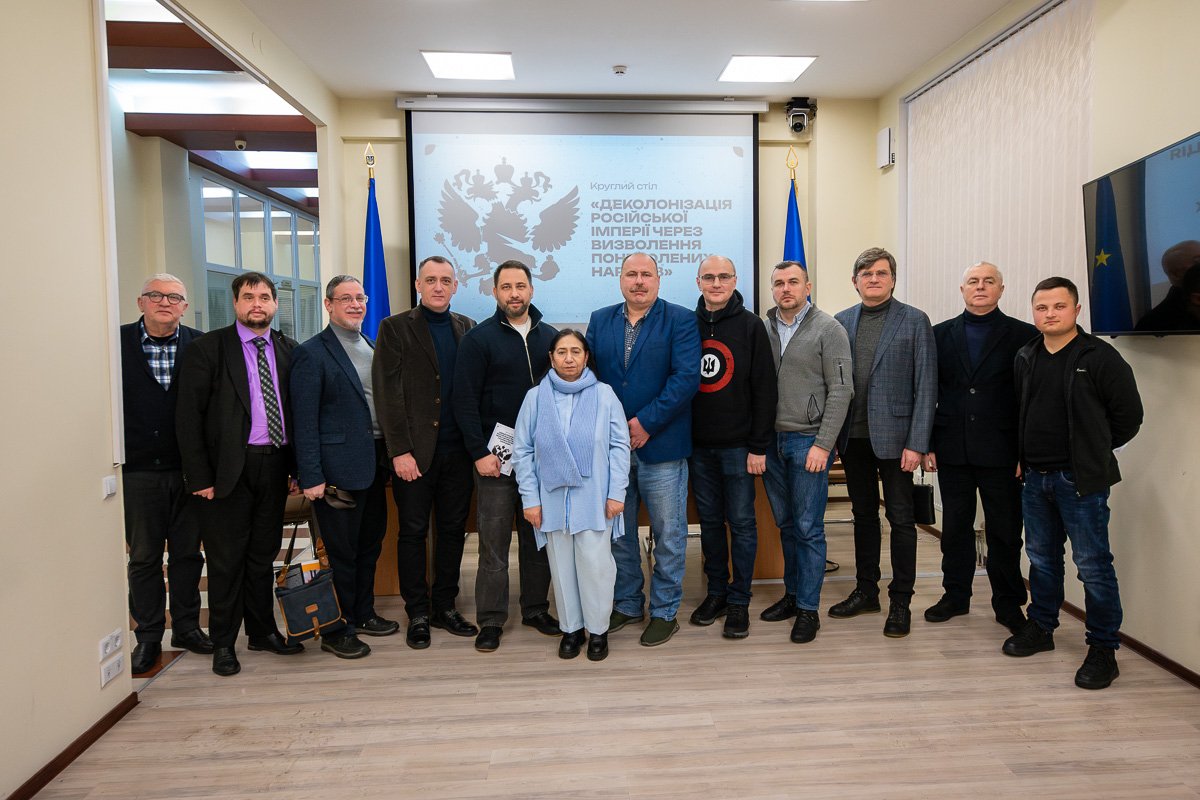
In Kyiv, in the premises of the Media Centre of the State Enterprise “GDIP”, a “round table” on “Decolonisation of the Russian Empire through the liberation of enslaved nations” was held.
The Anti-Imperial Block of Nations, the Ukrainian Peacebuilding Centre NGO, and the State Enterprise GDIP organised the event. Representatives of the foreign diplomatic corps, Ukrainian government bodies, Ukrainian scientific institutions, and the media took part in the event.
The roundtable meeting was moderated by the executive director of the Anti-Imperial Block of Nations, Oleh Vitvitskyj, who, in his opening remarks, updated the discussion topic.
The speakers of the event in the online and offline format were Yaroslav Yurchyshyn, National Deputy of Ukraine, Chairman of the Verkhovna Rada of Ukraine Committee on Freedom of Speech, Deputy Chairman of the Temporary Special Commission on the Development of State Policy towards Enslaved Nations, President of the Anti-Imperial Block of Nations, National Deputy of Ukraine of the 7th and 8th convocations Oleh Medunytsya, Chairman of the Board of the NGO Decolonisation Valeriy Pekar, Rector of the “University of Free Nations” Leontiy Shipilov, Deputy Chairman of the Congress of the Oirat-Kalmyk People Volodymyr Dovdanov, expert in constitutional law Andriy Magera, Head of the Tatarstan Independence Committee Aida Abdrakhmanova and others.
In his speech, Yaroslav Yurchyshyn spoke about the state and prospects of Ukraine’s policy on supporting enslaved nations within the Russian Federation. He emphasised that the relevant draft law has already been prepared and has the support of the main institutions, but its adoption has been blocked for political reasons. The speaker emphasised the importance of international recognition of the right of enslaved nations to self-determination as a condition for long-term peace in the region, emphasised the role of Ukraine as a partner and advocate for these nations, and also noted the need to improve coordination between state bodies, civil society, and international partners. “Our victory concerns not only Ukraine, but also the development of a democratic, civilized world around us. The results of a sociological survey show that the vast majority of Ukrainian society sees enslaved nations as partners on the issue of, in fact, changing the structure of the Russian Federation. At the same time, we understand how much trauma and how much pain there is in the relations between our nations due to Moscow’s aggression and Moscow’s imperial policy,” Yaroslav Yurchyshyn emphasised.
“ABN has many years of experience in cooperation with national liberation movements of enslaved nations and the struggle against the Moscow empire. Today, we are implementing this experience at the socio-political, informational, educational, human rights and international levels. We see our task in ensuring that the decolonisation and deimperialisation of the Russian Federation is not just a conversation here in Ukraine, but becomes a global political trend. Moscow imperialism has not gone anywhere and can only be defeated by destroying the centuries-old “prison of nations”. Therefore, we must speak and convince world politicians that we need to change our approaches to Russia. After all, we witnessed the collapse of the USSR and we believe that the Russian Federation will collapse in the same way,” said Oleh Medunytsya, president of the Anti-Imperial Block of Nations, in his speech.
In his report, Leontiy Shipilov emphasised the potential of Ukraine as an intellectual and organisational centre of liberation processes for enslaved nations. The expert also noted that the decolonisation of Russia requires a comprehensive approach, where Ukraine should become not only an example, but also a centre of support and decision-making. Leontiy Shypilov emphasised the importance of transferring to activists of liberation movements of enslaved nations the Ukrainian historical and modern experience of state formation, the development of anti-colonial studies, international legal expertise, strategic planning, information and security work.
Valeriy Pekar emphasised that the real victory of Ukraine is long-term security, which cannot be achieved without the decolonisation of Russia. The analyst denied the myth of its democratisation, called “Moscow-centric” thinking a trap for the West, and justified the controlled disintegration of the empire as the most realistic and safe scenario: “We understand perfectly well that the war will not end with Putin’s death or after a ceasefire or after some kind of peace… Peace is only a transition to waging war by other means. And victory is when Ukraine will be safe for a long time,” Valeriy Pekar concluded.
Representative of the Oirat-Kalmyk people, Vladimir Dovdanov, emphasised that Russia, despite the change of name, always remains an empire: “The Russian Empire is a classic colonial system that holds our nations by force, repression and total control. Political lawlessness, economic plunder of regions and forced Russification are not side effects, but the essence of the imperial model. The war against Ukraine is not an accident, but a logical continuation of this policy and at the same time a catalyst for the collapse of the imperial centre,” noted the deputy chairman of the Congress of the Oirat-Kalmyk people.
In her report, the leader of the Tatarstan Independence Committee and vice-president of the Anti-Imperial Block of Nations, Aida Abdrakhmanova, emphasised that the Kremlin’s repressions themselves destroy imperial myths, and Ukraine is a key ally and an example of the possibility of leaving the empire. She also noted the importance of adopting a Ukrainian state policy towards enslaved nations and systematic work with diasporas in conditions of limited resources. “First of all, Ukraine is a clear proof that Russia as an empire is neither eternal nor invincible. For the enslaved nations of Russia, Ukraine becomes a point of support, a reference point and a moral imperative that shows that leaving the imperial system is possible,” says Aida Abdrakhmanova.
Andriy Mahera considered the prospects for gaining independence by the subjects of the Russian Federation through the prism of constitutional and international law, emphasising that the modern Russian Federation was formed not as an abstract “constitutional federation”, but on the basis of specific political and legal agreements of the early 1990s.
In his report, Dmytro Levus, an expert from the United Ukraine think tank, spoke about the heterogeneity of the internal demand of the nations enslaved by Russia for independence and the hidden opposition to the subjectivity of these nations by the Russian Federation, including through the imitation of the opposition struggle. “This is an attempt by the Russians to make national liberation movements often perceived as sham, to belittle their significance, but still in the context of a greater Russia,” the expert noted.
“Law works only where there is power. And the task of Ukraine as a state of the Ukrainian people is to create such prerequisites for the enslaved nations of Muscovy so that they have the opportunity to build a state,” journalist Nazar Mukhachev noted in his speech and emphasised that it is precisely the growth of this power that is a crucial task in the struggle for self-determination.
Experts in constitutional and international law, strategic studies, decolonisation, information policy, and peacebuilding joined the active discussion.
Doctor of Law, Professor, Vice-President of the Association of the People’s Deputies of Ukraine, Vasyl Kostytskyi, in his speech, focused the attention of the participants of the event on the historical experience of the Ukrainian national liberation movement and emphasised the continuity of the idea of independent statehood and the responsibility of the political and intellectual elite for its preservation and development. Separately, Mr. Kostytskyi noted the role of Ukraine as a possible intellectual centre capable of helping enslaved nations in the formation of their own state idea.
In turn, the chairman of the board of the NGO “Centre for Strategic Studies”, Denys Bordiyan, added: “The situation that is currently developing around Russia is, perhaps, the most favourable for the enslaved nations to have the opportunity to declare their independence and take decisive action.” Denys Bordiyan drew a historical parallel with 1917, noting that it is during periods of imperial crisis that nations get a chance for independence and outlining the role of Ukraine as an example of successful resistance and a key factor in the strengthening of anti-imperial movements.
Media Centre “GDIP”
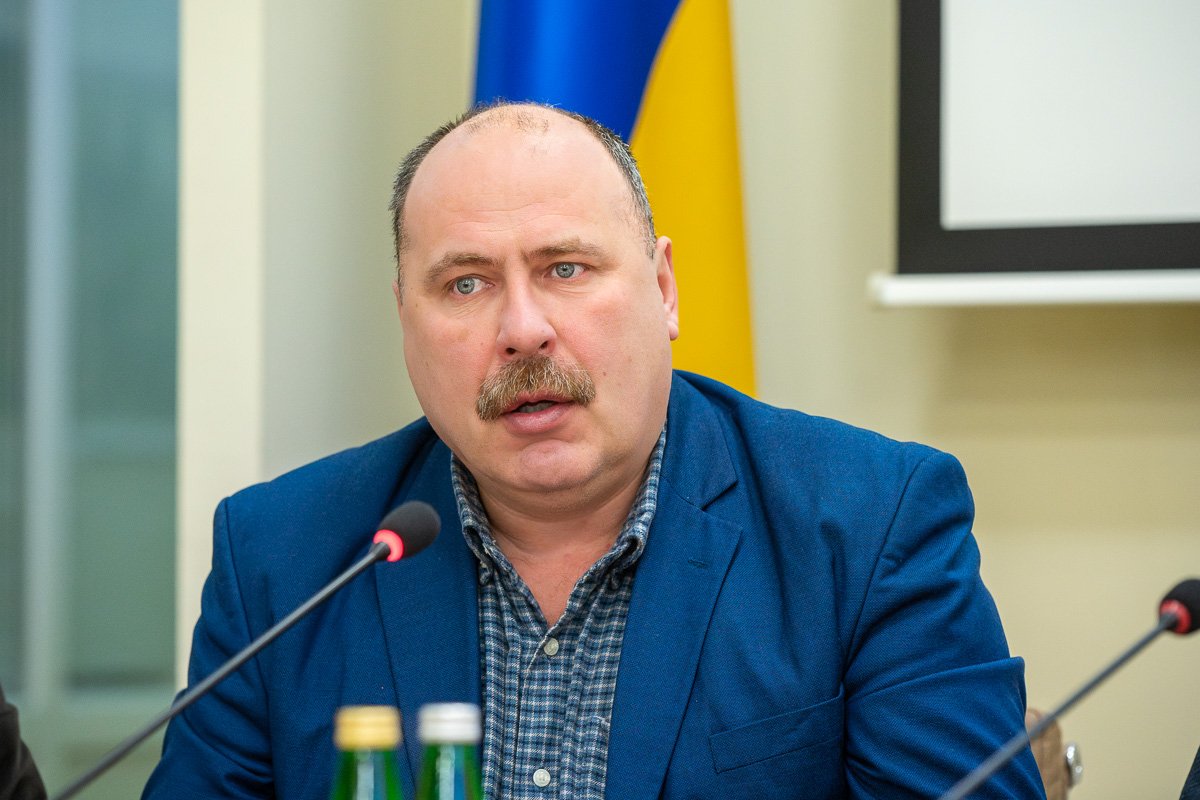
Oleh Medunytsya – President of the Anti-Imperial Block of Nations
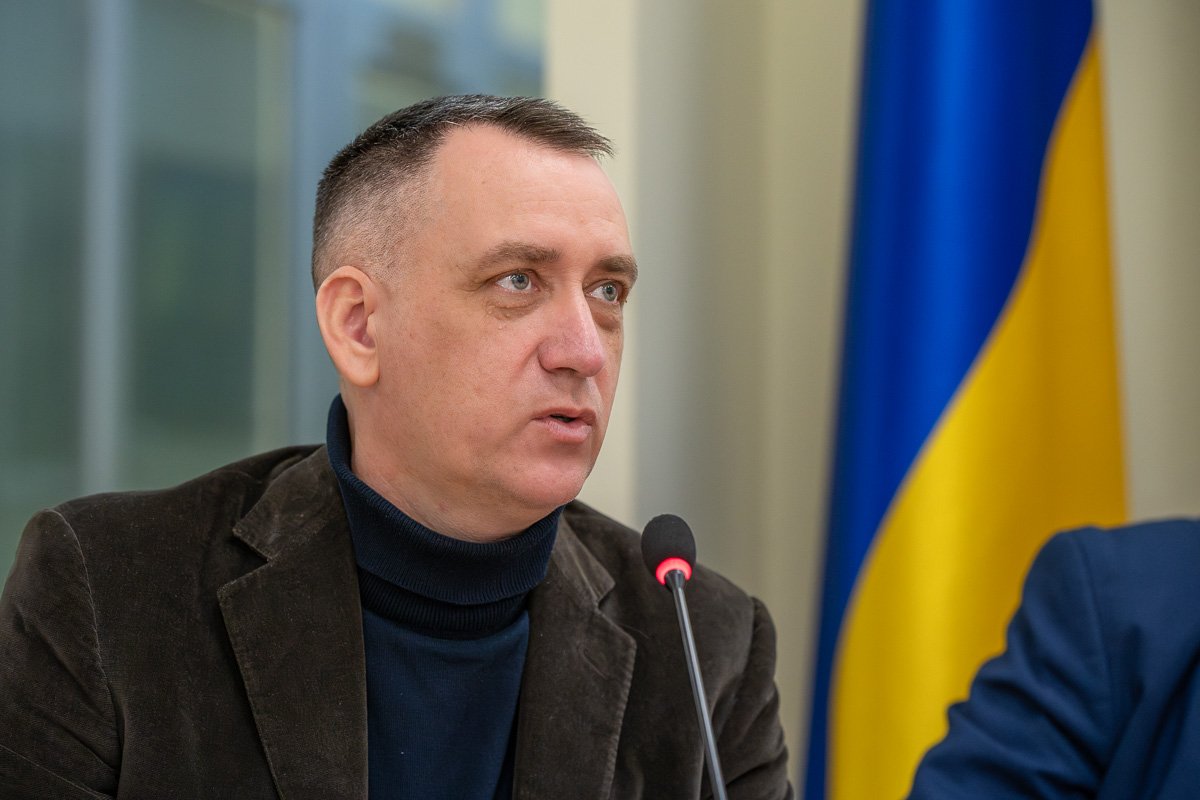
Oleh Vitvitskyi – Vice President, Executive Director of the Anti-Imperial Block of Nations






