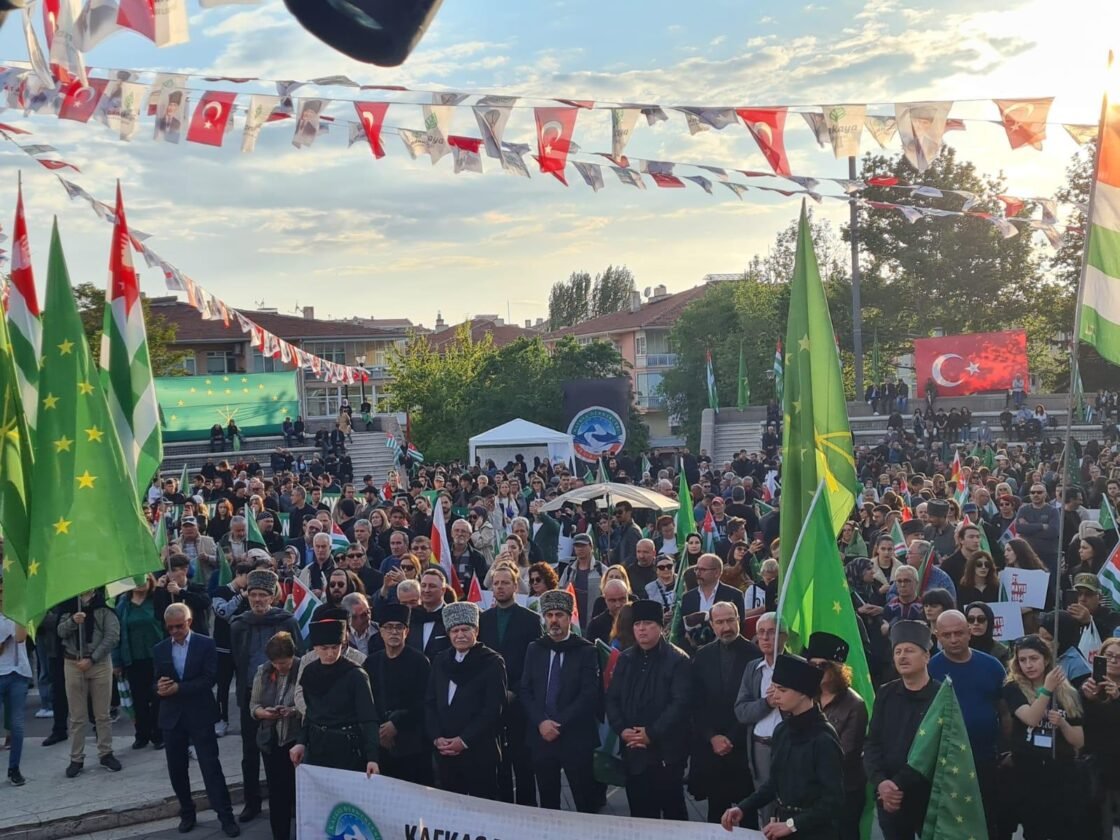

Last week, the Tatar language was heard on the streets of Tallinn, and in the town of Otepää, where the first Estonian flag was once consecrated in a church, the flag of another Finno-Ugric nation, the Erzyans, fluttered alongside it. From April 4 to April 6, Estonia hosted for the first time the Congress of the League of Free Nations, which unites several movements for the independence of indigenous nations and regions of Russia. “Idel.Realii” tells us what kind of event it was and how it went.
Previously, we have written more than once about the Forums of the Post-Russian Free States, whose participants also strive to gain sovereignty. These events have taken place in recent years in Poland, the Czech Republic, Sweden, Belgium, the USA, Japan, France, the UK and Germany.
What is different about the Congress of the League of Free Nations? If the Forum is a discussion platform for regular conferences, then the League is an organization that exists and is active not only during public meetings but also between them. As the organizers explain, the Congress here is not an end in itself – on the contrary, it complements the work of the League participants in other areas, gives them the opportunity to meet live and conduct in-person voting on organizational issues.
The structure of the Congress is also connected with this – the schedule was full of bureaucratic headings like “Report of the Chairman of the Resolution Commission” and “Discussion of the texts of the Charter and the Charter.” One might get the impression that the entire event was aimed at streamlining the internal work of the League and that an uninitiated person would be bored there, but experience showed the opposite: there were almost more guests at the Congress than delegates.
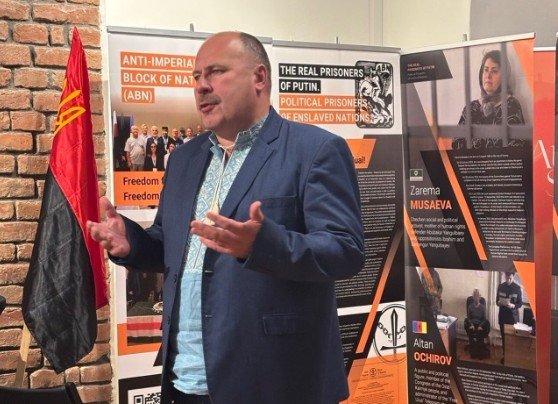
Among them are the founder of the URALIC centre Oliver Loode, elders of the indigenous nations of Estonia Võro and Seto Kauksi Ylle and Aare Hõrn, the main author of the current Estonian constitution Jüri Adams, representatives of Finno-Ugric NGOs in Finland led by Aleksi Palokangas and writer and politician Ants Miller. Member of the Verkhovna Rada of Ukraine Maria Mezentseva, American lawyer Askold Lozinsky, and many others also sent appeals to the Congress participants via video link.
Leaders and activists of several national movements, including those from the Volga region, became delegates to the Congress. Among them are Syres Bolyaen, Vitaly Romashkin and Aris Elme (Eryazne), Dorzho Dugarov and Rajana Dugar-DePonte (Buryats), Aigul Lion (Bashkirs), Zufar Zainullin (Tatars), Anton Mulkahainen and Maxim Kuzakhmetov (Ingrians), Imran Akhaev ( Chechens), Mish himself (Circassians).
From a formal point of view, the main result of the Congress was the adoption of several fundamental documents of the League of Free Nations. Although the organization has existed for two years and is constantly growing, accepting new national movements, it has not yet been registered as a legal entity. Descriptions of its goals and methods of work, principles and specifics of management have so far been only projects or drafts.
The Charter and Statutes adopted as a result of the Congress are intended to correct this, and the Organizing Commission, assembled during the Congress from among its delegates, decided to register the League as a non-profit organization in Finland with the subsequent opening of branches in other Baltic countries, the rest of Europe and the world. In addition to the internal documents of the League, the texts of official addresses to the Riigikogu (Estonian Parliament), to the international community as a whole, and fellow countrymen – representatives of the peoples and residents of the regions of the Russian Federation – were discussed at the Congress.
The final texts of all documents were adopted by direct vote of the delegates, and often during the discussion, changes were proposed, and the delegates additionally voted to change individual phrases and formulations. For example, in one of the paragraphs of the draft Charter, there was a sentence: “We belong to different peoples, races, cultures and religions, but to a single human civilization.” Following the discussion, Congress delegates voted to exclude the word “race” as an outdated and pseudoscientific concept.
The text of the appeal to fellow countrymen was also edited – in the first version they were asked, among other things, to “stick to their religions,” and in the final version a more inclusive wording was chosen: “to stick to their spiritual values and national traditions.”
“If you don’t want to think about your fate and your future, think about your children. What future do you have in store for them? Assimilation, poverty and the fate of being “cannon fodder” in endless Russian wars and special operations. Do you want a different destiny for your children? Get ready for the collapse of the regime, so that we meet this event not as observers, but as creators. Resist assimilation and teach children their native languages. Use legal public organizations and societies to build and strengthen horizontal ties within the nation. Avoid mobilization and service in the Russian Armed Forces. There is nothing honourable in serving Moscow and shedding your blood for the enslavement of other peoples. Russia will collapse not because we want it. It will collapse because, at the end of its chosen path, there is a cliff and an abyss. Be prepared to fight for your freedom and independence” – this part of the message remained unchanged.
The wording of the last lines reflects the point of view of many Congress delegates – it is important to realize that activists in exile cannot “destroy” Russia themselves, so you should not see the struggle for independence solely in “dividing the skin of an unkilled bear” and drawing maps with the boundaries of new ones, while non-existing states. It is much more important to understand that disintegration can happen on its own, and it is necessary to accumulate legitimacy, prepare informational and legal ground for the most comfortable transition to sovereignty that has “fallen on one’s head,” as one of the League participants, Daavr Dorhin, wrote back in 2022.
“We don’t want to live in this state.” But it will fall apart not only because we want it, but because the time has come. The decay process is irreversible. When we hear what they tell us from European countries: “Let’s give the Russians one more chance,” we understand it this way: “And let you remain in the position of slaves – weak-willed, without rights,” said the chief elder of the Erzya people, Syres Bolyaen, to Estonian to journalists at a press conference after the Congress.
This message contains another important goal of the Congress and the activities of the League in general. This is not the first year that activists of the organization have been communicating with politicians from different countries on the issue of recognizing the right of indigenous peoples of Russia to self-determination and statehood, trying to convey to the international community why they consider the collapse of Russia necessary not only for their peoples but also for world security. They achieved some success in Ukraine, which recognized Ichkeria as temporarily occupied by Russia and condemned the genocide of the Chechen people. Representatives of the League movements also spoke in the European Parliament.
Holding the Congress in Estonia is an opportunity to expand work in this area and begin a dialogue with the Baltic states. According to the organizers, the history of the national liberation movements of Estonia, Latvia and Lithuania has many parallels with their own activities, and the successful achievement of independence and the building of developed democracies in these countries inspires them to continue their struggle.
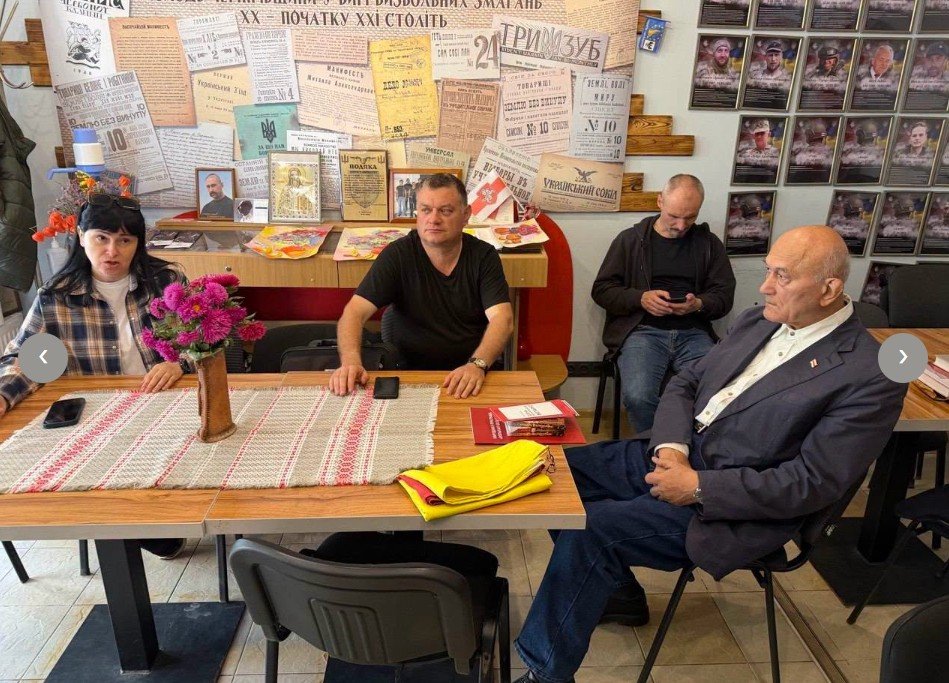
In addition to the adoption of some fundamental documents and the establishment of ties with Estonia, the Congress became an opportunity for the first time to meet in person, get acquainted and exchange experiences with League participants from different movements, countries and fields of activity. The diversity of the audience was truly impressive – from an active soldier of the Ukrainian Armed Forces, who came to the Congress from the front in full dress uniform with an Ingria patch, to the official representative of Ichkeria in Tallinn, a Bashkir journalist from California and Tatar students from Poland.
According to Syres Bolyaen, this experience of personal acquaintance and friendly communication between League participants, who previously met only on online calls, is one of the most important results of the Congress, which will affect the further work of the League.
- Not only the Russian authorities but also representatives of the Russian opposition do not agree with the separatist rhetoric of the regionalists. Thus, with the beginning of Russia’s full-scale invasion of Ukraine, Mikhail Khodorkovsky repeatedly said that against separatism, representatives of the Anti-Corruption Foundation (FBK) made a forecast about the improbability of the collapse of Russia. Leonid Volkov spoke about this in July 2022, and Vladimir Milov in February 2023. In mid-July 2023, Georgy Alburov also wrote about this, calling the idea of separating Bashkortostan and Tatarstan marginal. But Maria Pevchikh does not see any prerequisites for the collapse of Russia. Russian President Vladimir Putin shares the same opinion. In May 2023, he spoke ironically about supporters of secession from Russia, alluding to participants in the Prague Forum of Free Nations of Post-Russia, where both Tatars and Bashkirs were represented.