

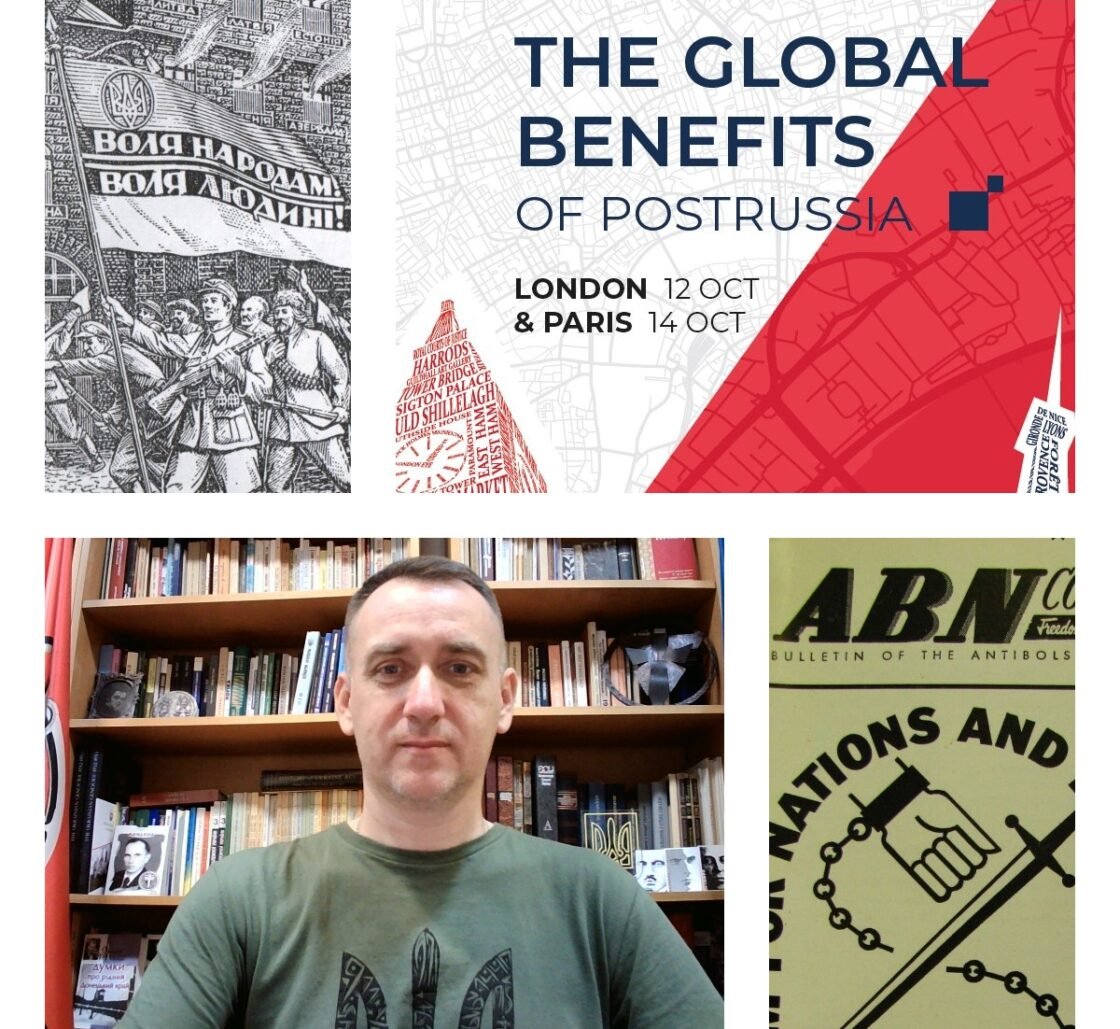
The processes of decolonization, as a matter of fact, are clearly demonstrated based on the analysis of the collapse of classical empires. However, in the context of the formation of decolonization cases for the captive nations, of the so-called Russian Federation, the Ukrainian evidence itself is one of the most demonstrative and most practical.
Few scholars and experts interpret the full-scale Russian invasion on February 24, 2022 as the final attempt of the Moscow metropolis to return its vast territorial possessions – Ukrainian lands. Such affirmations, in many aspects, can be accepted, but, in our opinion, they are not accurate or complete.
Thus, throughout the whole of its existence, the Moscow state always remained an empire, beginning with the Muscovite kingdom and ending with Putin’s Russia. Throughout its existence, the Muscovite empire upheld aggressive expansionist principles of foreign policy, which had previously accompanied the ruinous wars.
The Ukrainians not only clearly understood, but also continuously suffered under this imperial threat, sinking into occupation for long periods of time.
At the same time, the Russian conflict with Ukraine goes beyond the scope of typical colonial captivity. First, historically, Kyiv itself played the role of a metropolis for the territories in which the Muscovite power was established. Secondly, Ukraine experienced a permanent anti-colonial struggle for freedom and experienced a few short periods of state formation, which ruined the myth of a joint genesis and notion of “one people.” Thirdly, Ukraine itself was and is the promoter of the fight for the liberation of other captive nations.
Exactly 80 years ago, on November 21-22, 1943, near the small Volynsk village of Buderazh, with the aim of consolidating the struggle for freedom, the first Conference of the Captive Nations of Eastern Europe and Asia was held, and immediately after the end of the war the Anti-Bolshevik Bloc of Nations was created, until such time as on par with the Ukrainians, there were also Belarusians, Lithuanians, Estonians, Latvians, Georgians, Turkmens, Armenians, Slovaks, Bulgarians, Croats and other nations. The creators of the ABN clearly understood the imperial essence of Bolshevik Russia, and even perceived it as a “prison of nations.” In particular, the leader of the ABN Yaroslav Stetsko always emphasized this. The promotion of the movement under the slogan “Kyiv against Moscow”, in addition to its specific Ukrainian content, can be considered a universal path of struggle for all captive nations.
The systemic activity of the ABN on the international level became one of the primary factors for the collapse of the Bolshevik empire. This memorable event for many turned out to be the finale of Moscow’s imperial history, but it was a misleading impression. The empire did not exist, but continued to pursue its aggressive invasive policy, provoking both internal (Chechnya, Ingushetia) and external (Abkhazia, Transnistria) military conflicts. In the 90s of the twentieth century, the leaders of the ABN did not consider their mission completed, they even recognized the occupation of the Chechen, Tatar, Bashkir and other nations. However, the entire civilized world, as well as the political leadership of the Ukrainian state at that time, did not perceive a serious threat to a large-scale reincarnation of the empire, not until the year 2014, and after that 24 February 2022.
Throughout the entire period of its new independence, with continued success, Ukraine overcame its colonial past, with great experience of how to rid itself of the imperial vestiges. The processes of decolonization in Ukraine became a logical extension of the process of de-communization, broadening its scope and emphasizing a clear understanding of the deep roots of Moscow imperialism, regardless of under what flag or in what form it may exist: monarchical, Bolshevik or authoritarian-Putinsky. It is important that the idea of decolonization was supported by the majority of Ukrainians. In addition to the decolonization laws adopted by the parliament, a major role was played by initiatives from below: the work of local self-government bodies and non-state civil organizations.
However, the Ukrainians did not want to stop just at the de-imperialization of their native land. Even under the conditions of war, Ukrainian society is raising the question of full decolonization of the Moscow Empire, meaning, its complete division into states of free nations: Ichkeria, Tatarstan, Ingushetia, Oirat-Kalmikia, Bashkortostan, Chuvashia, Erzyan Mastor, Dagestan, Buryatia, Yakutia and many others.
It is encouraging that Ukrainian legislators are understanding about this today. The Verkhovna Rada of Ukraine has created a special temporary commission to develop government policy in support of captive nations, as well as an inter-factional parliamentary establishment “For decolonization and dismantling of the Russian empire.”
Recently, in Ukraine, the ABN has been revived in the format of the Anti-Imperial Block of Nations. From 1 June 2023, a new information resource became operational – the abn.org.ua website, which is available in three languages (Ukrainian, Russian, English). Materials from the history of the ABN are uploaded to this Internet resource, and news, analytical materials, interviews and reprints from other publications related to the liberation struggle of enslaved nations are regularly added. Two media resources have also been created based on the site: a Telegram channel (https://t.me/ABN_Freedom_for_Nations), which is conducted in Russian and is aimed at the regions of the Russian Federation and a Russian-speaking audience, as well as a Facebook page: https://www.facebook.com/ABN.FreedomForNations.
On the initiative of the Organization of Ukrainian Nationalists (Banderites) and the restored ABN, the University of the Free Nations online course was launched in Ukraine. The purpose of the course is the professional training of representatives of enslaved nations on issues of national statehood. The course is aimed at forming basic and special subject competencies in the field of national state-building and the organization of national liberation movements. It is within the framework of this course that Ukrainian researchers and experts are ready to share their experiences of decolonization and de-imperialization with project participants. Currently, only the first intake of the University is starting, but such a course is planned to be held on a permanent, regular basis.
In general, it is worth highlighting five Ukrainian cases that are offered to enslaved nations for study and use: Key methods and forms of the anti-imperial national liberation struggle; Consolidation of the international community regarding the destruction of imperialism; The formation of own military units within the armed forces of partner states; Achievements and mistakes of state-building and The case of freedom or the export of the revolution (Maidan).
Along with the above-mentioned progress regarding de-colonization processes and support for the struggle of enslaved peoples, there remain several problems, the solution of which requires professional consultations and discussions. For example, one of the urgent issues related to the de-imperialization of Ukraine and other enslaved nations remains the question of responsibility for crimes, genocide and other manifestations of aggressive imperial policy in various spheres: political, social, religious, economic, military, etc. To set a precedent, the state of Ukraine filed a lawsuit against the so-called Russian Federation at the UN International Court of Justice. Ukraine accuses the Russian Federation of committing genocide against the Ukrainian people. Bucha, Borodyanka, Izyum, Irpin and many other settlements of Ukraine became the scene of mass murders of civilians. However, if we superimpose the time of the potential satisfaction of the claim with the time of the collapse of the empire, many questions will remain open. The questions of genocide against the Chechen people, the deportation of Circassians, Crimean Tatars, the payment of reparations, contributions, and responsibility for the abduction of Ukrainian children, etc., will also require answers.
So, there are serious challenges and tedious work ahead. Its result should be tectonic changes in the Eurasian, and ultimately, the world civilization sphere. It is necessary to make maximum efforts for the victory of Ukraine on the battlefield and the creation of independent states of free peoples on the territory of the agonizing empire.
Carthage must be destroyed!
Note: for a quick information search please subscribe to our Telegram channel “Freedom for Nations!” https://t.me/ABN_Freedom_for_Nations
Also, read the Facebook materials of the ABN page and the group
Our site: https://abn.org.uaen/







