

Traditional geopolitical strategies are based on the assumption of an elite circle of people who know what will be better not only for themselves but for all of humanity. The second common assumption is that the consent and unanimity of all participants in the international process are supposedly required for change, regardless of their real positions and interests.
In such conditions, dictators and authoritarian regimes easily conclude non-public agreements against the world, believing that allegedly due to the democratic systems of the free world, they will easily be able to carry out aggression and commit violence against their own and foreign citizens and nations. A pretext is always found, as in a trick, only instead of a white rabbit – drawn out false historical claims, an appeal to imaginary power and the golden age of imperialism.
The only argument of the side that destroys world security and international law is the alleged unilateral success of the political elites, which is by no means guaranteed even for them.
When in the 19th century the leaders of France and the German Empire began to shake the Viennese system of the European order, it inevitably led to the First World War, the Second World War and ended first with the collapse of the German Empire and later with the collapse of the Third Reich.
The emergence of the Yalta system of international relations, when major players once again defined the basic rules of coexistence of major powers, forgetting about the interests of entire nations and countries, lasted long enough.
With the fall of the Soviet empire and the emergence of new independent states on the European continent, the optics of the main players changed too inertially. They did not understand the nature of the Soviet empire, often tolerated Russia’s unjustified ambitions and turned a blind eye to the obvious.
Russia cannot remain in the status quo.
It is this thesis that is an invitation to the dialogue of the entire civilized world, regardless of the differences of opinion about Russia itself that prevail in the circles of experts, diplomats and politicians.
The facts of Russia’s aggression on the territory of Ukraine, Georgia, Moldova, the Chechen Republic of Ichkeria, interference in political processes and espionage on the territory of the EU and the USA, and sabotage in the information and political sphere make Russian statehood a factor of common danger and risks. The presence of a coalition of authoritarian and totalitarian states around Russia only increases these dangers, making it impossible to think about the possible democratization of Russia, let alone the voluntary decolonization and liberation of numerous peoples and regions.
For those who are stubbornly looking for facts that point to the collapse of Russia as an inevitable reality, it is worth suggesting to considering whether any of the leading diplomats and analysts predicted the collapse of the USSR. What variables should be considered in such an analysis?
Has the Western policy of containing Russia justified itself? What has Russia given the civilized world over the past 20 years to now jointly repel its aggression on the territory of Ukraine, feverishly overstraining the opportunities for the transfer of weapons, ammunition and other resources?
It is worth finally admitting that existing tools for predicting the future have failed, as has the vision of the end of history and the final victory of democratic regimes. The fear of the unknown should not paralyze the will to create a future in which dialogue about the decolonization of Russia, the destruction of the imperial center, and the search for influential groups is the only pragmatic approach.
The disintegration of the external empire of the USSR, and the departure of the countries of Eastern Europe that were occupied and tied to Moscow by force, stopped in 1991 and, despite the announced opportunity to take maximum sovereignty, ended with the suppression of freedom and the subsequent colonization of dozens of nations.
That is why, in December of this year, the Forum of the Nations of Post-Russia will be held for the 9th time on the territory of Italy and Germany, where local parliamentarians, experts and representatives of enslaved nations will discuss the challenges and opportunities of the benefits of the decolonization of the Russian Federation for all interested parties, as in the regional and the global dimension.
The Ninth Forum of the Nations of Post-Russia is dedicated to developing scenarios for an acceptable, controlled collapse of Russia: After the empire: new independent states without militarism, colonialism and misanthropic ideologies. On December 11 and 12, the Forum will take place in the Italian Senate, on December 14 – in Berlin.
Pretending that an alliance of authoritarian and totalitarian states does not threaten global security means bearing responsibility for both past and future miscalculations. Among the important issues of the Forum are the search for opportunities for the formation of a policy of denazification in the territory of Post-Russia, the formation of memorial practices related to the genocides committed by Russia, the study of the practice of lustration of criminals who supported the imperial policy and carried out repressive and punitive policies.
The central issue of the Forum is the future potential borders of new states on the territory of Post-Russia, the principles of dispute settlement and the formation of a common safe space without nuclear weapons and an imperial centre.
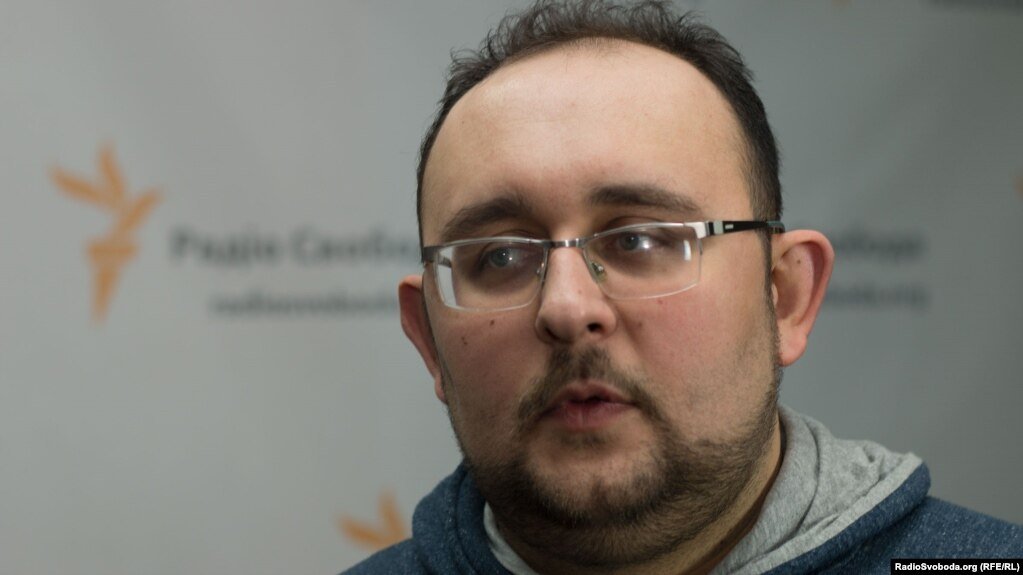
Stanislav Fedorchuk, head of the Post-Russia program, analytical center of the Ukrainian Strategic Initiative






