

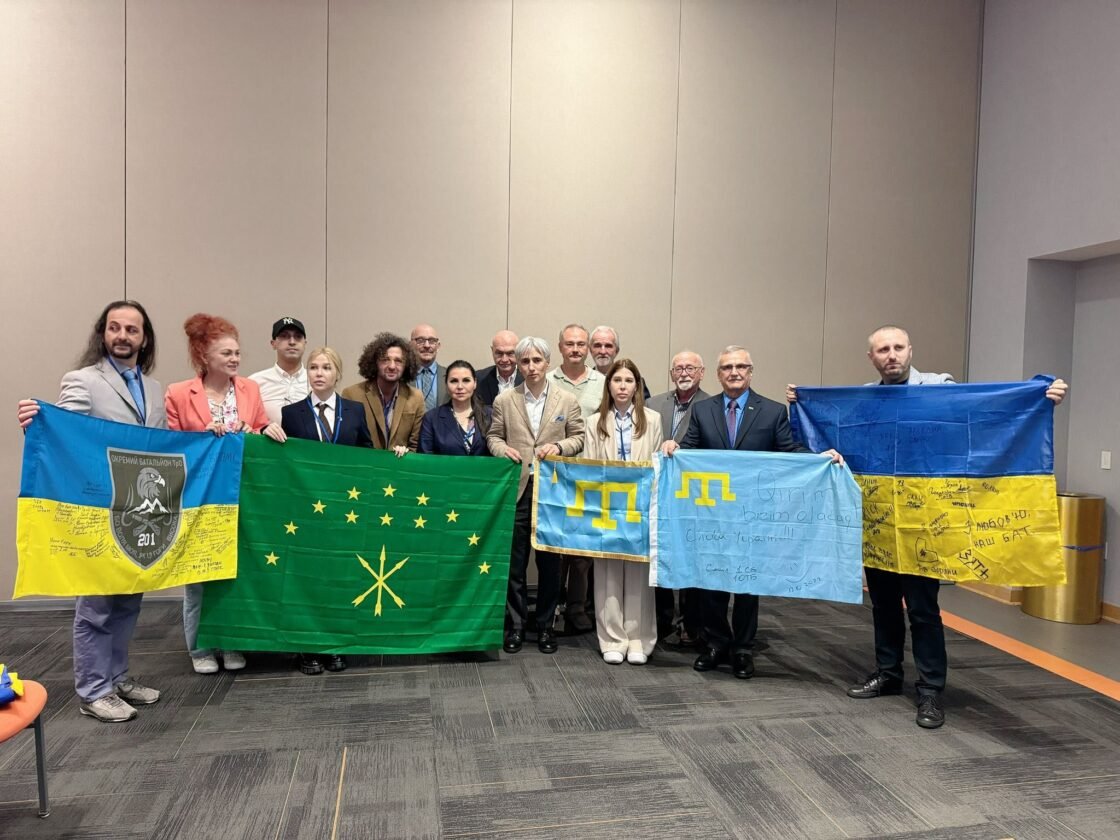
As Russia’s war against Ukraine grinds on, scholars, community leaders, and activists gathered at William Paterson University on September 27 to stress that Ukrainians, Crimean Tatars, and Circassians share not only centuries of history but also a common fight for survival. The eighth Ukrainian Historical Encounters Series, organized by the Center for U.S.–Ukrainian Relations (CUSUR), carried the theme “Ties That Bind: Reflections on Crimean Tatar–Ukrainian Relations and a Crucial Circassian Connection.”
CUSUR, founded in 2000, has become a central platform for Ukrainian Americans to connect history with present-day advocacy. Its Historical Encounters Series links scholarship with diaspora engagement, ensuring that Ukraine’s story is placed within a broader global context.
Centuries of Alliance
In opening remarks, Iyad Youghar, chairman of the International Council of Circassians, reminded participants that the ties among Ukrainians, Crimean Tatars, and Circassians “were forged in hardship.” Dr. Volodymyr Zaryckyj, CUSUR’s executive director, added that unity has always been the most effective response to Russia’s imperial strategies.
The first panel, “Crimean Tatar–Ukrainian Relations in the Far and Near Past,” was chaired by Dr. Lubomyr Hajda of Harvard University. Speakers Nedim Useinow (University of Warsaw) and Andriy Zhyvachivskyi (Polish Academy of Sciences) traced alliances from 16th & 17th-century Cossack–Tatar campaigns against Muscovy through cooperation during the Ukrainian People’s Republic and the great Maidan manifestations defining the latest iteration of the Ukrainian state. Their research showed that survival often depended on solidarity.
Crimean Tatars Under Occupation – Old & New
During the second panel, the conference revisited the fate of the Crimean Tatars, the largest indigenous group of Crimea. Centuries of repression culminated in Stalin’s 1944 mass deportation of the entire nation to Central Asia — now recognized as genocide.
Even after their partial return in the late Soviet period, they were denied land and political rights. Since Russia’s 2014 occupation, activists and members of the Mejlis have been arrested or disappeared, schools have been forced to close, and young men conscripted into the Russian army.
Speakers emphasized that the Crimean Tatars’ endurance remains inseparable from Ukraine’s broader survival. Protecting their culture, language, and political rights is not only a matter of justice but also central to resisting Russia’s ongoing war of erasure.
The Circassian Example
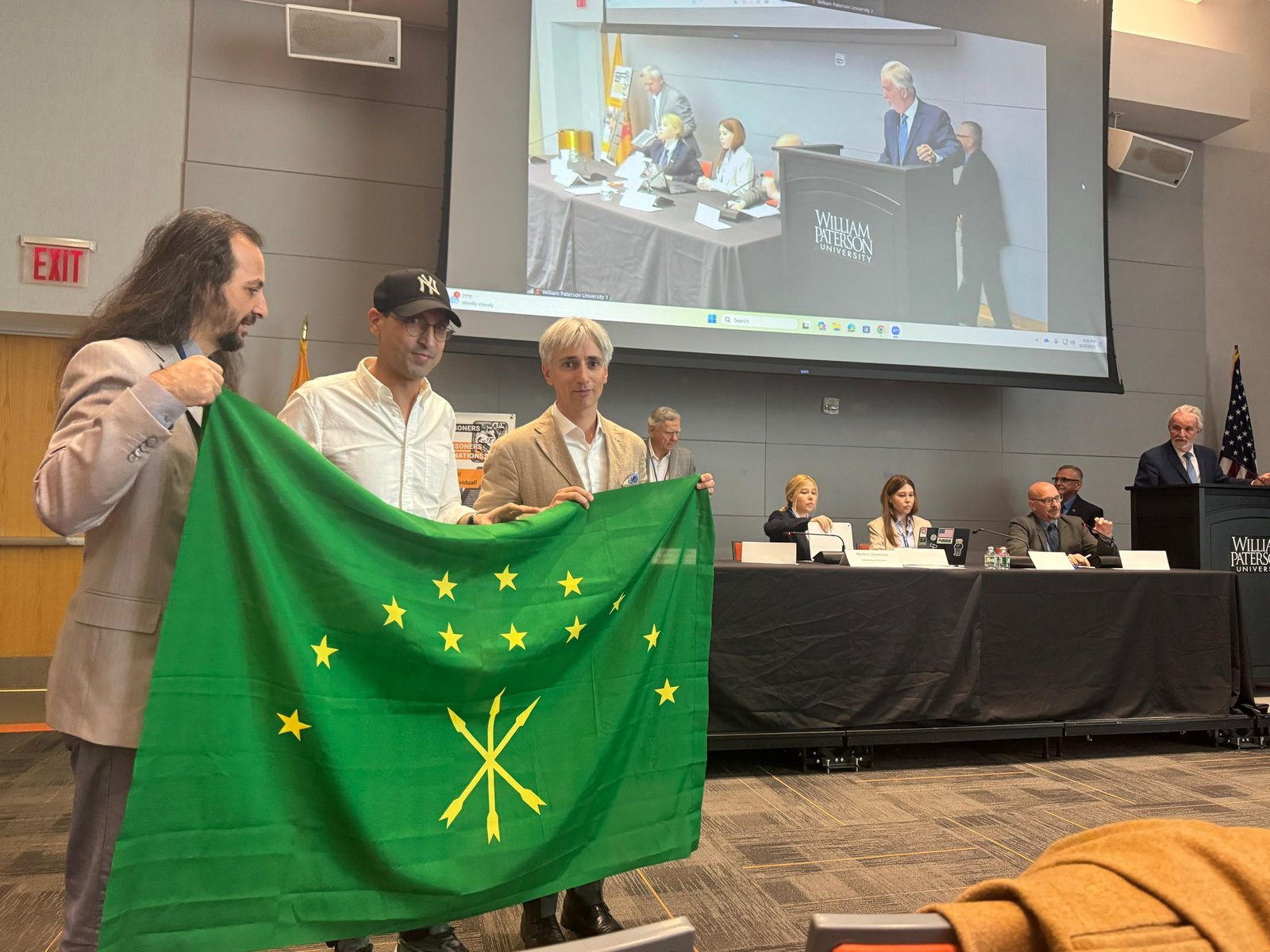
The third session turned to Circassia, described as the “first victim of Russia’s genocidal colonial policy.” Author Adel Bashqawi (Circassia & Ukraine) explained how the Russian Empire’s conquest of the Caucasus in the 19th century culminated in systematic massacres and the mass deportation of Circassians to the Ottoman Empire. What began as a military campaign became, in effect, an ethnic cleansing operation: villages were destroyed, families were scattered, and an estimated 90 percent of the Circassian population was forced into exile.
The loss of their homeland reshaped Circassian identity. Today millions of Circassians live in diaspora communities across Turkey, Jordan, and other parts of the Middle East, while only a fraction remain in the North Caucasus under Russian control. Bashqawi noted that this dispersal was not accidental but the direct result of imperial policy aimed at erasing the nation’s presence from its ancestral lands.
He stressed that the Circassian case is not a closed chapter but a warning. The same logic of conquest and displacement that defined Russia’s policy in the Caucasus reappears in Crimea and Ukraine. For Ukrainians and Crimean Tatars, the Circassian tragedy offers a mirror — a reminder of how far Moscow is willing to go to secure land while attempting to ‘delete’ the people who belong to it.
Final Reflections
Before the forum concluded, Purdue University Research Associates Zarema and Zera Mustafaieva returned the focus to the Crimean Tatar struggle. They described the continuing persecution of Crimean Tatars under Russian rule and emphasized the urgent need to protect their cultural survival. “For Crimean Tatars, the struggle is not just history — it is our daily reality under occupation,” one of the sisters said.
Building on that theme, Ayla Bakkalli, the Crimean Tatar representative to the United Nations, delivered the closing remarks. “History warns us, but it also binds us,” she said. “Our survival depends on unity.”
The event was livestreamed to broaden access. 👉 Watch the video on Facebook
The Ukrainian Historical Encounters Series continues to provide a forum where history, scholarship, and community meet. This year’s program underscored a clear message: the struggles of Ukrainians, Crimean Tatars, and Circassians are not separate threads, but one long story of resistance to empire. The “ties that bind” remain not only a reminder of the past but also a guide for the fight for freedom today.







