
Today’s Russian electoral system is not a democratic process in the classical sense, but rather a formality created to legitimise power. A kind of farce for an external observer – the attributes of elections are preserved, but there is no real competition. The result is known in advance and is broadcast as “popular support” for the regime. It is also a formality for internal governance – to confirm the power of the current leaders and create the appearance of their legitimacy.
Why can’t these “elections” be called legitimate?!
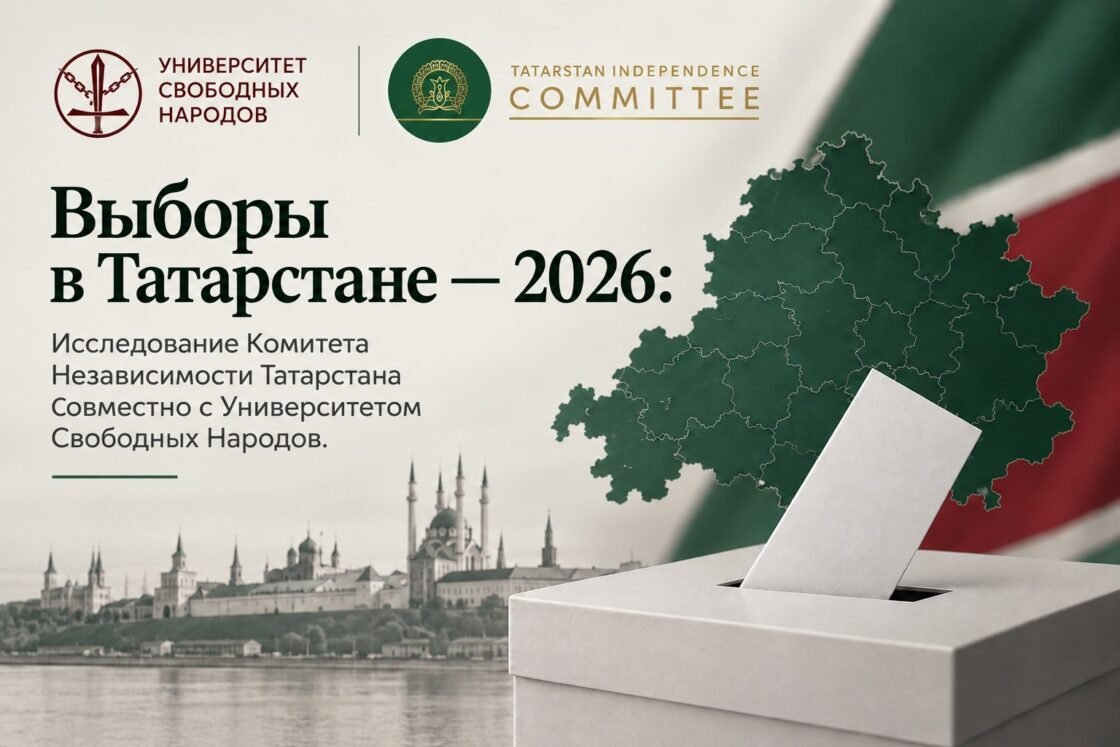
Firstly, the elections are formal in nature and do not reflect real political competition. The list of candidates does not represent the entire spectrum of political and public interests of the people of Tatarstan. Only those figures who had been previously agreed upon with the federal centre were allowed into the election campaign. This excludes the possibility of the emergence of independent leaders capable of expressing the genuine aspirations of Tatar society.
Secondly, the key goal of these elections is to confirm the authority of Rustam Minnikhanov, who has held the post of head of the republic for many years. His position in the power system is determined not by the will of the people of Tatarstan, but by Moscow’s need to have a loyal representative in the region. In fact, Minnikhanov acts not as a spokesman for the interests of the republic, but as a conductor of Kremlin policy.
Thirdly, the political system of Tatarstan is built into the model of the “vertical of power” of Russia, where elections are an instrument for legitimising previously adopted decisions. The participation of the people is limited to symbolic voting and not to real influence on the course of the republic. This contradicts both democratic principles and the right of the Tatar people to self-determination.
Thus, these elections cannot be seen as an expression of the people’s will. They serve only to strengthen Moscow’s position and maintain the appearance of a democratic process. For Tatarstan, this means a continuation of the policy aimed at weakening national identity, limiting cultural and linguistic rights, and maintaining the republic’s status as a dependent territory.
The elections of the Rais of Tatarstan in 2025, in their current form, have no legitimacy, since they do not ensure the free choice of the people and do not reflect the interests of the Tatar nation, that is, they are an imitation of democracy. They do not reflect the will of the people, but serve only as a tool for maintaining the vertical hierarchy of power and subordination of the republics to the federal centre.
Independence Committee of Tatarstan