

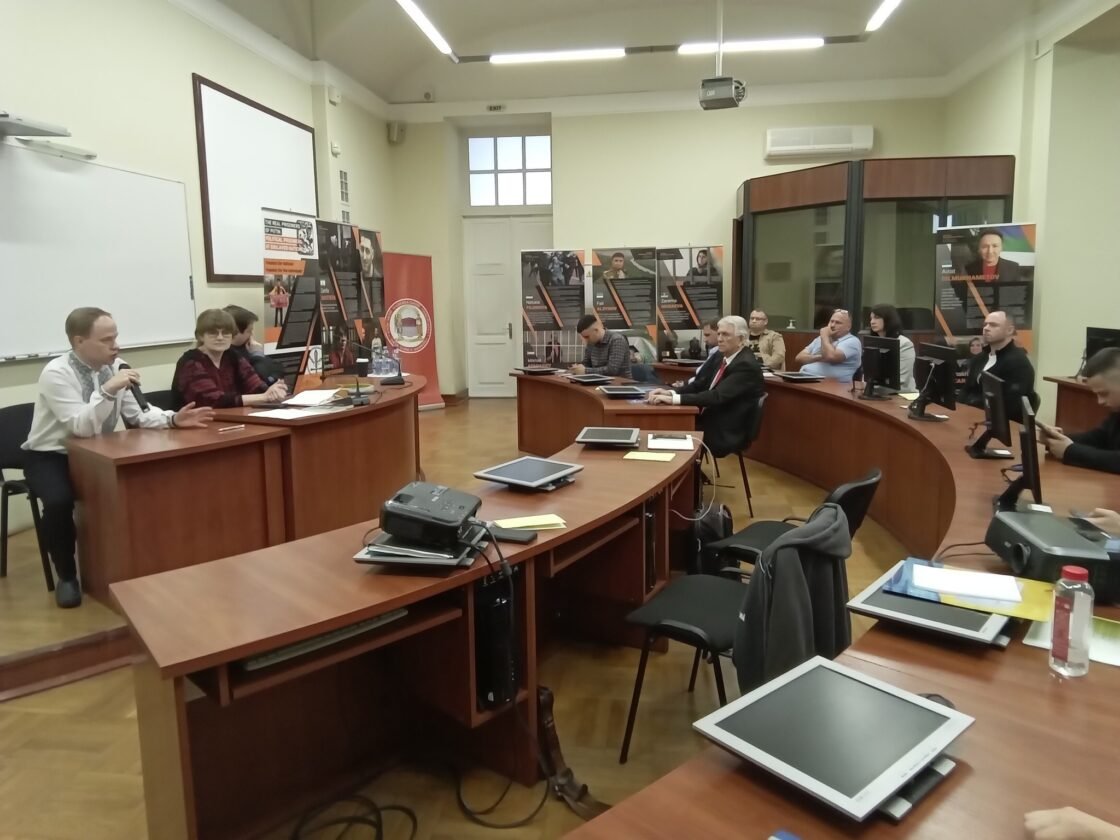
On 30 May, a panel discussion “Vectors of Ukrainian state policy regarding support for the enslaved nations of the Russian Federation” was held at the Taras Shevchenko National University of Kyiv.
The discussion was organized within the framework of the work of the Temporary Special Commission of the Verkhovna Rada of Ukraine on developing state policy towards the enslaved nations of the Russian Federation. The key topics for discussion within the discussion framework were: legislative consolidation of state policy towards the enslaved nations; work experience of state structures and civil society with the enslaved nations of the Russian Federation; educational tools in cooperation with the national liberation movements of the enslaved nations; the status of the enslaved nations of the Russian Federation at the international level.
The discussion was attended by Ukrainian MPs, leading scientists and experts, representatives of public structures, in particular, President of the Anti-Imperial Block of Nations Oleh Medunytsya and Vice-President of the Ukrainian National Academy of Sciences Leontiy Shypilov. The event was moderated by Mykola Marchenko, Candidate of Law, Executive Director of the Foundation for the Institutional Development of Ukrainian Science.
According to one of the co-initiators of the event, People’s Deputy of Ukraine Yaroslav Yurchyshyn, “The only solution that guarantees a radical change in Russia is to grant broad rights to enslaved nations. And Ukraine must be a leader in this process at all levels: legislative, international, academic, cultural and public. Our goal is the decolonization and refederalization of the entity that is called the Russian Federation and, at the same time, remains an empire.”
The speeches of the participants in the discussion were extremely relevant and meaningful, namely, People’s Deputies of Ukraine Volodymyr Viatrovych and Oleh Dunda, Head of the NGO “Decolonization” Valeriy Pekar, Candidate of Political Sciences, military officer of the Armed Forces of Ukraine Mykhailo Basarab, Head of the Board of the NGO “Network for the Protection of National Interests “ANTS” Hanna Hopko, former Advisor to the Secretary of the National Security and Defence Council Pavlo Zhovnirenko and others.
The leaders of the Anti-Imperial Block of Nations presented the practical results of the ABN’s work with the national liberation movements of enslaved nations on the example of human rights and educational cooperation. In particular, Oleh Medunytsya presented to the audience the ABN’s human rights project “Putin’s Real Prisoners: Political Prisoners of Enslaved Nations.”
The President of the ABN drew attention to the difficult conditions in which political prisoners, who represent both the enslaved nations of the Russian Federation, Crimean Tatar activists, and ethnic Ukrainians who have Russian citizenship, are held. He stated that the Anti-Imperial Block of Nations is preparing a separate register of Ukrainian political prisoners who are repressed by the Putin regime simply for being Ukrainians and preserving national traditions and culture.
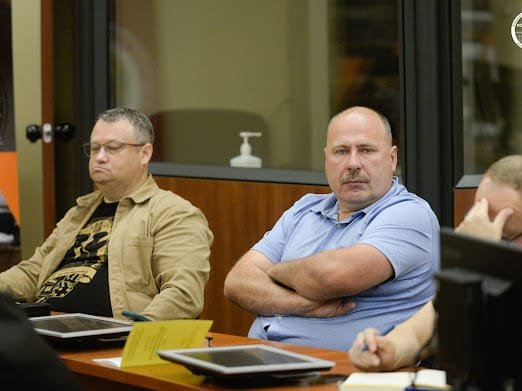
Leontiy Shypilov spoke about a unique educational project – the University of Free Nations, which has been training leaders and activists of national liberation movements in Chechnya, Tatarstan, Bashkortostan, Karelia, Dagestan, Oirat-Kalmykia, and others for the third year.
The participants of the event paid special attention to the need to widely inform society about the prospects of decolonization of Russia, to introduce this topic into scientific circulation. “As the initiator of work in this direction, it is very important for me to give the work an academic dimension. Because until the phenomenon is studied, it is not scientific. Until it is not scientific, it is not systematized,” Yaroslav Yurchyshyn emphasized. “The plan is very simple: bachelor’s, master’s, and, therefore, scientific works on the topic of decolonization of Russia. As a result, there is no misunderstanding why Ukraine and the West should be as interested as possible in the development of national liberation movements of enslaved nations.”
Yaroslav Yurchyshyn also raised the issue of delaying the consideration of draft law 11402. “I am surprised by the fact that the Verkhovna Rada of Ukraine Committee on Foreign Policy has still not found time to consider the draft of the relevant law, which has been lying idle in the Committee for over 9 months, despite the letter of support from the Ministry of Foreign Affairs of Ukraine, appeals from public organizations, and public need,” Yaroslav Yurchyshyn concluded.






