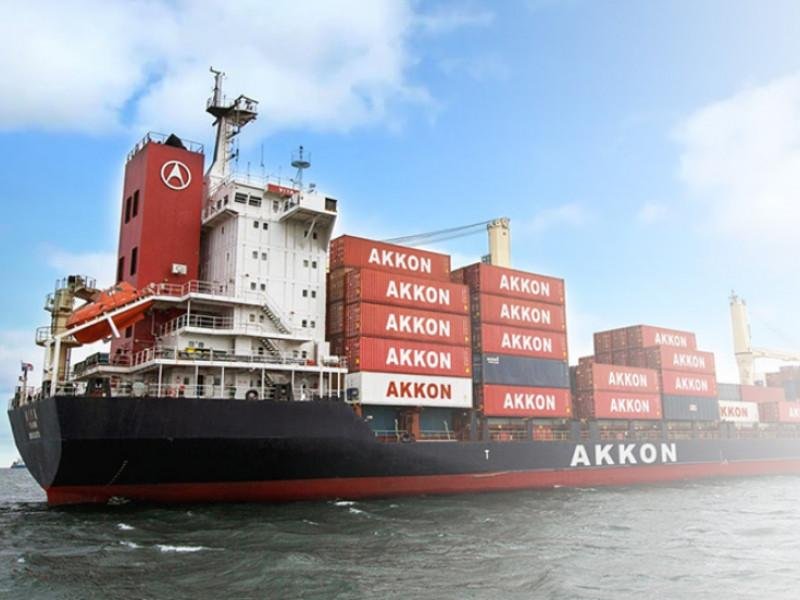
Turkish container carrier Akkon Lines has completely suspended calls at Russian ports, citing growing risks to crews, vessels and cargo. Ships heading for St. Petersburg have reportedly been turned back to Türkiye, while cargoes are to be returned to their ports of origin or discharged elsewhere.
The decision followed a sharp deterioration in maritime security in the Black Sea. On 21 August, the container ship RMS Team, operated by Akkon Lines, was struck near Novorossiysk. Eleven crew members were rescued, while one sailor remained missing.
But for Russia, this is more than another logistical problem.
When an international carrier leaves Russian ports, the empire loses not simply one shipping route, but part of its normal economic connection with the outside world.
This is particularly significant because Moscow is simultaneously trying to maintain control over a vast space inhabited by dozens of peoples it has historically subjugated. The more expensive and dangerous it becomes to sustain the imperial centre, the weaker its ability to hold that system together.
This is where economics and national liberation intersect.
The Russian Empire can survive only as long as the centre can control resources, transport, trade and its periphery. When those links begin to break, space emerges for a different future.
For Chechens, Bashkirs, Tatars, Sakha, Buryats, Erzya, Kalmyks and other nations, this means more than changing trade routes. A weakening Moscow could eventually create an opportunity for what the empire has spent centuries suppressing — political self-determination.
Akkon’s withdrawal from Russian ports is only one episode. But such episodes accumulate.
Empires rarely collapse in a single day. First, partners, routes, money and dependent territories begin to leave. Then the centre discovers that it can no longer hold its former periphery.
That is why every new rupture between Russia and the outside world should be viewed not only as an economic problem for the Kremlin, but also as another step toward a post-Russian space in which subjugated nations can determine their own future.
USM