Speaking about the past, present, and future of the ABN, we inevitably return to a question that was relevant eighty-three years ago and remains relevant today: why does the Russian Empire, while changing political regimes, state symbols, and ideological constructs, retain the ability to renew its expansionist policy?
In my opinion, the answer must be sought not only in the history of Russian statehood, military power, or the economic dependence of enslaved peoples. One of the key factors of imperial stability has always been the repressive apparatus, in which the special services occupy a central place.
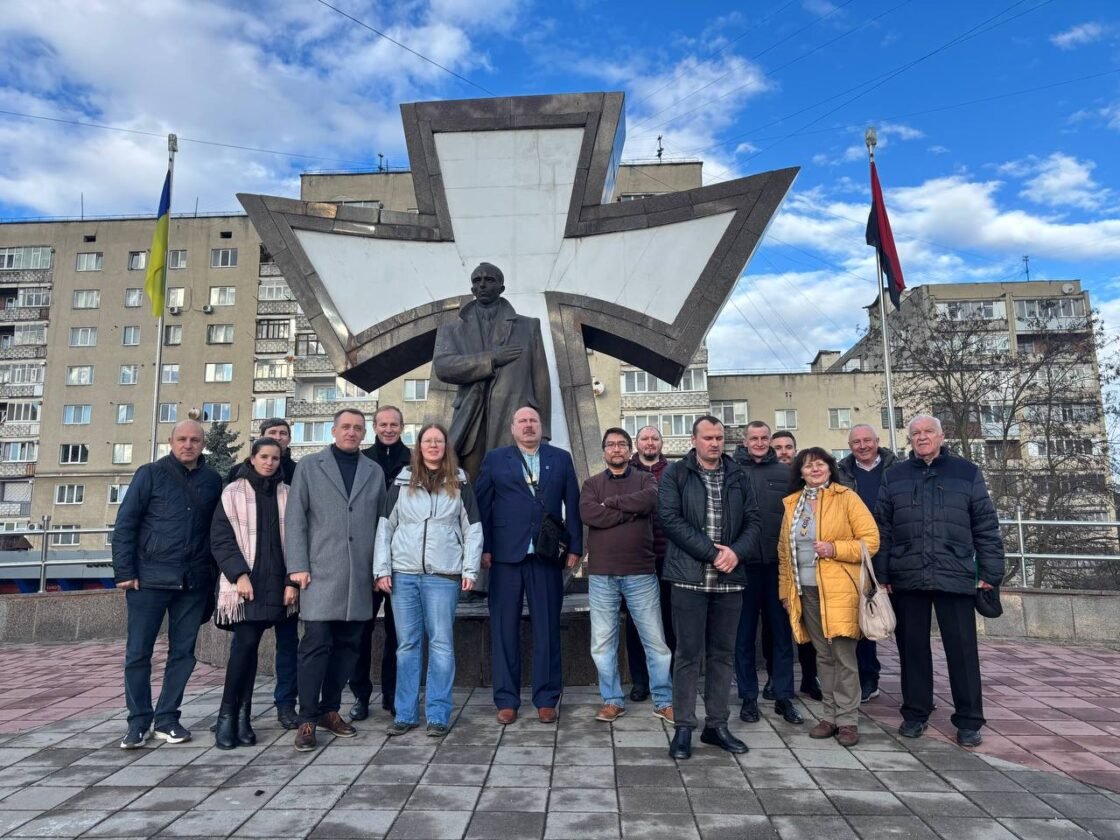
In November 1943, when the First Conference of the Enslaved Nations of Eastern Europe and Asia was held in the Rivne region, its participants formulated an idea that went far beyond the boundaries of the war at that time. It was about the common interests of peoples deprived of their own statehood or the real right to independently determine their future.
This was an attempt to create a united anti-imperial front. In 1946, these ideas received organizational continuation in the activities of the Anti-Bolshevik Bloc of Nations .
The historical merit of this movement lay primarily in the realization of a fundamental thing: the problem was not only communist ideology. It was about the Russian imperial system, which used Bolshevism as another form of its existence.
That is why today it is important not only to honor the history of the ABN, but also to understand how its strategic concept corresponds to modern security realities.
As a former counterintelligence officer, I want to emphasize one fundamental point. In the Russian state tradition, special services historically performed much broader functions than intelligence, counterintelligence, or the protection of state secrets. They were an instrument of political control, management of society, suppression of national identity, and neutralization of any forces that could question the authority of the imperial center.
This function can be traced in the activities of the Tsarist Okhrana, the Soviet Cheka, the ODPU, the NKVD, the MGB, and the KGB. In modern Russia, a significant part of similar tasks is performed by the FSB and other security structures.
It is clear that there are historical, legal, and organizational differences between these organizations. But the fundamental continuity lies in the use of state coercion and secret methods to preserve the political monopoly of the center.
The attitude of the Soviet special services towards the Ukrainian and other national liberation movements is particularly revealing. They were not simply persecuted. They carried out systematic intelligence operations against them, infiltrated leadership structures, provoked internal conflicts, spread disinformation, discredited leaders, and committed political assassinations.
It is enough to recall the murders of Lev Rebet in 1957 and Stepan Bandera in 1959, carried out by KGB agent Bohdan Stashinsky. Declassified archival materials also testify to the KGB’s targeted operational activities against the ABN and its leadership.
This is important to understand: Moscow viewed the international solidarity of enslaved peoples not simply as a political inconvenience, but as a potential threat to the integrity of its own imperial construct.
And today we see a continuation of this logic.
After the collapse of the Soviet Union, the Russian Federation formally became a new state. However, the dismantling of imperial governance mechanisms did not occur. On the contrary, a hypercentralized model of power was gradually restored, in which power structures became one of the foundations of the political system.
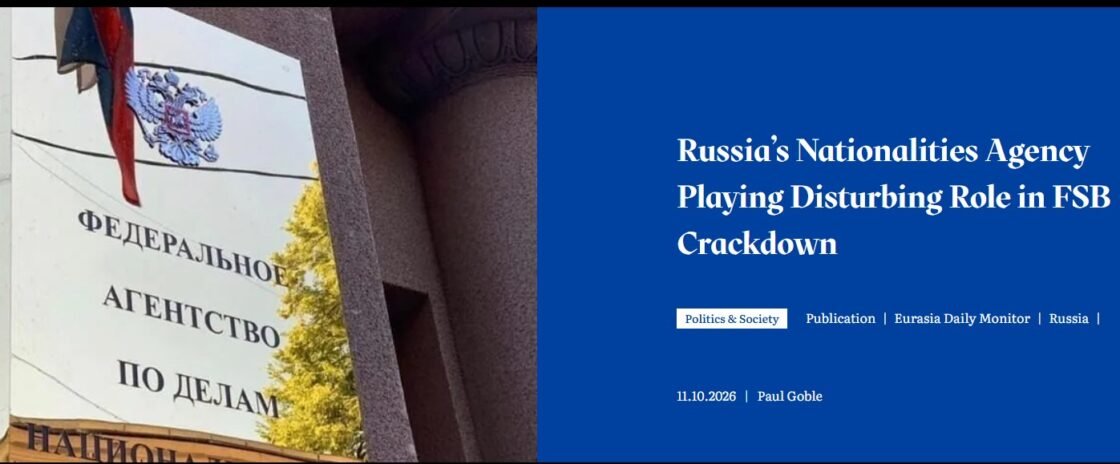
The modern FSB is not just a state security agency. It is an important participant in the system of ensuring political loyalty, controlling regional elites, suppressing opposition activity, and combating manifestations of national self-determination that the Kremlin considers threatening.
The practice of declaring organizations and associations associated with regional, indigenous, and national movements as extremist or terrorist has become indicative. Following the decision of the Russian Supreme Court regarding the Forum of Free Peoples of Post-Russia, the FSB in January 2025 published a list of 172 organizations that the Russian authorities attributed to its structures.
In fact, counterterrorism tools are also used to persecute political activity, civic self-organization, and discussions about the future of the state.
This practice has another dimension – international.
Russian special services are trying to extend their control beyond their own territory. This includes surveillance, intimidation, pressure on relatives, information operations, and other forms of transnational repression against political opponents and representatives of émigré communities.
Thus, the methods used against liberation movements in the last century are taking on new technological forms today.
But a natural question arises: if the Russian Federation is a multinational state with numerous internal contradictions, why does it still remain integral?
In my opinion, the reason lies in a combination of several factors.
This is centralized control over financial resources, the dependence of regional elites on Moscow, a monopoly on organized violence, information dominance, and a systemic limitation of the possibilities of independent political self-organization.
Therefore, the presence of national discontent does not mean readiness for independence. And the weakening of central power does not necessarily lead to the collapse of the state. This is fundamentally important for professional security forecasting.
We must abandon the simplistic thesis that Russia will inevitably collapse as a result of military defeat or a change of leadership.
Disintegration is only one possible scenario. Others could be the preservation of an authoritarian system with new leadership, managed decentralization, or a prolonged period of internal instability.
What will be decisive is not the fact of the political crisis itself, but whether the imperial center will lose the ability to control power structures, financial flows, regional elites, and social processes.
Accordingly, systematic monitoring of these processes is of particular importance for Ukraine.
Important indicators may include conflicts between federal and regional law enforcement agencies, deepening budget disputes, increasing independence of local elites, strengthening of national movements, and the loss of the ability of the center to ensure the implementation of its own decisions.
At the same time, it is necessary to understand that national movements of different peoples have different goals. For some, it is about independence, for others – about real federalization, cultural rights, language protection, or political self-government.
Ukraine must respect the right of these peoples to independently determine their own future, and not substitute their will for our geopolitical expectations.
And here we come to the actual counterintelligence dimension of the problem.
Any strengthening of national liberation movements will inevitably attract the attention of Russian special services. We can predict attempts at agent infiltration, the creation of controlled organizations, discrediting legitimate representatives of the peoples, provoking conflicts between movements, and using radical elements to compromise the very idea of decolonization.
Therefore, international support for such movements must be accompanied by proper risk assessment, verification of the reliability of information, transparency of cooperation, and protection of participants from repressive influence. It is especially important to prevent a situation where, under the guise of anti-imperial struggle, Russian special services create their own tools of political influence.
But the other extreme is also dangerous: automatically considering every representative of the enslaved nations as a potential agent. Such an approach will only help the Kremlin isolate these environments. Professional counterintelligence should work on the basis of facts, assessment of behavior and real threats, and not ethnic or political generalizations.
I would like to draw special attention to the future security consequences of the possible disintegration of Russia.
We cannot view it solely as a positive outcome. The uncontrolled collapse of a state that possesses nuclear weapons, large military arsenals, and an extensive repressive apparatus can pose serious threats to international security.
Conflicts between regional groups, the struggle for resources, uncontrolled arms transfers, transnational crime, and the emergence of new authoritarian regimes are possible.
Therefore, the strategic task of Ukraine and its partners should not be chaos on the territory of Russia, but the creation of conditions under which the imperial system will lose its ability to engage in external aggression and reproduce the policy of enslavement.
At the same time, international control over strategic arms, respect for human rights, peaceful settlement of disputes, and the realization of the right of peoples to self-determination in accordance with international law must be ensured.
In conclusion, I would like to return to the historical experience of the ABN. In 1943, representatives of the enslaved peoples realized that their struggle could not be effective without mutual solidarity. In the 21st century, another component must be added to this understanding – a professional awareness of the mechanisms of the functioning of imperial power.
We are dealing not only with a specific political regime, nor even with a specific head of state. We are dealing with an institutional system that has historically adapted to different political conditions and repeatedly restored its own expansionist capacity.
Therefore, I want to conclude with the main thesis of my report.
Russian imperialism will not automatically disappear with a change in Kremlin leadership. As long as the institutions that ensure imperial control remain, the ability to restore empire remains. Therefore, the security of Ukraine and Europe depends not only on the outcome of the current war, but also on the nature of the future transformation of the Russian state.
And that is why the legacy of the Anti-Bolshevik Bloc of Nations should be considered not only as an important page of our history, but also as an intellectual basis for the modern discussion about decolonization, the right of peoples to self-determination, and the construction of a new system of European security.
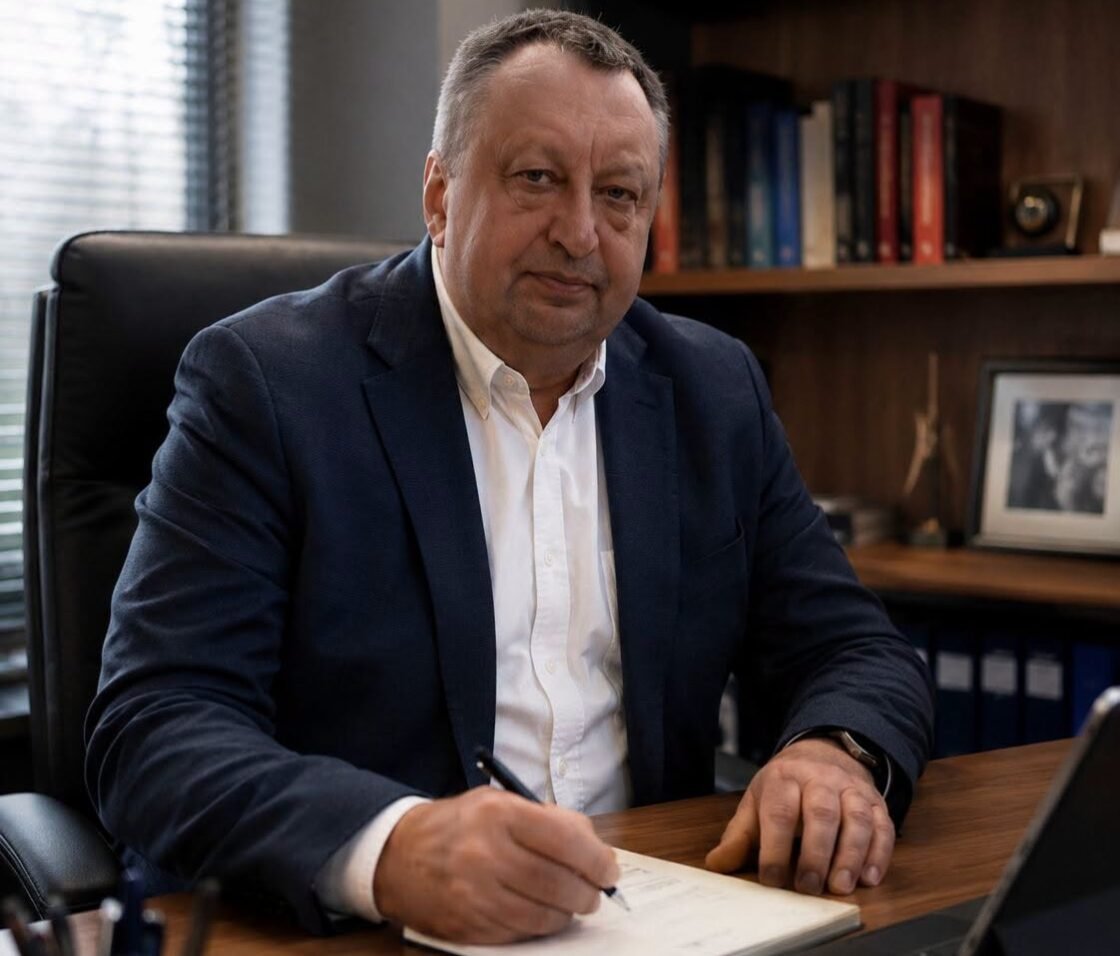
Viktor Yagun, reserve major general of the Security Service of Ukraine, former deputy head of the SBU, national security expert.
(Report at the International Scientific and Practical Conference “ABN: Past, Present, Future”)