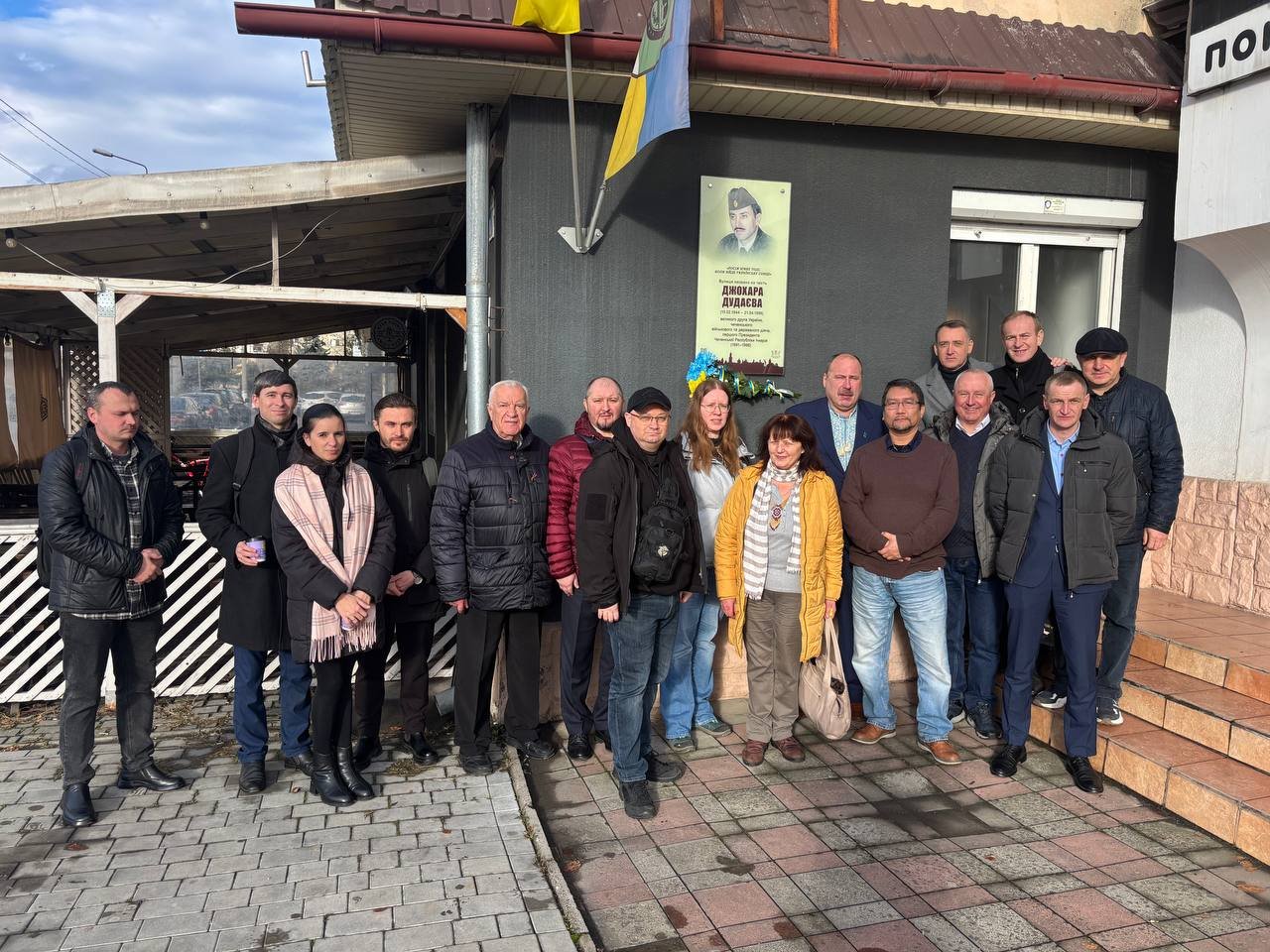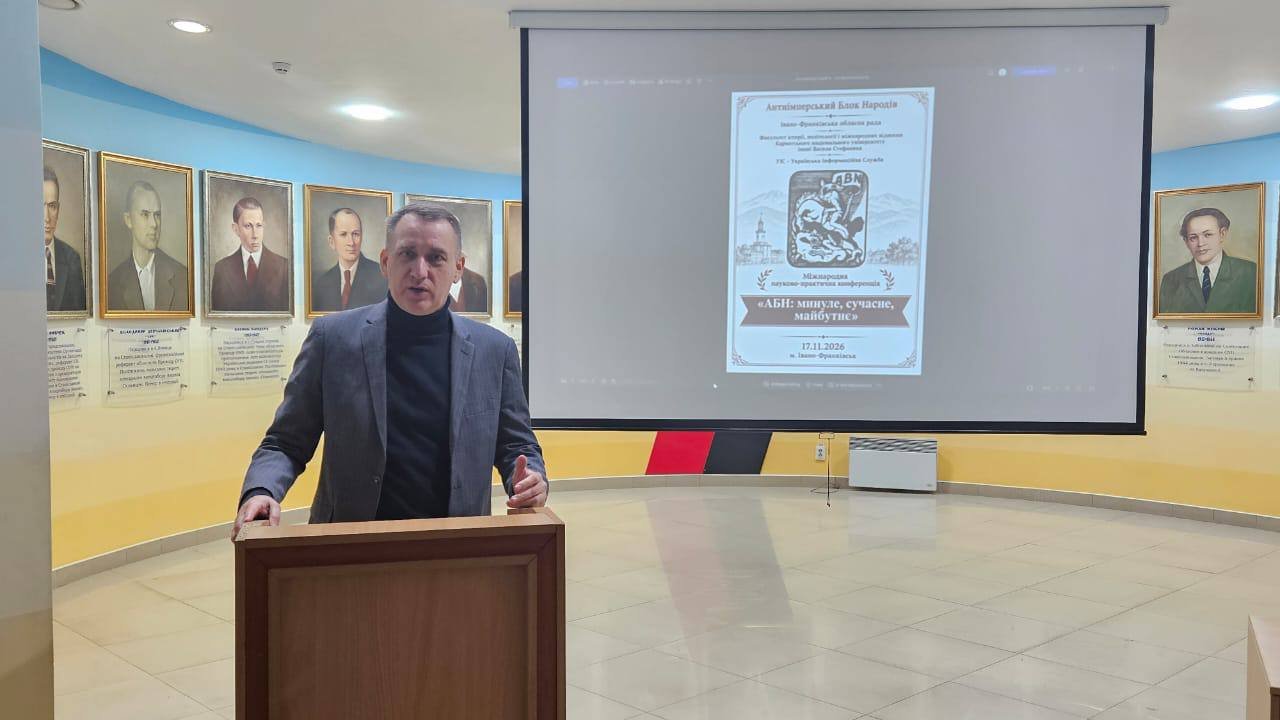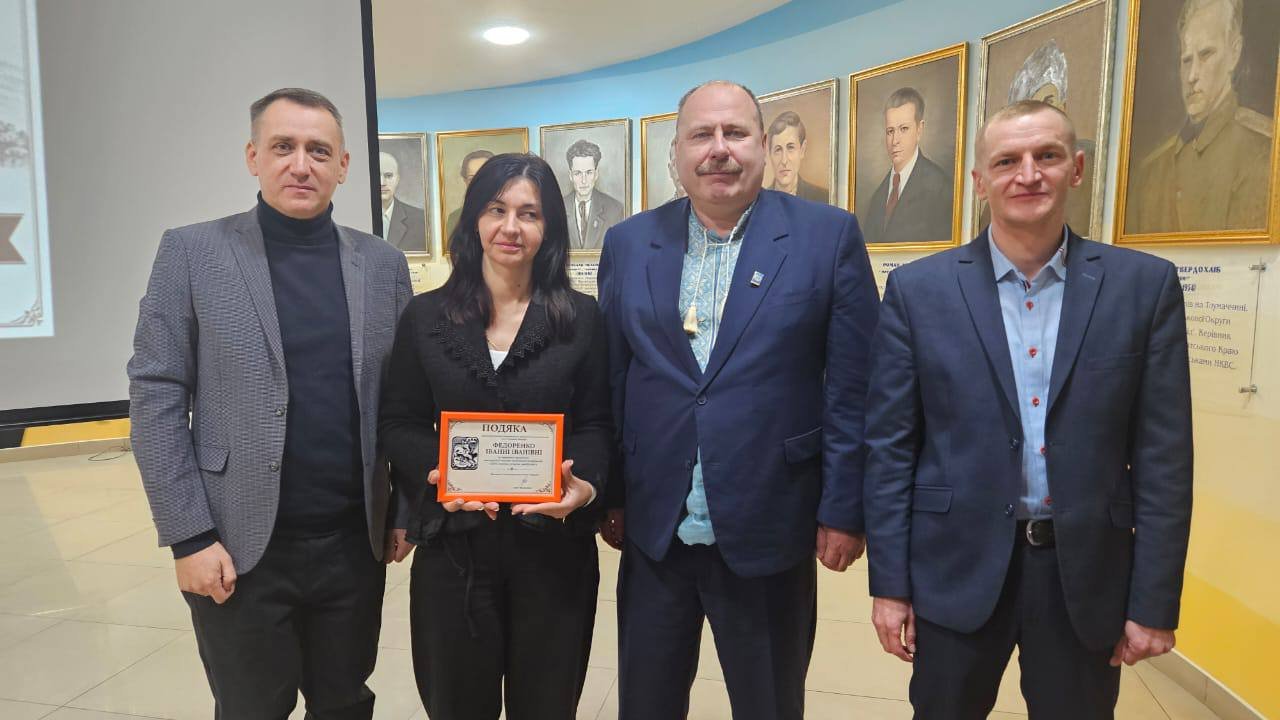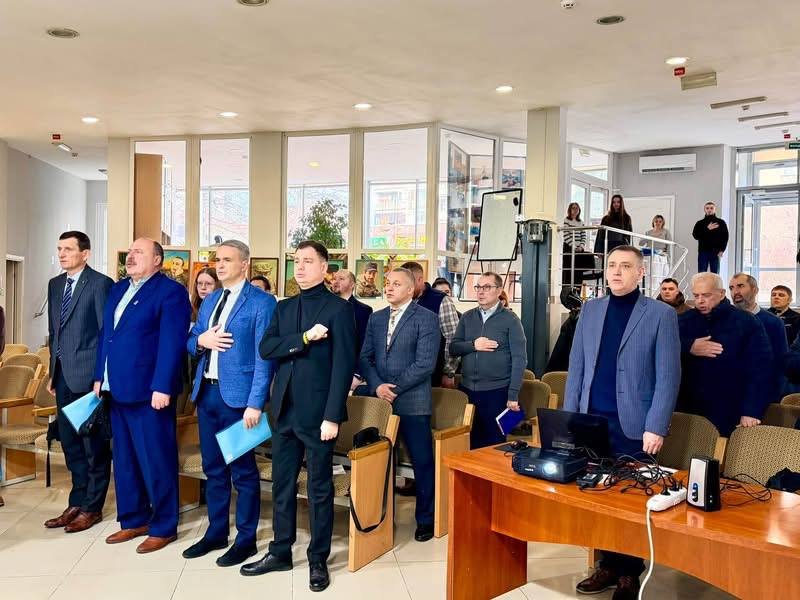
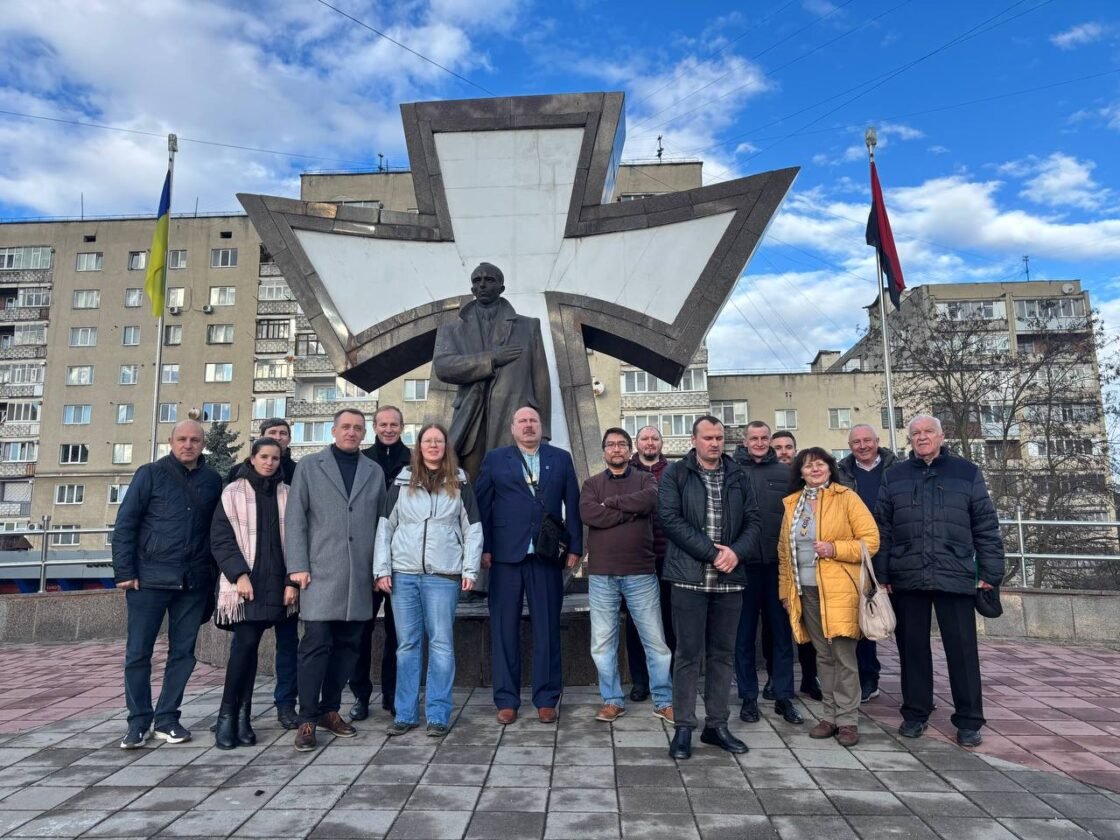
On November 17, an international scientific and practical conference “ABN: Past, Present, Future” was held in Ivano-Frankivsk, at the Stepan Bandera Center for Patriotic Education of Schoolchildren. The conference was dedicated to the 83rd anniversary of the First Conference of the Enslaved Peoples of Eastern Europe and Asia in November 1943.
The conference was co-organized by the Anti-Imperial Bloc of Peoples, the Ivano-Frankivsk Regional Council, the Faculty of History, Political Science and International Relations of the Vasyl Stefanyk Carpathian National University, and the Ukrainian Information Service (UIS).
Ukrainian scientists and researchers, leaders of national liberation movements of enslaved peoples, representatives of the government and the public took part in the conference.
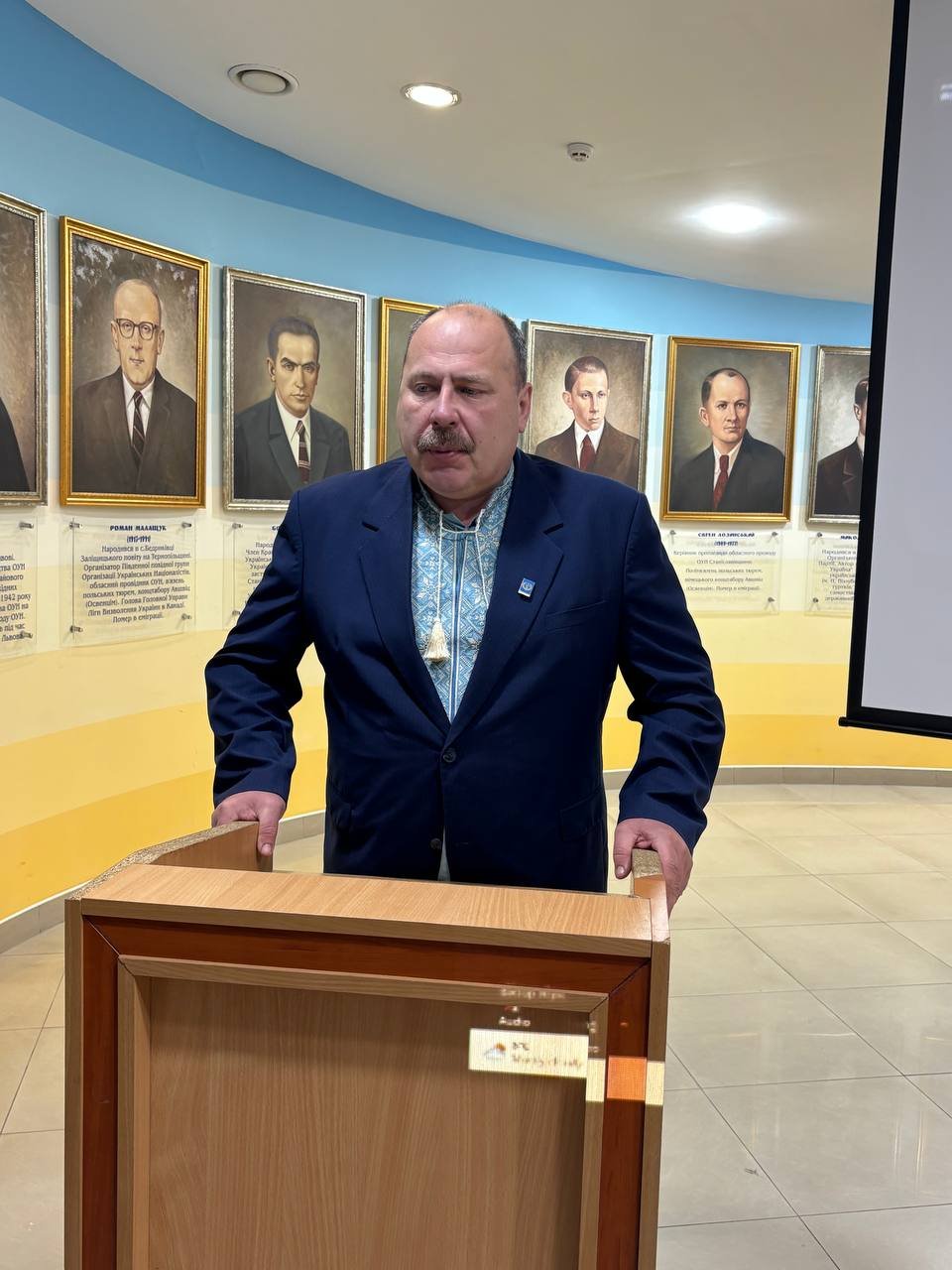
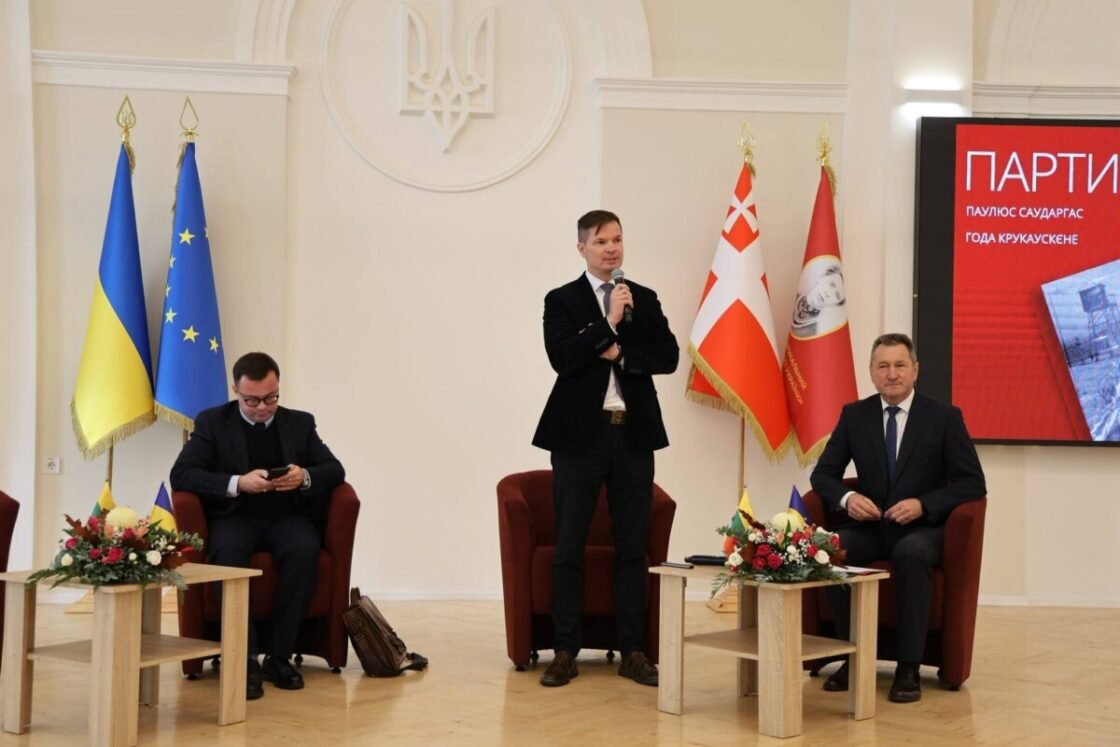
The conference participants were welcomed by the head of the Organization of Ukrainian Nationalists (Banderites), President of the Anti-Imperial Bloc of Peoples, Oleg Medunytsia, who emphasized the importance of studying the activities of the ABN and using the experience of the struggle in modern conditions.
The participants of the international conference were welcomed by the Chairman of the Ivano-Frankivsk Regional Council, Oleksandr Sych. In his opinion, the conference was an important stage on the path to the restoration of the ABN’s activities.
“The origins of the idea of creating the ABN date back to 1940, when the slogan “Freedom to the peoples! Freedom to the individual!” was sounded in the OUN Manifesto. And since 1941, the OUN began publishing the magazine “Our Front” – a joint publication of representatives of the emigration of a number of peoples enslaved by Bolshevism – Ukrainians, Georgians, Belarusians, Azerbaijanis, Turkestans. The “Commission for the Affairs of Enslaved Peoples” specially formed in the OUN worked on it,” noted Oleksandr Sych. “Moscow’s aggression against Ukraine placed many important accents and, among other things, rehabilitated Ukrainian nationalism in public perception. Having gone through a long path of struggle against the Muscovite empire, Ukrainian nationalists have always emphasized that liberation from Moscow’s colonial enslavement can only be achieved through struggle.”
Oleksandr Sych emphasized that today it is extremely important to raise the issue of the dismemberment of the Moscow Empire to a scientific level, to develop mechanisms for its implementation and, accordingly, to neutralize those threats to the Ukrainian State that exist and will continue to exist on our eastern borders for some time.
The Deputy Mayor of Ivano-Frankivsk, Sviatoslav Nykyrovych, Vice-Rector of the Vasyl Stefanyk Carpathian National University, Vitaliy Shkromyda, Dean of the Faculty of History, Political Science and International Relations of the Vasyl Stefanyk Carpathian National University, Ihor Hurak, Vice-President of the ABN, Head of the Educational Project “University of Free Peoples” Leontiy Shipilov, and Deputy of the Lviv Regional Council, Sviatoslav Sheremeta, also shared their thoughts on the relevance of the issues discussed at the conference.
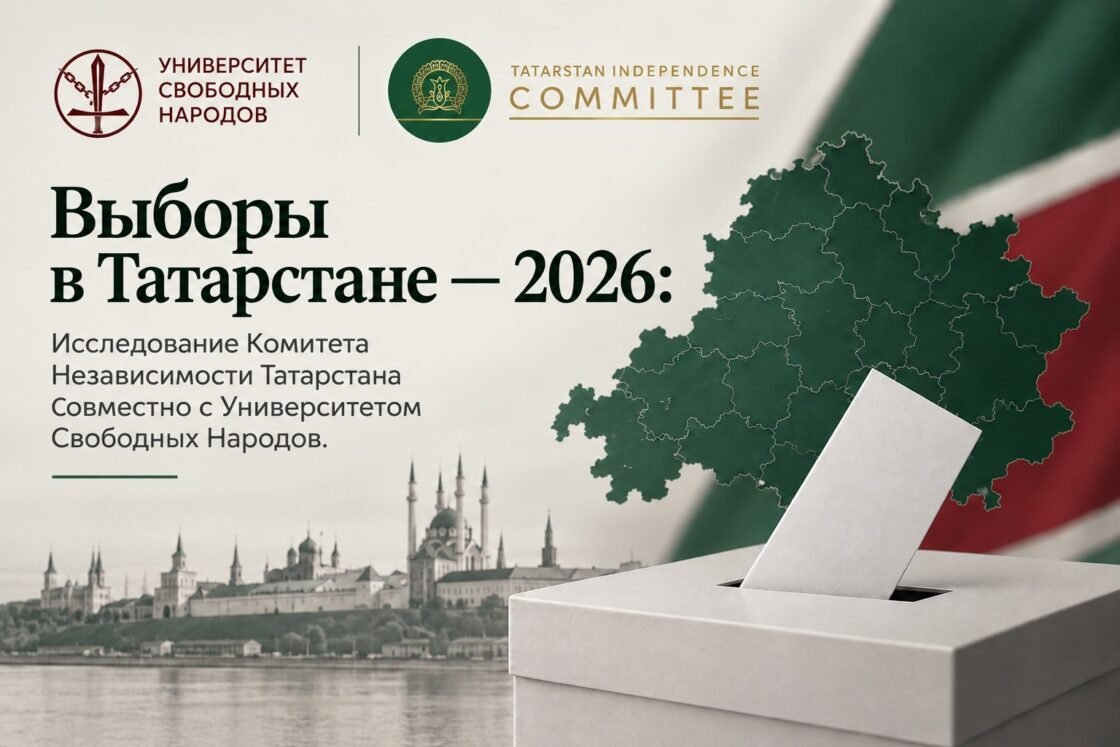
The leader of the Buryatia independence movement “Buryaad-Mongol Erheten” Dorzho Dugarov and the head of the Tatarstan Independence Committee, vice-president of the Anti-Imperial Bloc of Peoples Aida Abdrakhmanova delivered reports on the history and prospects of the national liberation movements of enslaved peoples at the conference.
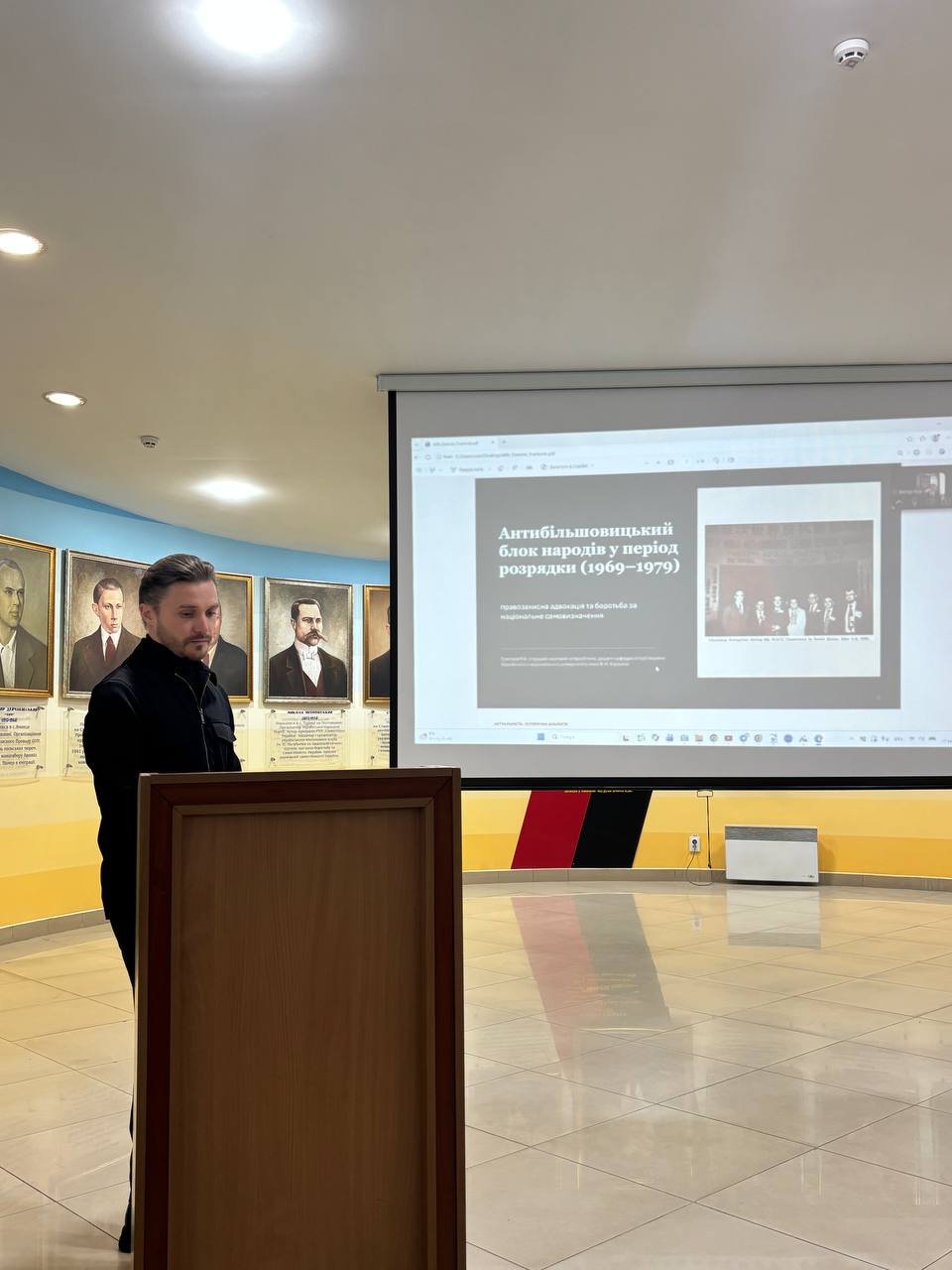
ABN history researcher, associate professor of the Department of Ukrainian History at V.N. Karazin Kharkiv National University, Hryhoriy Riy, presented a report on the topic: “Anti-Bolshevik Bloc of Peoples during the period of détente (1969–1979): human rights advocacy and the struggle for national self-determination.”
Mykola Posivnych, a well-known researcher of the national liberation struggle, a senior researcher at the I. Krypiakevych Institute of Ukrainian Studies of the National Academy of Sciences of Ukraine, delivered a report on the topic “The 1943 Conference of the Enslaved Peoples of Eastern Europe and Asia in the Military-Political Plans of Roman Shukhevych.”
Deputy of the Rivne Regional Council, well-known public and political figure Oleksandr Dekhtyarchuk told those present about preserving the historical memory of the ABN in the Rivne region.
In total, about twenty researchers presented interesting reports on a wide range of issues related to the topics of the international conference.
As noted by the conference moderator, Yaroslav Koretchuk, a graduate student at the Vasyl Stefanyk Carpathian National University, the main goal of the conference was not simply to recall the history of the struggle of the peoples enslaved by Moscow, but also to talk about its continuation and future, about the formation of a common anti-imperial front, about the right of peoples to their own statehood, and about the real prospects for dismantling the last colonial empire in Europe.
Yaroslav Koretchuk is convinced that Ukraine will not have lasting peace as long as the Moscow empire with its aggressive ambitions exists.
“Moscow has been keeping the conquered peoples in colonial dependence for centuries, taking away their resources, destroying their national identity and using them as cannon fodder in its wars of aggression,” noted Yaroslav Koretchuk. “Today, this is especially cynically manifested in the war against Ukraine. The Kremlin is throwing representatives of the enslaved peoples onto Ukrainian soil: Tatars, Bashkirs, Buryats, Chechens and others. Those whose lands and resources Moscow has appropriated, whose national aspirations it is suppressing, whose future it is trying to destroy. In fact, the empire is forcing some enslaved peoples to fight against another people who are fighting for their freedom. But this must be put to an end! The future of the peoples who are today under the Moscow yoke is not in colonial subordination, but in their own independent national states. “Moscow’s loss of colonial territories, resources, and the ability to use enslaved peoples in its wars, the dismantling of the imperial system, and the deprivation of its ability to carry out aggression are not only a matter of the freedom of these peoples. They are a matter of the national security of Ukraine and all of Europe,” the conference moderator emphasized.
The organizing committee of the international scientific and practical conference reported that after proper processing of all reports, the conference materials will be prepared for publication.