

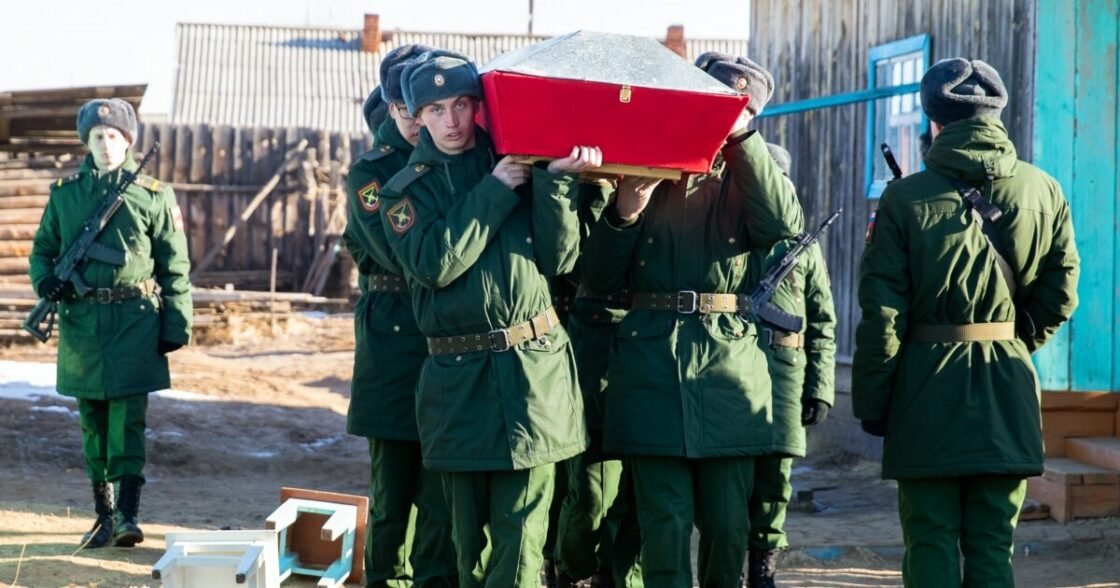
4,075. That is the number of confirmed deaths of people from Buryatia in Russia’s war against Ukraine recorded by the Buryat Memorial project. The database stresses that the real number is considerably higher. Its data indicate that an average of about six men from Buryatia die every day.
This is no longer merely a statistic of war. It is the price the Buryat people are paying for Moscow’s imperial policy.
The Kremlin decides where and why to fight. Buryatia supplies the people. Moscow controls political decisions and resources. Buryatia receives the dead, demographic losses and empty graves.
But this cost inevitably raises a political question.
Why should Buryatia’s future be decided in Moscow?
The Free Buryatia Foundation advocates the deimperialisation of Russia and a free and prosperous Buryatia. Other Buryat activists are now openly raising the issue of Buryat independence.
This does not mean that all Buryats share the same political position. But the growing independence discourse shows that Moscow’s imperial model is no longer the only imaginable future.
Research presented in 2026 also highlights how Soviet policies suppressed Pan-Mongol identity, divided Buryatia territorially and accelerated Russification.
So the 4,075 names are more than a list of the dead.
They raise a question about the very logic of empire: how many generations must sacrifice their lives for a state that denies them the right to determine their own future?
The Russian Empire survives not only through its army. It survives through the assumption that Moscow has the right to determine the destiny of Buryatia, Yakutia, Tatarstan, Dagestan and other peoples.
Once that assumption disappears, genuine decolonisation can begin.
The 4,075 dead need not become a symbol of Moscow’s imperial greatness. They can become a reminder of why, when the imperial centre weakens or collapses, Buryatia must have the right to choose its own path — including the path to statehood.






