
Donald Trump has been the 47th President of the United States for six months. During this time, he has said so much that it is enough for everyone, both for love and hatred. Not only in words, but also in actions. However, some words are equivalent to deeds.
The Kremlin greeted the billionaire’s election with cautious optimism. As the inauguration approached, the optimism grew stronger. Opinion polls confirmed the intra-elite consensus that was being transmitted to the grassroots. For example, on 13 November, VTsIOM reported that 33% expected changes for the better in Russian-American relations, while only 6% expected changes for the worse. Another thing is that people did not specify what the “improvement” might consist of. After all, someone took Trump’s words about “a blow to the centre of Moscow” seriously.
The broadcast of the inauguration footage on federal channels demonstrated that the Kremlin was eagerly awaiting the first steps of the new US leader. For the sake of such a matter, the kiseli-nightingales even turned down the fuse of their arrogance and began to fawn before the overseas ruler. Trump’s statements about the annexation of Greenland and Canada confirmed the Kremlin’s hopes. Having begun to threaten everyone and everything, especially the EU, with the introduction of customs tariffs, the president earned new applause from the Kremlin media.
At the same time, there were reasons to condescendingly pat the White House owner on the shoulder. In particular, Simonyan’s RT quoted the words of Professor Pavel Feldman with some pleasure: “In a market economy, restrictive measures do not work.” As is well known, the Kremlin is filled with libertarians.
The authors of some Z-channels, however, expressed bewilderment at the general jubilation, considering it a form of collective submission to the hated America. Igor Girkin also became wary in the zone.
Another surge of Kremlin Americanophilia was caused by the telephone conversations between Putin and Trump that took place on 12 February. Solovyov added a fly in the ointment, saying that Trump was “spreading the word too softly” and that one should “keep one’s ears open” with him. Such maxims gave the impression of a gentle reprimand of the Washington prankster: don’t hold your head up high. Trump tried to live up to the image of a good boy, which was confirmed by the UN vote on the resolution on 24 February, and the scandalous press conference on 28 February, with the participation of Volodymyr Zelensky. Putin joyfully offered the American president rare earth resources of Russia, which he occupied. This was the peak of official Trump worship – both in terms of frequency of mentions and positive assessments.
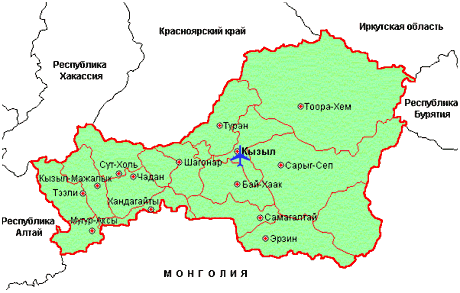
Nikolai Novik, an expert from the Higher School of Economics, hastened to assure that the Russians will not lose anything from the plundering of their country. Since, unlike the Ukrainian ones, the Russian reserves are quite significant, and are also located “in the north, in Murmansk, the Caucasus, the Far East, the Irkutsk region, Tuva and Yakutia.” In general, in those places whose residents the venerable expert does not feel sorry for, and the Kremlin resident is even less interested in their fate.
Z-media people were a little concerned by the billionaire’s statement on 3 March, where he called himself “the only president who has not given Putin’s Russia a single inch of Ukraine.” However, the next day, the businessman rehabilitated himself before Moscow, declaring at a joint session of Congress that Russia is in favour of peace (preferably all of it). True, it was expected that Trump, in addition to this, would notify congressmen about the final halt to aid for Ukraine, but he decided not to rush things.
If the first call between the president and the dictator lasted half an hour, the second, organised on 18 March, lasted for 2 hours and 28 minutes. In response to Trump’s proposal to freeze military actions for 30 days, his counterpart made a counter-proposal: only in relation to energy infrastructure facilities. The lovebirds also cooed about the prospects for normalising relations between the Russian Federation and the United States. Judging by the comments of Z-bots at the time, the Kremlin decided that it was time to put the squeeze on Donald by pouring a bucket of slop on his head. The head of NOD, Yevgeny Fyodorov, also distinguished himself by declaring that the Americans “want to destroy our country as a competitor.” The stick was accompanied by a carrot in the form of TV programmes dedicated to the centuries-old Russian-American friendship.
Contradictory data were presented by sociologists. Thus, the Public Opinion Foundation shared statistics on 28 March, according to which 39% of Russians have a positive attitude towards the Washington ruler, 22% – negative. At the same time, 66% considered Trump cunning and sly, 13% – honest and sincere. The survey was conducted on the eve of and during International Women’s Day. The respondents were not quite sober, since the simple-minded American businessman seemed to them “cunning and sly.” Although this unfinished Machiavelli himself, perhaps, really considers himself as such.
April was marked by terrible tariffs, which pleased rather than frightened the inhabitants of the Kremlin. Peskov, as usual, noted the attentive interest of “our economic departments”, but at the same time made it clear that he didn’t give a damn. Even Washington’s threats to introduce secondary duties were honoured by a sluggish response from him about some “very complex” aspects of the discussions that “require additional efforts”. Purgonos showed with his whole appearance that the Kremlin didn’t give a damn about economic sanctions, and Trump didn’t even mention bombing the Kremlin in those days. So what’s there to be afraid of?
After the Istanbul talks, it slowly began to dawn on Trump that he was being led by the nose. Although this did not prevent him from calling Putin on 19 May. A week later, Trump could not stand it any longer and declared that Putin had “gone crazy.” Peskov responded in the spirit that Trump was emotionally overwhelmed.
The White House and Kremlin hosts held a new telephone conversation on 4 June. Hot on the heels of “Web”. Putin spent an hour and a quarter complaining about Ukrainian strikes. Trump expressed understanding of the dictator’s emotions. Despite the recent negative statements of the American president about Putin, Russian propaganda appreciated the latest “Ku pose”. In particular, Solovyov spoke with some sympathy about Donald, who, according to him, is facing prison. Like, we understand everything and let your anti-Putin phrases go in one ear and out the other.
The fallout between Musk and Trump on 6 June has caused mixed feelings in Kremlin circles. Some Z-speakers considered this news bad. Since both were perceived as people favourably disposed toward “champions of traditional values” like Volodin and Krasovsky. On the other hand, Putin’s people seized on a conspiracy theory as a straw for a drowning man. They say that the two friends pretended to quarrel to disconnect Ukraine from Starlink.
On 14 June, the day after the Israeli strike on Iran, Putin and Trump spoke on the phone again. For 50 minutes, the Kremlin resident tried to sell the services of a “middleman.” A week later, American planes attacked nuclear facilities in Iran. Despite the sympathies of some Putinists (in particular, Solovyov) for Israel, the official media were generally confused. The propagandists clearly tried to influence the fate of the ayatollahs. Even Dugin, who until then considered the American president a conductor of the “fourth political theory” (in normal language – Putinversteherstvo), could not resist. Now he allowed himself a terrible insult, comparing Trump to Bush Jr. However, he still gave the billionaire a chance, stating that the neocons had taken Trump hostage. Dugin also said: “There is a deadly struggle for Trump in the United States.” And sometimes one can even agree with these words: “Trump doesn’t realise what he’s doing.”
On 16 June, the American president confirmed this opinion, stating that the exclusion of the Russian Federation from the G8 was a mistake, and on 3 July, he called Putin again. Only after the sixth call did a period of “disappointment” begin, which continues to this day. On 14 July, Trump called Putin a tough guy who had deceived many US leaders, and then gave the dictator 50 days to resolve the conflict. At the end of July, the deadline was shortened to 8 August.
The Kremlin obviously doesn’t like the new statements. The idiot Dmitry Medvedev has fluffed up his tail, threatening the American leader with war: “Don’t follow in Sleepy Joe’s footsteps.” Peskov is more reserved: “We continue to record all statements coming from President Trump.” Maria Zakharova said that “threats of new sanctions against Russia have already become routine.” At the same time, she didn’t like the supply of Patriot air defence systems to NATO countries, and from there to Ukraine.
Lindsey Graham answered them all in one voice: Calm down, you don’t live under Biden, he was the one coddling you. But isn’t the Reaganite senator exaggerating Trump’s decisiveness? Isn’t he attributing his own attitude to him? That’s the question.
Kremlin media have registered interest in a recent Fox News poll, which shows that most Americans support the idea of creating a powerful third party. It seems that Putin’s supporters have become disillusioned with both the Democrats and the Republicans. Now they are looking for ways to “hack” the American political system. However, Elon Musk’s “America” party is unlikely to provide such a chance.
What about domestic polls? FOM’s March data are indirectly confirmed by a survey conducted by the editorial staff of “News Mail” after Trump’s tough statements in mid-July. 54% of Russians believe that Russia and the United States will continue to interact, 42% assume that interaction will be limited, and only 2% are sure that contacts will cease completely. However, the specifics of the current Russian state do not allow us to completely trust such studies. Cases of beatings or public humiliation of “veterans of the SVO”, acts of destruction or damage to regime property, arson of military registration and enlistment offices and “United Russia” offices tell us much more about the public mood.
The attitude towards Trump in the Kremlin media varied from adoration to contempt and back. At the beginning of the second term, serious hopes were noted among the Putinoids and Turbozetniks. These hopes were deeper than geopolitics. They were generated fundamentally, from ideology and aesthetics. The group that came to power in the US seemed to be inclined towards the traditional values of Putinism: to rob, kill and rape.
If America becomes like the Russian Federation, there will be a chance for mutual understanding and mutual assistance in the imperial division of the world. Hence, the surge of Americanophilia, which, by the way, resembled the USSR of the 1920s. It is not the first time for the nomenklatura and agitprop of the Russian Federation to wipe their asses with their banner. But to such an extent… What was the value of Sergei Lavrov’s historical research on the eternal peacefulness of the Americans, on their joint confrontation with the Russians against predatory Europe?
Trump expressed understanding in his “transactional” lack of principles and mental attraction to autocrats who “hold the cards in their hands.” And he tried to adapt. However, his Moscow partners demonstrated a level of impudence and cynicism that was beyond even his capabilities. It was not oppression and obscurantism, not violence and bloodshed, but the lack of personal respect that outraged the president to the point of a nervous breakdown and a change, if not in policy, then in rhetoric. Well. Better this way than nothing.
The zigzag stunned the Kremlin. Medvedev’s “grandpa” and Prokhanov’s “Agasfer” followed. “It looks like he got confused himself,” Dugin recorded on 24 June. On 8 July, the same Dugin summed it up: “Trump has turned from the hope of 2025 into the disappointment of 2025.”
The latest flash of references to date is Donald Trump’s “atomic quarrel” with Dmitry Medvedev. The Kremlin clown, called into the arena for no other reason than to give his master a hard time, did not dare to dream of such a thing. The American president is speaking to him personally, and not to anyone else! (And let Secretary of State Marco Rubio testify to the whole world: Medvedev is an empty space – it is enough that these people recall this name.)
The public’s attitude to the scandal is ambivalent. On the one hand, Trump is once again turning into an American enemy, and the pliable public consciousness habitually reacts with another U-turn. But on the other hand, they know too well in Russia who Medvedev is. The masses have no respect for any of the rulers. But at least there is someone to fear. This moron, who is trying so hard to look like a violent person, is not even feared. He is too ridiculous and insignificant.
By entering into a polemic with Putin’s puppet, the US President has put himself in a strange position. He has lowered his perception. How can you seriously talk about anything with Medvedev, and even move nuclear submarines because of him?! It’s funny, at least. In any case, we’re stocking up on popcorn, since this particular incident is filling the airwaves.
But let’s put aside the superficial nonsense. There are serious aspects to this.
It is too early for those who value freedom and human dignity to rejoice. Trump’s reputation for seven Fridays in a week is far from being overcome. But there are situations when a villain or simply an insignificant person ends up on the side of good and really makes the world a better place. It is very dishonourable to be a spineless lackey of evil spirits.
The first six months of Trump’s rule have cost humanity dearly. Whether he will ever wash himself clean of this is a big question. But there is a chance. If he was offended, convinced that he is being taken for a sucker, then he is not hopeless.
Fedor Shaporenko