The non-governmental analytical centre “Ukrainian Studies of Strategic Research” continues its long-term project on Monitoring Regional Processes in the Russian Federation.
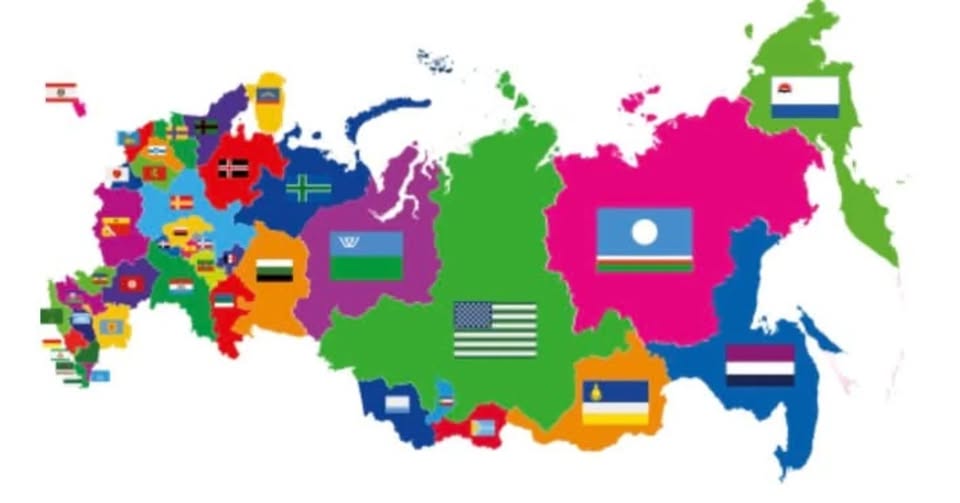
The purpose of the research is to record and determine the dynamics of conflict-generating and disintegration factors that will contribute to the deconstruction of the Russian Federation and its disappearance as a geopolitical reality.
The object of monitoring is the information space of the Russian Federation, with the most popular news from various regions of Russia over a quarter being analysed. This will provide a more or less clear understanding of the internal processes occurring within the aggressor state and allow for the monitoring of conflict-generating regional processes.
Monitoring of Regional Processes in the Russian Federation: Winter 2024/2025
During this period, many regions experienced problems with infrastructure, for which winter traditionally came unexpectedly. In regions close to Ukraine, the “arrival of war” into daily life became apparent. Across Russia, there is a worsening socio-economic situation, and in some regions, conflicts on national and religious grounds are intensifying.
EUROPEAN PART
Moscow Region
Despite the apparent stability of the centre, the winter of 2024–2025 revealed several structural problems that are increasingly penetrating the social-political fabric of the region.
Economically, the area was impacted by strikes on oil refining infrastructure, resulting in a 50–60% drop in refining capacity. This not only affected production but also intensified the pressure of security services on industrial enterprises. Inflation exceeded 10%, particularly hitting food prices, which triggered a rise in social discontent.
Protest activity increased against the backdrop of widespread problems in the housing and utilities sector. In several cities of the Moscow region — including Khimki and Krasnogorsk — protests were held due to heating outages and rising tariffs. In the regions of the Central Federal District, there were numerous instances of electricity and heating disruptions. The fact that such actions are emerging in the privileged Moscow region may indicate serious systemic failures.
At the political level, there is an intensification of repressive measures against the opposition. Events surrounding the anniversary of Navalny’s death gained particular attention: the detention of activists attempting to reach Moscow demonstrated the government’s fear of even symbolic acts of defiance. Despite this, a small memorial rally took place in the capital, signalling the presence of remnants of political resistance, albeit deeply marginalized.
An interesting new line of tension is the split within the Russian Orthodox Church. A priest from the Mozhaysk district publicly criticized Patriarch Kirill for his “excessively patriotic” rhetoric, which sparked wide resonance. This could indicate the emergence of internal resistance even within an environment that has traditionally been loyal to the regime.
The environmental issue remains one of the enduring catalysts for protest — residents of the region are opposed to the construction of agricultural land and landfills. Although these actions are not yet widespread, they are rooting protest culture among local communities.
Overall, the Moscow region is showing signs of a gradual loss of social consensus: economic pressure, failures in the utility sector, the strengthening of the police state, and even the beginnings of religious discontent are creating an unstable environment that, under external or internal stress, could lead to unexpected political outcomes.
| Humanitarian | 1 |
| Environmental | 2 |
| National | 0 |
| Criminal | 0 |
| Religious | 1 |
| “Special Military Operation” (SVO) | 2 |
| Socio-economic | 2 |
| Socio-political | 2 |
Bryansk Region
During the specified period, the Bryansk region has been under conditions of increasing internal tension, caused by a combination of economic, social, and security factors.
The inflation rate, which reached 11% in February 2025, is causing growing public dissatisfaction, particularly due to the association of rising prices with the costs of the war against Ukraine. The amount of criticism directed at both local and central authorities is increasing.
There are also noticeable human losses: over three months, 3 civilians were killed and another 11 were injured, while among the military, more than 530 were killed. This has led to public discussions on the legitimacy of the war.
The demographic crisis is deepening: mortality is more than twice the birth rate, and the average age of residents is 39 years. To stimulate birth rates, the authorities are introducing financial payments for pregnant schoolgirls and students, which has caused mixed reactions in society.
The security situation has significantly worsened: from December to February, hundreds of drone, missile, and artillery strikes were recorded. Regular warnings about missile threats have also appeared.
Thus, Bryansk is gradually transitioning into a state of chronic tension, where the military factor is closely intertwined with internal political and socio-economic dissatisfaction.
| Humanitarian | 0 |
| Environmental | 0 |
| National | 0 |
| Criminal | 0 |
| Religious | 0 |
| “Special Military Operation” (SVO) | 3 |
| Socio-economic | 2 |
| Socio-political | 0 |
Chuvashia
The winter of 2024–2025 in Chuvashia passed under conditions of political instability and social dissatisfaction. The new regional leader faced resistance from the old nomenklatura, which retains influence through schemes for redistributing positions. Corruption scandals and internal elite struggles are intensifying the crisis of trust.
Mobilization is met with persistent resistance, especially due to stories about its compulsory nature, particularly among prisoners.
Prices for basic goods and utilities are rising, deepening social tension.
The population is increasingly demonstrating alienation from the official authorities, as reflected in online discussions and comments in local media.
| Humanitarian | 0 |
| Environmental | 0 |
| National | 0 |
| Criminal | 0 |
| Religious | 0 |
| “Special Military Operation” (SVO) | 2 |
| Socio-economic | 1 |
| Socio-political | 1 |
Tatarstan
During the winter of 2024–2025, Tatarstan sharply experienced an escalation of structural problems encompassing the economy, demographics, identity, and politics.
The republic found itself in a state of staffing and financial crisis: despite the presence of 49,000 migrants, there is a shortage of 37,000 workers, and the state debt reached 113.4 billion rubles, mostly due to federal loans. Meanwhile, nearly 80% of taxes are directed to Moscow, further increasing the region’s dependence on the center.
The demographic situation continues to worsen — the natural population decline nearly doubled, mortality rose by 6.6%, and birth rates fell by 3.3%.
Social and cultural tension is rising due to the neglect of Tatar cultural monuments and the prioritization of Christian cultural heritage sites. Despite this, there is growing interest in Islam in the region: mass Quran courses, the activity of Muslim communities, and increased religious self-organisation.
The arrest of Tatar national movement veteran Fazil Valiakhmetov and reports of thousands of casualties in the war with Ukraine only intensify anti-war and national sentiments. Behind external loyalty, there is a gradual increase in internal instability.
| Humanitarian | 1 |
| Environmental | 0 |
| National | -1 |
| Criminal | 1 |
| Religious | 1 |
| “Special Military Operation” (SVO) | -2 |
| Socio-economic | 2 |
| Socio-political | -1 |
Bashkortostan
The winter season in Bashkortostan was marked by a series of social protests and an increase in repression.
The main indicators of tension included:
- Protests by residents of Ufa against the opening of a probation centre at the art college
- A protest by construction workers on the M-12 highway over unpaid wages
- Environmental outrage in Sterlitamak regarding the landfill, as well as displays of anti-imperial behaviour by teenagers who burned the imperial flag.
All these events were met with a response from the authorities, from temporary concessions to high-profile persecutions. Repression continued against participants in last year’s protests in Baymak.
At the same time, corruption scandals unfolded in the region: sentences for Nizakayev, Lokotchenko, and the head of “Bashstroi,” as well as growing dissatisfaction due to inflation, air pollution, and the threat of floods. Despite efforts by the head of the republic, Khabirov, to maintain stability through infrastructure projects, his position has been weakened by the loss of business interests in Abkhazia.
The war against Ukraine is increasingly penetrating the local consciousness — bomb shelters are being built to order and fake stories about “Ukrainian hacker transfers” are circulating. The overall picture is a growing disillusionment with the conditions, marked by uncoordinated but regular protest activity.
| Humanitarian | 0 |
| Environmental | 0 |
| National | 1 |
| Criminal | 0 |
| Religious | 0 |
| “Special Military Operation” (SVO) | 1 |
| Socio-economic | -1 |
| Socio-political | 1 |
Orenburg Region
Throughout the winter, discussions and investigations continued regarding the flood at the beginning of 2024, particularly concerning compensation and the responsibility of the authorities. Some facilities (such as a polyclinic and the “Rus” sanatorium) were restored, but the population remained dissatisfied with the lack of systemic changes. Despite statements from the Ministry of Emergency Situations (MNS) and an inspection by the President’s Administration’s control office, no significant changes occurred, leading to a wave of mistrust.
Suppression of dissent continued: three people were sentenced for “justifying terrorism,” including two residents of Orenburg — a woman to 5 years and a man to 12 years, as well as a citizen of a Central Asian country. The channel “Utyug,” which criticized Russia’s internal policies, came under pressure — two administrators were detained on charges of extortion.
Amidst rising social tension, there were several attacks on law enforcement officers. Meanwhile, acts of protest noticeably increased:
- Residents of Chebenki village protested against the closure of medical institutions
- Orenburg city residents protested due to transportation issues and rising tariffs
- In Energetik village and Novotroitsk city, protests occurred over the reduction of medical infrastructure.
In December 2024, there was mass poisoning at Gymnasium No. 4, which the authorities denied, causing public outrage.
Problems in the housing and utilities sector escalated: the company “Priroda” failed to remove garbage, leading to a rat infestation, and announced its exit from the region. A conflict with Governor Pasler over tariffs led to a prolonged standoff until March. Large-scale corruption in road construction was uncovered — the CEO of “Orenburgremdorstroy” was detained, and a cartel conspiracy involving five companies operating in the region was announced.
Instability deepened due to personnel changes: Orenburg’s mayor, Salmin, went off to fight in the war against Ukraine, leaving his position to the first deputy, Obyedkov. Salmin was constantly criticized by residents, and his approval rating was among the lowest in Russia. Social media speculated that he “ran away” to avoid responsibility. Meanwhile, Pasler, despite belonging to the same political force, actively distanced himself from Salmin, publicly criticizing him.
Activity surrounding the war against Ukraine intensified. Over the winter, numerous examples of mobilization, returns from captivity, formation of evacuation points, and even bomb shelter inspections were noted. Financial support for war participants was increased — 350,000 rubles each for 5,000 people. Instances of forced mobilization continued to be recorded, for example, an Orenburg resident who was detained for selling a child.
Protests remain local and disorganized, with systemic opposition groups taking the initiative: the Communist Party of the Russian Federation (CPRF), “Fair Russia,” and Ksenia Sobchak. Meanwhile, there is noticeable fatigue from inefficiency and corruption, both in the city and in rural areas of the region. According to estimates, the level of centrifugal processes in the region continues to moderately increase.
| Humanitarian | 1 |
| Environmental | 0 |
| National | 1 |
| Criminal | 0 |
| Religious | 0 |
| “Special Military Operation” (SVO) | -1 |
| Socio-economic | 1 |
| Socio-political | 1 |
EASTERN SIBERIA
Primorye
In the period from December 2024 to March 2025, Primorsky and Khabarovsk regions experienced a series of incidents signalling an increase in repressive mechanisms and internal instability. In Velykyi Kamen, a 16-year-old teenager set fire to a bank and attempted to set fire to an administrative building. In Komsomolsk-on-Amur, a local woman received a suspended sentence for attempting to set fire to a military enlistment office, a crime prompted by fraudsters. In Ussuriysk, a former contract soldier claimed to have been tortured at a military unit.
In Khabarovsk, a bust of Dzerzhinsky was erected, and journalist Mingazov was fined 700,000 rubles for “fake news” about Bucha. The persecution of former Governor Furgal continues in a case regarding the creation of an organized criminal group (OCG).
On the economic front, the strategic enterprise “Dalpolimetal,” which extracts metals for the military industry, was brought under state control. At the same time, there is an ongoing demonstrative “fight against dishonest politicians” — the head of the local United Russia faction in Arsenyev was removed from office by the authorities.
Overall, the situation in the region is relatively controlled but shows signs of systemic degradation and an increase in the repressive apparatus.
| Humanitarian | -1 |
| Environmental | 0 |
| National | 0 |
| Criminal | 1 |
| Religious | -1 |
| “Special Military Operation” (SVO) | 1 |
| Socio-economic | -2 |
| Socio-political | 1 |
Kamchatka
Kamchatka Krai faces several serious issues in housing and utilities, the economy, ecology, and politics. In the housing and utilities sector, seismic activity and the region’s isolation lead to excessive resource exploitation, particularly geothermal water, which causes heating problems. 25% of the housing stock does not meet seismic safety standards, leading to numerous complaints. Power supply is also deteriorating due to outdated infrastructure. The economic situation is also difficult: budget deficits, rising unemployment, inflation, and declining purchasing power negatively impact social conditions. Meanwhile, crime is on the rise, including murders and thefts.
Road infrastructure remains in critical condition, although the number of traffic accidents has decreased due to partial road repairs. Environmental disasters, such as oil spills and accidents, worsen the situation in the environment. Kamchatka is also experiencing demographic decline, despite attempts to attract specialists through the national project “Demography.”
An increase in repressive practices and the suppression of civil society is heightening social tensions. Overall, Kamchatka Krai continues to face challenges in all areas of life, particularly in resource management and addressing socio-economic issues.
| Humanitarian | 0 |
| Environmental | 0 |
| National | 0 |
| Criminal | 1 |
| Religious | 0 |
| “Special Military Operation” (SVO) | 1 |
| Socio-economic | 2 |
| Socio-political | 1 |
Sakhalin
Key issues include the housing and utilities crisis, the collapse of transportation infrastructure, rolling power outages, and the worsening demographic situation. Due to snowdrifts and the inaction of local authorities, some settlements were isolated, leading to an increase in traffic accidents and supply disruptions. Power and heating outages during extreme cold spells caused significant public dissatisfaction.
In this resource-rich region (including oil and coal), economic indicators are deteriorating: a decline in the extractive industry, agriculture, and transportation has led to a reduction in real incomes, despite formally high wages. Inflation is rising, and there is a crisis in consumer purchasing power.
Against this backdrop, emigration and mortality are increasing, especially in remote areas where medical assistance is lacking. The intensification of repression (including the case of 85-year-old human rights activist Mark Kuperman) and xenophobic actions against migrants deepens social anxiety. The accident involving a Chinese ship highlights environmental risks and the lack of transparency in Russian-Chinese relations. The concealment of war casualties only exacerbates distrust in the authorities.
| Humanitarian | 0 |
| Environmental | 1 |
| National | 0 |
| Criminal | 0 |
| Religious | 0 |
| “Special Military Operation” (SVO) | 1 |
| Socio-economic | 2 |
| Socio-political | 1 |
CAUCASUS
Dagestan
From December 2024 to March 2025, the repressive campaign in Dagestan intensified under the pretext of combating terrorism. Against the backdrop of the ongoing persecution of the region’s Muslim community, the authorities strengthened control over the information space: in December, internet and messaging services were blocked for several days.
The FSB regularly reports on the “elimination of militants.” Meanwhile, detainees are increasingly being accused of preparing terrorist attacks, such as the schoolboy Murad Kadirov or the imam of the village of Serebryakovka. Many detainees report torture: Khalid Magomedov, a suspect in the case of attacks on religious institutions in June, claimed that FSB officers forced him to confess to terrorism.
On the evening of 14 February, a shootout occurred in Makhachkala, involving former deputy mayor of Makhachkala, Alibulat Magomedov, and his acquaintance Saypulakadi Magomedov. The cause of the shooting may have been a construction contract in the village of Khurik—the official was allegedly dissatisfied with the delay. Later, the individuals appeared at the police station with a confession.
The number of cases related to “justifying terrorism,” even through publications in messaging services, is growing. Streamer Khavier Yarmagomedov received a 7-year sentence for broadcasting with insults against religious symbols.
On 20 February, the Federal Agency for Nationalities Affairs (FADN) developed amendments to the law “On the Guarantees of the Rights of Indigenous Minorities of the Russian Federation.” The agency proposes depriving Dagestan of the right to independently determine the list of indigenous minorities living in the republic. Currently, it is the only region with such authority.
Dagestan was among the Russian regions where medical institutions were most actively closed last year, according to The Moscow Times. District rural hospitals and maternity wards were the most frequently shut down.
Overall, there is a noticeable increase in the use of coercion, restrictions on freedom of expression, religious rights, and the use of anti-religious rhetoric as a tool for political control. The situation indicates a systemic escalation of repression in Dagestan.
| Humanitarian | -1 |
| Environmental | 2 |
| National | 3 |
| Criminal | 3 |
| Religious | -1 |
| “Special Military Operation” (SVO) | 1 |
| Socio-economic | 0 |
| Socio-political | -2 |
North-Western Caucasus
The winter of 2024/2025 in the North-Western Caucasus was marked by an ecological disaster that occurred on the Black Sea coast of Krasnodar Krai. Just before the New Year, two tankers carrying fuel oil were wrecked. The efforts to mitigate the consequences of the disaster divided society into two camps: volunteers who self-organised and tried to do everything they could to mitigate the effects of the catastrophe, and the authorities, who turned the fight against the environmental disaster into another publicity stunt and a festival of lies. The growing self-organisation of the active part of the local community and its confrontation with the cynicism and dishonesty of the local administration may, in the long term, create favourable conditions for destabilising the situation in the region.
On the other hand, there are the so-called Cossack communities. Their task is to accumulate active and ambitious youth within their ranks. Various Cossack organizations guide the youth through all stages of “patriotic upbringing,” offering career advancement through law enforcement structures. In exchange, loyalty to the authorities and devotion to the imperial system are instilled in the younger generation. This way, a whole layer of loyal system supporters is nurtured. However, in the medium and long term, the future of the “Cossacks” remains unclear. Will they remain loyal to the authorities, or will they become a centre of destabilization within society?
| Humanitarian | 1 |
| Environmental | 1 |
| National | -1 |
| Criminal | 1 |
| Religious | -1 |
| “Special Military Operation” (SVO) | 1 |
| Socio-economic | 1 |
| Socio-political | 1 |
NORTH-WEST
Republic of Komi
The winter period of 2024–2025 in Komi was marked by transportation difficulties due to heavy snowfall, the destruction of old housing stock, and critical infrastructure degradation.
The newly appointed governor, Rostislav Goldstein, initiated personnel purges among officials, criticizing their inactivity.
Despite salary and pension indexing, the region continues to decline: inflation is rising, the population is shrinking, and youth outflow is increasing. Komi remains one of the main suppliers of mobilized troops for the war against Ukraine, through financial incentives and significant losses among the indigenous population. The republic shows signs of systemic degradation against the backdrop of its natural wealth (the region hosts production facilities for corporations such as Lukoil, Gazprom, Transneft, and Vorkutaugol).
| Humanitarian | 0 |
| Environmental | 0 |
| National | 0 |
| Criminal | 0 |
| Religious | 0 |
| “Special Military Operation” (SVO) | 1 |
| Socio-economic | 1 |
| Socio-political | 1 |
Karelia
The winter of 2024/2025 in Karelia passed under patriotic slogans, which the authorities used in an attempt to cover up their failures in housing and utilities (HCU) and environmental issues. December in the region began with the bankruptcy of an entire district, a potential for Muyezersky. It turned out that all the fees had been collected in advance, and the budget for the winter period was significantly deficient. As a result, direct administration was introduced in the district, and its budget was replenished from the republican and federal levels. The republic’s authorities tried to overshadow the situation in Muyezersky by using patriotic slogans, calls for mobilization to the “SVO” (Special Military Operation), and even organising a parade of supposedly captured military equipment.
In the Republic, the propaganda potential of “imperial grandeur,” inflated by the wave of the aggressive war against Ukraine, is being fully exploited. Meanwhile, local activists from the town of Kaalmo wrote a complaint to the Investigative Committee demanding the restoration of their water supply. The head of the Investigative Committee, Putin’s friend Alexander Bastrykin, personally took up the case. This case is symbolic—when the investigative body deals with local water supply issues. It vividly demonstrates how Putin’s friends and regime lackeys become the last hope for ordinary citizens to rein in local “boyars” who have completely lost their way.
In the region, the struggle continues to preserve the unique recreational zones of the region. The environmental movement in Karelia is the most active and remains the only opposition to the occupation regime, as all active national forces have been suppressed and now primarily operate in exile. Special attention is drawn to the local opposition information space regarding the XII Bandera Readings, which took place in early February in Kyiv, where representatives of the local national movement participated.
Meanwhile, the peace in the region is disrupted by the Kremlin regime itself. In one of his interviews, Putin’s assistant, Nikolai Patrushev, again spoke about the “war crimes of fascist Finland” during World War II. A threat to Finland’s statehood lies in the comparison of its current situation to that which supposedly prevailed in the country on the eve of the Soviet-Finnish war. The official Kremlin frequently makes such statements before taking aggressive actions against its neighbor.
| Humanitarian | -1 |
| Environmental | 2 |
| National | -1 |
| Criminal | 0 |
| Religious | 0 |
| “Special Military Operation” (SVO) | 1 |
| Socio-economic | 2 |
| Socio-political | -1 |
WESTERN SIBERIA
The winter in Siberia has been marked by an increase in repression, social tension, and environmental issues. In the Tomsk region, the government raised the payment for contracts with the Ministry of Defence to 1 million rubles, indicating difficulties in recruitment. Regional governors stopped publishing data on the fallen, and in Barnaul, the anniversary of Navalny’s death was commemorated.
In Yakutsk, direct mayoral elections were cancelled, and in Tomsk, residents are demanding the resignation of the current mayor. In Novosibirsk, teenagers were sentenced for sabotage, in Krasnoyarsk—repressions against “AllatRa,” and in Tomsk—a sentence for erotic anime.
The situation with medicines remains critical—several regions face an insulin shortage, even for children. In Irkutsk, there was a protest against tariffs, and in Tomsk and Novosibirsk, protests to preserve historical architecture. At the same time, the authorities are promoting “traditional values” and militarizing children’s events.
Microplastics have been detected in the atmosphere of Western Siberia, and rivers are polluted by the extractive industries. The real estate market in Novosibirsk is experiencing a crisis.
Siberia is showing increasing tension: local resistance is growing, though it remains scattered. The region is caught between stability maintained by repression and civil unrest.
| Humanitarian | 1 |
| Environmental | 1 |
| National | 0 |
| Criminal | 1 |
| Religious | 0 |
| “Special Military Operation” (SVO) | 2 |
| Socio-economic | 1 |
| Socio-political | 2 |
CONCLUSIONS
In all regions of Russia, the economic and demographic situations are worsening. Inflation, rising unemployment, and economic stagnation are significantly narrowing opportunities and prospects for the population. On the other hand, the authorities are urging people to mobilise for an aggressive war against Ukraine.
However, the number of those willing to die on Ukrainian soil, even for large sums of money, is decreasing. Under these circumstances, the Kremlin is trying to combine the carrot and the stick. On one hand, payments for participation in the war are constantly increasing, while on the other hand, forced mobilization is practiced, mainly among socially unreliable groups, particularly among prisoners.
The rising number of casualties in the war and the declining standard of living are increasingly escalating the situation, creating a fertile ground for protests. The authorities are attempting to suppress protest potential through repression, but without addressing the root causes of the problem, this will only worsen the situation and radicalise opposition to the government.
The situation is already escalating in problem regions, and one of these for the Russian authorities is undoubtedly the Caucasus. In quieter corners of the empire, the authorities are still managing to keep the situation under control, often using patriotic slogans for this purpose. The authorities are trying to consolidate the population in the context of war, but this is a dangerous game, as the growing casualties could turn war into a catalyst for unrest. In regions close to Ukraine, the intensification of drone attacks or the use of heavier weaponry could act as a catalyst for public upheaval.
Potential for protest exists in Russia. It only needs a spark to ignite it.
The monitoring was carried out by:
Yuriy Syrotyuk
Yuriy Oliynyk
Mykola Volhov
Ivan Yaniuk
Darya Shapoval
Andriy Kovaliov
Denys Kovaliov
Yuliia Dolya
Iryna Yevdochenko
Andriy Mykhailychenko
Oleksiy Tkachenko
Armaïs Ohanyan
Translation into English:
Oleksandr Chupak