

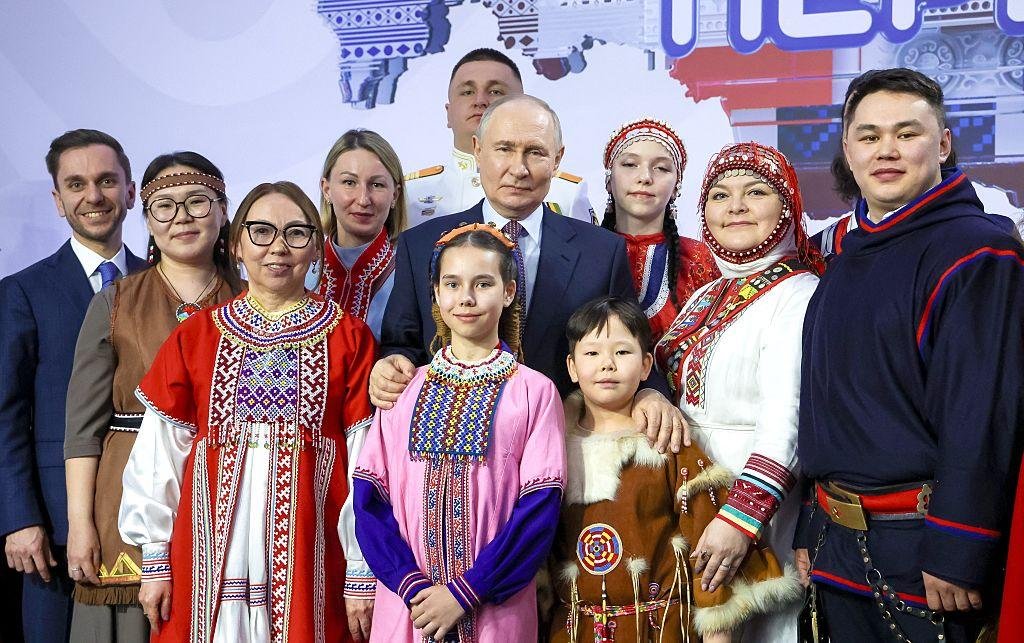
On 8 September 2026, Russia marked its so-called Day of the Languages of the Nations of the Russian Federation for the first time. The Kremlin spoke of nearly 200 peoples, hundreds of languages and the need to preserve them. Yet Vladimir Putin immediately stressed that the Russian language had supposedly “united” all these nations into a single state.
That is where Moscow’s imperial logic becomes visible.
For an empire, the languages of subjugated peoples can be celebrated as folklore, cultural decoration and part of official ceremonies. Linguistic agency, however, is something different.
Since 2018, the study of non-Russian languages in Russian schools has been optional. A 2026 report on the Finno-Ugric peoples notes that this has contributed to declining knowledge of native languages. Several languages are already at serious risk of disappearing.
Moscow can therefore speak about “linguistic diversity” while maintaining a system in which Russian remains the dominant language of education, government, military service, career advancement and overarching imperial identity.
An empire does not always need to ban a language. Sometimes it is enough to make sure that a person cannot fully live in their own homeland without Russian.
For the nations subordinated to Moscow, genuine linguistic decolonisation means more than Kremlin ceremonies. It means restoring real status to native languages in education, administration, media and public life.
Moscow can celebrate the languages of its nations. But their future depends on whether those peoples themselves have the right to decide how they will live — and in which language.






