

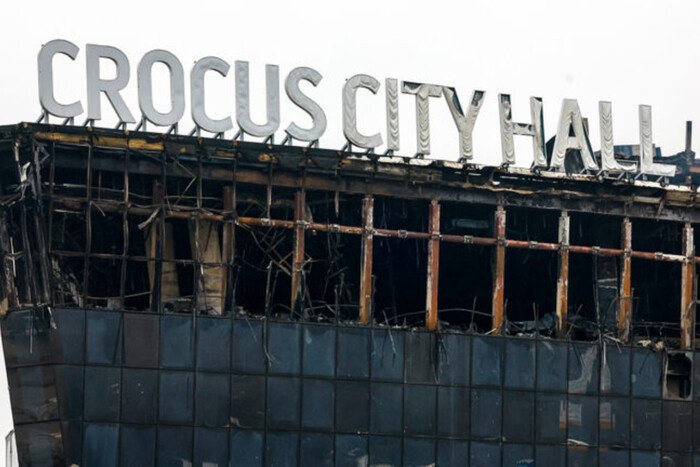
There are many spots in the history of the terrorist attack in the suburbs of Moscow, but it is worth talking about the consequences and challenges already. First, the Kremlin will try to present the existence of a “Ukrainian footprint” internally, pretending that it is not even a concern. However, the theme of “compassion and sympathy” will be promoted externally, and this should not be underestimated. Look at how instantly everyone reacted and compare it to the reaction to the latest Russian strikes on Ukraine. There is something to think about here.
Secondly, the Kremlin will use this as an excuse to intensify relations between the special services both with the West and with non-Western countries, for example, with the Middle East, referring to the common terrorist threat and proposing new areas of cooperation. It is the same with Israel, by the way. This may work to a limited extent. Thirdly, whatever they say in the Kremlin, this is a blow to its image and the image of the special services, because even after the American warnings, the system did not work either to warn or quickly locate those who carried it out. The phrase “window on the border” is generally bad, because it means that after years of war, the FSB cannot close the border for a few terrorists. The vulnerability of the system is obvious, heads will fly, which ones and when – we’ll see. The Kremlin may use this terrorist attack to lift the moratorium on the death penalty for some categories of crimes because the Russian Federation is no longer a part of the Council of Europe and does not consider itself a European country at all. Tightening the nuts can also move in this direction.
Fourthly, we can expect an inspection and partial clearing of migrants in the Russian Federation from Central Asia, and this will be a devastating blow to the Russian economy, which depends on them. Fifth, under these conditions, our partners can talk to us about what actions of ours are possible on Russian territory, fearing escalation. We, of course, have the right to self-defence against Russian aggression, which is not limited to our territory according to the UN Charter but our partners may not want to give the Kremlin additional excuses. Finally, sixthly, it is debatable whether the Islamic State’s claim of responsibility is genuine.
But it is obvious that for some Muslims the wars in Afghanistan, Syria, Chechnya, etc. are components of the Russian war against Islam. After the actions of Hamas, others may say: “If it worked for them, why can’t it work for us?” It is clear that whoever planned this may not see it as an isolated terrorist attack, but as part of a larger story. In general, the Kremlin will try to use this terrorist attack to “tighten the nuts” and further demonize us internally, but will try to create a wave of sympathy for itself and intensify cooperation in the fight against terrorism externally. At the same time, the vulnerabilities of the Russian special services in this story are also obvious, and this will continue to destroy the image of the regime.
Pavlo Klimkin






