

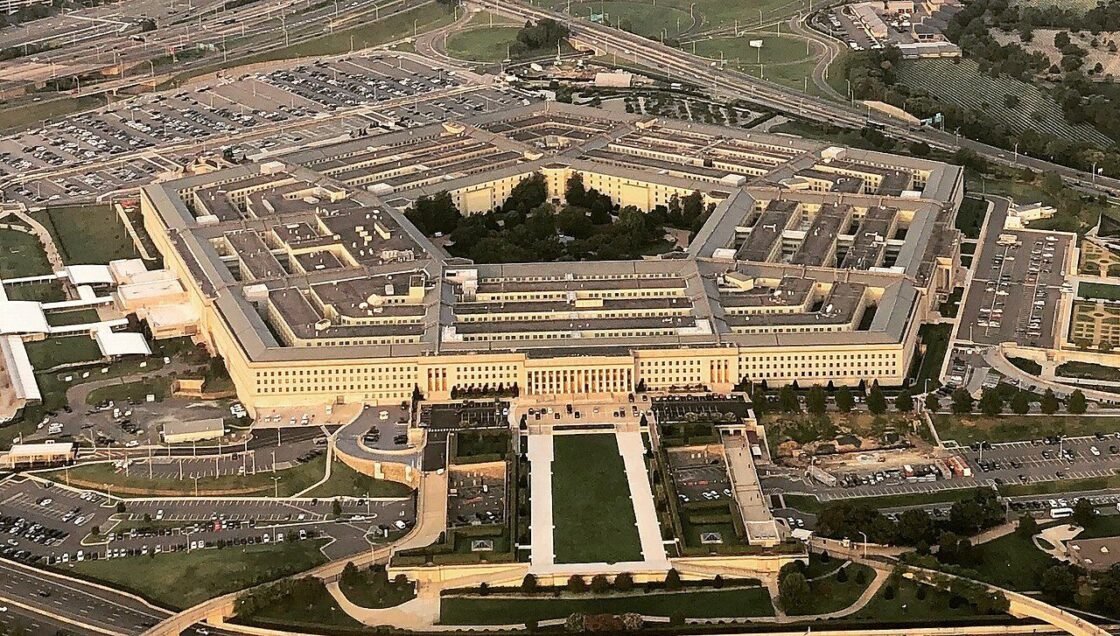
The “Pentagon Pizza Index” is not a joke or a conspiracy theory, but an empirical observation that has been recorded for decades by journalists and OSINT communities. Its essence is extremely simple: when the Pentagon building sees a sharp increase in the number of nightly food deliveries from nearby pizzerias, this does not mean a “premonition of war” but rather a transition of the decision-making system into an extreme-intensity mode.
Under normal circumstances, strategic and military-political decisions in the United States are made according to procedure, schedule, and at a predictable pace. But when weekends are disrupted, civilian and military leaders work late into the night, and unscheduled interagency meetings are called, it always means a crisis, an escalation window, or an urgent need to synchronize decisions at multiple levels. It is at such moments that the “pizza index” soars.
Historically, such spikes have coincided with phases of escalation in the Persian Gulf, strikes on Iraq, crises around Ukraine, Iran, and Israel. But it is fundamentally important to understand: this index does not “predict” anything. It does not answer the question “what exactly will happen.” It only shows the level of tension, the speed of decision-making, and the fact that the system has moved from a planning mode to an instability management mode.
That is why it is a small but useful marker for analysts: an indicator that the time for long procedures is over, and decisions can be made faster, more rigorously, and with less margin for error.
What exactly could be worrying the Pentagon at such times?
More often than not, it is not one specific war, but the synchronization of several crises at once. The Pentagon is most stressed not when there is a single problem area, but when several theatres of risk begin to resonate with each other. The Middle East, Ukraine, the Indo-Pacific region – and the question is not “where is the war”, but where the chain of containment can break.
The second key factor is the window of escalation, not the escalation itself. Night meetings usually involve assessing whether deterrence mechanisms are still working or are on the verge of breaking down. This is not about planning full-scale campaigns, but about scenarios for limited strikes, proxy responses, cyberattacks, displays of force, or signals that are designed to stop the adversary without triggering an uncontrolled conflict.
The third element is intelligence with a short “shelf life.” When information arrives that must either be used immediately or will lose its value, the Pentagon goes into nightly collective analysis mode. It could be a force shift, a window for political or military pressure, a signal from allies or adversaries that cannot be “put off until morning.”
A fourth, often underestimated factor is managing allies, not enemies. Paradoxically, much of this work is aimed at discouraging partners from taking too drastic or emotional steps. Someone in the coalition may want to respond more quickly, harshly, or publicly than is appropriate from the perspective of overall strategy, and the United States is forced to level the playing field to prevent an uncontrolled chain of decisions.
Finally, the fifth aspect is political timing in the United States itself. When military decisions have direct domestic political consequences, the Pentagon works in close contact with the White House. This is not a “military nerve” but a complex civil-military balance: what is allowed now, what is advisable, and what is better to postpone, even if it looks logical from a military perspective.
The key conclusion is simple and fundamental. If the “Pentagon Pizza Index” is indeed rising, and such information exists, it does not mean that “something is about to happen,” but that the United States is trying to prevent something from going wrong. This is a regime of active instability management, not preparation for the apocalypse. And this is precisely its true analytical value.
Viktor Yahun
Facebook 





