

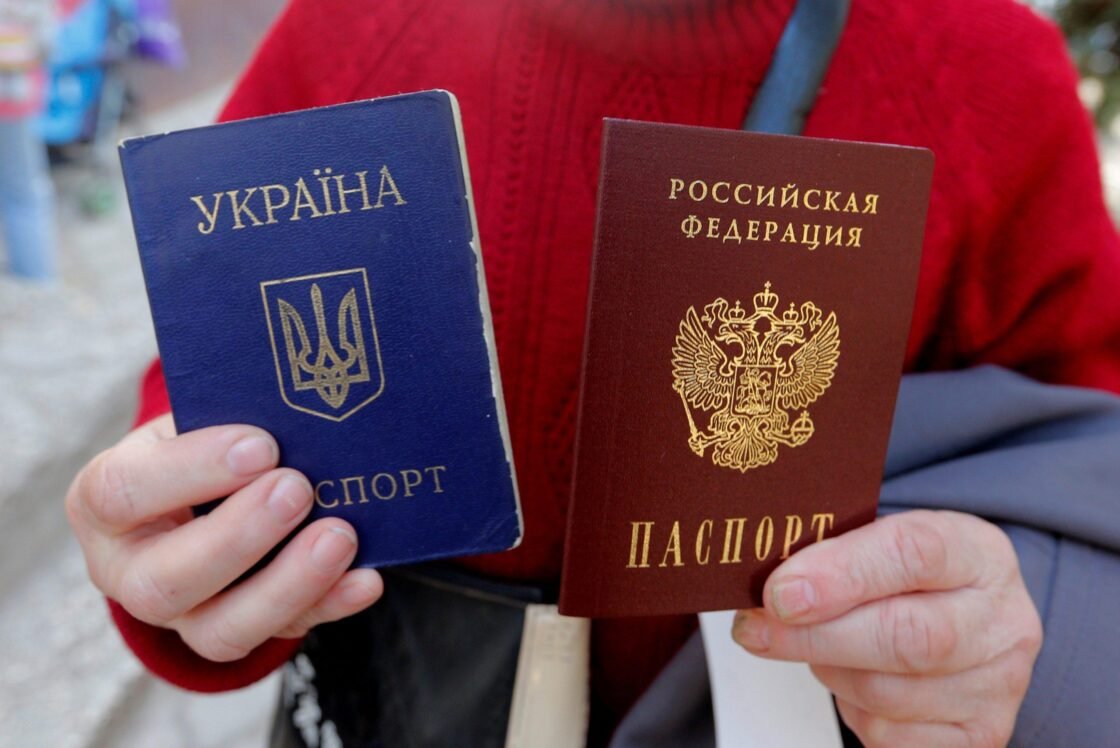
Russia uses the passport not simply as proof of citizenship. In territories Moscow seeks to keep within its sphere of influence, it becomes an instrument of political expansion.
The model was tested in Abkhazia and South Ossetia. Moscow distributed Russian passports on a large scale and later used the presence of “Russian citizens” as an argument for political and military intervention.
The same mechanism is now operating in Transnistria and the Russian-occupied territories of Ukraine. In 2026, Russia continues to simplify access to Russian citizenship for residents of Transnistria, Abkhazia and South Ossetia.
In occupied Ukraine, the Russian passport has increasingly become a condition for normal life. Russian authorities tie access to administrative services, social benefits and other basic rights to Russian documentation.
The imperial logic is simple:
first — the passport; then — “our citizens”; finally — “we must protect them.”
But a passport does not create sovereignty. The European Union does not recognise Russian documents issued in the occupied territories of Ukraine and Georgia.
The Russian empire of the 21st century does not always begin with tanks.
Sometimes it begins with a passport.






