

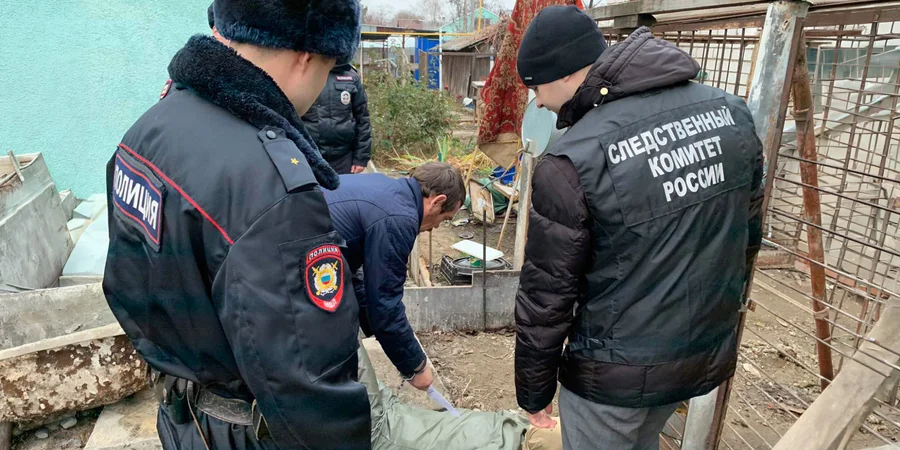
NV cites the conclusions of researchers from King’s College and Georgetown University on how Putin’s aggression has turned marginalised regions of the Russian Federation into new hotbeds of serious crime.
Of all Ukraine’s neighbours, it was Russia that experienced the largest surge in serious crime after the full-scale invasion, with new foci of violence emerging in regions that lost disproportionately many people to mobilisation—Buryatia, Bashkortostan, Dagestan, Yakutia, and Tatarstan.
NV cites such data in the article Putin’s Boomerang Returns, which discusses why the war unleashed by Moscow has destabilised the Russian rear more than the battlefield.
The article draws on research by Alexander Kupatadze, a criminologist at King’s College London, and Erika Marat of Georgetown University in Washington, D.C. Their work, funded by the UK Foreign Office for the SOC ACE programme at the University of Birmingham, was published in March this year.
According to the researchers, by 2022, criminal activity in Russia was concentrated in large cities — Moscow, St. Petersburg, and Nizhny Novgorod. After the invasion, it began to spread to the periphery — to the Volga region, the Urals, Siberia, the Far East. Putin’s aggression first took men from the periphery, and then returned them injured, armed, and without any support system.
“We often assume that invasion exports instability. But the data shows otherwise,” Kupatadze wrote. “Russia has experienced the largest increase in serious crime of all of Ukraine’s neighbours. And crime is no longer confined to large cities: it is spreading to the periphery.”
The study recorded that in 2024, the Russian Ministry of Internal Affairs registered a record number of serious crimes in 14 years, over 617,000. The number of incidents related to arms trafficking in the Russian Federation increased tenfold, and manifestations of drug trafficking and human trafficking doubled.
Among the reasons, researchers cite the mass exodus of police officers to the front, the normalisation of violence for society, the emergence of new black markets due to sanctions, and, most importantly, the return of mercenaries from the war, a significant number of whom are former prisoners.
Kupatadze and Marat’s conclusions are confirmed by other Western experts: Mark Galeotti, one of the most prominent British researchers of Russian organised crime, estimated that about 250,000 people who went through the war may suffer from post-traumatic stress disorder, and British military intelligence warned as early as 2023 that the return of large numbers of former criminals with combat experience “is likely to pose a serious challenge to Russian society.”
According to a Levada Centre poll, 39% of Russians expect an increase in conflicts and crime after war veterans return home.






