

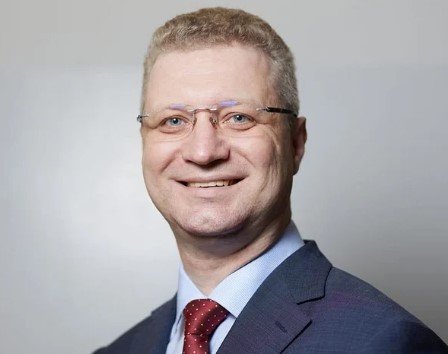
The protection of Ukraine’s sovereignty against Russian military aggression necessitates the search for all possible allies. In addition to the states of stable democracy, today we have to look at the nations enslaved by our enemy. This Ukrainian view should be implemented using the institutional experience of cooperation between the foreign part of the OUN (B) and the governments of democratic states in the period 1940-1990. Turning to this experience should help to form a systemic state policy in the field of support for the enslaved people of the Russian Federation. In this process, I consider it expedient to propose the following vectors for the formation of the appropriate state policy:
- Formation of a state programme of financial support for organizations of enslaved Russian nations who are fighting for independence;
- Creation of a special state programme for the development of scouting organizations of nations enslaved by Russia to form an environment for future democratic leaders of independent states;
- Formation of a special degree programme for obtaining higher education in Ukrainian universities by representatives of enslaved nations of the Russian Federation;
- Creation of a special programme for the training of democratic leaders from among enslaved nations with an emphasis on the competencies necessary for democratic governance.
The implementation of relevant state programmes requires the formation of a special mechanism of interaction with the relevant enslaved nations of the Russian Federation. One should agree with the position regarding the need for the Verkhovna Rada of Ukraine to adopt a special legislative act dedicated to state policy in the field of indigenous nations and the creation of a special state agency in the field of interaction with the enslaved nations of the Russian Federation.
I believe that the relevant agency should work with the widest possible range of stakeholders. In particular, it is advisable for the relevant agency to work with the following groups of stakeholders:
- active members of national movements of enslaved nations;
- the youth of enslaved nations;
- educational institutions and analytical centres of Ukraine;
- government structures of democratic countries;
- Ukrainian business;
- Ukrainian scout organizations.
We should pay special attention to the issue of involving Ukrainian businesses in cooperation with the future state agency for issues of enslaved indigenous peoples.
As vice president of ICC-Ukraine, I see the following vectors of such cooperation:
- formation of a policy to ensure the employment of representatives of enslaved nations in Ukraine;
- participation of business associations in forming curricula of educational programmes for representatives of the enslaved nations in Ukrainian universities;
- joint formation with the agency of economic programmes for organizations of enslaved nations with an emphasis on future economic cooperation with Ukraine;
- assessment of resources on the territory of the respective enslaved nations in order to form a concept of their future economic cooperation with Ukraine.
I consider it expedient at the legislative level to consolidate the formation of a special council of business stakeholders under the relevant state agency.
It is advisable to include in this council:
- representatives of leading Ukrainian business associations;
- Ukrainian banks;
- Ukrainian industrial groups;
- innovative enterprises
The Council of Business Stakeholders should assist the agency in developing an economic policy for the organizations of nations enslaved by the Russian Federation, forming a policy of sanctioning pressure of the democratic world on the Russian Federation to protect the rights of enslaved nations, and forming the basis for future economic cooperation between the currently enslaved nations and Ukraine.
Dmytro Oleksienko, vice-president of ICC Ukraine






