

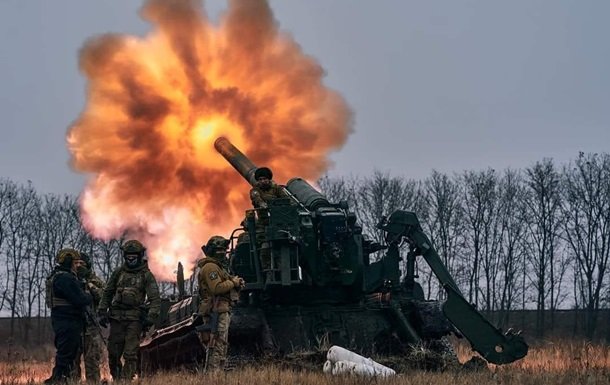
The course of the war
The high probability of a large-scale Russian invasion of Ukraine has been evident since 2014. However, during this time, the Ukrainian authorities failed to take either comprehensive or sufficient measures to strengthen the country’s defense capabilities.
It was on the unpreparedness of Ukraine’s defence to repel a full-scale invasion, as well as on the presence of an extensive network of its own agents in Ukraine, that the Russian military-political leadership based its calculations in choosing the invasion plan.
The leadership of the Russian Federation, being captive to colonial stereotypes, underestimated all three components of war (according to Clausewitz): the state leadership, the army, the people . In Moscow’s vision, the leadership had to flee or hide, the Armed Forces of Ukraine to disperse or go over to the side of the aggressor, and the people, if not to greet the “liberators” with flowers, then to sit in the outermost houses in fear.
The Kremlin’s overestimation of its own capabilities and underestimation of Ukrainian capabilities explains why the Russian invasion force was smaller than military science recommends, given the area and population in the theater of war. Russian invasion forces were insufficient for a full-scale war.
Despite significant failures in the implementation of the Kremlin’s plans, its strategic tasks remain unchanged – these are:
- destruction of the subjectivity of the Ukrainian state as an international state (the so-called neutral status), de facto colonial dependence, further occupation of sovereign Ukrainian territories; rejection of Ukrainian identity, which is described as “Nazism”;
- undermining Ukraine’s internal subjectivity, destruction of industrial potential and destruction of infrastructure.
The result of the war in 2022 was the successful offensive campaigns of Ukraine in the Kyiv region during the first months, and then successful operations in the Kharkiv and Kherson regions, which made it possible to completely liberate the right bank of the Dnieper, eliminate the Izyum offensive enclave, and completely make impossible the offensive campaign planned by Russia to completely cut off Donbas, where a large group of the Ukrainian army is concentrated, from the rest of the territory.
In the winter of 2022–2023, the Russian offensive took place near Bakhmut, which led to the depletion of Russian resources. In 2023, Russia managed to capture and virtually wipe out the towns of Bakhmut, Soledar and Maryinka in the Donetsk region.
At the end of spring, Ukraine seizes the initiative and moves to counteroffensive actions in the south with parallel strikes in Donbas. The Defence Forces of Ukraine cut off the Velikonovosilkiv ledge and organized a stable and powerful robotic bridgehead.
However, through covert mobilization, the Russian army was able to renew its forces and not only defend itself in the south but also make limited offensive attempts in the Lyman and Kupyan areas. In the winter of 2023, Russia seized the initiative and moved to offensive operations along the entire front line.
The main problem for the Armed Forces was the lack of weapons and ammunition necessary for an offensive operation, the lack of parity in the air and the lost time associated with logistical delays in the supply of military aid by the Western allies, which allowed the Russian Federation to strengthen defensive lines and expand minefields. In such conditions, the Armed Forces use the methods of point strikes in order to destroy the enemy’s infrastructure, artillery and accumulated manpower in the near frontal zone, which, despite the length of time, allows to achieve obvious successes (primarily to limit the supply of ammunition to the enemy’s artillery).
Russia used one of the two ultimate means (except for nuclear weapons) – it started the so-called partial mobilization. However, this led to a significant increase in tensions within the Russian Federation and limited deployment of protest movements (especially noticeable manifestations in Dagestan). The reinforcement of combat units by mobilized forces did not lead to significant results, such as the freezing of the front line.
In 2023, Russia continued to actively use its missile monopoly, striking all over the territory of Ukraine, including civilian objects and critical infrastructure objects. Only the availability of a limited number of air defence equipment and ammunition for them, provided by the allies, made it possible to partially reduce the damage caused to Ukraine by Russian missile strikes. At the end of 2023, the use of North Korean missile systems was recorded.
In total, during 2023, Russia used 1,255 cruise missiles, 555 ballistic and aeroballistic missiles, and more than 3,201 kamikaze drones.
The declared results of Ukraine are the exit to the state borders on August 24, 1991, that is, including the liberation of the occupied territories of Crimea and Donbas for nine years.
In Russia, the undeclared goal of the “special military operation” remains the complete liquidation of Ukrainian statehood. None of these tasks will be achieved in a year and a half, the two forces are sufficiently exhausted by active operations at the front. Russia tried to launch a winter offensive in Donbas, attracting a significant number of mobilized troops to the front, but with great efforts, it was only able to take control of Bakhmut in May, with great losses of its own forces, primarily among prisoners recruited to the “Wagner” PIK.
Ukraine was able to take advantage of the concentration of enemy forces around Bakhmut to prepare fresh forces for the summer counteroffensive that began in June. However, in six months, the Russians were also able to significantly strengthen the defence line in the southern direction, primarily due to the oversaturation of minefields. Because of this, the counteroffensive actions of the Armed Forces are slow and with significant losses of equipment.
At the end of the year, the intensity of actions in the south decreased, but the Armed Forces of Ukraine were able to gain a foothold on the left bank of the Kherson region, in the Krynyk region. The Russian Federation is launching another large-scale operation to capture Avdiivka according to the Bakhmut scenario. At the same time, aerial attacks on Ukraine are intensifying, but thanks to the improvement of Ukrainian means of air defense, the Russian Federation will not be able to repeat the energy crisis of the end of 2022.
So far, significant results have been achieved in the destruction of enemy infrastructure and artillery, including in the depths of Russia (attack on the airbase in Pskov).
The defence forces of Ukraine managed to destroy Russia’s total superiority in the Black Sea by asymmetric methods, effectively making large-scale naval amphibious operations of the Russian Federation impossible, lifting the blockade from the ports of Odesa and renewing exports by sea, forcing Russia, under the threat of destruction, to move most of the fleet from Crimea to Novorossiysk.
In recent months, Russia has been concentrating its forces on the Avdiiv operation. However, the capture of the city cost unprecedented losses, greater than in Bakhmut (approximately 47,000 irreversible losses in the Russian army, of which 17,000 were killed). The purpose of the operation is to show a convincing achievement before the “presidential elections” in the Russian Federation and to use the period of reduced levels of Western aid for Ukraine.
Trends appearing today
At the end of the spring of 2023, Ukraine was able to seize the initiative at the front. The autumn mobilization of the Russian Federation was finished near Bakhmut. The main task of the Ukrainian army in the summer-autumn campaign was to break through the enemy’s lines in the Zaporizhzhia region, which was not fully achieved until the end of the year. This task was carried out with the complete superiority of the enemy in the air and fire means. Long-range artillery of the Russian Federation is added to this imbalance. The role of drones and guided munitions is growing more and more.
Also, the problem of working with personnel, who feel tired from intense two-year battles, is growing more and more. On the other hand, civilians had too high hopes for a quick victory, which led to a gradual despondency fuelled by enemy information leaks. This exacerbates problems with mobilization, which is necessary for the replenishment and rotation of troops.
Russia’s problems
Russia has lost a significant amount of military equipment, which may limit its ability to carry out large-scale ground offensives. This may be one of the reasons why the Russian government and President Putin now increasingly see this war as a long-term measure necessary to guarantee Russia’s security.
The Russian Federation was able to partially mobilize the military-industrial complex to meet the regular needs of the army, albeit with minimal reserves and obvious unpreparedness for a conflict with a state that would possess a more serious air complex. Of course, all this was done with great difficulty – strikes on the energy infrastructure would not have had such an effect without the massive use of Iranian Shaheds, which are just now starting to build themselves (however, Ukraine also builds drones).
Continuation of the protracted struggle, which is slowly depleting Ukraine’s weapons stockpile and at the same time leading to a decrease in Western aid, is a major part of Russia’s current strategy in the war against Ukraine.
At the same time, turning this war into a slow, grueling campaign allows time for the sanctioned defence industry to come up with the necessary solutions and workarounds. For example, the enemy’s successes in the production of drones, in particular the Lancet type, are noticeable. This is caused not only by the help of Iran and China but also by the continuation of semi-legal supply from Europe. The acquisition of foreign-made microchips is very important for the production of Russian military systems, weapons and technologies. According to official sources, the X-101 missiles, which the Russians fired at Ukraine in August, were manufactured in April 2023 – approximately 30 foreign microcircuits were found in them.
The Kremlin is gradually losing control over the power structures, “Wagner”, battalions of individual republics and regions. We expect another wave of mobilization after the presidential elections. Average probability of unfreezing of the conflicts in Abkhazia and Ossetia, the crisis in Tajikistan on the border with Afghanistan, which will distract the attention of the Kremlin.
The Russian authorities experienced a major crisis of legitimacy during the rebellion of the “Wagner” PMC, which was superimposed on the population’s weariness from the war. However, there are still no prerequisites for rapid revolutionary changes.
The resistance of the enslaved nations and the Russians themselves against the mobilization and loss of life will grow, but in the short term, we do not expect significant changes in the political field of individual regions. However, dissatisfaction with the regime is gradually fuelled by the intensification of various problems and manifests itself in spontaneous movements that are not yet politicized. A typical example is the unrest in the Caucasus, especially in Dagestan, in October 2023 in the context of a wave of support for Muslims in the Gaza Strip, as well as the January demonstrations in support of Bashkir activist Fail Alsynov in Baymak. We expect that the wave of instability will gradually increase.
It is impossible to call Vladimir Putin’s reappointment election in Russia in March 2024. There are no political freedoms in the country, the free press and political competition have been destroyed. The political space has been completely cleared, which is emphasized by the absolutely controlled nature of the so-called “presidential election campaign” (prevention of Nadezhdin, murder of Navalny). It is not only about serious anti-war candidates – even ultra-patriots who support the war are not allowed to interfere with the coronation of Putin, who has ruled longer than Stalin. But even here the stick has two ends. Now the “tsar” is solely responsible for everything that Russia does. The non-recognition of the elections by the international community and the ICC’s arrest warrant are only the first bell. One of the good reasons for the non-recognition of the elections is their holding in the occupied territories of Ukraine.
It is obvious that after the elections in the spring of 2024, Moscow will try to conduct a new wave of mobilization.
Economic trends
Based on the results of almost two years of full-scale Russian-Ukrainian war, we can talk about economic stabilization on both sides. The Ukrainian economy, having experienced a sharp decline of more than 29% in 2022, has pushed off the bottom and is starting to grow slowly. But Russia is also gradually recovering from sanctions, reorienting itself to new markets. Despite the sanctions pressure, Russia was able to put the economy on a war footing to a large extent, running the military-industrial complex at full capacity in three shifts. Budget spending on war in 2023 compared to 2021 increased by 60%. The employment structure of the Russian Federation is actively changing towards military specialties.
The new year 2024 is coming for Ukraine in conditions of uncertainty that are already familiar to us. On the one hand, a full-scale war every day creates a threat of destabilization for the entire country in all spheres of its existence without exception. On the other hand, there is a growing risk of a decrease in foreign aid, on which the viability of Ukraine, according to the State Budget Law, depends on at least half.
However, the Ukrainian economy will end in 2023 much better than expected twelve months ago. By the end of 2023, the gross domestic product (GDP) should grow by about 5%, and inflation slowed to 5.1% in annual terms in November. We could say that we bottomed out in 2022, losing 29% of GDP, and are now beginning a cautious recovery.
If positive trends are maintained, we can grow by 4-6% in 2024, according to the International Monetary Fund. The main factors of positive influence on the Ukrainian economy are the following:
- 1. Success on the battlefield. The defence forces of Ukraine do not allow the occupiers to seize new territories, allowing Ukrainians to plan their economic life.
- 2. Business adaptability. Ukrainian entrepreneurs quickly adapt to difficult circumstances and organize their activities when they are forced to move.
- 3. Uninterrupted supply of electricity. Compared to last year, the business is not forced to interrupt work every day due to a lack of power supply.
- 4. High productivity in the agricultural sector. Agricultural production is the leader in the structure of Ukrainian exports, and the saturation of the market with its own products has become the main factor in reducing consumer inflation.
- 5. Exchange rate stability. Thanks to the high level of reserves, the National Bank manages to keep the hryvnia exchange rate within the forecast range.
The main threat of 2024 is the aforementioned decrease in external financing. The budget deficit is planned at the level of more than 40 billion dollars per year or more than 3 billion per month. Currently, Ukrainian government officials are expressing concern about the further provision of aid, in particular due to the delay of the promised 50 billion euros from the European Union and 60 billion dollars from the United States. However, we hope that by the end of winter these funds will be allocated and we will not have to save on pensions and salaries of public sector employees.
An extremely unpleasant negative factor that can affect us in 2024 is the blocking of cargo transportation on the western border. Because of them, Ukraine lost at least 7% or about 1.3 billion dollars of export of agricultural products. The blockades began at a time when we finally started to solve the problem with the sea corridor, laying routes through the waters of Romania and Bulgaria, as well as destroying the Russian fleet. Eliminating blockades in early 2024 is one of the priority tasks of the Ukrainian government.
Of course, active hostilities and shelling of cities and economic facilities put the greatest pressure on our economy. Currently, the state is making macroeconomic forecasts with the expectation that the war will continue throughout 2024 with unchanged intensity. A significant challenge for the economy in case of intensification of the war may also be the year 2025, at the beginning of which the government in the United States may change. If the Americans change their policy towards Ukraine in the direction of reducing aid, their example may be followed by the EU countries.
Thus, economic trends in Ukraine largely coincide with military trends. Receiving insufficient armed assistance, we successfully oppose the aggressor. Similarly in the economy: we implement optimistic forecasts without having the minimum required level of financial support. Therefore, in 2024, our partners need to properly think about how much they do not want the Russian occupier to encroach on their lands in the future.
Humanitarian consequences
Civilian casualties, according to UN records for December, are 10,065 dead (429 of them children) and 18,679 wounded. However, many victims are unaccounted for (especially in the temporarily occupied territories), and the real numbers may be several times higher, including up to 20,000 missing persons.
The situation in the occupied territories of the south is extremely difficult, where ethnic cleansing continues and a strict occupation regime is established.
Increasingly, the world is paying attention to the “nuclear terrorism of Russia” – the occupation of one of the largest nuclear plants in Europe – the Zaporizhzhia NPP.
The recorded facts of genocide are the terrible crimes of the aggressor against civilians, murders and tortures in the liberated towns and villages, in particular in Buch, Gostomel, Makarov and Borodyanka in the Kyiv region, and in Izyum in the Kharkiv region. Also, the occupiers take Ukrainian children en masse, taking them to the Russian Federation (up to 20,000 minors have been identified). This became the basis for opening a court case against Putin and other relevant officials of the Russian Federation at the International Criminal Court in The Hague.
In June, due to the threat of the Ukrainian Armed Forces forcing the River Dnipro, Russia committed another act of genocide and ecocide, blowing up the dam of the Zaporizhzhya hydroelectric power station, flooding vast areas near the Dnipro. The number of victims on the occupied left bank of the Dnipro, where the occupiers prevented rescue operations, is still unknown.
According to the UN, up to 26 million people crossed the border mainly in the direction of neighbouring EU states. About 6.2 million of them did not return and remain abroad. Also, about 4.8 million people have become internally displaced within the country, according to government data (other estimates may be twice as many).
Negotiations and diplomatic configuration
The negotiations have been put on hold, as the Ukrainian side does not want to meet capitulation demands, and the Kremlin is waiting for the exhaustion of Ukraine and the fatigue of the Western allies. But more and more, it is the Russian side that is showing a desire for negotiations in order to record individual gains, minimize losses, and gain time to accumulate strength. There is a growing risk of increased pressure on Kyiv, provided the conflict drags on, and a transition to a low-intensity phase on the part of allies seeking to freeze the problem. The situation is especially uncertain against the background of the election process in the USA, where Ukraine is used as a topic of internal political struggle.
But positive moments are visible in Europe, which is more actively looking for ways to involve Moscow in deterring it to compensate for American interruptions. Despite the ambivalence of the statements at the Munich Security Conference, Germany and Great Britain agreed on new deliveries of missile weapons, the search for artillery ammunition is underway on third markets (through the Czech Republic), and agreements on permanent assistance are signed with certain European states. Japan is involved in supporting Ukraine. In February 2024, Tokyo announced the allocation of 1.25 billion euros to support Japanese investments in Ukraine.
IMPACT ON GLOBAL PROCESSES
Against the background of the collapse of the “grain agreement” and the demonstration of Putin’s weakness during the so-called “Wagner” rebellion, Ukrainian diplomatic positions strengthened. This was shown by the negotiations in Jeddah – the positive in the formation of a negotiating group with Kyiv and without Moscow, with the participation of China.
But in recent months, there has been an increase in contacts between China and the United States against the background of many serious publications in Germany and the United States about the inability of the Armed Forces to achieve quick results. This may indicate intensive negotiations on freezing the conflict.
From the very beginning of the full-scale attack, Russia used the Republic of Belarus as a springboard for an attack on Ukrainian territories. However, in addition to this, there are constant attempts to involve Belarusian servicemen in the war. The presence of Russian troops, as well as the infiltration of the security forces of Belarus by Russian special services, increase the risks of direct annexation by Moscow.
Another instrument of Moscow’s influence is attempting to increase pressure on Europe by creating problems in neighbouring regions, primarily in Africa. In this context, we consider the coup in Niger and the blocking of uranium supplies to France, which threatens an energy crisis in Europe in the fall.
In 2023, Russia secured support in the supply of Iranian and North Korean-made missiles, artillery ammunition, and unmanned aerial systems.
Unfortunately, it turned out that the Western allies of Ukraine are not able to produce and provide as much artillery ammunition as North Korea alone, and do not have the political will and determination to provide missiles and unmanned aerial systems of medium range.
FORECAST
Since both forces lack resources and means, an important element of a long-term war is the preservation of diplomatic and military-political support:
- for Ukraine – the USA, NATO, Great Britain, Poland and the Baltic countries;
- for Russia, the formation of a conditionally anti-American coalition, because Russia can no longer produce enough of the necessary equipment (in particular, this applies to drones and high-precision missile weapons).
Against the background of the prolongation of the conflict, the Russian Federation is preparing for a large-scale wave of mobilization. According to Western estimates, the training grounds can accommodate up to 600,000 recruits. However, large-scale and rapid offensive actions for the Russian Federation are now minimally possible. Ukrainian actions depend to a large extent on the dynamics of partner supplies, in particular aviation. Most likely, the dominant position in 2024 will be a positional war similar to the First World War.
The formation of a situation of “strategic balance” at the front and Russia’s use of meat assault tactics, which leads to the bleeding of manpower on both sides, forces both sides, especially Ukraine, to search for new tactical solutions to preserve manpower on the front line. In particular, where the front has acquired static features, saturation and application of robotic and automated fire control systems, reconnaissance and attack unmanned aircraft systems, which are capable of disrupting enemy assaults, conducting reconnaissance, and destroying enemy positions on the front edge, without undue risk to manpower, are appropriate.
Russia has lost a significant amount of military equipment, which may limit its ability to carry out large-scale ground offensives. This may be one of the reasons why the Russian government and President Putin increasingly view this war as a long-term measure necessary to guarantee Russia’s security.
Negative trends are also growing in Ukraine, reinforced by corruption scandals and disappointment over the apparent ineffectiveness of the counter-offensive. Moscow will continue to use these factors.
The main directions of Russia’s informational and psychological operations aimed at weakening Ukrainian society will remain:
- The spread of opinions and narratives in Ukraine and in the world that Ukraine is not capable of winning
- Provocation among the population of disappointment and distrust of the Ukrainian authorities against the background of the deterioration of the socio-economic situation
- Provoking political conflicts and through them – discrediting the Ukrainian political class.
Therefore, it remains critical for the victory of Ukraine not only to achieve success at the front, to obtain positive and noticeable results, but also to transfer the war to the enemy’s territory (primarily in the worldview and information sphere). The aggravation of socio-economic disparities between regions in Russia, national contradictions, and also support the national self-determination of non-Russian nations should be used.
The main challenge for Ukraine remains technical dependence on the supply of allies, and not only high-tech ones (its own factory of artillery ammunition must be built by next year).
Instead, technologically successful decisions in the naval war, which increased the possibility of significant restrictions on the Black Sea trade of the Russian Federation (primarily grain and oil products, as well as dual-purpose sanctioned products) turned out to be technologically successful.
American support for Kyiv will be significantly influenced by discussions in Washington in the context of the presidential elections. Europe will be forced to be more involved in supporting Ukraine. In particular, due to the active production of tank equipment in Ukraine with the participation of the German corporation “Rheinmetal”.
CONCLUSIONS
The Russian-Ukrainian war can only end with a military defeat and the collapse of Russia. Any ceasefire, freezing of the war and pseudo-peace negotiations will mean only one thing – preparation for the next even bigger war.
Since neither Ukraine nor our allies are currently asking this question, we can only talk about the end of the first Russian-Ukrainian war in the 3rd millennium. At the beginning of the Great War, society was warmed up by the expectation of a quick course of the hot phase. These inflated expectations of a quick end to the war led to the fact that prolonging these terms psychologically demoralized both the direct participants in the war at ground zero and the citizens of Ukraine.
Now another card is being played – “war without end”, for years, and even for decades. Such a horizon of predictive expectation is even more demoralizing.
But even with a freeze, the war will continue with subsequent hot phases, since the main contradictions will not be resolved.

Yuriy SYROTYUK, Director of the non-governmental analytical centre “Ukrainian Studies of Strategic Studies”, National Deputy of Ukraine of the 7th convocation, junior sergeant of the 5th separate assault brigade of the Armed Forces of Ukraine
Yuriy OLIYNYK, HHHd of research programmes of the National Centre for Strategic Studies of Ukraine, Candidate of Political Sciences

Oleksandr CHUPAK, Head of economic programmes of the National Centre for Strategic Studies of Ukraine
УССД





