

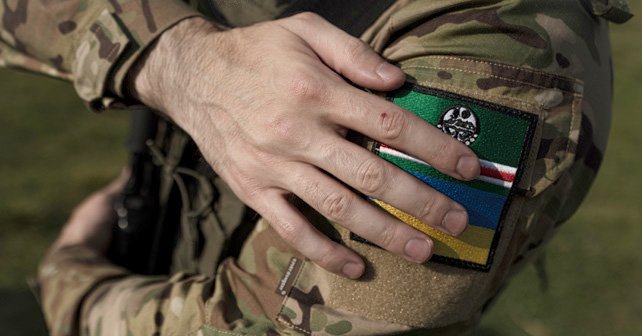
6 September was the Independence Day of the Chechen Republic. I congratulate all free Chechens on this holiday and sincerely wish them the liberation of their long-suffering country.
Nowadays, many Nokhts are fighting side by side with Ukrainians against a common enemy. Probably even more of them sympathize with and help Ukraine as much as they can.
For its part, Ukraine has become another platform for political, military and cultural activities for the Chechens. Here, the heroes of the Chechen Republic are honoured in street names and commemorative plaques. Here is the base of the Ichkerian armed formations. Chechen soldiers were allowed not only to take revenge on the Russians, but also to properly prepare for modern war. Inshallah (as Muslims say), they will need this training not only in Ukraine.
Kyiv has taken the first, yet hesitant, steps towards diplomatic recognition of the Chechen Republic. The Verkhovna Rada’s resolution of 18 October 2022 denied the legitimacy of Russian sovereignty over Chechnya.
Usually, a holiday is an opportunity to celebrate successes and achievements. But it will be no less useful to talk out loud about some of the problems and barriers that exist between Chechens and Ukrainians. Not for the sake of making claims or clarifying relations. On the contrary, to increase understanding and trust in the future.
Imperial Optics
Although problems of mutual perception really exist, they almost never become a topic of open polemics. Ukrainians discuss Chechens among themselves, just as Chechens evaluate Ukrainians mainly within their own circle. Without an exchange of arguments, the parties remain in the dark and deprived of the opportunity to change their minds.
What is described below certainly does not apply to everyone. And it manifests itself differently in everyone.
The strength of biased ideas about another nation varies from subconscious stereotypes to firm worldview convictions. Some manifest their perception in involuntary statements and behaviour. Others are ready to actively and publicly prove the correctness of their views. Often, even the experience of personal communication between representatives of both nations does not help. Only a sincere conversation and deep immersion in the topic can help here.
Both Ukrainians and Chechens have a powerful experience of opposing themselves to the empire. However, by inertia, they continue to look at each other through imperial optics.
Our people are not devoid of an orientalist attitude towards the peoples of the North Caucasus. In such a picture of the world, Chechens are civilisationally backward carriers of wild and noble traits, firmly bound by an archaic code of conduct and tribal ties. They are restless, prone to religious radicalism and criminal methods of achieving their goals.
Instead, in the minds of many Chechens, we are simply a slightly different version of Russians. A people without a distinct national identity and their own history, who almost accidentally quarrelled with their “older brother” and can just as suddenly make up with him. Family conflicts are painful, but short-lived. And soft Ukrainians are not inclined to an uncompromising struggle.
This is precisely the imperial colonial optics, because this is how the Russians themselves look at us – Chechens and Ukrainians. We do not agree with the chauvinistic characteristics of ourselves, but we accept with confidence the chauvinistic characteristics written about the other. For a long time, the nations of the empire could not do without the Russian intermediary in getting to know each other. Therefore, we do not know the real motives and values of the other.
Crisis of confidence
Ukrainians have heard about the Chechen wars, but they know almost nothing about Chechen statehood, its political orientations, and ideology. This leads to false conclusions, such as that Kadyrov’s despotism is the same independence that the Chechen mujahideen sought. If Kadyrov is so subjective, if Chechen culture is not threatened, and Grozny looks like Dubai, then what else do these “sons of the mountains” need for happiness?
Meanwhile, Chechens mostly know nothing about our Cossacks and the liberation struggle of the 20th century, about the influence of those historical events on Ukraine’s attitude towards Russia and their influence on the modern war. Chechens compare the price at which independence was obtained by Ukraine and Ichkeria in 1991. From the comparison, they conclude that Ukrainians received their independence for nothing and do not know its price.
Unfortunately, such stereotypical Ukrainians and Chechens (let’s call them “Little Russians” and “savages”) exist in nature. If you look for examples and confirmation of your stereotypes in life, you will find plenty. But it is not such individuals and situations that determine the national “self” of their peoples.
Imperial optics are bad not only because they are unfair. Distorted perceptions of each other breed distrust that prevents effective cooperation toward a common goal.
Ukrainians are not entirely sure whether interaction with the Chechen “terrorists” will not tarnish their reputation. And does the Ichkerian cause have any prospects in the current conditions to support it? Meanwhile, the Chechens are worried that Kyiv may betray them by making peace with Moscow. While the “family quarrel” continues, the Mujahideen are needed. And then these Slavs will easily agree at the expense of the Nokhts.
Rivalry between freedom fighters
Chechens tend to be somewhat lenient towards the Russophobic fervour of Ukrainians. Neofitsky, in their opinion. It is they, the Mujahideen, who know the true value of Russia and its interior. After all, the Russian-Chechen wars were a timely, unheard warning for Ukraine and the rest of the world. If Russia had been stopped in Grozny, it would not have reached Mariupol. Without Samashek, there would be no Bucha.
These arguments are valid, if not exaggerated. Chechens are sincerely disappointed when Ukrainians neglect this and begin to count the era of Russian imperialism only from themselves, from 2014 or 2022. At the same time, Chechens, for the most part, do not realise that the chronicle of Ukraine’s armed struggle for independence begins at least in 1917.
The illusion of a “brotherly Ukraine to Russia” is supported not only by myths of Slavic and Orthodox solidarity, but also by the seemingly peaceful period of coexistence of Kyiv with Moscow at the very time when bloody wars were being waged in the Caucasus. Along with other influences, Russia instilled in the then Ukraine a narrative about “evil Chechens”. Unfortunately, we also have several shameful examples of the extradition to the Russians of Chechen rebels who tried to find temporary shelter in Ukraine.
Post-Soviet Ukraine has long been following Moscow’s lead. But independent Chechnya essentially aspired to the same thing. Dzhokhar Dudayev and Aslan Maskhadov almost continuously negotiated with Russia and offered it one or another concession. Just to establish peaceful coexistence, to achieve recognition. Attempts to reach an agreement did not stop even under the conditions of Russian occupation. It is necessary to admit the obvious: war was always Moscow’s choice. If in 1994 Russia had started with Crimea, and not with Chechnya, then today it would not be the Chechens, but us, who would act as unheard prophets.
At a time when Ukrainians still remember their Ichkerian predecessors and begin to compare themselves with them, Chechen pride immediately makes itself felt. They say that Ukraine is fighting in “comfortable” conditions, with full Western support. No one helped the Mujahideen, and the forces were a hundred times more unequal. Ukraine is defending with tanks and aircraft, has a stable rear. Meanwhile, “the Chechen atom is a grenade launcher”. Guerrilla warfare is more difficult, more sacrificial and more victorious. If only the boastful Ukrainians would try to wage war like that!
Ukrainians tried, but it was a long time ago: in the 1920s, in the 1940s. The enemy was the same and the genocidal methods were the same. Only in Ukraine, the Chekists fought with atamans and fighters, and in our time in the North Caucasus – with amirs and jamaats. Fortunately, Ukraine does not have to go through this hellish experience again. And the demographic pyramid in Ukraine will not allow a repeat of a total guerrilla war.
It is important to understand that the relative parity of military capabilities allows Ukraine to wage war with Russia according to civilised rules, in compliance with international humanitarian law. We respond to missiles with missiles. Chechen partisans were able to respond to Russian missiles only with sabotage and terrorist attacks. Terrorism is a war of the weak, a strategy of desperation. Chechen terrorists killed civilians just as the Russian military did. But the reputation of the Chechens suffered more from the killings of civilians than the reputation of the Russians. The paradox of perception: dropping air bombs on a refugee column is a more “civilised” method of killing than detonating a suicide vest in a crowd.
Accusations of collaborators
It is a shame that some Ukrainians allow themselves to accuse Chechen society of passivity and pro-Russianness, reproach it for the lack of uprisings here and now. Perhaps these Ukrainians do not fully realise the scale of what happened to Chechnya before the beacon of freedom turned into Kadyrov’s satrapy. Three decades of armed resistance, hundreds of thousands killed, hundreds of thousands of refugees and emigrants. Genocide, “Chechenisation”, rampant propaganda and bribery. And all this in a republic territorially smaller than one Rivne region, with a population of one and a half million. Such accusations are a gross disrespect to all fighters against the empire, past and present.
It so happened that critical milestones in the modern history of Ukraine coincided with the deaths of leading leaders of the Chechen armed underground. The legitimately elected president of the Chechen Republic, Aslan Maskhadov, died in March 2005, shortly after the victory of the Orange Revolution. The creator and first emir of the Caucasus Emirate, Doka Umarov, died of poisoning in the fall of 2013, on the eve of Euromaidan, the occupation of Crimea, and the ATO. Aslan Butukayev, the last leader of the organised armed underground in the North Caucasus, was killed in early 2021, a year before the start of Russia’s full-scale invasion of Ukraine.
While reproaching free Chechens for being Kadyrov collaborators, Ukrainians should first ask themselves: how many holders of blue passports with a trident are now fighting against Ukraine for Putin? We can go even further and mention the huge number of Ukrainians and Ukrainian immigrants who, as part of the federal forces, suppressed the liberation struggle in the North Caucasus. The most famous war criminal of that time was Yuri Budanov. He was born in the Donetsk region, graduated from the Kharkiv Tank School. Presumably, Budanov’s parents remained in Khartsyzsk and were citizens of Ukraine.
The moral of the story with Kadyrov’s people is simple: if you lose your own liberation war to Russia, you will continue to help Russia defeat another people. Putin is conquering Ukraine so that later the Ukrainians can conquer Europe for him. After all, all this has already happened. To believe that modern Russian aggression has vaccinated Ukrainians against submission to the Russians for all time is a dangerous illusion.
Why won’t Ukraine have its own Kadyrov?
Still, there is one important nuance in the story with the Mankurts. What is the difference between the Ukrainian Yuri Budanov and the Chechen Apti Alauddinov? The former was a Russian military officer and did not position himself as a Ukrainian soldier. Just like the absolute majority of military personnel connected with Ukraine in the service of the Kremlin. Ukrainians under the Russian tricolor are invisible. The situation with Kadyrov’s people is different. They emphasize their Chechen identity, compete with the Ichkerians for the right to be considered the heirs of Baysangur and Mansur.
Anti-Putin Chechens are offended when they encounter the everyday Chechenophobia of Ukrainians. Every time we have to call out not to call Kadyrov’s people Chechens. But for the Ukrainian everyday person, this distinction is often not obvious. Based on external attributes, one may get the impression that there are two Chechen armies in this war: one on the Ukrainian side, the other on the Russian side. It is objectively easier to ignore Ukrainian collaborationism than Chechenism.
However, this does not mean that Chechens are bigger Mankurts than Ukrainians. The limits of what is permitted in national self-expression are not determined by the collaborators themselves, but by Moscow. Kadyrov’s supporters were allowed to be Chechens. Little Russians were not allowed to be Ukrainians. The reason for the different attitudes lies in the different roles painted by Russian imperialism. For the Kremlin, Chechens are “our sons of bitches.” In contrast, Ukrainians are a demographic resource for total absorption by the state-forming people of the Russian Federation.
Yes, Kadyrov has the right to his native dances with a tambourine. But Kadyrov’s republic is a clan despotism, imposed by the Russians in a defeated occupied country. This is the complete opposite of the freedom-loving ideal of the Chechen nation. In addition to daily terror and sycophancy, Kadyrov’s Chechnya also has a religious oppression that is less noticeable to Ukrainians. Kadyrov’s version of Islam is alien to many of his subjects, but there is no alternative in the public space.
Demonised by everyone, Kadyrov is assigned the role of a lightning rod when it comes to the extreme excesses of Russian everyday life. Similarly, the imaginary war of Chechnya with Ukraine is a vivid illusion, in which not only Kadyrov, but also Russians are invested: from the pro-government Solovyov to the opposition Kara-Murza. Who is committing atrocities in Ukraine – if not the Chechen savages? And will a Ukrainian be able to extend a hand to a Chechen for a joint fight against Moscow after these crimes? Maybe it would be better to make peace with our Slavic brothers? This whole spectacle is for the sake of drawing such conclusions.
Ukrainians must understand what Kadyrov’s Chechnya is. In return, Chechens must realise what “Slavic brotherhood” is for Ukraine. The Ukrainian nation does not need guardians and older brothers. Common ethnic origin and religion are not the determining criteria for Ukraine in choosing allies. The modern war with Russia is a struggle to preserve its own national “self”: language, culture, history. They are different from the Russians, so that Putin’s propaganda does not spread to the whole world. Ukrainians are a nation of warriors, just like the Chechens. In “comfortable” or not very comfortable conditions, they will resist the invader. The bet of the enslaved peoples on cooperation with Ukraine is a winning one. The defeat of the Ukrainians will be the defeat of the Chechens as well.
Choosing allies
Differences between Chechens and Ukrainians also arise in matters of international politics. The attitude of many Chechens towards the West is rather negative, and it is also projected onto Ukraine. First, the West disappointed the Chechens when it did not support their liberation war in any way. And did not even punish Moscow for the genocide, contrary to its advertised principles. Second, the West is perceived as an imperialist force that oppresses Muslims, with whom the Chechens have a strongly developed religious solidarity. Third, many aspects of Western liberalism are unacceptable to those who hold more conservative religious morals.
Kyiv seeks friendly relations with the whole world, but cooperation with the West is a priority for us. It is Western countries that invest the most in Ukrainian stability and defence. European countries are a model of social order for Ukraine. At the same time, the level of Ukraine’s dependence on the US and Europe is often exaggerated by the same Chechens. Western weapons are indeed important, but they are constantly lacking and were almost not a factor in the first, most critical, days and weeks of the 2022 invasion. Planes and tanks from partners are not a gift from heaven, but the result of a desperate struggle of Ukrainian diplomacy. Neither Brussels nor Washington can order Ukraine to surrender or accept certain conditions. We depend on them, but we are not puppets.
Kyiv will not convince Chechens to love Europe. Especially those who have been forced to live in European countries for decades as refugees from Russian occupation. Our relations with Chechens must be pragmatic and flexible enough to put up with existing differences in worldviews. After all, Ukrainian society is very pluralistic, and this is our strength, not our weakness. Every day, we find common ground with fellow citizens who are different from us. So can’t we find common ground with the nations enslaved by Russia?
Chechens also need to understand that Ukraine is not a monolith, but a turbulent cauldron. There are conscious people and not-so-conscious people, there are friends and there are enemies. It is always possible to establish cooperation, but for this, you need to make an effort: look for partners, lobby for your interests.
The article was prepared by Maksym Mayorov, an expert at the Prometheus Security Environment Research Centre, especially for readers of the InformNapalm international intelligence community website.
InformNapalm





