The Russian region neighboring Estonia, which still bears the ridiculous name “Leningrad Region”, is interesting from the point of view of its political prospects. Of course, Russia still gives the impression of a “single and indivisible empire,” and all the talk about its collapse may seem like fantasy to some. However, how many could predict the collapse of the USSR 3-5 years before this event? And the full-scale Russian-Ukrainian war, which has been going on for a year and a half, has already weaned people from being surprised by many things…
This war, among other things, caused a sharp increase in the activity of regionalist movements representing various regions and republics of the Russian Federation. From the collision with the Ukrainian “iceberg”, the imperial “Titanic” seemed to have cracked. Of course, in Russia itself, any independent policy is prohibited today, you can get a long term even for the phrase “No to war!”, Not to mention some slogans of regional self-government. But in political emigration, it is no longer “general federal”, but rather regionalist projects that often directly call themselves “ post-Russian ” are more and more noticeable.
One of these projects is the Free Ingria civil movement , which emerged in St. Petersburg in the early 2000s and participated in many city political events. At first, it was an analogue of numerous European localist movements demanding the growth of local self-government and the protection of the historical and cultural specifics of the city. Recall that this region was called “Ingria” even in the pre-Petrine era, and as part of the Russian Empire, its first name was “Ingermanland province”.
The Kremlin has set a course for a harsh suppression of regionalism
But the Kremlin authorities of the 21st century, headed, paradoxically, in many respects precisely by the “Petersburgers”, more and more severely suppressed any regionalism with their imperial “vertical”. Ingrian regionalists began to be persecuted, and many of them were forced to leave the country. In response, the movement itself radicalized; now its representatives are increasingly talking not just about raising regional self-government, but about the need for pro-European Ingria to leave the anti-European Muscovite empire.
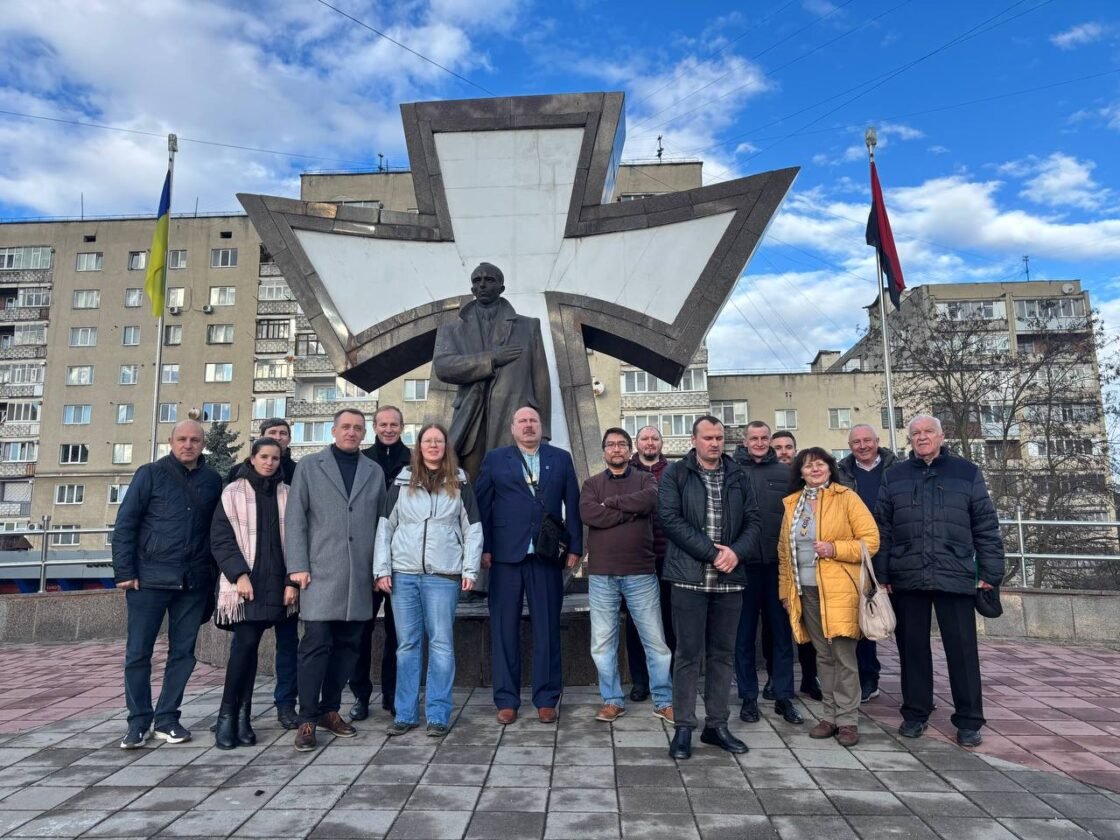
And the matter is not limited to statements alone. In the summer, two members of the movement, now living outside the Russian Federation, Pavel Mezerin and Denis Ugryumov, announced the creation of the Free Ingria platoon as part of the Foreign Legion of the Armed Forces of Ukraine. Because the struggle for the European future, in their opinion, is unfolding today in Ukraine. This news suddenly disturbed Novaya Gazeta very much. Europe”, which foundseveral “ethnic Ingrian Finns” who strongly oppose such “politicization of Ingria”. Moreover, it is curious that the editorial staff does not disclose the names of these “ethnic” figures, but tells about two regionalists who have gathered for the war against the empire, who are obviously in greater danger, in biographical details. But, apparently, these are the canons of Moscow journalism, which “opposition” journalists adhere to even when they moved to Europe. By the way, they brought with them a very wary attitude towards any projects of de-imperialization of the Russian Federation.
It is significant that as soon as the Ingrian regionalists once again declare themselves, the Russian press, as if in opposition to them, immediately recalls the “Ingrian Finns”, who, it turns out, are “quite law-abiding citizens” and have nothing to do with the “separatists” . Therefore, it makes sense to somewhat understand this issue: who – regionalists or ethno-nationalists – has more moral and historical rights to the brand of Ingria? Or even its flag itself, which, according to the ethno-nationalists, the regionalists will “appropriate”?
This question ultimately comes down to the long-standing debate about identities, which is simplistically reduced to the principles of “blood” or “soil”. Supporters of the first argue that any identity is set by a purely ethnic origin, the second argue that the very specificity of space gives rise to a special mentality among its population. The first point of view at first seems more convincing, but after thinking more deeply, one can realize that, for example, the British and Americans, despite their common ethnic origin, are still very different nations.
There are such “protonations” in the Russian space – for example, the inhabitants of present-day Kaliningrad, despite the fact that they are descendants of post-war immigrants, have already become “related” to the Koenigsberg brands and strive to develop the uniqueness of their region. By the way, until the Putin regime finally tightened all the political nuts, there existed its own Baltic Republican Party . However, the Ingrians also claim the brand of the ” Fourth Baltic Republic “.
Will St. Petersburg become the capital of independent Ingria?
The current Ingrian regionalists are, of course, a completely international audience, although they are Russian-speaking. But if you call them “Russians”, many of them will argue: they do not want to be associated with the “Russian world” that the Moscow Kremlin imposes. And the attempts of the Ingrian Finns to “privatize” the name of the region are answered logically and witty: “If there are Ingrian Finns, then why can’t there be Ingrian Russians, Ukrainians, Jews?”
Ingria for regionalists is their native St. Petersburg and the region surrounding it, they are ready to defend and promote their interests in every possible way. They treat the local Finno-Ugric cultures with complete sympathy, willingly participate in traditional holidays such as Juhannus (Midsummer Day), but still clearly understand that these cultures, of which there are only a few thousand people left, are unlikely to dominate the multimillion-strong region, although they certainly need to be given every opportunity to develop their languages. The metropolis of St. Petersburg will not speak Izhorian, Votic, or even Finnish, but this will not prevent the fact that “Ingria will be free!”, as Oxxxymiron claims at the end of his super-popular composition, banned in Russia .
In a word, the Ingrian regionalists would like to see the future Ingria as a free European country. Moreover, there is even a curious, albeit semi-mythical version that its very name appeared in the 11th century and comes from the name of the Swedish princess Ingigerda, the wife of the Novgorod prince Yaroslav the Wise. But there is also a more accurate historical fact – the Ingrian Finns, who now consider themselves “indigenous” there, were resettled to this territory by the Swedish administration only in the 17th century. And the colors of the Ingrian flag themselves (a blue cross with a red border on a yellow background) are also of Swedish rather than Finnish origin.
Perhaps it would not make much sense to delve into these historical jungles if it were not for the constant claims of the Ingrian-Finnish ethno-nationalists for the historical and symbolic “copyright” of this territory. However, the paradox here is that these supporters of the “preservation of national culture” in their struggle against the regionalists surprisingly turn out to be allies of the imperial Kremlin. By the way, the situation is similar in Karelia, where “national ensembles” dance in great-grandmother’s outfits, demonstrating Z-symbols .
Sometimes these ethno-national movements refer to the Estonian Singing Revolution of the late 1980s, but nevertheless, in Estonia, which was then freed from the Soviet empire, in addition to historical folklore, its modern political and economic programs were already developed. But the Ingrian ethno-nationalists have nothing of the kind – they still count only on the “patronage” of the state, continuing to receive presidential grants for their dances. It is significant that the official Finno-Ugric organizations in the Russian Federation refused to participate in the VIII World Congress of Finno-Ugric Peoples , held in 2021 in Tartu, because obedience to the Kremlin is more important for them than related cultures.
It seems that some ethno-national movements in Russia perceive themselves as something like the “loyal Indians” of their era. They are happy that the empire is setting up “cultural reservations” for them and are hostile to supporters of independence. But in the end, modernity wins, and the names of the Indian tribes remain only in the names of the states. And the dispute about who is “root” of whom, instead of a path to the future, can only lead to a battle between Neanderthals and Cro-Magnons.