

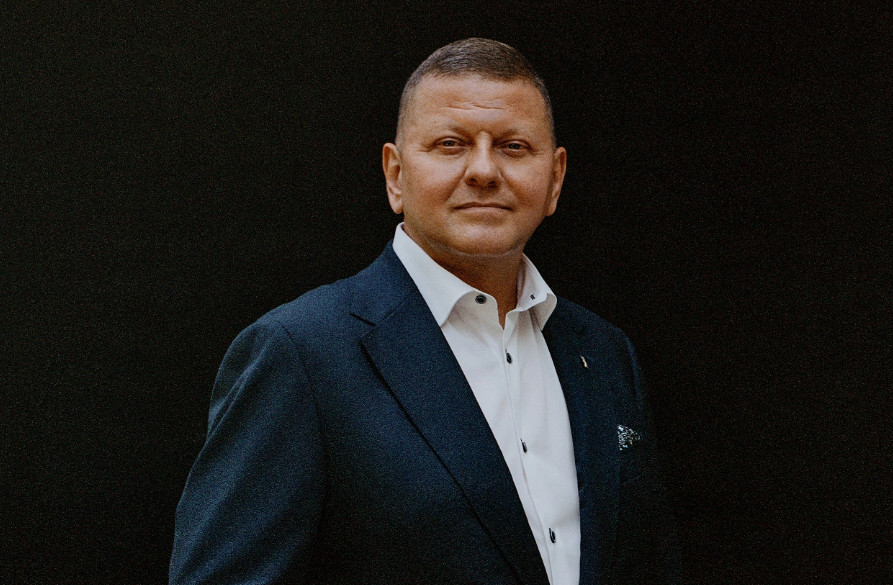
I was born in 1973 in an ordinary Ukrainian city, in an ordinary Ukrainian family. I remember my childhood well. For some reason, unlike my youth, it lasted a very long time. This is probably because we were children of parents who were born after a great and cruel war and became almost the only hope for the future of the country. They, our parents, seemed to have been extremely confident in this future, and therefore they steadily moved along the state program. This is how we, the future builders of communism, were born, whose childhood was really long, because we first had to grow up for the expected bright future.
Perhaps I have such fond memories of those years because, as Vasyl Alexandrovich Sukhomlynsky said, “the years of childhood are, first of all, the education of the heart.” According to his theory, it is at an early age that a personality is formed, moral qualities, emotional intelligence, and the ability to empathize develop. I grew up too, gradually developing and changing under the influence of that distant world of colours and emotions.
Everyone in our family spoke Ukrainian. But I wore my first embroidered shirt as an adult. In those days, in the town where I grew up, many Ukrainian songs were sung. There was also plenty of literature and magazines in Ukrainian. In my grandfather’s modest house, where I spent my childhood, I don’t remember a single Russian book, except for my mother’s textbooks on Russian literature. By the way, they later came in very handy for me.
On the other hand, the big city where my parents lived was different. We, who spoke Ukrainian, were like strangers. In a military camp, we had to “learn the language.” This language came to me from the streets. But I didn’t think about it at the time. They were like friends, with whom we played football until the first blood and beat each other off our neighbours. For this, we needed a language. Their language.
Later, in 2015, while carefully studying the intelligence report, I remembered both that language and our street football team. Almost everyone who once taught us the “great language”, “played” in our occupied territory. But now it’s not about them. But about us, those who are Ukraine. To understand who we are and what we mean to others, I would like to recall another story. This is the story of one wonderful woman who was born and raised in Crimea, but lives in Kyiv and tirelessly helps the front throughout the war. She is a little younger than me, but wiser. She once told me. You see, I realised that I live in Ukraine only as a teenager – until I received a passport of a citizen of Ukraine. Today, she, I, and millions of completely different people are Ukrainians. And it is we, different in origin, place of birth, faith, and even skin colour, who today make up a truly great concept — the state of Ukraine. Because we are the state.
So, when talking about our country and its role today, we can only talk about us — the people who are united in the state of Ukraine. There is nothing else, abstract, that can replace the concept of the state. All that is in it is only you and me. We, those who live now. And it is we who are responsible for today and for what will happen tomorrow.
So what do we, all together, mean to the world? Perhaps it would be better to first tell the world what lessons we have learned over the past extremely difficult years. We have the right to say this because we survived the bloodiest war of the 21st century. Because we are fighting and defending ourselves alone — against the most brutal enemy since fascism. An enemy that for decades has cultivated hatred for us in millions of its citizens, with propaganda that only a modern-day Goebbels could compete with. So.
Lesson 1
We did not let ourselves be deceived. Because we are the people and the state. We did not let ourselves be destroyed on the cold night of February 24, 2022 — and that is why we still exist and fight. It was not an abstract state that did this, but we, the Ukrainian people. Trust in God, and do not be afraid: a society that seeks security must be ready to pay for it.
Lesson 2
The greatness and power of the enemy are not always what their leaders and propagandists imagine. The spirit that tears the body into battle is the only measure of strength, even in the conditions of high-tech warfare.
Lesson 3
A neighbour who helps you in trouble helps himself first of all. If he did not come to your aid, he is part of your trouble. You need to be friends with your neighbours. And you need to be able to defend yourself from those who do not want to be friends.
Lesson 4
The enemy who did not break you on the battlefield will break you in the rear at the same moment. With the same force, but more insidious. With the same intentions, he will come to your neighbour who helps you.
Lesson 5
There are no miracles in war. Some laws that govern war are thousands of years old, while others arise just now. Only they influence the course of war. Sometimes, to understand this, you have to pay a very high price. Ignorance of these laws does not protect you from defeat.
Lesson 6
When thinking about victory, you need to be prepared to be alone. Your victory is not always beneficial to your allies. Those who do not fight for their lives always have their own benefit. And also: weapons that do not bring benefits are not used. What kind of weapons these are, I will not say.
Lesson 7
The most precious resource in war is people. And not only because they cannot be quickly replaced, but also because they can be mentally lost and rendered useless. The enemy is constantly working on this, and not only on the battlefield.
Lesson 8
When fighting a larger enemy alone, think: what victory do you want and can get now, and what in the future. Decisions have their time. It is not always now.
Lesson 9
Your friends and allies don’t always think the same way you do. Sometimes it takes them time to understand even the simplest things. As Timothy Snyder said, our job is to make what is obvious to us obvious to others. Sometimes it’s a debate even about that enemy. This is a time to strengthen friendships and explain the truth.
Lesson 10
Every day in war is either a new lesson or death. It is better to learn these lessons without war. Otherwise, you will have to learn them from the experience of those who managed to survive them.
Despite all the hardships, we continue to fight. All together. And while we do our job, we are being painted with different scenarios and visions. From options for ending the war to scenarios for holding elections. This is done by people who are often part of our society themselves. Those who should at least try to change something. But we are still standing. And while we are standing, we matter a lot to the world.
We united and became strong. And therefore, subjective. I can imagine the surprise and disappointment of both our and Western politicians of the 90s and 2000s. Soviet-Ukrainian generals were also surprised. But we did it. And today we speak about ourselves loudly, because we can be heard well on the other side of the planet. So, we already have the right to choose. We, ordinary Ukrainians, who until recently looked in one direction, then in the other. Our strength today gives us a chance to form a new world order. And not a monopolar totalitarian one. And at least with a chance for democratic values. We give such a chance.
In a world that has irreversibly changed, it is we, Ukraine, who every day give our neighbours, Europe, a chance to save its security and its citizens. It is on our shoulders that peace in Europe rests. It is we, left alone in the absence of shells and guns, who managed to set the wheel of scientific and technological progress in motion. The technologies we invented have not only changed the idea of security, but can also save humanity from a new plague. We are open to those who have not abandoned us. Today, we have the largest and most combat-ready army on the European continent. And therefore, it is around us, our courage, heroism and innovation that it is possible to form a new security architecture in Europe.
Ultimately, we are fighting for the right to life for ourselves and our children. And only for them do we create our future. What it will be depends only on us. There are enough examples in world history. But we are writing our history right now.
Photo: Anna DakiZalu
Vogue





