

It is crucial to be here, in this very room, and to have a discussion about our, I draw your attention to – our common future. I would like to emphasize once again that the time when you were the ones who could watch everything that was happening in Ukraine, and perhaps worry about us, is over.
Some of you may have foreseen all this, some have understood these changes that have come, already today – it doesn’t matter. The main thing is that we must understand here and now what to do next for all of us.
So, let’s start with perhaps the most important thing to discuss – the concept of world order. More simply – with the balance of power in world politics. Now there is no time and no need to talk about how and how many times this world order has changed. Let’s just go back to the Yalta Conference in 1945, where the leaders of the three victorious powers decided the future of the post-war world.
The formation of a new world order was completed on 2 August 1945, in Potsdam, where the future was finally decided (at least for more than four decades). Then began the war that went down in history as the “Cold War.” This era ended in 1991 with the collapse of the USSR and the end of the bipolar confrontation.
The world continued to live in this old world order for some time, still based on the foundations of the Yalta-Potsdam system of international relations. Even in the conditions of a unipolar world, the United States managed to maintain peace and stability in the world by force. Somewhere force was replaced by money, but the world lived in a stable system. And this happened even against the background of an increase in the number of states in the world, which seemed to choose their own future fate.
Everything changed on 10 February 2007, when Russian President Putin, a year before the end of his second presidential term, spoke at the Munich Security Conference. This speech can be considered a turning point in the revision of the existing system of world order. “Nobody feels safe, nobody can hide behind international law like a stone wall,” he said.
Perhaps the West made a huge mistake by not heeding Putin’s warnings and in no way adapting to the coming era that has brought us here today.
In 2008, Putin started a war in Georgia, in 2014 – in Ukraine. And already in 2022, he attacked Ukraine by all possible means. 18 years ago, Putin said, or rather warned, that the unipolar model, which is aimed exclusively at serving the interests of the United States and a select circle of states, is not viable. At the same time, he said that China, India, and other developing countries, as a result of transformation, will become almost the most important economies in the world.
Perhaps today we can see how the countries of Asia, Africa and Latin America are trying to determine the global agenda. And what about Ukraine? Ukraine eagerly entered the struggle and was able not only to give a worthy rebuff to the enemy but also to prove and defend its subjectivity in the formation of the world order.
It was because of Ukraine, which seemed to have lost the opportunity to resolve the issue of war on its own in 2023, mainly due to the fears of our partners, that Russia was forced to openly start creating the so-called Axis – the Axis of Evil. You all understand perfectly well who is included in this Axis. It was then, back in 2024, when these countries were concluding strategic agreements, that it was necessary to think about whether this was not a continuation of the policy of revising the current system of world order.
Of course, it is difficult for Ukraine to fight the Axis of Evil alone, although, with the help of partners, it is fighting. The war in Ukraine was even more global in scale. Its results could have been predicted. They are still relevant today. After all, the USA, China, Russia, and Europe were unprepared for a war of such intensity.
Human and economic losses in Ukraine, the expenditure of resources on the war, migration, sanctions policy, the lack of cheap energy sources and markets, as well as other problems, have become a colossal economic burden on the economies of all parties involved in the war, hampering their development and creating risks of global crises.
After all, the war in Ukraine has practically exhausted the economic and industrial “reserves of strength” in most countries, especially Russia, the USA and Europe. They almost lacked the resources to continue military operations, while the deployment of weapons production turned out to be excessive, provided that agreements on the cessation of hostilities were reached.
Thus, it can be argued that the formal reasons for revising the world order today exist. The starting point for such a revision, of course, can be considered the upcoming end of the war in Ukraine and the formation of a new world order based on its results. After all, indeed, the old world order itself is already almost destroyed today. For example, today it is obvious that the White House has questioned the unity of the Western world. In addition, Washington is already trying to shift the security and defence of Europe to its own forces, without the United States.
Such actions probably suggest that NATO may cease to exist. A series of US negotiations with Russia, whose leader has been issued an arrest warrant, state the fact that the White House is taking more and more steps toward the Kremlin regime, fully understanding that in this case, Europe could become a new target for Russia. An undeniable factor in this is the decision, for example, of the US Cyber Command to stop any planning directed against Russia.
Washington’s non-recognition of the Russian aggression is also a new challenge not only for Ukraine but also for Europe. So, this is enough to understand that it is not only Russia and the Axis of Evil that are trying to destroy the world order, but also the United States is completely destroying it.
I would like to draw your attention once again to the fact that the destruction of the old world order is also taking place against the backdrop of the rapid development of technology. We can without doubt say that it was the Russian-Ukrainian war that became the catalyst for the development of military technologies, which will probably become the basis of future global security. It was these changes that took place in the fields of the Russian-Ukrainian war that led to a global crisis of operational art including NATO doctrines. Classic large-scale operations with incredible resource consumption have not only lost their relevance but have even become suicidal. But only Ukraine and the Axis of Evil know about this.
Whether all the players who want a new world order are ready for this, or whether they need another war to understand this, is still unknown. It is known for certain that a technological breakthrough has occurred not only in the military sector but also in all others, which will require restructuring the economies of leading countries. Accordingly, both the need and priorities in the extraction of minerals have changed. Does the last statement remind you of something familiar from history? Time will tell.
But still, there is Ukraine. In this difficult situation, Ukraine has truly become a subject of international politics precisely because of its ability to resist during a full-scale war. Ukraine must be reckoned with. This is already clear to all, even very strong states. Ukraine has not lost its independence. Despite the change in the strategy of its enemies and the threats of its friends, Ukraine is fighting, even when it seems impossible and is quite effectively defeating the enemy.
Ukraine, whether anyone likes it or not, is now de facto defending not only NATO’s eastern border but also the eastern border of Europe, which, by the way, could become a line of contact. Against the backdrop of recent events and future US intentions regarding security in Europe, as well as against the backdrop of NATO’s unpreparedness to confront Russia, at least without the US, Ukraine’s positions are becoming more and more attractive for Europe. Of course, Ukraine does not yet have its nuclear weapons, so it is paying for its freedom with its blood, but it is its Armed Forces that indicate that, presumably, in the near future (5-10 years), a new architecture of European security is impossible without Ukraine.
One can list many more factors that confirm that the existence of an independent Ukraine today is perhaps the most important factor in Europe’s security. Of course, there are also many intra-European factors for preserving Europe’s internal security. But, I’m talking about Ukraine now.
We should talk about Ukraine precisely in terms of:
- First of all, the conduct of war. After all, without a clear fixation of the line of contact, it is impossible to appeal for further action. For this, of course, support is needed – probably more European.
- When achieving a sustainable, just peace, Ukraine must receive real security guarantees.
- Ukraine should hope for a fair and full restoration of the country, including at the expense of the aggressor country.
- Ukraine in the post-war period must be fully protected from Russian propaganda and economic sabotage.
Of course, without going into details, in such a situation, Ukraine needs to maintain its subjectivity in relations with global players. Presumably, this requires:
- Continue to insist on its security interests and territorial integrity. Avoid the role of a “bargaining coin” during any international negotiations.
- Seek a balance between the interests of the US, the EU, and China, while avoiding undermining sovereignty.
- Strengthen international trust in Ukraine on all international platforms and in other countries of the world, which is the basis for political and financial support.
Finally, before starting the discussion, I would like to mention a wonderful Canadian writer, Carl Schroeder. He is alive and well, thank God, and is currently engaged in researching the future. He once wrote: “Forecasting exists not only to predict the future but to minimize surprises.”
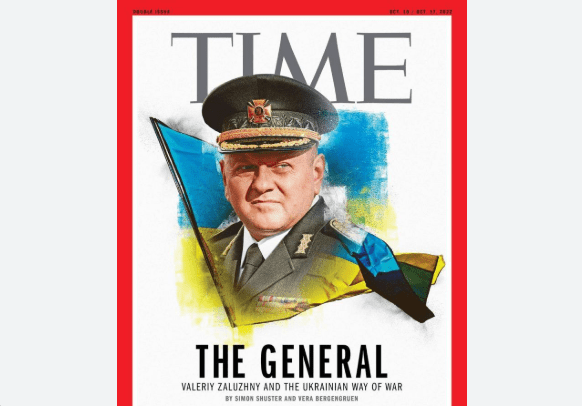
Valeriy Zaluzhnyj
Українська правда





