

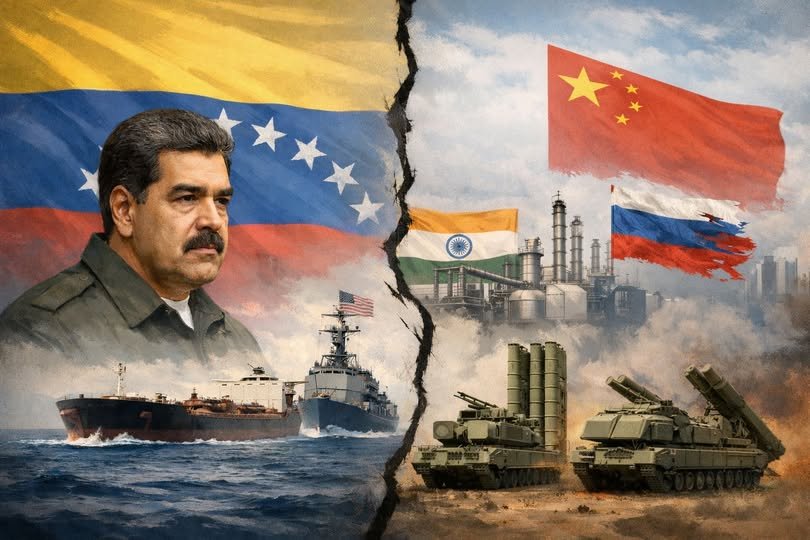
Venezuela is attempting to convert control over oil resources into a partial normalisation of relations with the West, employing a classic set of tools: limited political concessions, signals of “readiness for dialogue,” and parallel informal negotiations with key players in the energy market. The release of more than a hundred political prisoners is not a humanitarian gesture, but diplomatic currency – a clear marker for Washington and Brussels that the regime is ready to bargain for access to finance, insurance and logistics.
Against this backdrop, US actions, including the continued practice of seizing tankers and tightly controlling oil flows without the consent of third parties, demonstrate a return to direct extraterritorial pressure. This is not improvisation, but a market signal: any easing of the sanctions regime will occur exclusively on American terms and with full control over routes, insurance and clearing. The very fact that global traders and oil and gas corporations are beginning to prepare for such a scenario indicates faith in a managed, partial discovery of Venezuelan oil.
Discussions of possible supplies of Venezuelan raw materials to Asia, involving Reliance Industries and traders Vitol / Trafigura, are more of a political move than an economic one.
As a result, the consequences for Russia are much broader than the loss of another formal partner. Venezuela, which has been used by the Kremlin for years as evidence of the “anti-Western coalition,” is actually moving into a mode of transactional cooperation with the West, where Russia’s place is minimal or nonexistent. This hits several targets at once: the geography of Russian influence in Latin America is narrowing, the reputation of the Russian military-industrial complex is being undermined, and Moscow’s energy leverage is weakening due to the emergence of alternative heavy oil on the global market. In fact, the Kremlin is not losing an ally – it is losing another element of the illusion of a global counterbalance to the West, which was based not on real capabilities, but on declarations and symbolic gestures.
Viktor Yahun
Facebook 





