

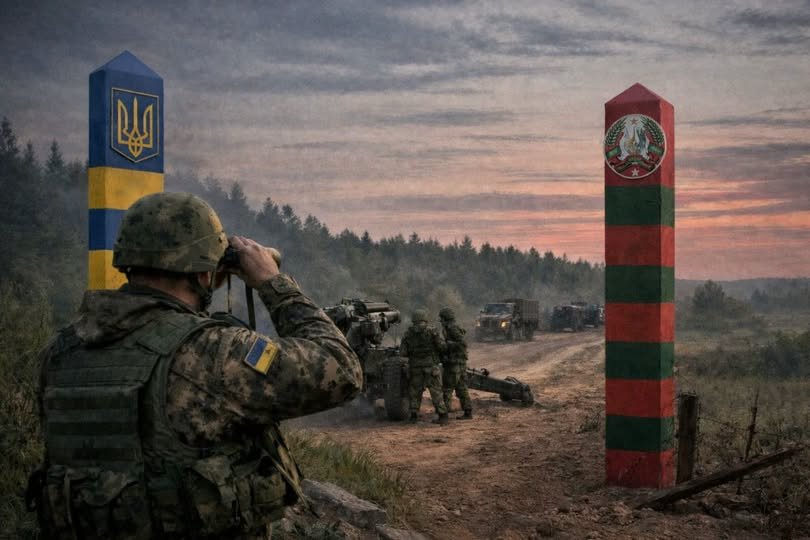
You should not reassure yourself with the thought that all this is “another noise” around Belarus. When the President of Ukraine, after the report of the Commander-in-Chief, directly speaks about the construction of roads towards the Ukrainian border and the arrangement of artillery positions, these are no longer rumours or telegram fantasies. This is a signal that the northern direction is being transferred from the observation mode to the mode of potential threat. And when, in parallel, Lukashenko signs a decree on the call-up of reserve officers for 2026, this no longer looks like a separate bureaucratic document, but as part of a single picture. Formally, Minsk, of course, presents this as a planned event. Decree No. 132 of 17 April does indeed apply to men under the age of 27 from among reserve officers who have not completed military service or service in the reserve, and the Belarusian authorities emphasise that such events are held every year.
But in politics and war, not only does the fact itself matter, but also the context. And the context is this: Russia is dragging out the war, has problems with personnel, is regrouping, and at the same time is trying to keep Ukraine under the constant threat of opening new areas of pressure. This is exactly what Zelensky said publicly. It is worth understanding a simple thing. Roads to the border are not built “for beauty”. Artillery positions are not prepared “just in case”. Reserve officers are not returned to service just for statistics. All this together means preparing the infrastructure, the command structure, and the ability to quickly deploy forces when the political command comes to it. This does not mean that a major offensive will begin tomorrow from the territory of Belarus. But it definitely means creating conditions for blackmail, a demonstration of force, the flogging of our reserves in the north and, if necessary, for provocations or local actions within the framework of the Russian plan. Lukashenko is once again trying to sit on two chairs.
Outwardly, he plays the role of someone who “doesn’t want war” and “keeps the situation under control.” But the facts are more stubborn than the rhetoric. It was Belarus that gave Russia its territory for an invasion in 2022. After that, Minsk agreed to the deployment of Russian tactical nuclear weapons, and now we see new signs of military development in the border area. That is, Belarus has for a long time no longer been a neutral neighbour, but a militarily dependent space that the Kremlin uses as much as Lukashenko’s political endurance allows. It is important here not to panic or self-deceive. Panic is when they shout, “Tomorrow they are going to Kyiv again.” Self-deception is when they say that “nothing will happen, this is just training.” The reality is harsher: Russia is systematically forming a Belarusian instrument of pressure, and Lukashenko is providing territory, infrastructure, and human resources for this. It is not a fact that he personally wants a big war. But this has long ceased to be key. The Kremlin is methodically drawing Belarus into its military orbit, and each such “planned” step narrows Minsk’s room for manoeuvre. For Ukraine, the conclusion is obvious: the northern direction cannot be considered secondary. For Belarusians, the signal is also direct: the “we have nothing to do with it” status no longer works. When the authorities build roads to the border, prepare artillery positions, and tighten up the officer reserve, they are not preparing for peace — they are preparing for the possibility of war. And then everything will depend on whether the Kremlin dares to turn Belarus from a rear balcony into a full-fledged bridgehead. Ukraine sees this risk. That is why Kyiv’s warning to Minsk sounded now, and not when it will be too late.
Viktor Yahun
Facebook





